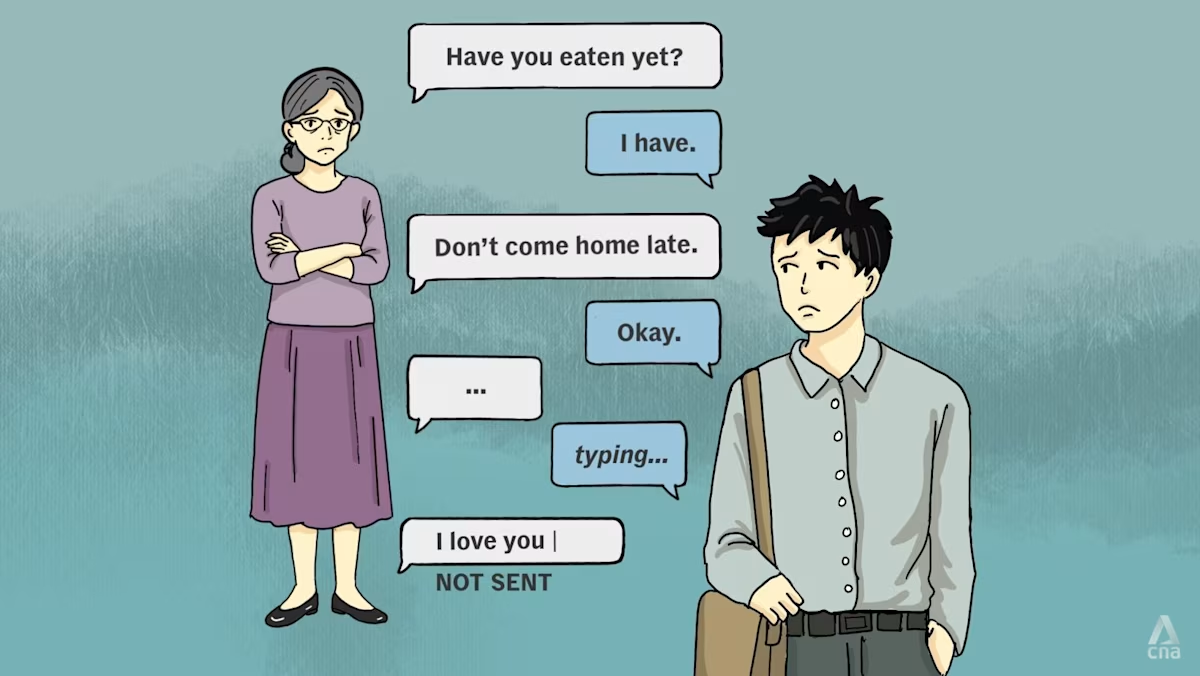
All demonstrations of love cannot be in the form of a heartfelt text or prolonged phone call. Love can be expressed through a funny or interesting article or link sent with no explanation at all. The message itself appears rather cold and clinical on the surface since it often does not convey the emotions verbally. But people usually know how to understand the message implied in such communication.From the point of view of relationship experts, maintaining the connection between people is not based only on unilateral moves and efforts. It includes all of those small things and actions that remind both of the other person's importance.The hidden meaning behind people who always send articles and memes. Image credit - GeminiRelationship maintenanceIn our fast-paced world, there are few occasions when people can spend hours on end discussing their relationships. A lot of people who have to work or study hard find it convenient to communicate through simpler methods. This practice is called "relationship maintenance." These are the acts aimed at maintaining social connection and encompass such aspects as mutual support, experience sharing, positive messages, etc.In this regard, the recent publication in the journal Current Opinion in Psychology highlights the significance of everyday activities aimed at fostering close personal relations irrespective of the impossibility of deep and constant communication. In this context, the practice of sharing articles may play a key role since it allows remaining connected without conducting intensive conversation.Reasons for viewing the ordinary act of sharing articles as a deeply intimate gestureAt times, the significance of sharing an article can lie within the message delivered implicitly. Sharing articles about your interests and hobbies, problems recently discussed, topics dear to your heart, shows the other person's ability to consider your interests.Feeling recognized and appreciated is vital for any romantic relations. As Harry Reis, a well-known researcher of responsiveness in relationships, argues, being noticed and recognized is one of the most significant features of a relationship's success. Research suggests that responsiveness correlates with positive emotionality more frequently than emotional communication.Forwarding an article has become the modern version of “thinking of you”. Image credit - GeminiSmall messages are capable of creating intimacyPerhaps unexpectedly, it is possible to build relationships not by having significant conversations but with insignificant ones. This conclusion is based on the findings of a research paper published in 2025 and dedicated to online interaction and digital communication. The study showed that digital communication irrespective of its volume led to participants feeling interpersonal closeness.Thus, forwarding an article can be emotionally valuable to users. It is not necessarily the content that matters in the conversation. In fact, a message with the link helps bridge the communication gap created by daily stress and allows for a moment of interaction despite a busy schedule. For most adults, relaxed communication is easier than engaging conversations.Psychology behind small bids for connectionA renowned relationship researcher John Gottman uses the concept of "bids for connection" that refers to those small gestures people make. They can be either direct or indirect actions. Forwarding articles is a kind of such bid.Instead of stating "I miss you," an individual may share a piece of content that he or she thinks the other party will find interesting. The act provides room for engagement without expecting a response. Such flexibility is one of the keys to successful interaction.Why it becomes even more relevant when people are apartResearch demonstrates that high levels of texting frequency and responsiveness in digital communication correlate with increased levels of satisfaction in long-distance relationships. In the absence of physical meetings, small digital practices take on additional significance.The shared article can be used as a way to create common experiences despite the fact that the partners are located in various cities and live by different schedules.The underlying message about sharing linksNot every single article that one shares has an underlying emotional meaning. Many links are shared for no other reason than just being shared. Yet, the psychological theory says that there is a social function that lies beneath many interactions of this kind. They convey messages about care, recognition, and interest. People use them as a reminder of the fact that they still have a place in their loved ones' minds.According to a 2025 meta-analysis on digital relationship tools, online communications foster relationships by showing that someone cares and thinks of us.It can explain why the act of sharing articles is so popular. For many adults, it may become their primary mode of emotional expression in everyday interaction due to time constraints, distance, or shyness. The next time someone shares with you a meaningless article from the internet, it may mean: "Today I thought about you."
Psychology suggests adults who send articles instead of saying 'I miss you' aren't closed off; they're making tiny bids for connection in the language daily life allows
In our hyper-connected era, small digital gestures—like sending a thoughtful article—are essential for fostering and nurturing relationships. These simple acts signify affection and acknowledgment, helping to dissolve any communication barriers. For those in long-distance relationships, such expressions are particularly crucial, offering a heartfelt reminder that someone is always thinking of you.
776 words~4 min read