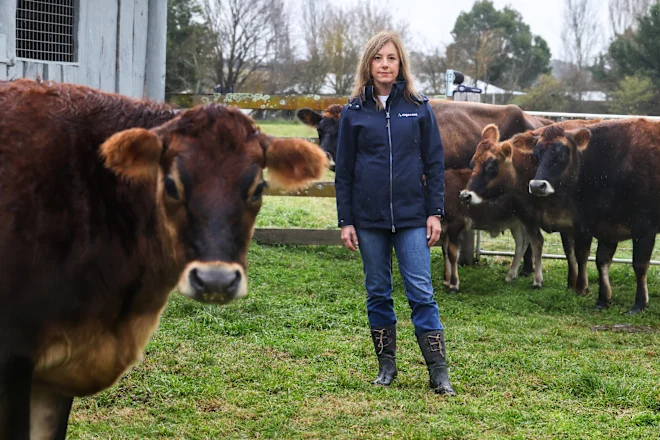
Aidan Connolly, President, AgriTech Capital, is a food/feed/farm futurologist and author of the book The Future of Agriculture.gettyThere is a quiet but critical gap in modern livestock production: medication. We can closely monitor feed intake, growth curves and environmental conditions and increasingly predict disease risk using artificial intelligence. Yet, medication, one of the most important interventions on any farm, remains poorly recorded. This gap reflects an underlying limitation in how livestock systems connect detection, decision-making and outcomes.Without reliable treatment records, producers are left interpreting outcomes without knowing what actions were taken, when and why, creating a structural weakness in how decisions are made. That disconnect limits learning, reduces consistency and ultimately constrains both productivity and animal welfare improvements.Across agriculture, working in over 100 countries for more than 30 years, I've heard a common principle: "You can only manage what you measure." That truth should apply to medication as well, but in practice, much of the industry still relies on handwritten logs, memory or disconnected systems, creating blind spots around traceability, efficacy and compliance.Using What You SeeThe recent acceleration in precision livestock technologies has brought sensors, computer vision and advanced analytics into routine use. The ability to detect early signs of disease or stress has shifted the industry toward real-time, data-driven decision-making. Digital monitoring systems can combine behavioral, environmental and biological data to provide continuous insight into animal health risks. Across species, these technologies are improving early detection.Together, these technologies have significantly improved how producers identify problems. However, the value of this data is undercut unless it is integrated into decision-making systems. Once a health issue is identified, intervention follows. And that intervention, most often medication, is where the data trail frequently breaks down. While farms may increasingly identify at-risk animals, they often lack structured information on what past actions have been taken and their effectiveness.Capturing Medication DataOne approach is to start from the other end: to focus on what happens after a medication decision is made. The Australian startup Xsights combines continuous monitoring with a medication logging tool that captures treatments directly at the point of administration. Each intervention is linked to an individual animal, creating a clear record of what was given, when it was administered and at what dosage. The process is integrated into existing workflows, allowing data to be captured as part of routine farm operations, rather than as a separate task.Other agtech startups have focused on specific health issues. Austria's smaXtec has achieved the concept of the "connected cow" by placing an AI bolus sensor in the rumen of the cow to optimize cow health and productivity. The high-profile, Thiel-backed New Zealand startup Halter has integrated its virtual fencing system with biological data. In poultry, leaders are focused on digital water medication that can help veterinarians. Verax from DSM Firmenich allows growers to take tissue, blood and other fluid samples from poultry—to test for biomarkers of critical poultry diseases such as coccidosis and the effectiveness of nutritional programs. Emerging AI health technologies are also addressing aquaculture productivity, among other concerns.These systems can help address a long-standing gap in livestock systems. While many aspects of production have become increasingly digitized, medication data has remained fragmented and difficult to standardize, creating challenges around traceability, increasing the risk of repeat dosing and limiting the ability to evaluate whether treatments are effective. By capturing treatment data automatically and linking it directly to animal-level health and performance signals, systems like these can begin to close that gap, providing visibility not only into what is happening, but into what actions are taken and how those actions influence outcomes. In practical terms, this can shift medication from a one-time event to a measurable part of the production system.Why This Gap Matters NowThe timing of this shift is critical. Globally, there is increasing scrutiny around antimicrobial use, animal welfare and supply chain transparency. Predictive monitoring technologies are already helping reduce unnecessary treatments by identifying at-risk animals earlier and enabling more targeted interventions. At the same time, farms are facing increasing operational complexity. Tasks such as administering treatments are often carried out by less experienced staff, increasing the risk of inconsistency or error.Systems like these begin to address both challenges. By capturing data at the point of action, they can reduce reliance on manual processes while improving accuracy and accountability. By creating structured records, they can provide the transparency needed for regulatory compliance and supply chain verification. When producers can link interventions to outcomes, they can stop reacting to problems and start systematically improving how those problems are addressed.The Road AheadThe value of AI and LLMs in agriculture will be severely limited by poor data accuracy and the validity of data. Incomplete or faulty datasets in an AI context leads to hallucinations and inventions. Sensors can help address this by autonomously collecting information, without human intervention, reducing the risks of corruption or misinterpretation.In my previous Forbes article, I wrote that leaders need to fix their data first. This should be the mantra for leaders in the agri-food chain who want to maximize the value of AI.From Measurement To ManagementIn agriculture, progress rarely comes from entirely new ideas. It comes from applying existing principles more consistently. The idea that you can only manage what you measure is widely accepted, yet unevenly applied. For years, medication has remained outside that framework. It has been essential to operations, but not fully integrated into data systems. That is now beginning to change.As technologies bring medication into the data ecosystem, they can shift it from an unstructured activity to a measurable part of the production system. This can help enable a move toward deeper evidence-based management, where decisions are informed by outcomes rather than assumptions. In a sector defined by tight margins, biological complexity and rising expectations, that shift will help redefine how livestock systems learn, adapt and improve.Forbes Technology Council is an invitation-only community for world-class CIOs, CTOs and technology executives. Do I qualify?
Animal Tech: Why Medication Tracking And Data Is The Next Frontier
The value of AI and LLMs in agriculture will be severely limited by poor data accuracy and the validity of data.
985 words~4 min read