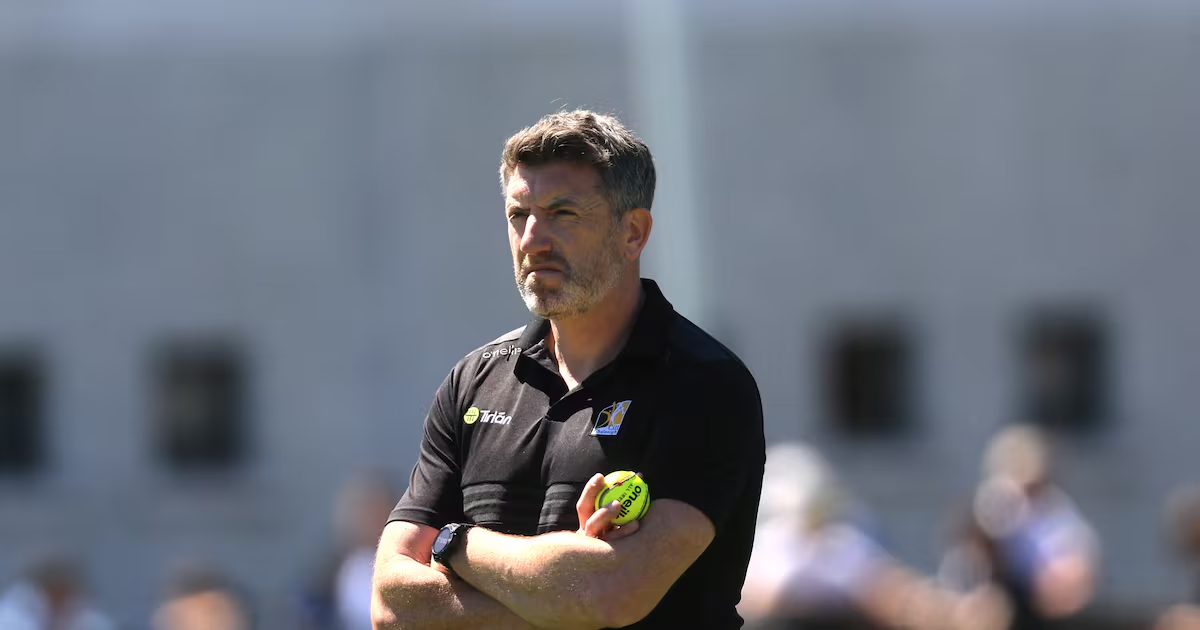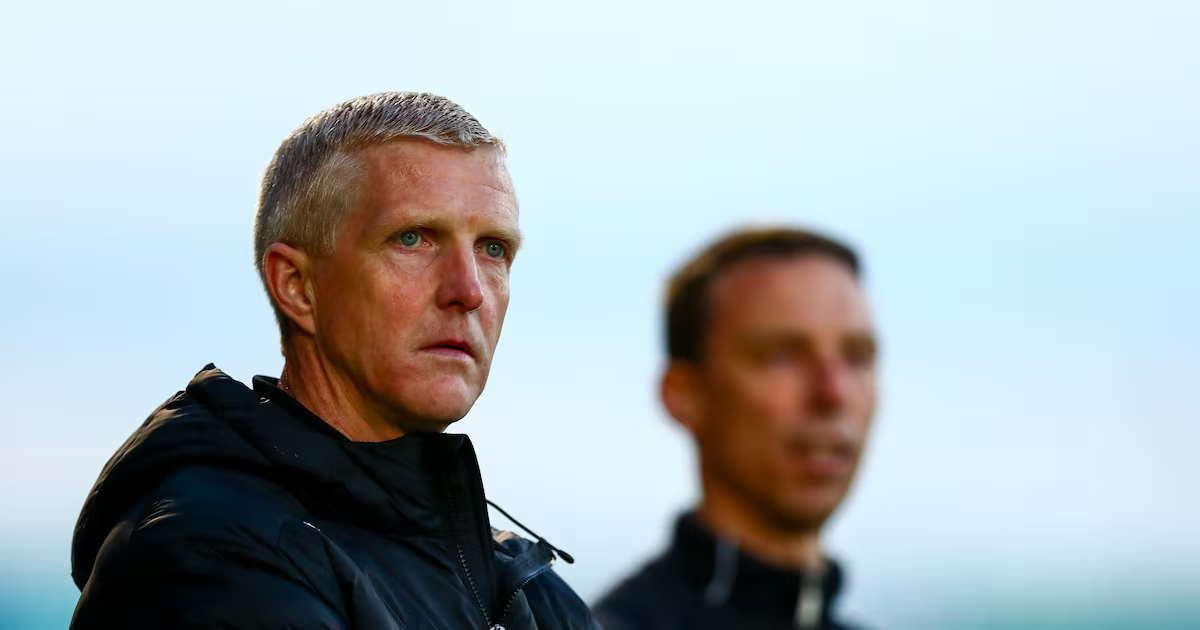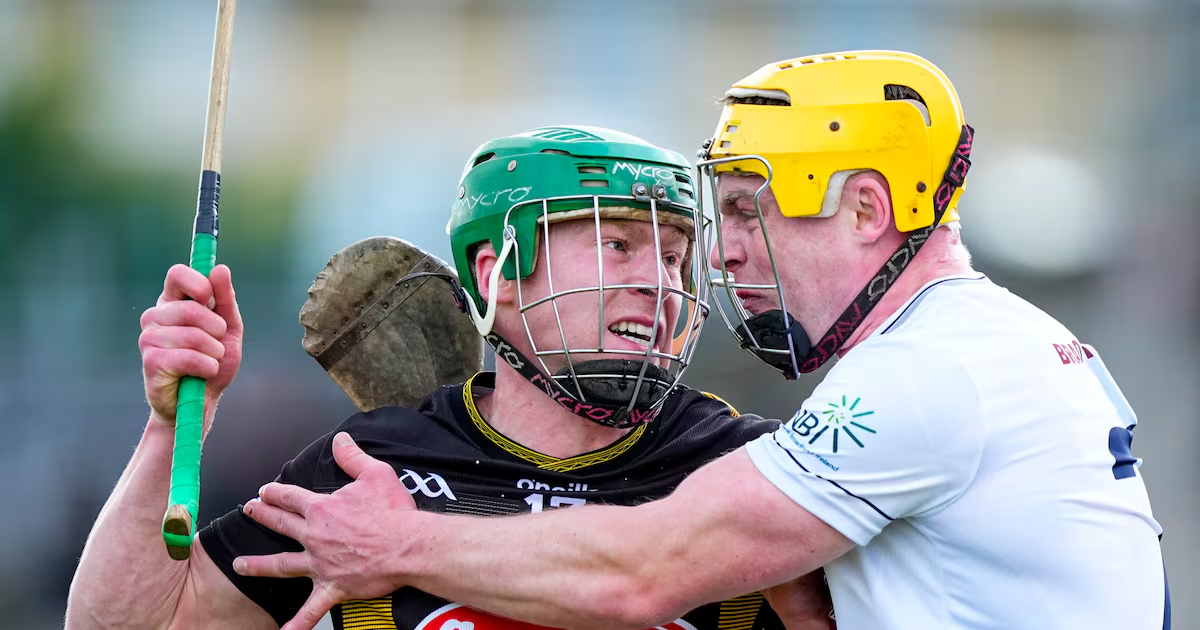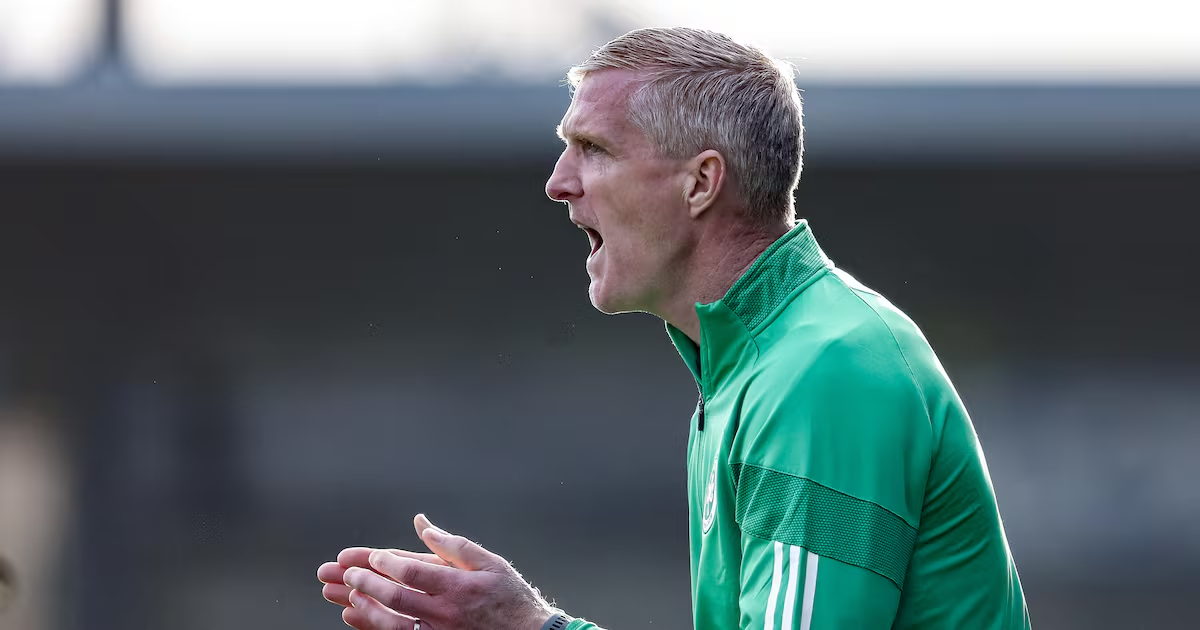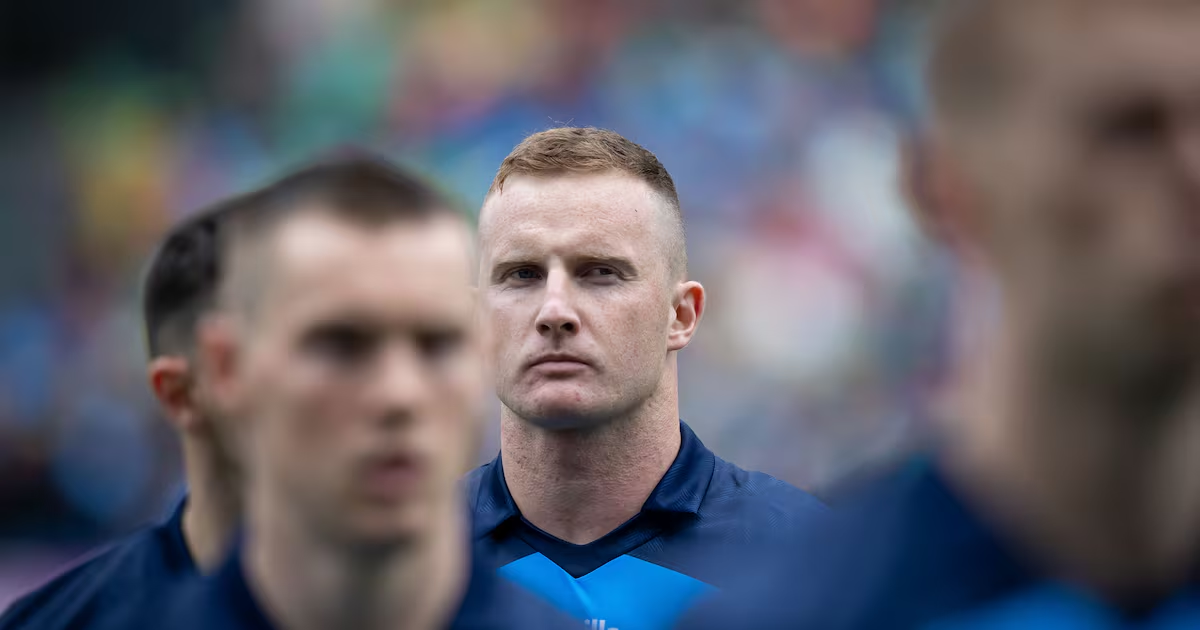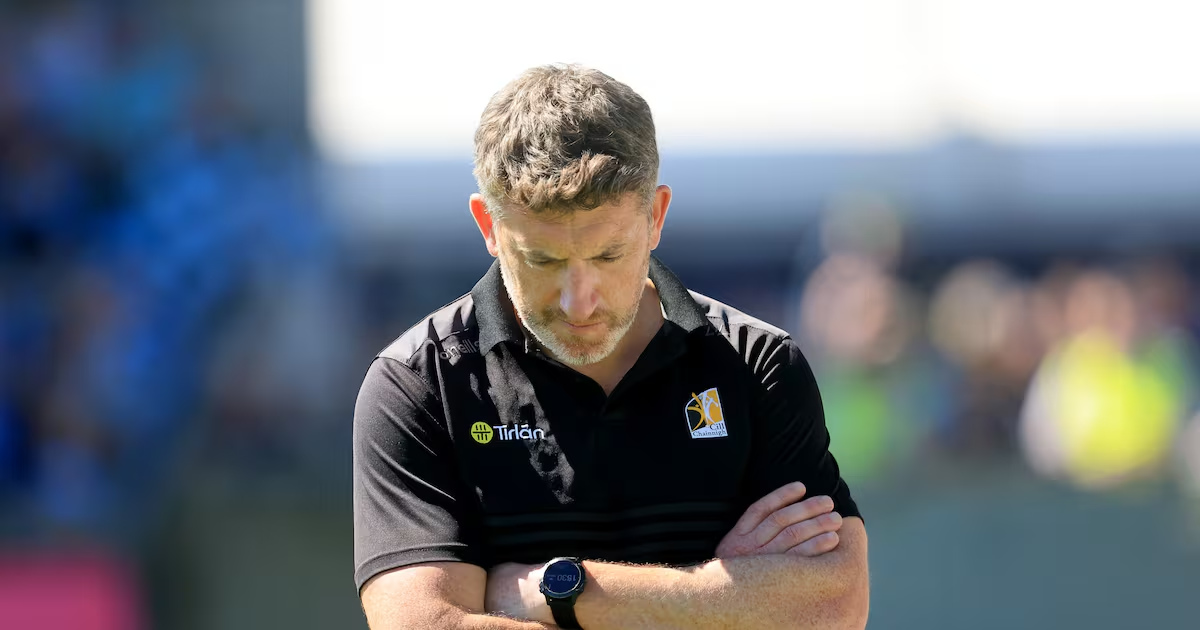
In keeping with everything else he has done in the service of the jersey, nothing about Derek Lyng’s last days as Kilkenny manager has been an opera. After their elimination from the championship in Parnell Park 10 days ago, he fronted up to the post-match interviews with characteristic dignity. There were no attempts at deflection or no excuses. On his square shoulders he carried responsibility for everything in his charge.By stepping down on Tuesday he brought a quick end to speculation that would otherwise have spiralled over the coming weeks. Given his standing, it is unlikely there would have been a heave against Lyng, but Kilkenny didn’t need a summer of waiting and wondering. The county board has time to think and a big decision to make. When Henry Shefflin was appointed as under-20 manager for this season, the general belief was that he would be Lyng’s successor. The companion assumption, though, was that Lyng would stay for a fifth year and see out the second season of his extension.This year, Shefflin brought the Kilkenny under-20s to a Leinster final where they lost by nine points to a Galway team who didn’t start either of their best players against them. In his managerial career so far, all of Shefflin’s success has been with his club Ballyhale Shamrocks, a star-studded team whom he led to back-to-back All-Ireland titles.But in Shefflin’s three years as Galway manager he oversaw a period of stagnation and, ultimately, regression. In terms of the modern game, their tactical approach was relatively unsophisticated, which is precisely where Kilkenny find themselves now: trapped between what winning used to look like and what winning has become. In that game, Kilkenny have been slow learners.The other obvious alternative is Brian Dowling, the current Kildare manager. His intercounty playing career was comparatively short and low wattage but his success as a coach has been extraordinary. Since the turn of the decade, he has won the Christy Ring Cup and the Joe McDonagh Cup with Kildare, two All-Ireland camogie titles with Kilkenny and led St Kieran’s College to three All-Irelands. Kildare hurling manager Brian Dowling has built an outstanding reputation as a coach. Photograph: Laszlo Geczo/Inpho Kildare were relegated from the Leinster championship this year but their competitiveness in most games exceeded expectations. As a coach, Dowling is in tune with how the modern game is being played by the most successful counties. For years, Kilkenny have been in denial about making this leap.Shefflin’s decision to take the Galway job was divisive in Kilkenny and famously didn’t meet the approval of Brian Cody, but there is no lingering fall-out that would prevent him from getting the Kilkenny job now. Over the years, other former Kilkenny players such as Eddie Brennan, Martin Comerford, Michael Fennelly, Eoin Larkin and Michael Kavanagh took on coaching roles with counties who were no threat to Kilkenny without a hint of local rebuke. Dowling is in that bracket too. For the first three years of Lyng’s time as manager it was easy to argue that Kilkenny were among the top-three teams in the country but there was also a pattern of decline. They were competitive for three-quarters of the 2023 All-Ireland final against a Limerick team at their devastating peak, but they lost the last two All-Ireland semi-finals to teams who were stronger in the home stretch. Kilkenny were unquestionably discommoded by a scoreboard cock-up in the closing minutes of last year’s semi-final against Tipperary – mistakenly believing they needed a goal to draw the game when two points would have been enough. But Tipperary played the last 15 minutes of that game with 14 men and Kilkenny were simply unable to manage the ball and prosecute their advantage. In their winning years, when Kilkenny were masters of hurling’s universe, an outcome like that would have been inconceivable. Kilkenny's Jordan Molloy with manager Derek Lyng during the National Hurling League match against Waterford in February. Photograph: Tom O’Hanlon/Inpho Beneath the surface, they have issues with player pathways. Michael Dempsey, the former Kilkenny selector and trainer, led a review of Kilkenny’s development structures which has brought about reform in recent years. But as Cork found to their cost, these changes take years to bear fruit. Kilkenny had fallen off the pace in their squad systems and there was bound to be a price to pay. Last weekend, their minors lost an All-Ireland quarter-final by 12 points to a Cork team that finished third in Munster. They have lost the habit of winning big games too. Since 2015, Kilkenny have contested 13 All-Ireland and National League finals at senior, under-20/21 and minor level and won just two of them. “The overriding issue is one of coaching,” wrote Enda McEvoy in the 2024 Kilkenny Yearbook. “The events of the past summer have demonstrated yet again, in shrieking neon, that Kilkenny’s intercounty coaching model is not fit for purpose. Hitting the ball hard down the field is not a viable approach. It is not even an approach.” Lyng and his coaches tried to modify that approach over the last couple of years, but it led to fogginess and incoherence. Players were being asked to adopt a system of play in a Kilkenny jersey that is not accepted by the clubs or not approved by their supporters. Against the elite teams, though, Kilkenny’s old way of playing was no longer cutting any ice. They still have some very good hurlers and plenty of decent players. Even in Cody’s time there were players on the Kilkenny team who were not blessed with outrageous talent but who grafted to make the most of what they had. Lyng was one of those players.This year, though, Kilkenny were less than the sum of their parts. For whoever comes next, addressing that deficit will be the essential starting point.
Denis Walsh: The strongest candidate to succeed Derek Lyng at Kilkenny is not who you think
Hurling’s former kingpins are trapped between what winning used to look like and what winning has become
TL;DRAI
Derek Lyng resigns as Kilkenny manager; top candidates are Shefflin and Dowling, the latter favored for modern coaching expertise. Kilkenny's decline reflects failure to update tactics—dominant teams collapse without coaching innovation and strategic modernization.
970 words~4 min read