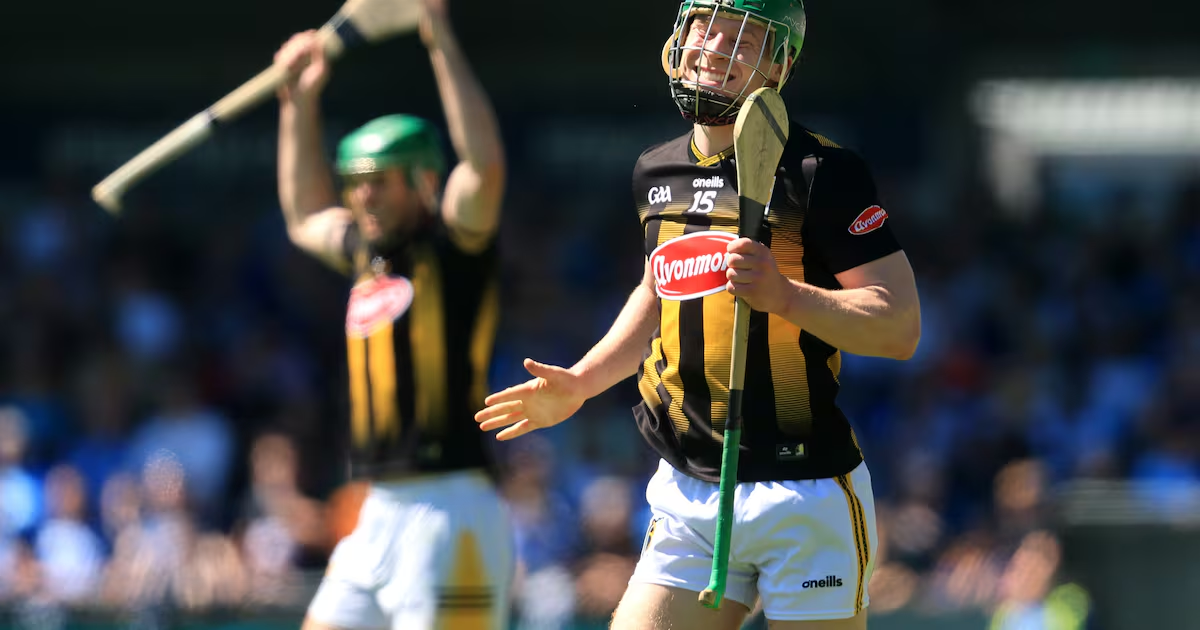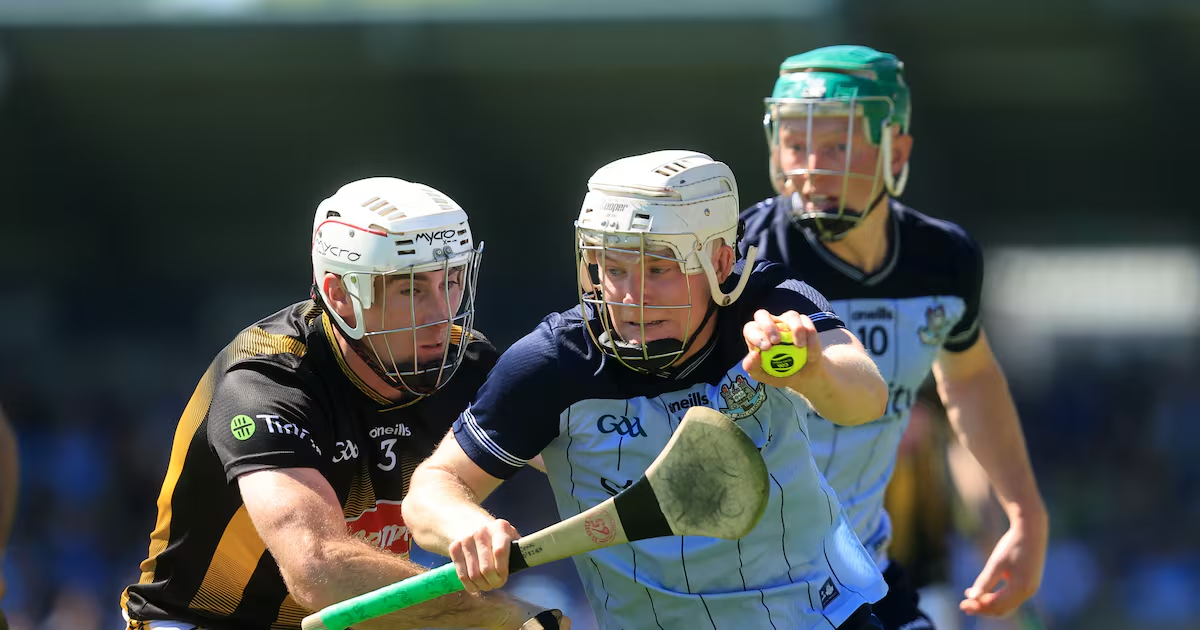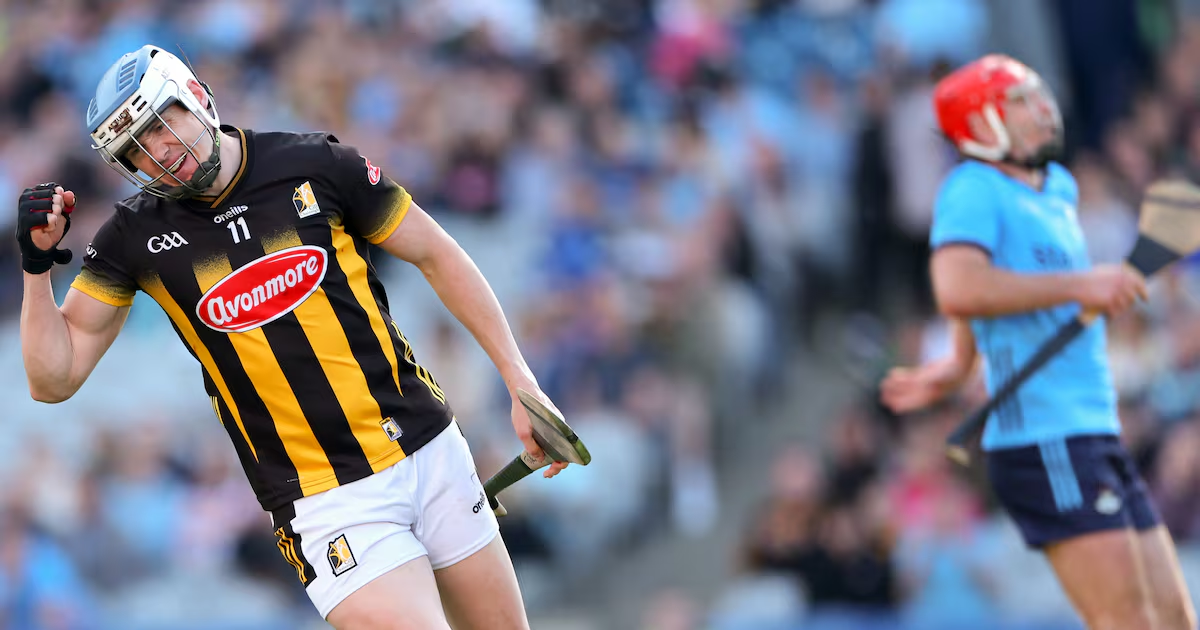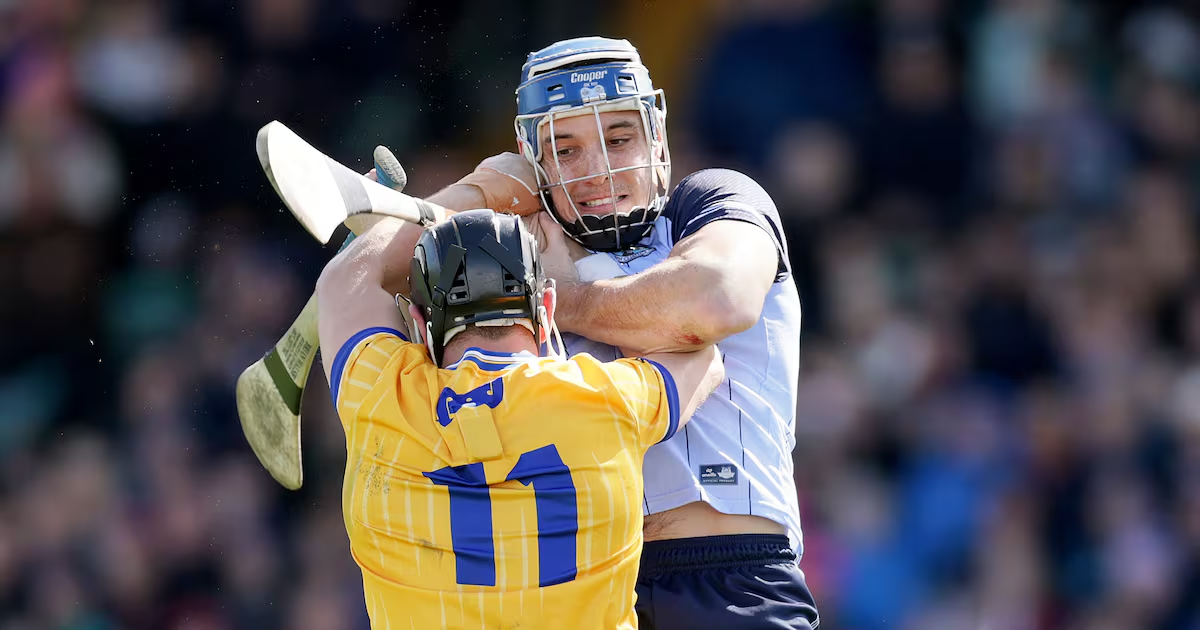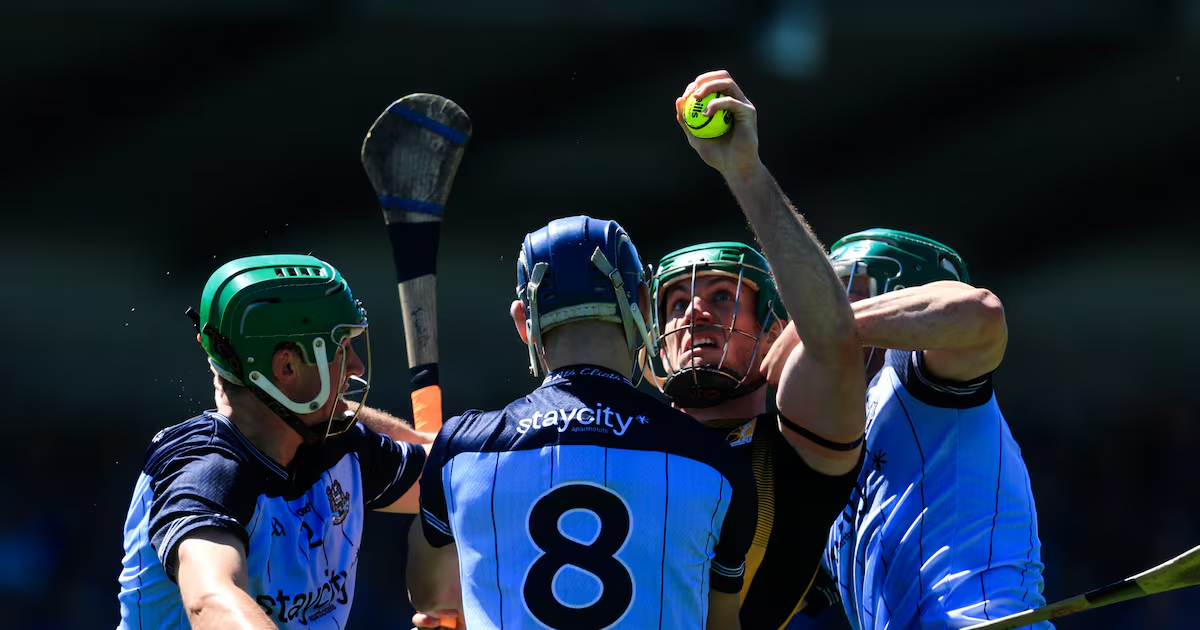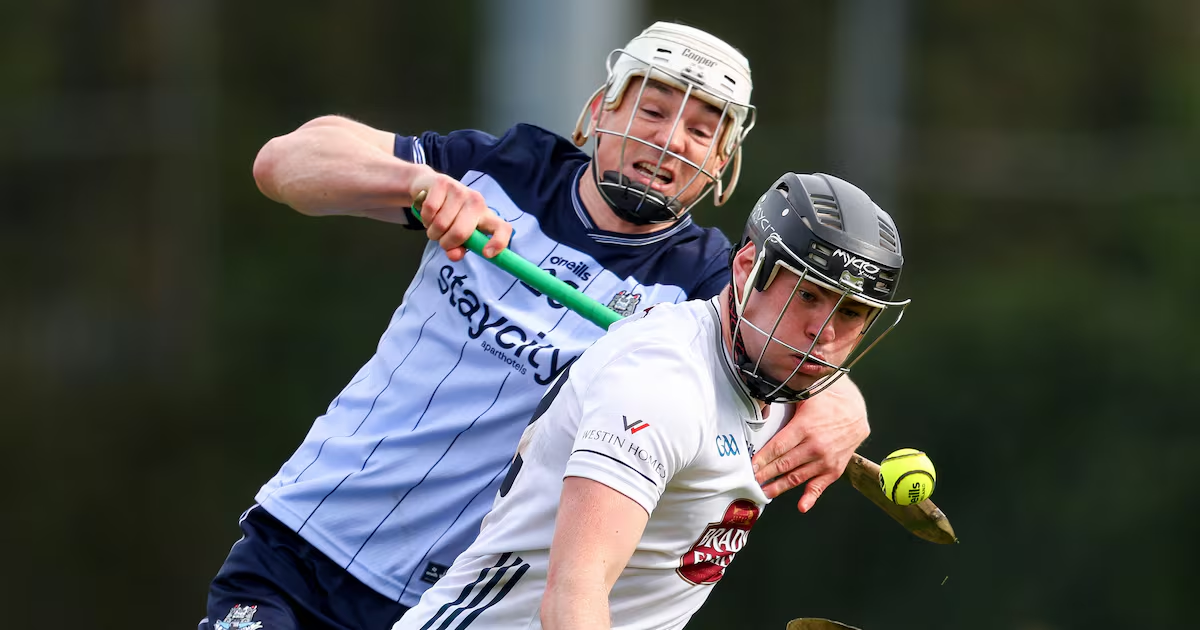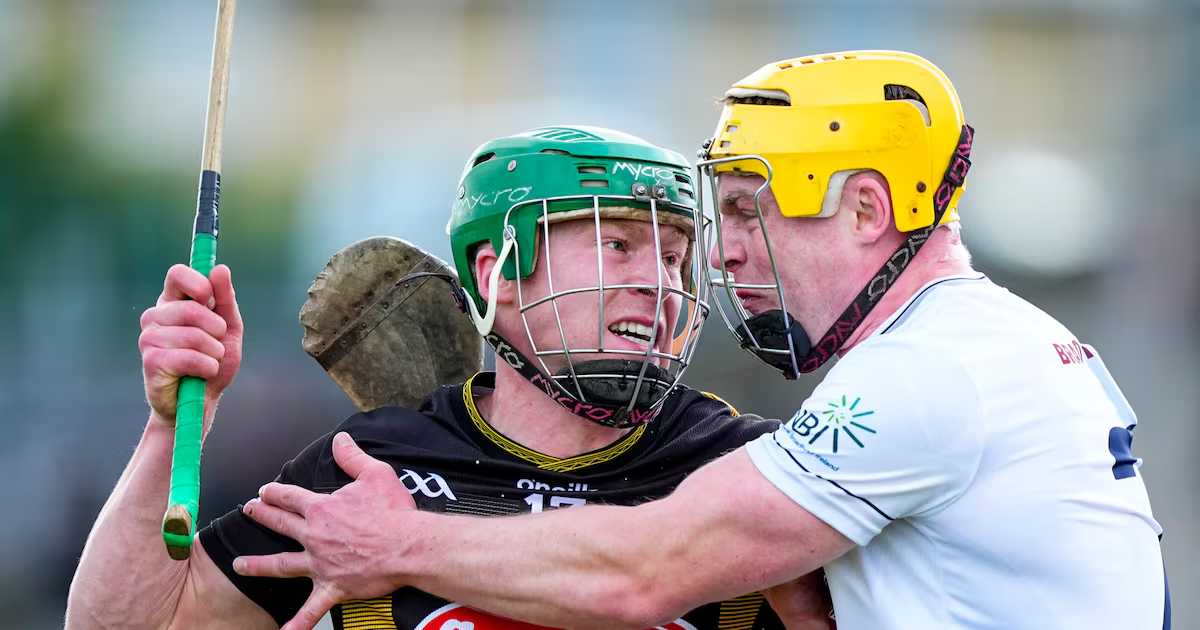
Michael Fennelly watched the replay of the 2014 All-Ireland final a while back. Not in a fit of nostalgia but because he had been asked about something that he couldn’t remember. The drawn game had been a heady cabaret of singing and dancing, but the replay was a more reserved affair.Brian Cody had frowned upon the high jinks, so the overall scoring dropped by 42 per cent. Kilkenny won the replay under the strict conditions they routinely imposed on all-comers. Everybody understood.“Jesus, I was mortified looking at us hitting the ball away,” says Fennelly. “We wouldn’t even look where we were hitting it, just drive it down the field. Tipp tried to hurl it better than us, deliver it better. We still beat them, but our hurling was raw, it was as raw as anything.”It didn’t matter. For most of the Cody years, Kilkenny won as they pleased. Agents of change entered the game in that time, but Kilkenny were propelled by age-old certainties. They saw the game as art and labour; not science. As long as they were winning, they could think what they liked. It is 11 years now since Kilkenny’s last All-Ireland, the longest hiatus between titles in their glorious history, and that has forced them into hard reflection. Bit by bit, everything they believed about themselves came under scrutiny until it turned into a matter of identity. It was a straight conflict between the two elements that defined them: winning and playing the way they have always played. Those elements were no longer in harmony.“Instead of having our own identity now we’re chasing the pack,” says Adrian Ronan, the former Kilkenny player, who has been involved with county development squads for many years. “They used to chase us, now we’re chasing them – their style, their identity. That’s a bit of a change for Kilkenny.”Adrian Ronan on Kilkenny hurling: 'We are trying to change, but we’re reluctant to change.' Photograph: Ryan Byrne/Inpho The Kildare match last weekend was a thumbnail sketch of their dilemma. In the first half, Kilkenny’s build-up was practised and slow and by half-time Kildare trailed by just a point. Nicky Brennan, who has served Kilkenny in every role from player to manager to county chair, covered the game for local radio.“We did a lot of lateral passing in the first half, getting nowhere,” Brennan says. “The [Kilkenny] crowd got animated because they just want to see deliveries going in. At the moment, I think we’re in two minds [about how to play]. We just need to go back to making it a simpler game.”Kilkenny had a man sent off just before half-time and in the second half they were more direct. Kildare couldn’t cope. What Kilkenny did in the first half was counter to their culture, but it conformed to the trends of the modern game. What Kilkenny did in the second half honoured the local vision of how the game should be played, but, against the elite teams, that is a blunt instrument now. For most of the Cody years Kilkenny didn’t compromise on any of that stuff, but that is where they find themselves now: trapped between the harassed certainties of the past and the insistent metrics of the new order.Ronan is involved this year with the Kilkenny under-16s and last weekend they played Cork in a challenge match. In the second half Cork played a sweeper and they could tell that the Kilkenny players were discommoded.“In the club scene in Kilkenny the only sweeper you’ll see is the lad cleaning the dressingroom,” says Ronan. “You will not see a sweeper in Kilkenny club hurling. We play man on man. Playing the ball through the lines and through the hands, we consider that to be basketball or rugby and we’re not good at basketball or rugby. We play hurling and that’s all we play.Kilkenny's TJ Reid aiming to demonstrate a piece of timeless hurling skill against Kildare earlier this month. Photograph: James Lawlor/Inpho “Not that we’re arrogant, or that it’s our way or no way. That’s just our way and we’re set in our ways. We are trying to change, but we’re reluctant to change. When you were successful doing it the other way, why would you change? We’re trying to bring in more modern approaches – we are. But we’re doing it against our will.”When the winning was reduced to Leinster titles, everything was questioned. What had happened to their player pathways? Kilkenny haven’t won a minor All-Ireland since 2014 and in the last 17 they have won just one under-21/20 title. This week their minors lost a brilliant Leinster final but their under-20s were outclassed by Galway – despite Galway not starting either of their best players. Around the turn of the century, Kilkenny were seen as pioneers in this space. “A lot of other counties came to have a look at our template,” says Ronan. “Kilkenny people gave seminars on the Kilkenny squad system. What did other counties do? They tore it to shreds and rebuilt it themselves.”Mossy Keoghan of Kilkenny competing with Kildare's Rian Boran earlier this month. Photograph: James Lawlor/Inpho Michael Dempsey was part of Cody’s management team for 15 years and in 2021 he led a review commissioned by the county board. “It wasn’t that there was an air of despondency or gloom in the county,” Dempsey said three years ago, “but a lot of people in the county definitely felt things could be done better.”In player development, they had fallen miles behind. One of the action points from Dempsey’s review was the creation of a job of performance lead. It is a full-time role now, but it was part-time when Fennelly was the first incumbent. Immediately, he chased reform.“St Kieran’s were always competitive and winning [colleges] All-Irelands, but St Kieran’s is probably close to an intercounty team in many ways,” says Fennelly. “So that camouflaged our slowness to hire more people on the coaching side of it, and our slowness to build facilities. The dominant attitude was: ‘We’ll be grand.’“The academies were revitalised. More resources were added, and more are probably needed. I would have done a survey with current players, former players, current management, former management about what are the values we need to uphold to be a Kilkenny hurler, what are the standards we expect from each other. I pulled all that together and basically created a blueprint to build off [in the squads]. What you’re doing is trying to build a culture again.”Michael Fennelly has played an influential role in trying to develop Kilkenny's hurling culture. Photograph: Lorraine O'Sullivan/Inpho At the height of the Cody empire, nobody sweated about this stuff. Winning took care of a lot of things. But every empire ends. What then?In terms of facilities or funding or coaching structures, there was no traceable legacy from those years. “We are bereft of facilities,” says Brennan. A few years ago, the county board developed two pitches on the site of an abandoned council dump but, according to Ronan, “they are not fit for purpose”. At the beginning of this year a variety of Kilkenny teams were forced to train on the SETU campuses in Carlow and Waterford. The county board has no centre of excellence or even an AstroTurf pitch.“Where we feel asleep for the last 15 years was from a funding perspective,” says Ronan. “We can’t skirt around the issue of facilities – it’s in your face. We have to travel to Carlow and Waterford during the winter to train our young lads [in the squads].“I think everyone in Kilkenny realises that the underage needs better structures and better facilities. You can’t compete with the Limericks and these guys with one hand tied behind your back, and that’s what we’ve been doing. Limerick had the structures and, there’s no secret behind it, they also had the funding.”Cian Kenny scoring a goal for Kilkenny against Wexford in April. Photograph: Morgan Treacy/Inpho That issue is being addressed now. For the last three years, a group of former players and others took on a golf classic that used to generate about €25,000 in annual income. This year’s event took place on Thursday and Friday in Kilkenny Golf Club and it raised roughly €120,000, the biggest golf classic ever staged in the county. That money has been ring-fenced for the academies.A centre of excellence is at the conception phase with plans for as many as eight pitches. A group of local businessmen, led by former European commissioner Phil Hogan, has been tasked with raising between €10 and €15 million and an announcement on its progress is expected soon. For far too long this had been left undone.In the meantime, Kilkenny are fighting for their lives in the championship. Limerick and Kilkenny are the only teams who have qualified from their provinces in every year of the round-robin system, but if Kilkenny lose in Parnell Park on Sunday and Offaly beat Kildare they will be eliminated. For generations, Dublin versus Kilkenny has been an easy game to predict. Not this time.[ Fortress Parnell Park? Dublin’s record against Kilkenny says otherwiseOpens in new window ]“There is a level of frustration in Kilkenny,” says Brennan. “The supporters are edgy but there’s a certain air of resignation that we’re not good enough at the moment [to win an All-Ireland]. The crowds are way back on what they would have been in the past. I suppose, over the years, Kilkenny people have been spoiled.”Along the way, something of their essence was mislaid. The search is ongoing.
Kilkenny find themselves fighting for their lives, and their identity
Doubts about once-dominant Kilkenny make Sunday’s showdown with Dublin much harder to predict than such clashes used to be
1,590 words~7 min read