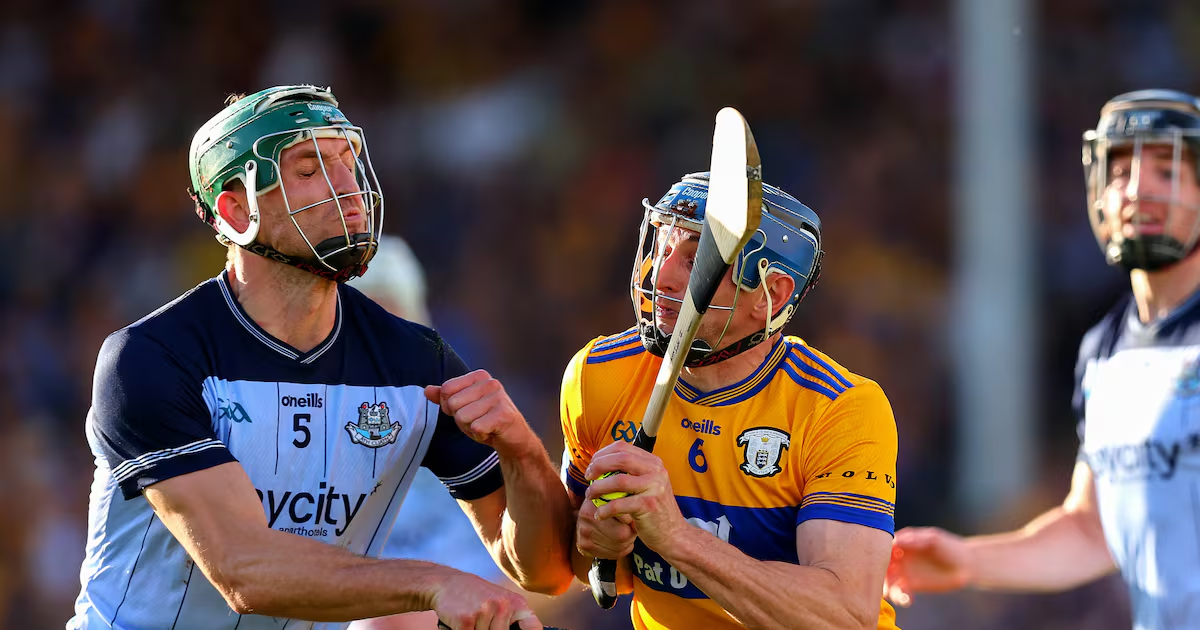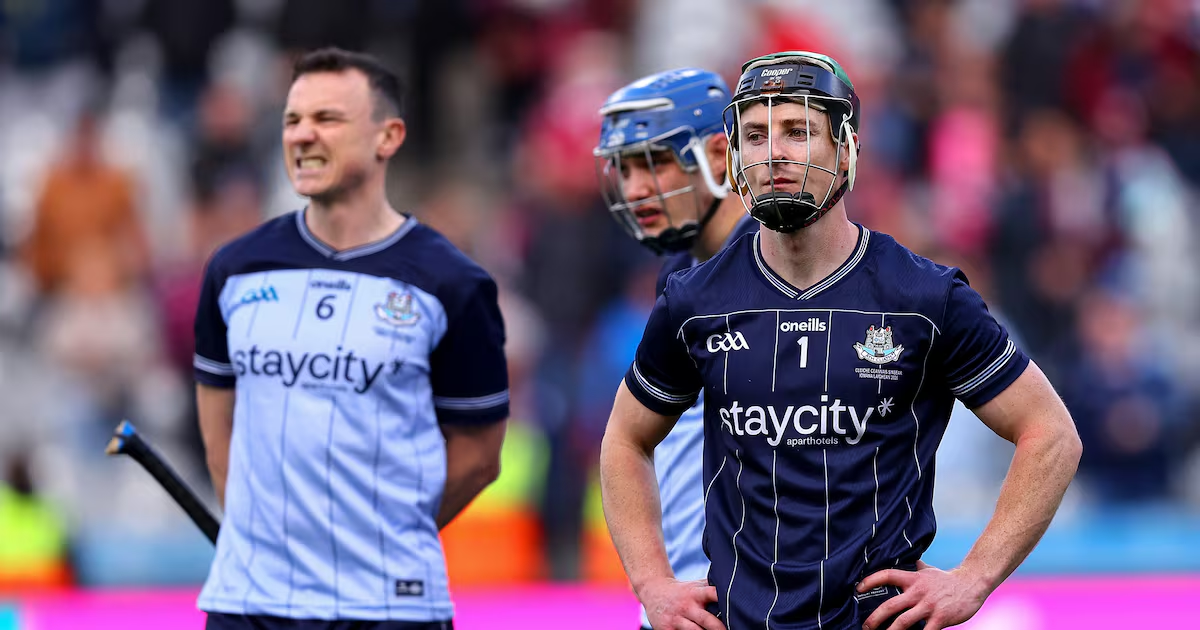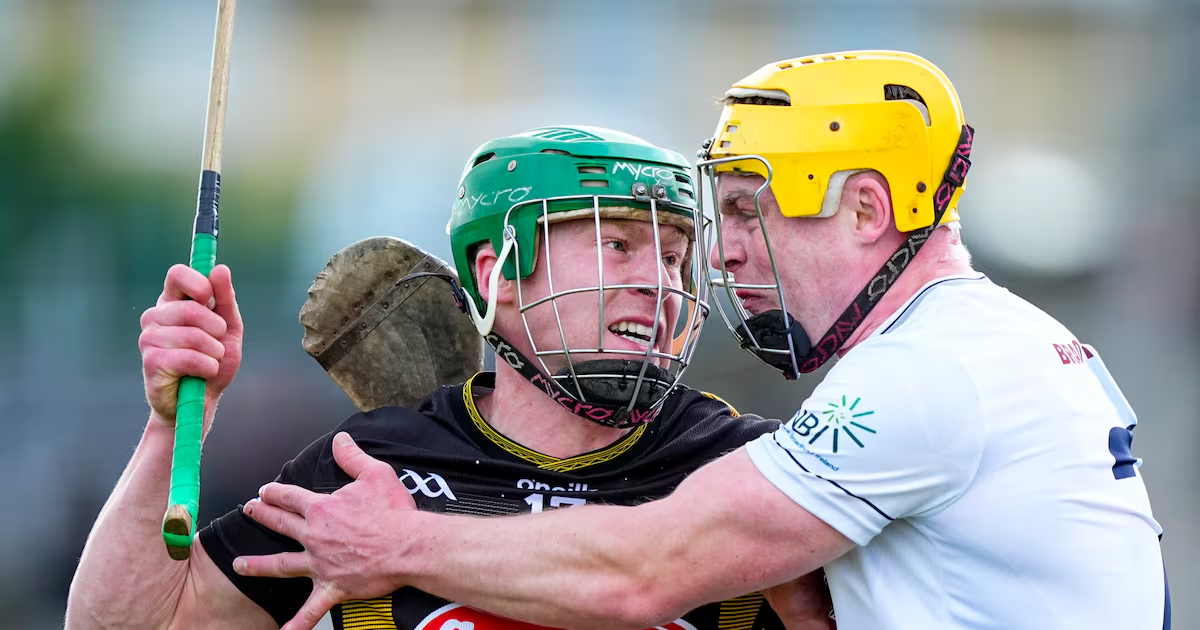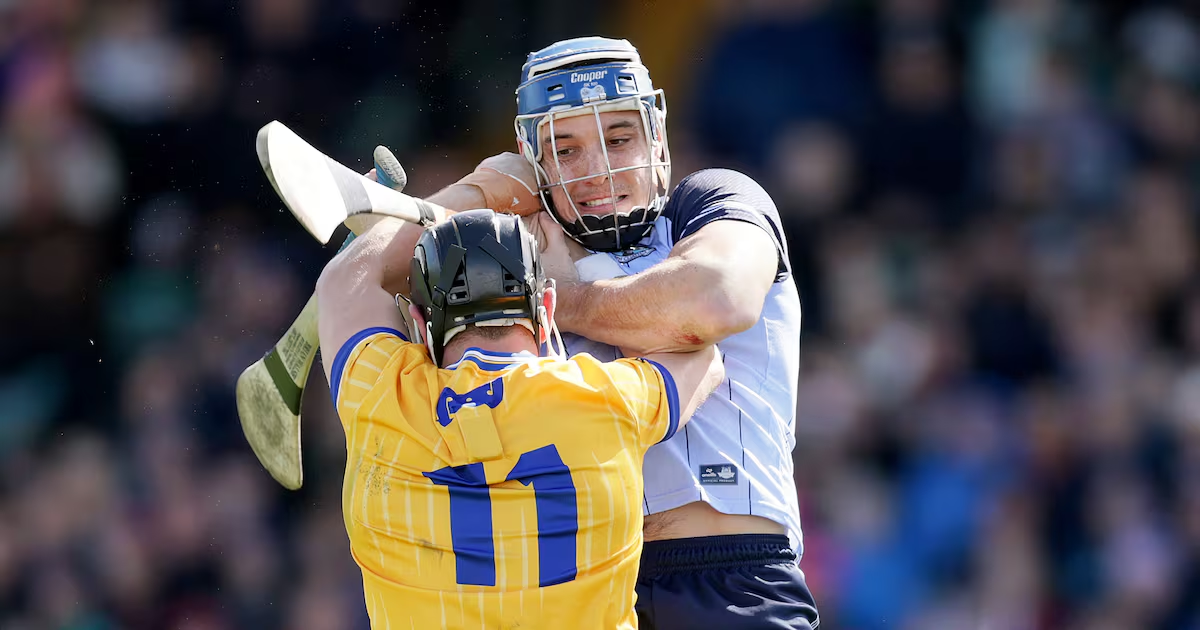
The question before their crucial match against Kilkenny four weeks ago was whether Dublin could be trusted to back up a good result with another. Having beaten Galway in Salthill, they delivered, and knocked Kilkenny out of the championship.Maybe there was an overreaction to this in the rush of enthusiasm for them before the Leinster final. Kilkenny were coming off a very poor season and although I’ve always felt that Dublin are better off in Croke Park, on that occasion, Parnell Park suited them very well.It increased the number of rucks because of the restricted space and although that used to be Kilkenny’s special power, by this stage, Dublin were well able to outmuscle them and create a dominant platform.The win in Salthill was smash and grab, although they deserved credit for hanging in and taking their chances, but it was an outlier. Galway shot 17 wides to three. That was unlikely to happen again in the final and it didn’t.Just as the Dublin train looked to have left the station, it shuddered to a halt.When Galway were able to get the space in Croke Park, they really exposed their opponents on the night. In fairness to Dublin, they suffered significant injuries on the night as well. Brendan Kenny, who had been lively and scored a couple of points, was gone by half-time and key defenders Chris Crummey and Liam Rushe were replaced before the final quarter.Saturday’s All-Ireland quarter-final against Clare is an echo of the Division 1B final in April. That day in Limerick, in the first half, Clare looked like they were going to destroy Dublin. Shane O’Donnell did enormous damage leading the line but went off at half-time.Mark Rodgers took over and then he had to go off. Dublin’s response was impressive and they reeled in Clare and had a goal chance at the death to push the match towards extra time but Éibhear Quilligan saved. There was also only a couple of points in the earlier league match.Clare's Shane O’Donnell after scoring a goal against Dublin in the Division 1B final. Photograph: Tom O’Hanlon/Inpho Clare have had a couple of bad beatings, from Limerick and then in Cork but having already qualified for the All-Ireland stages, they didn’t look that busy in Páirc Uí Chaoimh. Or that the remote chance of a place in the Munster final was really on their agenda.They have their credentials, a noticeably committed win over Tipperary when they were very good and they also beat Waterford as convincingly as anyone, but there are also problems, with question marks over the fitness of Rodgers and Ryan Taylor, and the form of Tony Kelly and Shane O’Donnell – all of whom are important performers,It is easy to identify Dublin’s room for improvement: injuries clearing, Dónal Burke being closer to this season’s form than he was in the Leinster final, more attacking variety and not just lumping route one ball down on John Hetherton and getting Brian Hayes into space more successfully than Galway allowed in Croke Park.Even if Niall Ó Ceallacháin manages to engineer that upside, it’s an uphill battle. Clare have played Leinster opposition four times in All-Ireland quarter-finals in the past eight years and won them all.Dublin could point out that the last time a Munster team lost a quarter-final was when they shocked Limerick last year but I think Clare will be too strong.After this weekend, there will be just three days of hurling and four counties left in the 2026 championship at the same time as football is hitting top gear.Clare's Conor Cleary and John Hetherton of Dublin in the Division 1B final. Photograph: Laszlo Geczo/Inpho Hurling is a game being played at the wrong time of the year. I wish someone in Croke Park would look at the idea of pushing the provincial finals back a week or two.Maybe bring the All-Ireland final to after the football. It wouldn’t need to be a radical alteration – just a way of playing as many matches as possible in the best possible conditions.In the past 10 years, Leinster teams have beaten Munster in just five of the 20 All-Ireland quarter-finals. The difference between the Leinster teams this year is that for Dublin this is season-defining whereas for Offaly, it’s not.By getting out of Leinster and playing in a quarter-final as well as staying in Division 1A of the league, Offaly have already had a successful year. They haven’t reached an All-Ireland quarter-final in 23 years and in the meantime dropped as low as Tier 3 in the championship.They’re a proud county, who have worked hard to rebuild their fortunes but they’re not going to Thurles for a pat on the head. They have been very competitive in the championship with just one defeat, and that on a scoreline that thoroughly flattered Galway.Offaly's Killian Sampson and Jack O’Connor of Wexford, in last month's Round 4 championship clash in Tullamore. Photograph: Tom O’Hanlon/Inpho Three years ago, they faced Cork in an under-20 All-Ireland final. In their last championship match they fielded seven of that team with a couple unavailable because of injury.Because Cork have had an established presence, they have been able to introduce their former under-20s at a more gradual rate but Eoin Downey, Diarmuid Healy and William Buckley all started the recent Munster final.Offaly are such accomplished hurlers, and their use of the ball is excellent. They have good players all around the field. Adam Screeney has a growing reputation and Killian Sampson, at centre back, is a right good player.Their problem is that, although they’ll be suited by Thurles, and I expect that their phenomenal under-age support is now starting to gather around the seniors, they haven’t the physical maturity or experience of Cork, and that makes survival this weekend difficult.
Nicky English: Dublin face an uphill battle against Clare
Clare have played Leinster opposition four times in All-Ireland quarter-finals in the past eight years and won them all
962 words~4 min read