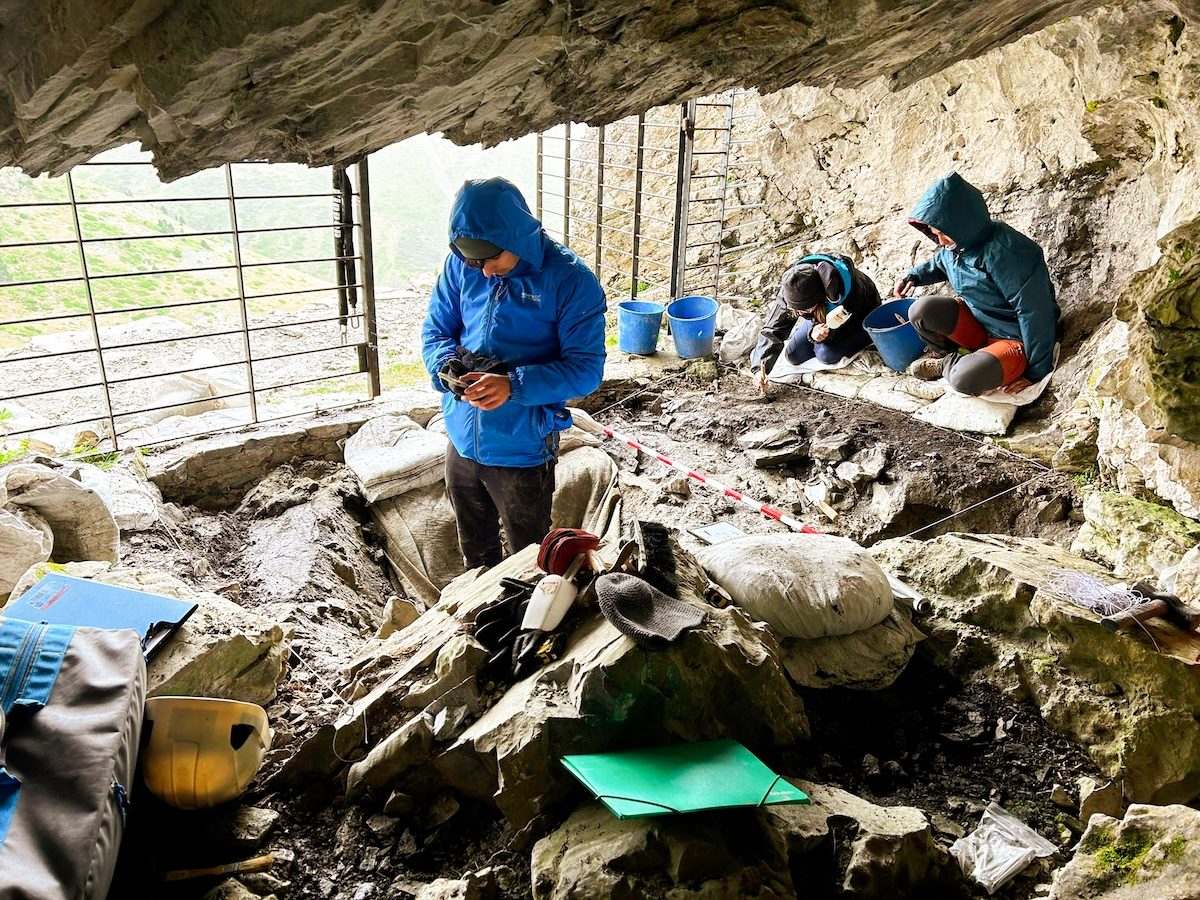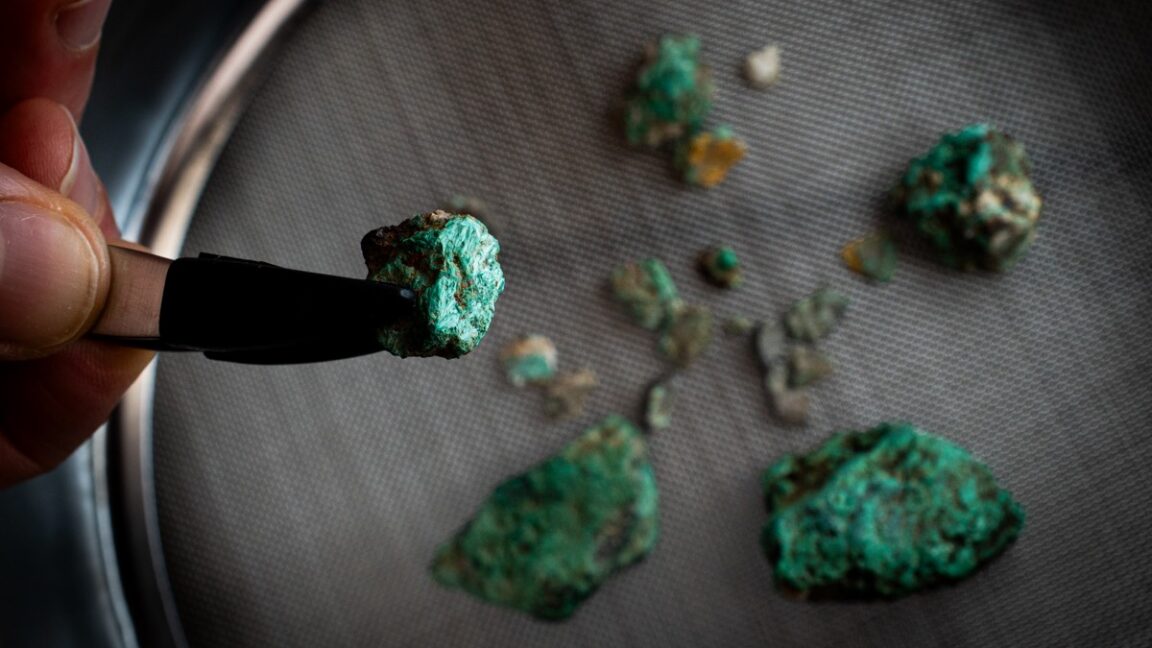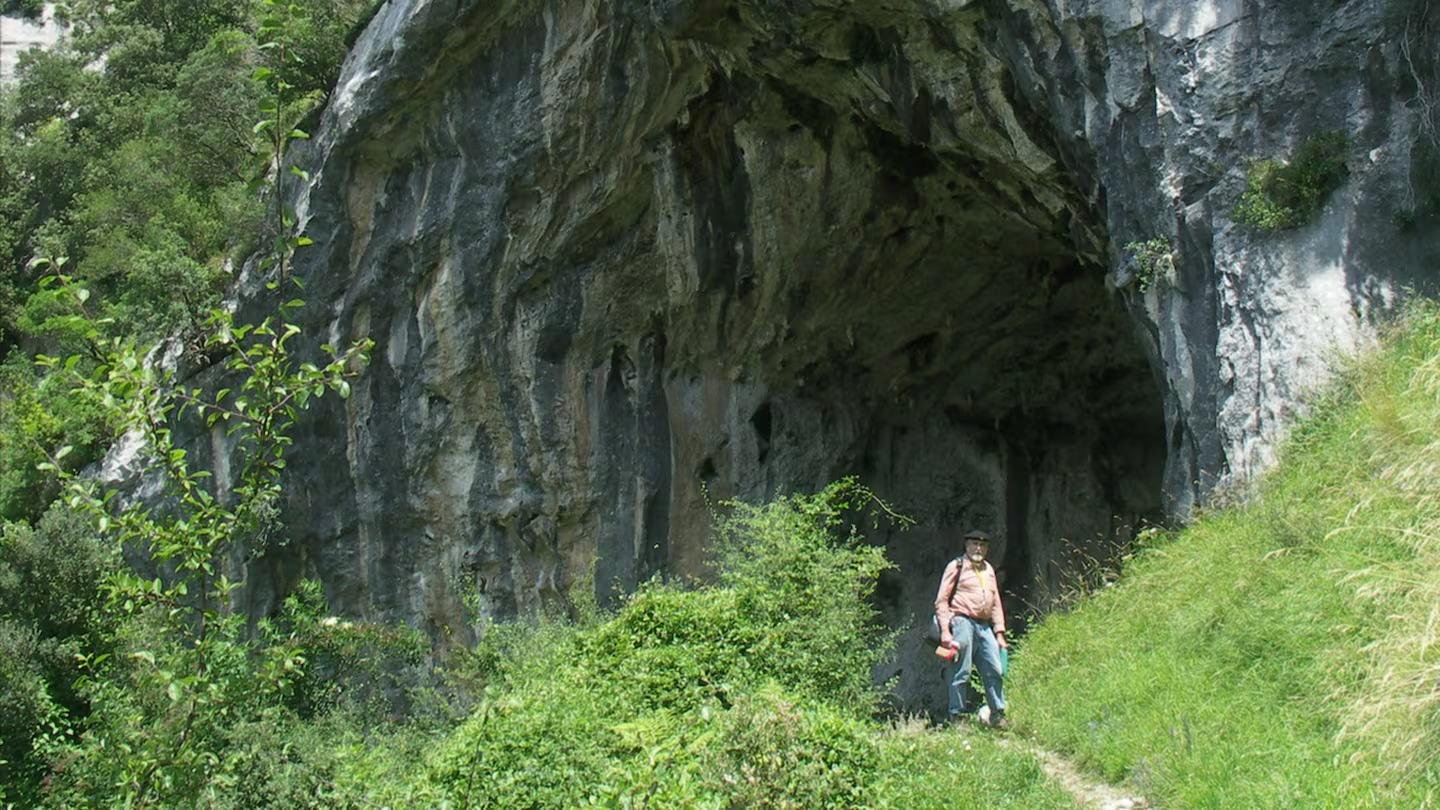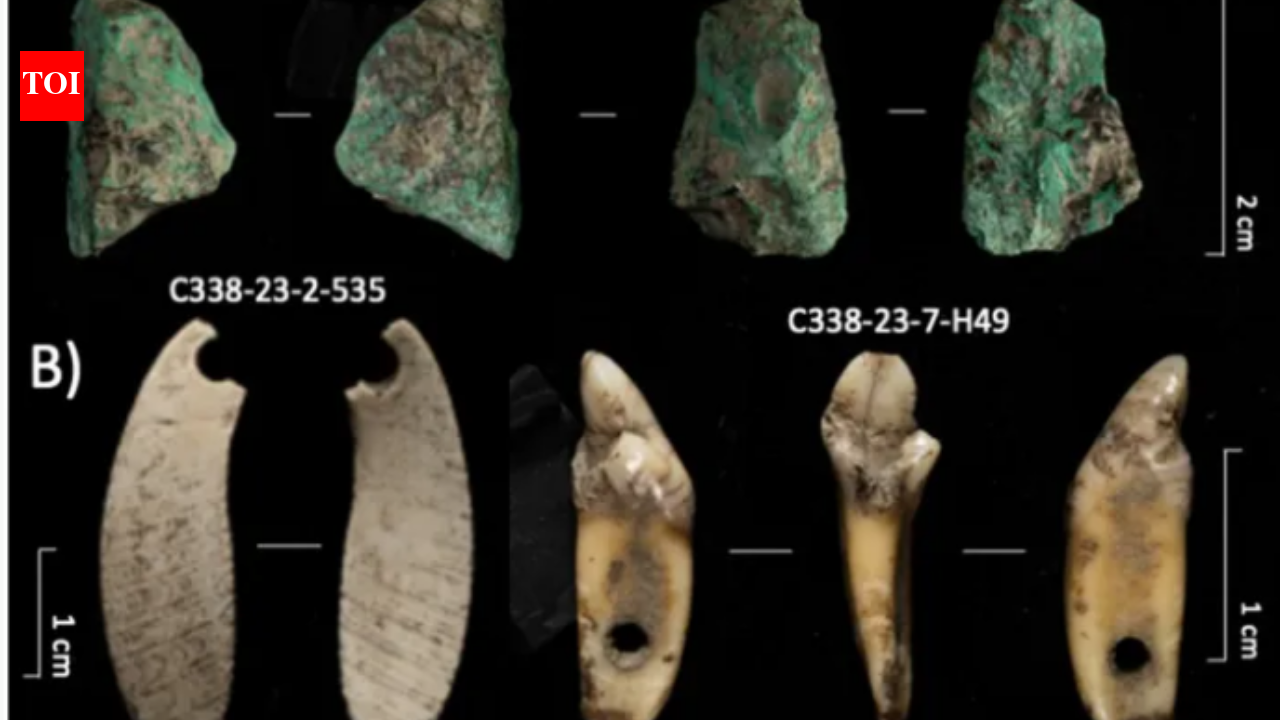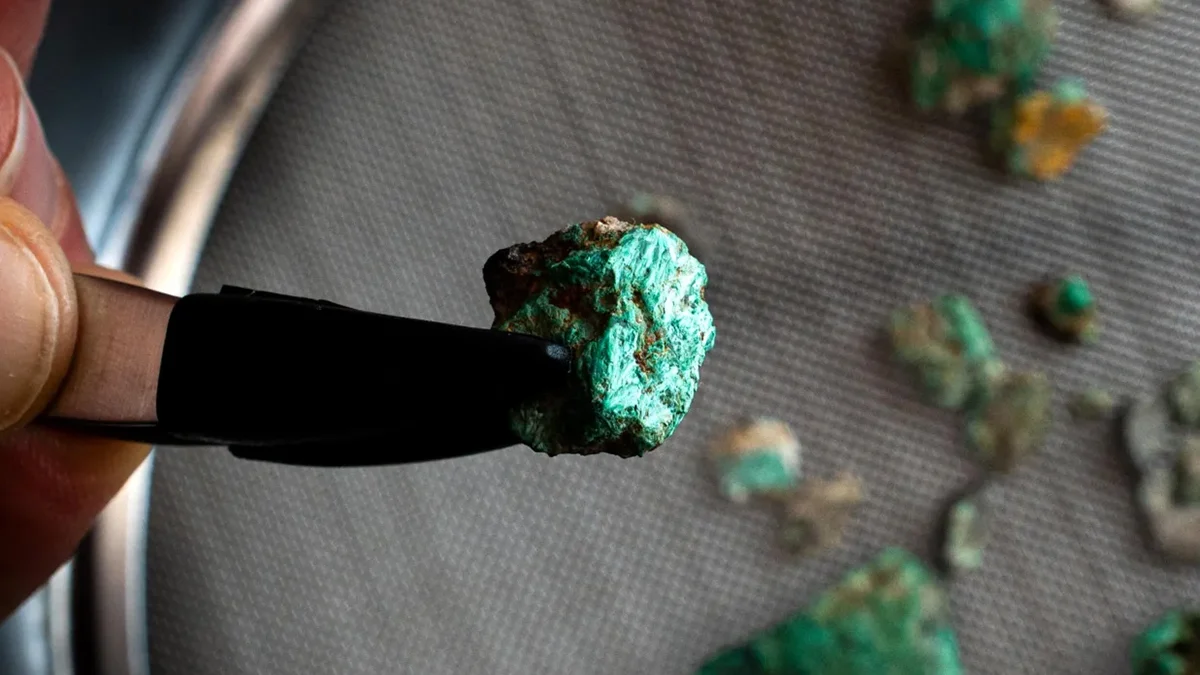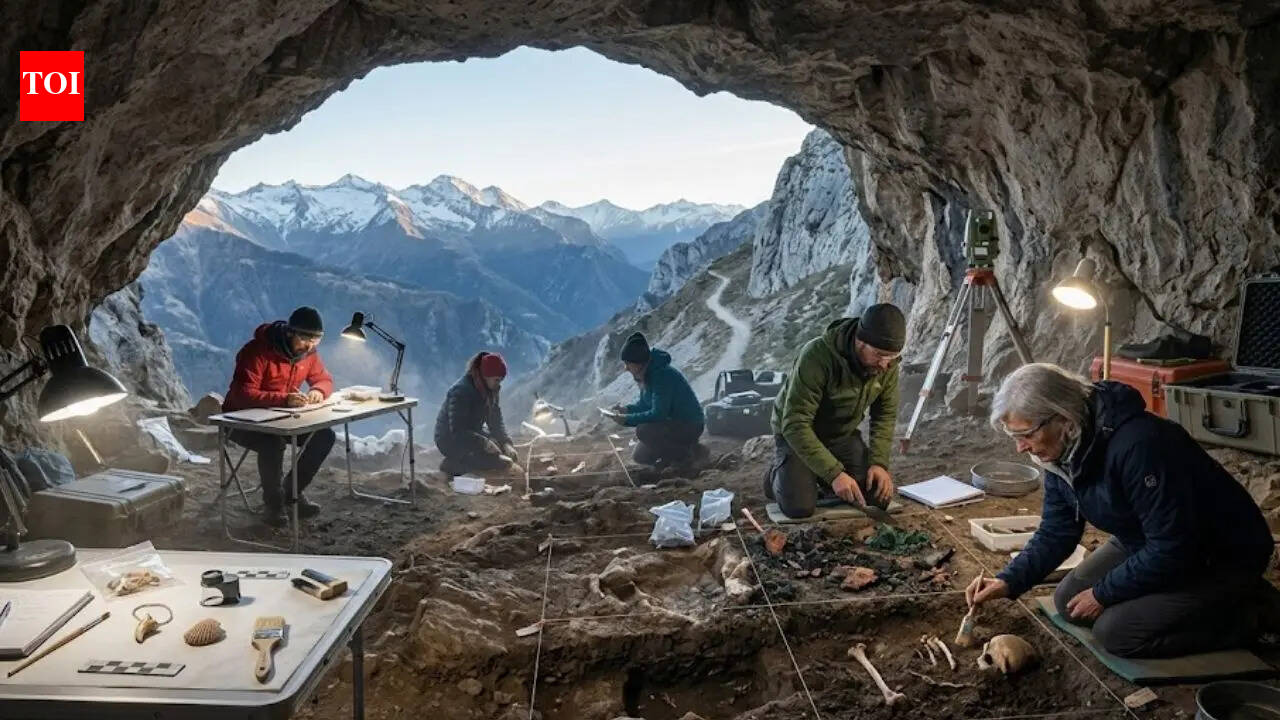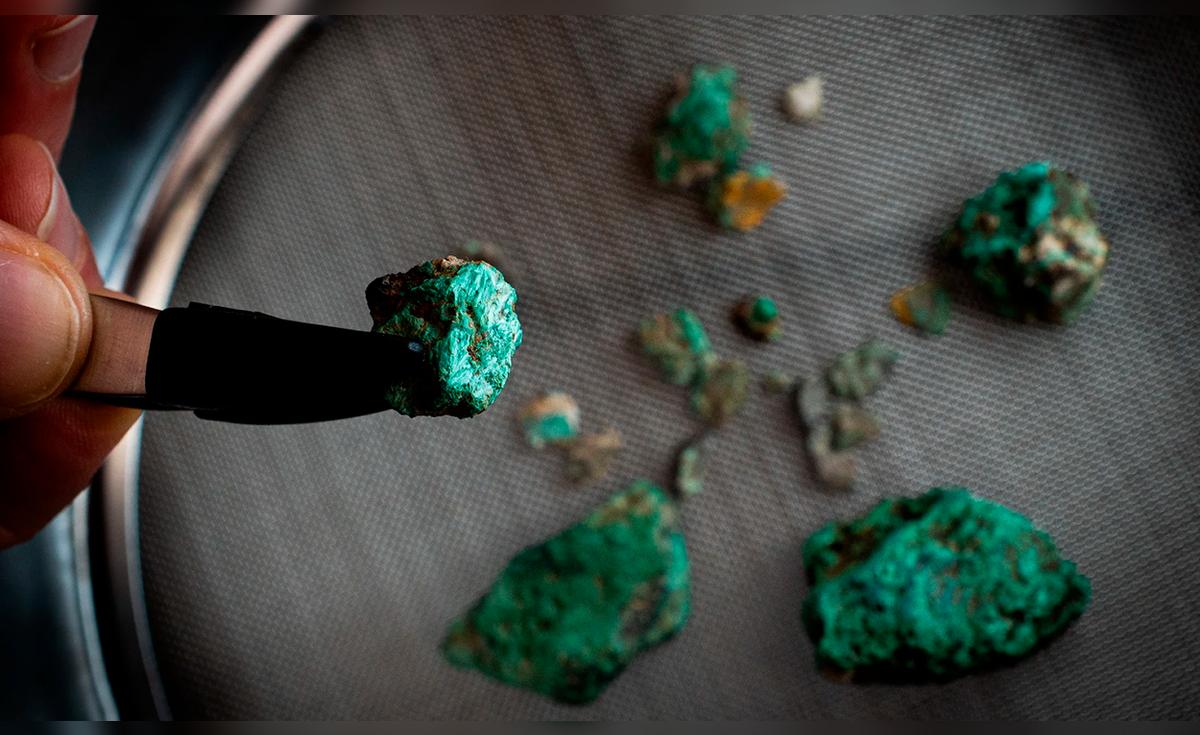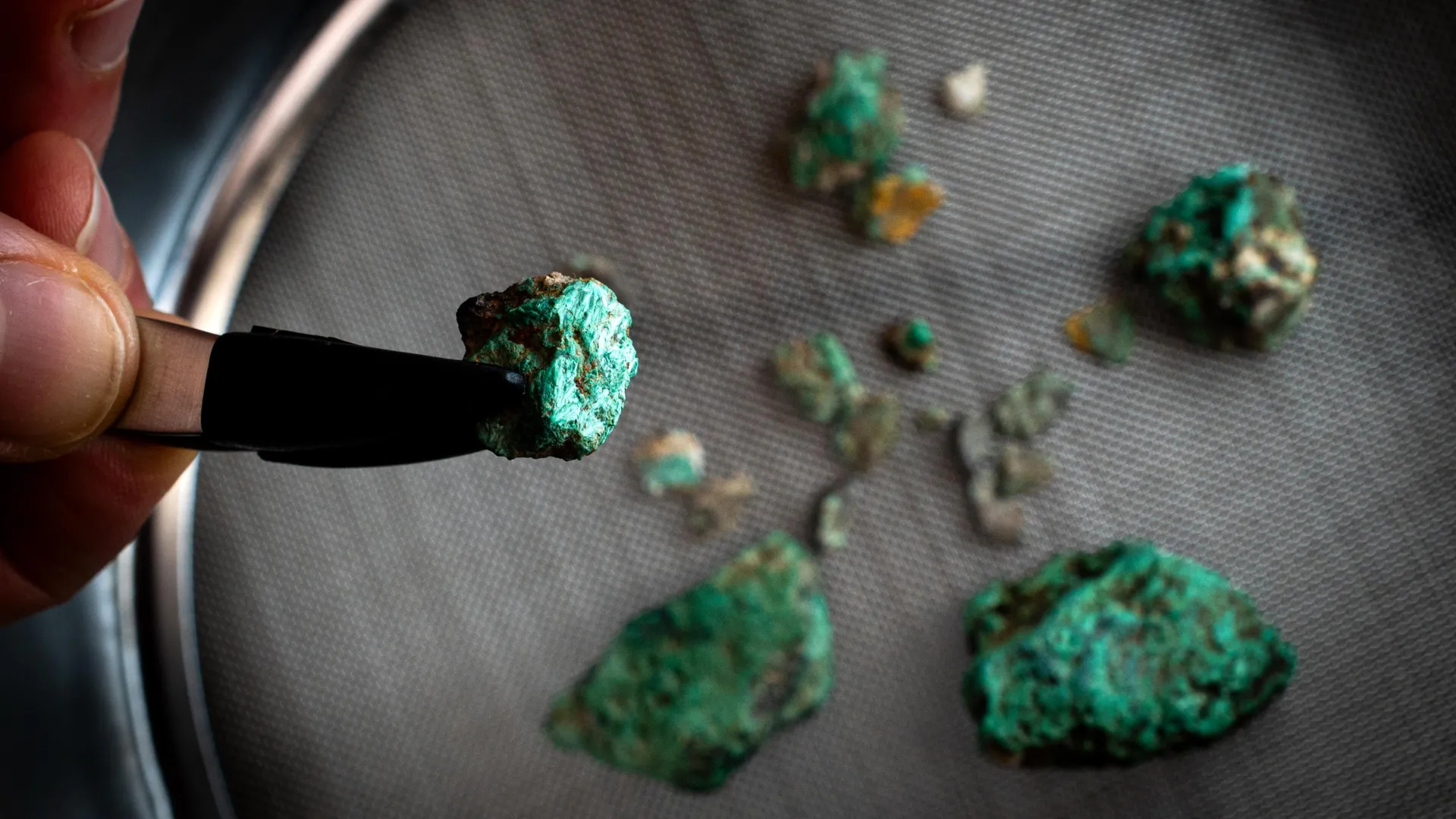
High in the eastern Pyrenees, archaeologists have uncovered evidence that could transform our understanding of how prehistoric people used mountain landscapes. A cave perched more than 7,300 feet (2,235 meters) above sea level contains dozens of ancient hearths filled with fragments of green mineral that may point to early copper mining activities.
The discoveries suggest that people repeatedly traveled to this remote location over a span of roughly 2,000 years. The findings challenge the long-standing belief that prehistoric communities only passed briefly through high-altitude environments. Researchers have also recovered a child's finger bone and baby tooth, raising the possibility that the cave may have served as a burial site.
"For a long time, high-mountain environments were seen as marginal, places prehistoric communities passed through occasionally," said Prof Carlos Tornero of the Catalan Institute of Human Paleoecology and Social Evolution, lead author of the article in Frontiers in Environmental Archaeology. "But we found a really rich archaeological sequence, including multiple combustion structures and a very large number of green mineral fragments. We can't say exactly how long people stayed each time, but the repeated use of the space and the density of remains suggest occupations that were short to medium in duration, but happening again and again over long periods of time."