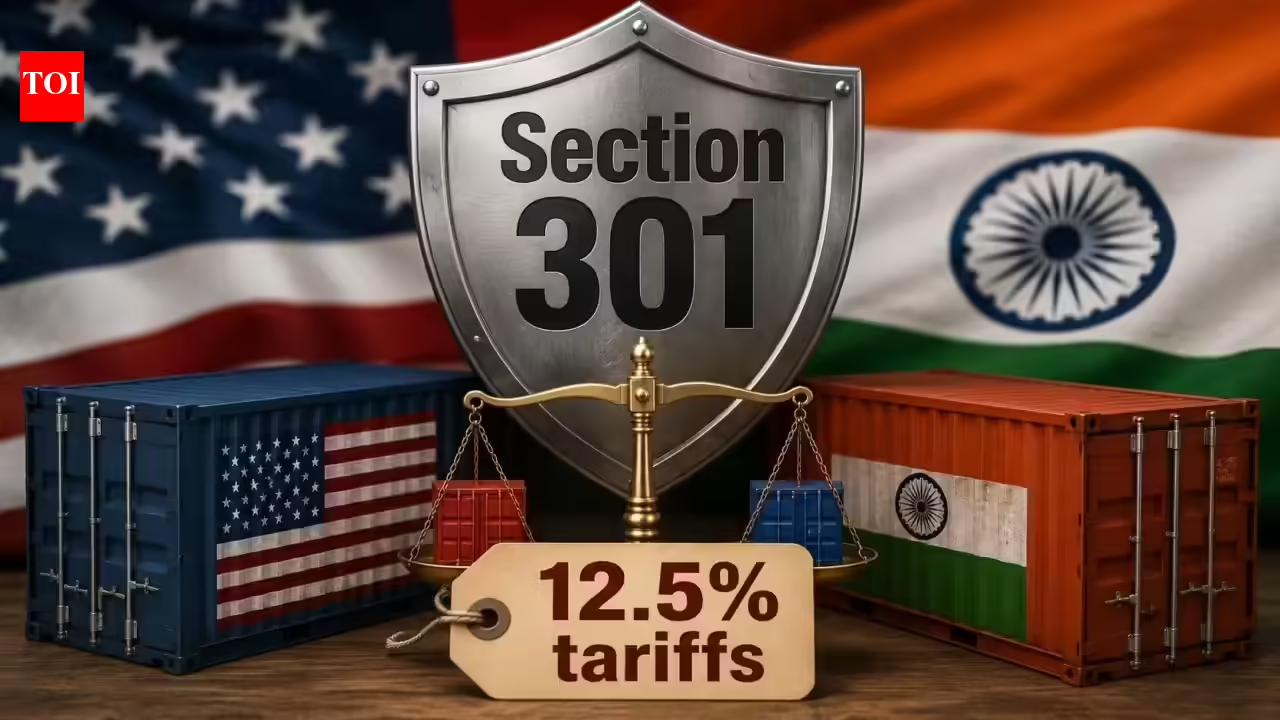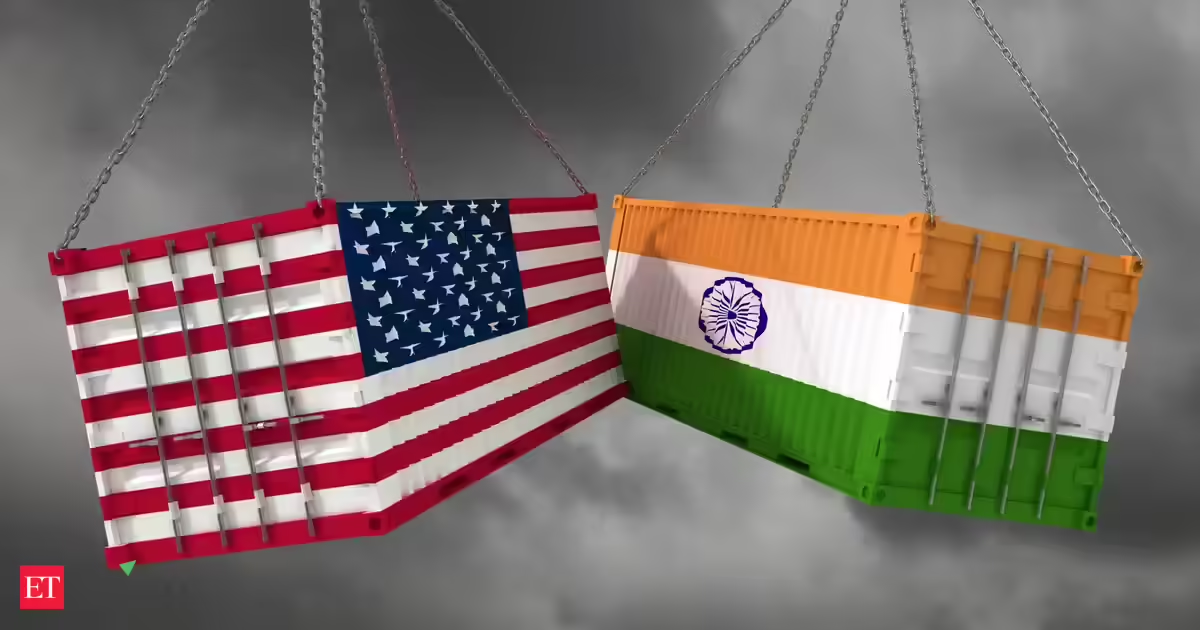
India needs to challenge the legal basis of a proposed US tariff action that seeks to impose an additional 12.5% duty on imports from the country under a Section 301 investigation, trade policy think tank Global Trade Research Initiative (GTRI) said on June 3.The recommendation comes after the Office of the United States Trade Representative (USTR) proposed fresh duties on imports from 54 economies following a probe into the enforcement of restrictions on goods linked to forced labour.GTRI said that the investigation stretches the intended scope of Section 301, a trade enforcement mechanism traditionally used to address barriers affecting market access for American businesses in foreign jurisdictions, PTI reported.The current action is focused instead on whether countries regulate imports originating from third nations where forced labour concerns may exist, the think tank observed.Also read | Iran war puts Malhotra & Co in razor-edge policy bindThe proposed tariff rate of 12.5% for India and several other economies is also higher than the tariff ceiling committed by the US under multilateral trade rules, the think tank said.According to GTRI founder Ajay Srivastava, India should maintain that Washington is attempting to extend its domestic import-control framework beyond its borders through unilateral trade measures.He said such an approach falls outside the mandate of Section 301 and raises broader concerns regarding the use of trade policy to influence regulatory practices in other countries.The think tank further noted that concerns surrounding forced labour are often confined to specific products or sectors rather than entire economies. It argued that imposing country-wide tariffs may not be an appropriate response when targeted measures could address the underlying issue more effectively.Also read | CBDT tells tax officers to tighten scrutiny of unexplained income, assetsGTRI also viewed the proposed action in the context of ongoing trade negotiations between India and the United States, suggesting that the move could increase pressure on New Delhi as both countries work toward a bilateral trade agreement. It cautioned that India may face additional investigations under Section 301 in areas such as industrial overcapacity.The USTR initiated two separate Section 301 investigations in March this year covering 60 economies. One inquiry examined issues related to forced labour, while the second focused on concerns over excess manufacturing capacity.Following the conclusion of the forced labour investigation, the US has proposed additional duties on imports from 54 economies. Under the plan, imports from countries including Canada, Ecuador, Mexico, Indonesia, Pakistan and the European Union would face a 10% tariff. A higher duty of 12.5% has been proposed for 48 economies, including India and China.The proposal has not yet been finalised and is currently open for public consultation. Stakeholders have until June 22 to request participation in hearings and submit testimony summaries, while written submissions can be filed until July 6. Public hearings are scheduled for July 7.A final determination is expected in the coming weeks and could be announced before the expiry of the temporary Section 122 tariff measures on July 24. If approved, the additional duties may come into force shortly thereafter.The investigation does not allege the use of forced labour in India's export production. Instead, it examines whether India has adequate restrictions on imports sourced from third countries where forced labour concerns may arise.Inputs from PTI
New tariff: Think tank GTRI makes a case against US' additional 12.5% duty on India
As India faces a proposed 12.5% US tariff on its imports, trade think tank GTRI has advised the govt to challenge the levy on legal grounds. The investigation stretches the intended scope of Section 301, the think tank says.
538 words~2 min read