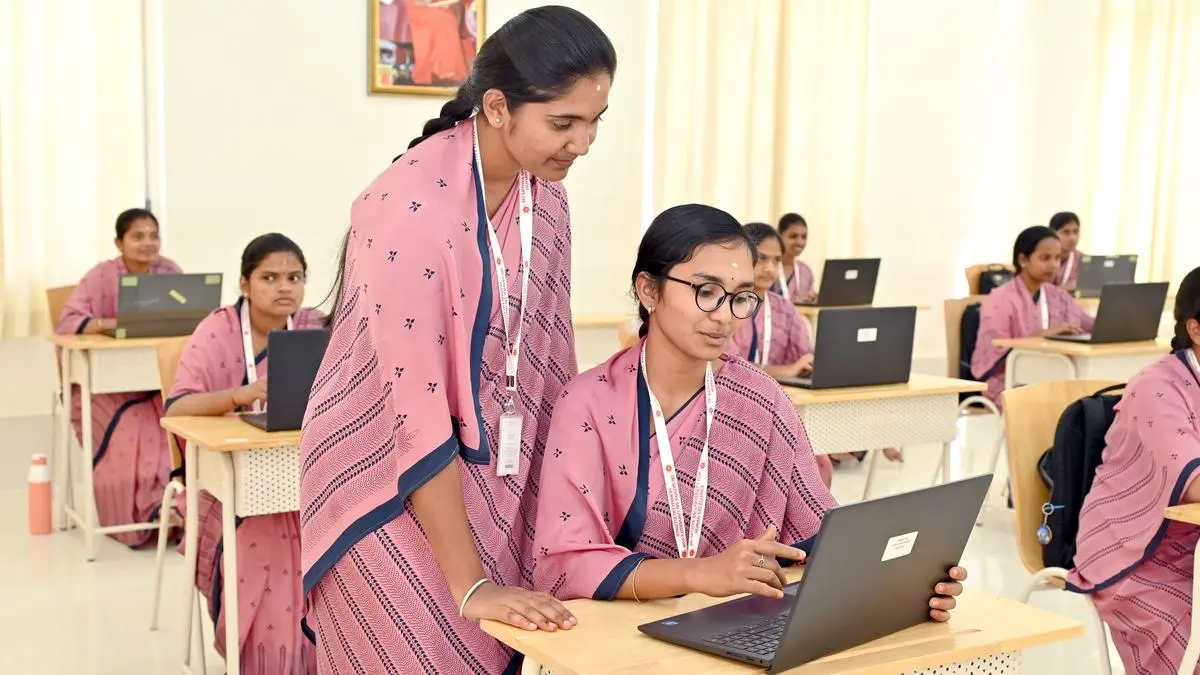
When Maria (name changed) from Tirupati nearly gave up her dream of higher education in 2023, it was not because she lacked ambition. It was simply because she lacked the means. She had just joined the Indian School of Development Management (ISDM), to attend a 11-month programme in development management. She lost her father that same year, and her mother became the sole earning member of the family. It was an emotionally and financially overwhelming period. The Fatima Sheikh Financial Assistance Programme (FSFAP) and additional scholarship support helped her take the step to join ISDM at a time when she was still apprehensive about committing to the programme. Through this structure, Maria completed her education and now works as a programme associate in Telangana, improving learning outcomes for children. With average starting incomes of around ₹6.5 to 6.7 lakh per year, most ISDM graduates comfortably repay about 10% of their annual income.Philanthropy (Shutterstock)Scholarships are not new. They provide a level playing field and a launching pad for deserving students who lack opportunity. What is different in Maria’s case is that her scholarship amount also came from former scholarship recipients who made grants back to their alma mater. The recipients in this programme were funded by A. T. E. Chandra Foundation via ISDM, with a structure that allowed them to give back through deferred, interest-free payments so that future students could also be supported. Repayment rates have touched nearly 99% in the earliest batch. Each repayment is not a transaction but a gesture of gratitude that directly supports another student’s education.The FSFAP has supported 50 students over five years and has eased tuition burdens worth nearly ₹1 crore. Across ISDM, the deferred-fee model has benefited close to 300 students. Alumni contributions under the Fatima Sheikh Financial Assistance Programme have already generated an additional ₹50 lakh in scholarships, allowing more students like Maria to pursue higher education with dignity and without financial distress.Donor-funded fee deferment programmes are different from traditional scholarships. They act as giving multipliers in which scholars treat the support as interest-free loans or deferred payments and then repay or pay it forward once they are able. In doing so, original recipients also come forward as supporters of the institution, helping sustain access to higher education for future batches.The model does not treat scholars as passive beneficiaries, but as future partners in institution building. Equally importantly it helps build a culture were giving is more inclusive and not just the preserve of the rich. Another exemplar of this model is The Foundation for Excellence (FFE), which has taken this ethos to scale. In FY 2024–25, it awarded scholarships worth over ₹8 crore coming from their large base of alumni. We asked Ram Kolavennu, CEO, FFE about the background of their recipients and he says “Most FFE recipients come from families earning under ₹3 lakh a year — farmers, daily wage earners, small traders. For them, a scholarship is more than financial aid; for these scholars their scholarships are the difference between stagnation and possibility.” A remarkable number of the 4,300+ FFE alumni, many in high paying corporate jobs, now support new scholars. They are a testament to how generosity can evolve into a more equitable and sustainable movement. FFE has also seen this evolve into a pan India movement--seven years ago they saw students coming in from four states leading the giving it forward work. Today students from across 26 states and five Union Territories give back to FFE. Leading US educational institutions are materially funded by Alumni. We are beginning to see this take root in India as well, with contributions to the various Indian Institute of Technology (IITS) in particular. This model offers a practical blueprint for to replicate at scale. Donors, instead of allocating 100% of their philanthropic capital for infrastructure or pure scholarships, should consider contributing to paying it forward programmes which are designed to not put pressure on recipients. Institutions need to invest in alumni relations and communications in a systematic and deliberate manner, to help those can give back complete the loop, when they can do so.Scholars should be encouraged to contribute back to the same fund with a flexible repayment period of around four to six years, and without any interest or legal commitment. Even outside of education and the Indian examples cited above, this concept has helped sustainably transformed lives in other countries and sectors. Kiva’s microloans, Grameen Bank’s collateral-free credit for women, and Heifer International’s Passing on the Gift initiative all work on the same logic: One person’s repayment becomes another’s opportunity. Applying this model to education more vigorously can unlock large amounts of capital in a more sustainable manner.In a country where money can be an obstacle for the dreams of millions who are deserving, concepts like this offer a hopeful alternative. They also remind us that impact in case of scholarships doesn’t simply end with giving — it begins when we build an inclusive society of those enabled with opportunity, and wherein recipients can also become givers and be celebrated alongside the wealthy. (The views expressed are personal)This article is authored by Sharmista Chaudhury, communications head, A.T.E. Chandra Foundation, Mumbai with contributions from Amrtha Kasturi Rangan and Deepa Varadarajan.
Why paying forward could redefine educational philanthropy
Authored by - Sharmista Chaudhury, communications head, A.T.E. Chandra Foundation, Mumbai with contributions from Amrtha Kasturi Rangan and Deepa Varadarajan.
870 words~4 min read