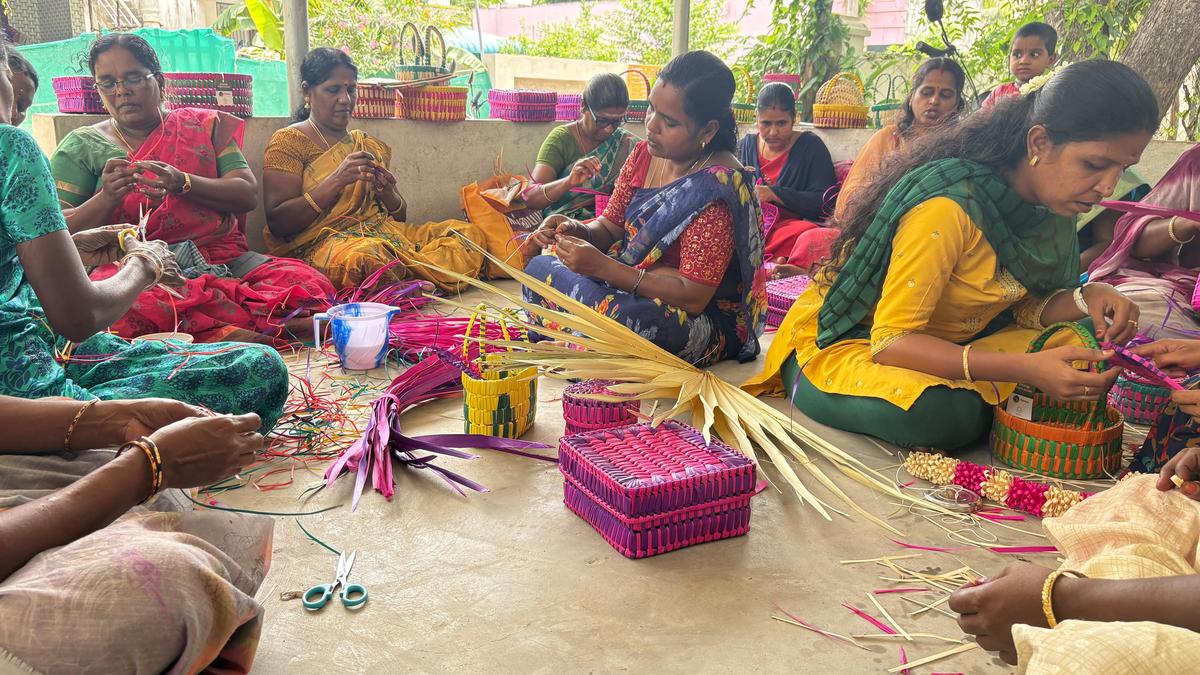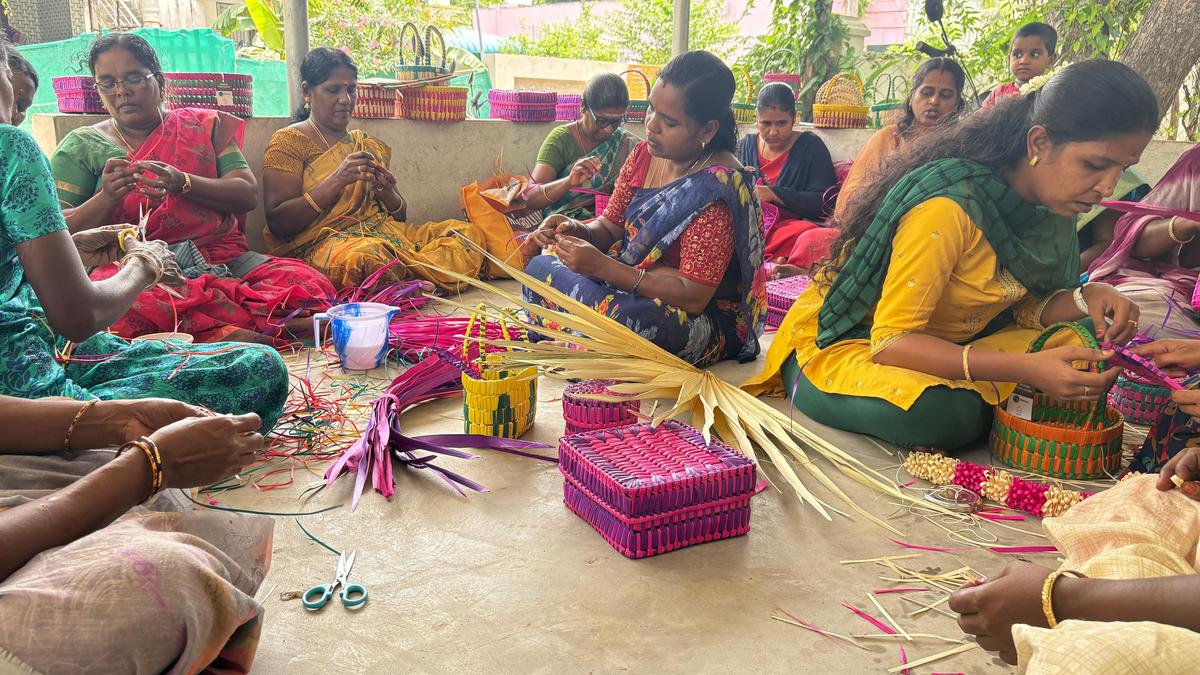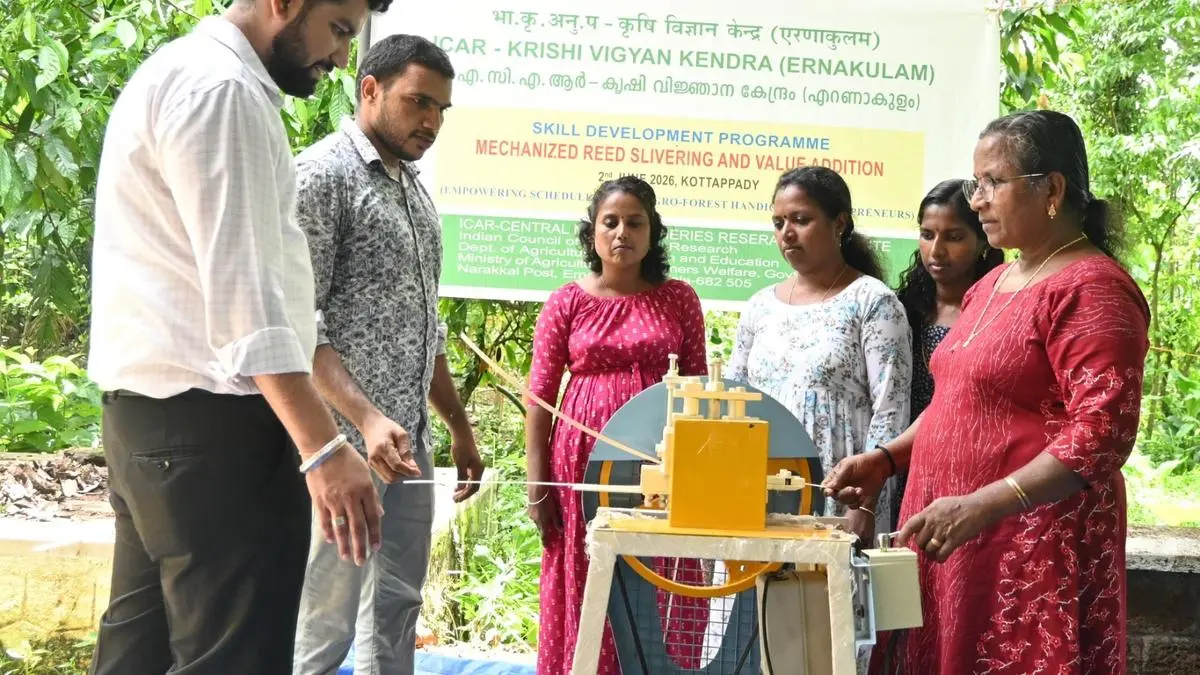
In a bid to improve productivity and reduce labour intensity, the Ernakulam Krishi Vigyan Kendra (KVK) under ICAR-Central Marine Fisheries Research Institute (CMFRI) has introduced mechanisation in reed handicraft production by training artisans to use a slivering machine.The first hands-on training programme on using the machine was organised for members of the Triveni Scheduled Caste Women’s Group, whose primary livelihood is reed handicraft.KVK officials said that the preparation of reed slivers, one of the most labour-intensive stages in handicraft production, has been a major bottleneck despite strong market demand for reed products. The newly introduced machine enables faster and uniform production of slivers, helping artisans increase output and meet market demand more efficiently.Shinoj Subramannian, Head, KVK said the technology would significantly enhance productivity, reduce physical drudgery and improve the income prospects of artisans. The quantity of reed slivers produced by as many as four workers over an entire day can be produced by a single person in just 2.5 hours using the reed slivering machine, he said.The training covered machine operation, safety measures and methods to improve production efficiency. KVK Technical Officers Pushparaj Angelo and Robin Bilam, and Technician Sineesh Ambi led the training programme.The initiative was organised under the Scheduled Caste Sub-Plan of the Indian Council of Agricultural Research with support from the Kerala State Bamboo Corporation.Published on June 3, 2026
Ernakulam KVK promotes mechanised reed handicraft production
The first hands-on training programme on using the machine was organised for members of the Triveni Scheduled Caste Women’s Group, whose primary livelihood is reed handicraft
TL;DRAI
Ernakulam KVK deployed a slivering machine enabling one artisan to produce in 2.5 hours what four workers previously completed daily, resolving labour-intensity in reed handicraft. The mechanisation case shows how targeted automation reduces manual drudgery and scales output—applicable to any craft-intensive industry facing productivity constraints.
222 words~1 min read