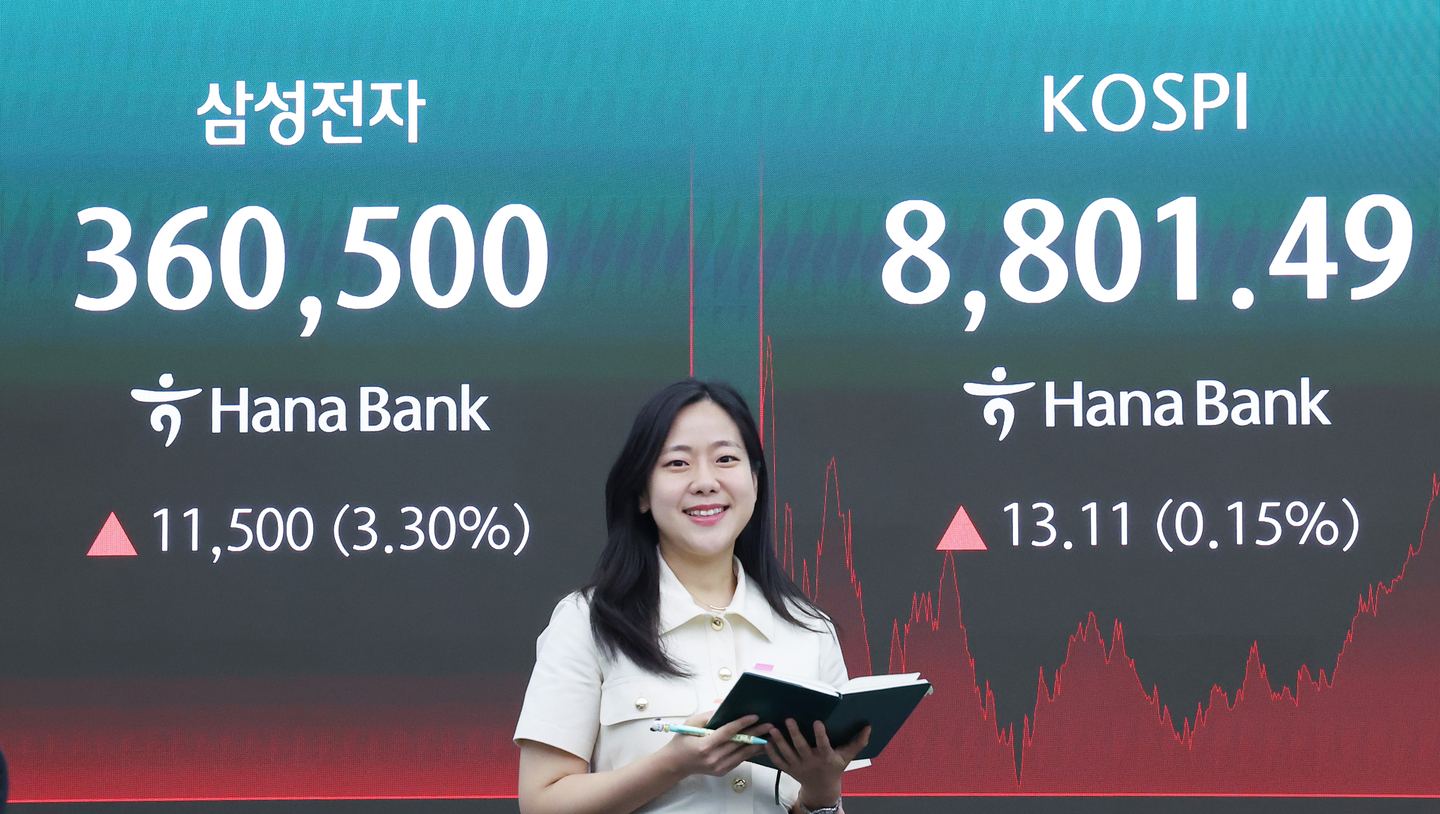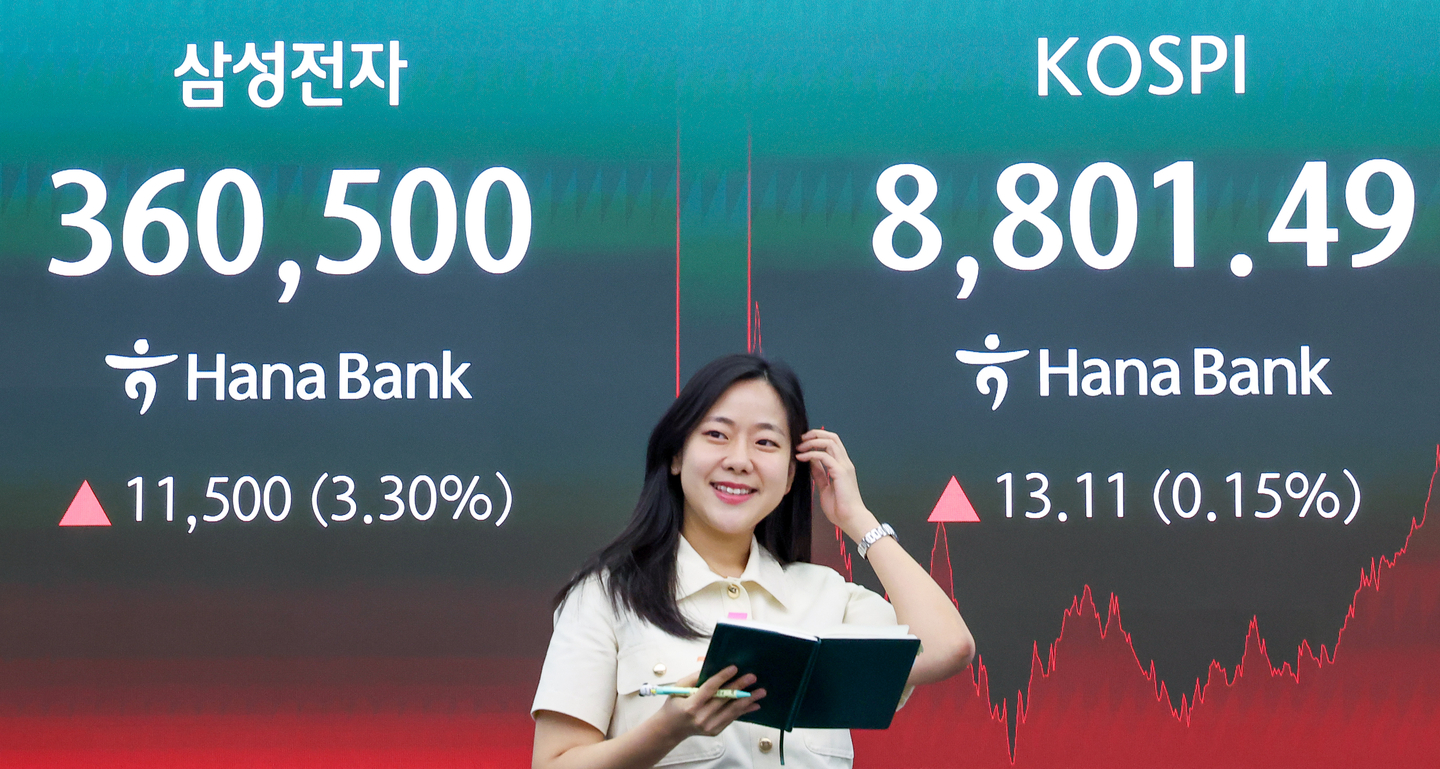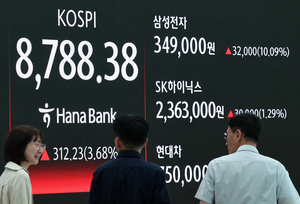
Sidecar triggers near 2008 record as rising leverage, forced selling amplify volatility An electronic board at a Hana Bank dealing room in Seoul shows the Kospi up 3.68 percent at 8,788.38 on Monday, with Samsung Electronics surging more than 10 percent to 349,000 won and SK hynix rising 1.29 percent to 2,368,000 won during the session. (Yonhap) South Korea's stock market is swinging at a pace not seen since the global financial crisis, as a record-setting Kospi rally collides with rising leverage and forced selling.Sidecars, which halt program trading for five minutes when futures move more than 5 percent for at least one minute, were triggered 20 times in the first five months of the year. Of those, 11 were triggered on the buy side and nine on the sell side.This year's tally already accounts for a quarter of the 80 sidecars since the Korea Exchange began compiling related data in 2002. At the current pace, it could surpass the annual record of 26 set in 2008, when the Kospi tumbled from around 1,900 to the 800 level during the global financial crisis.The strain has also appeared in market-wide circuit breakers. The Kospi triggered two first-stage halts in March, including on March 4, when the index suffered its steepest-ever daily drop of 12 percent in the early days of the US-Israel war on Iran. It was the first time since the COVID-19 pandemic shock in March 2020 that circuit breakers were triggered twice in the same month.The concern is that volatility is now hitting the leverage built up during the rally.Margin debt, a gauge of money borrowed from brokerages to buy stocks, topped 38 trillion won ($24.9 billion) for the first time last week, according to the Korea Financial Investment Association. It eased slightly to 37.7 trillion won on Monday, but remained near record levels.That leverage is feeding into forced liquidation as volatility rises. Forced selling reached 794.6 billion won in May, nearly triple the 264.2 billion won recorded in April, according to the association. The jump suggests market swings are starting to strain leveraged retail positions.Forced liquidation occurs when brokerages sell investors' shares after they fail to repay loans or meet collateral requirements. The jump suggests market swings are starting to strain leveraged retail positions.The Kospi's climb toward 9,000 has been marked by sharp intraday moves, with the index swinging by hundreds of points even as it set fresh records. The VKOSPI, Korea's so-called fear gauge, has stayed above 70, touching 75.42 during trading Tuesday. A reading above 50 is considered extreme.Market watchers are also focused on single-stock leveraged products tied to Samsung Electronics and SK hynix, which debuted on May 27, as another potential amplifier of intraday swings. For instance, the SOL SK hynix Futures Single Stock Inverse 2X ETF, which bets on declines, recorded turnover of 2,014 percent on its second trading day."Retail investors' concentration in single-stock leveraged products is increasingly shaping the direction of the index," said Seo Sang-young, an analyst at Mirae Asset Securities. "Intraday volatility in the index is likely to remain elevated for the time being."
Kospi rally fuels market swings unseen since financial crisis
South Korea's stock market is swinging at a pace not seen since the global financial crisis, as a record-setting Kospi rally collides with rising leverage and f
514 words~2 min read