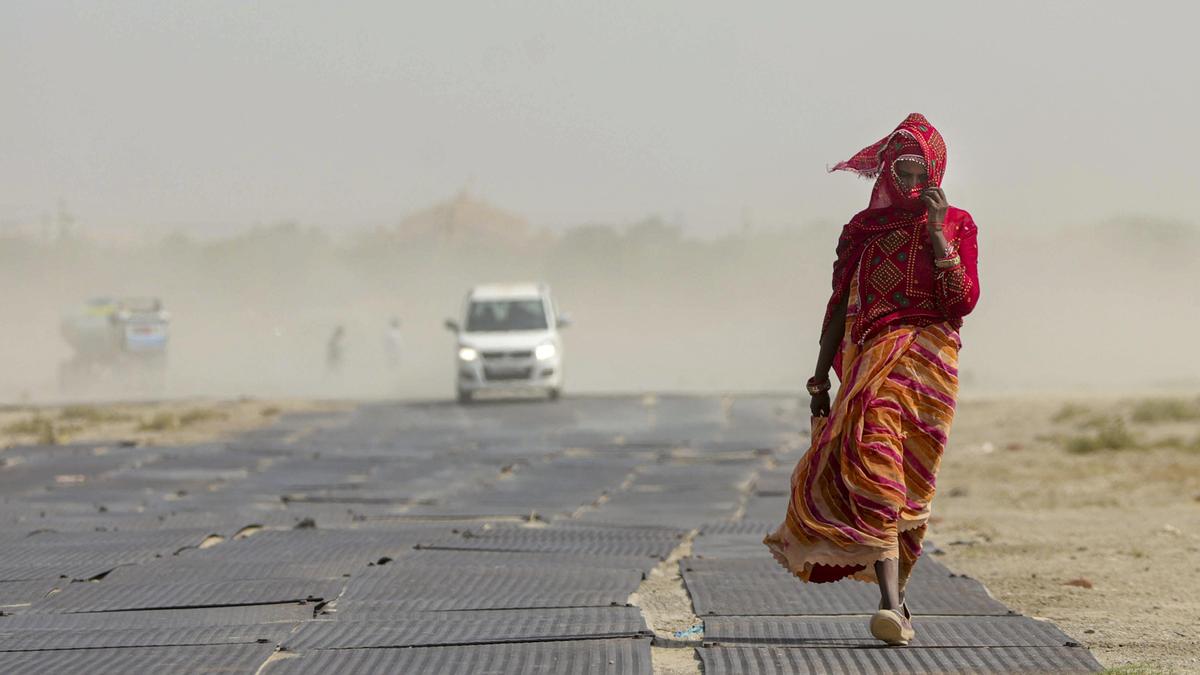
India has been in the grip of a hotter-than-normal summer, with a heatwave that caused temperatures to exceed 40°C to 45°C in many regions in April and May. You can feel it on your skin: fatigue, irritation and unexpected sensitivity.“I definitely see a shift,” says Dr Madhuri Agarwal, founder and medical director of Yavana Aesthetics Clinic, Mumbai. “Sensitive skin issues and barrier damage are increasing. Pigmentation that was once easily treatable is now more persistent, and tanning despite sunscreen use is common.” She also notes an increase in early signs of photoaging and sun-induced conditions, such as polymorphous light eruption (PMLE), which can cause a delayed, itchy, or burning rash, usually red bumps, patches, or blisters on the skin.Skin under threatBeyond the visible heat lies ultraviolet radiation, easier to underestimate, but biologically far more consequential. The UV Index (UVI) measures the intensity of ultraviolet radiation reaching the Earth’s surface. At lower levels (0–2), exposure is minimal. As the index rises beyond 8, even brief unprotected exposure can cause damage. The World Health Organization classifies a UVI of 11 or higher as “extreme risk”, where skin damage can begin within 10–15 minutes. Alarmingly, in April, Bengaluru recorded an extreme UV index of 13, according to reports. Chennai and Mumbai routinely recorded UV Index levels of 11–13, according to the The Weather & Radar and The Weather Network pages, real-time UV Index trackers.“The country’s high UV Index is largely driven by geography, with ozone dynamics, local environmental conditions and climate change playing supporting roles,” says Anukriti Sharma, environmental scientist and member of the IUCN Commission on Education and Communication, a global network of volunteer experts who use strategic communication and education to inspire action for Nature conservation.
India’s UV Index is rising. Are our sunscreens keeping up?
India’s UV Index is rising. Are our sunscreens keeping up?
TL;DRAI
India's UV Index hit 13 in Bengaluru and 11–13 in major cities; sunscreen launches up 235% since 2020, yet only 14% of adults use protection. Sun protection focuses on SPF (UVB) while UVA (95% penetrates) drives cumulative damage, signaling need for better formulations and testing standards.
1,209 words~5 min read