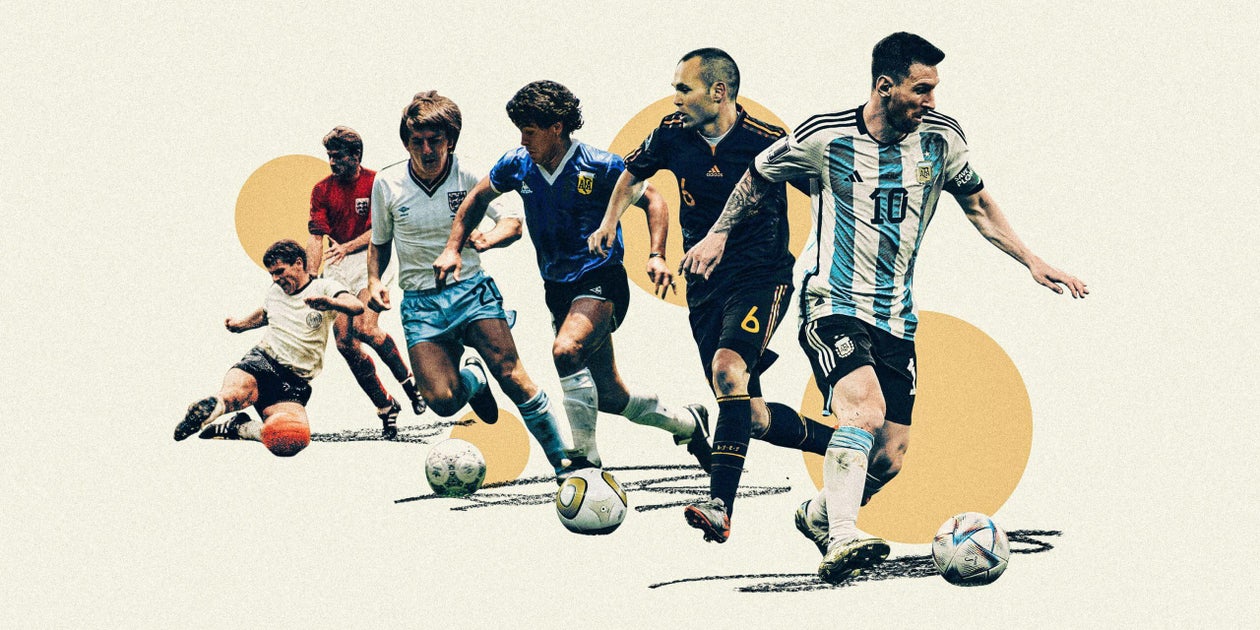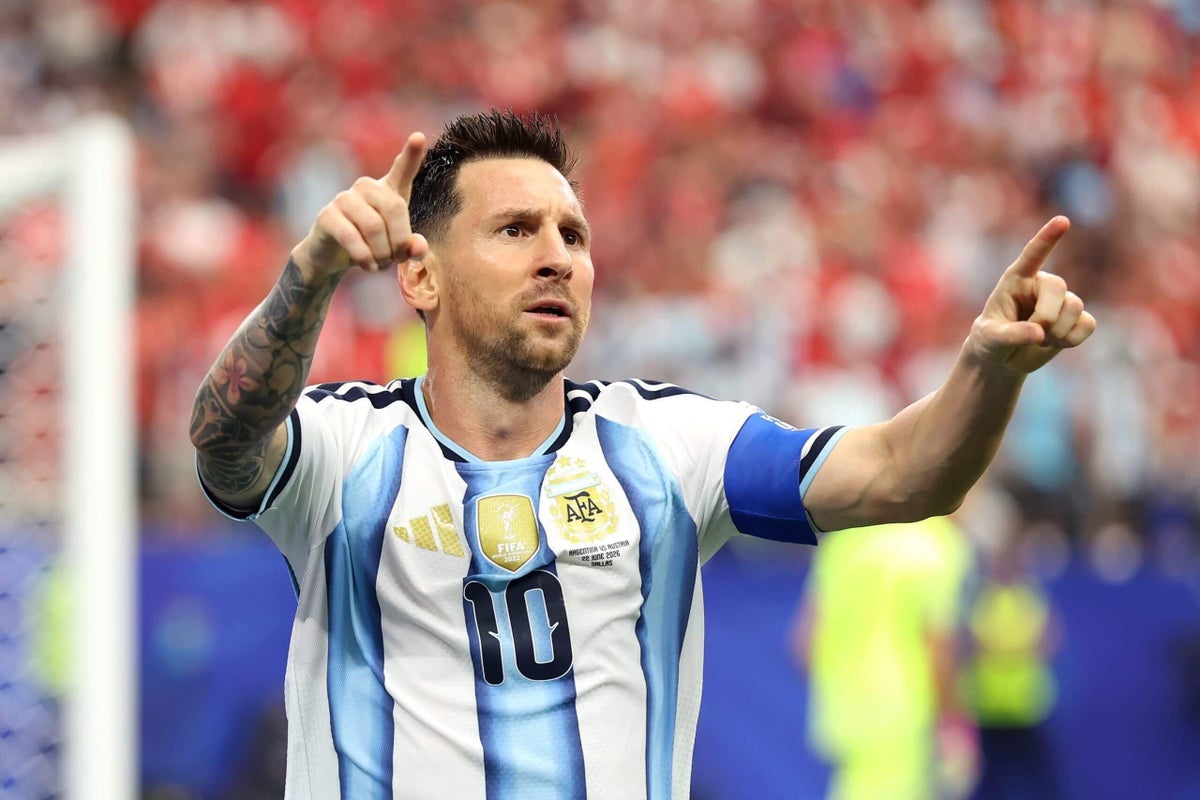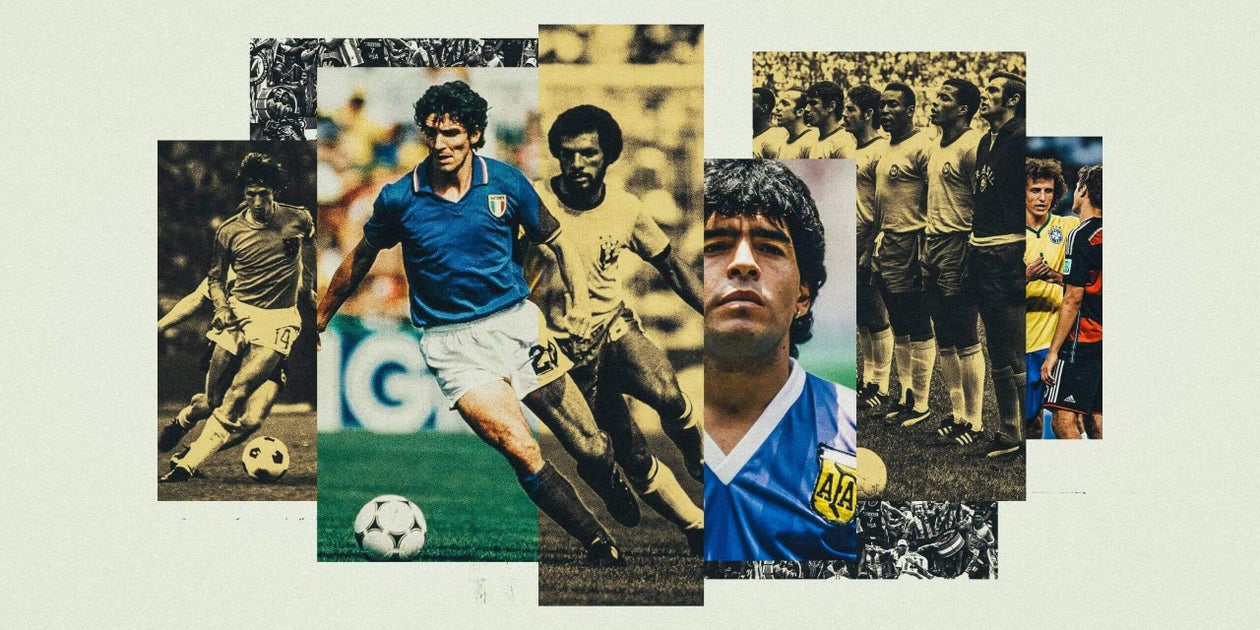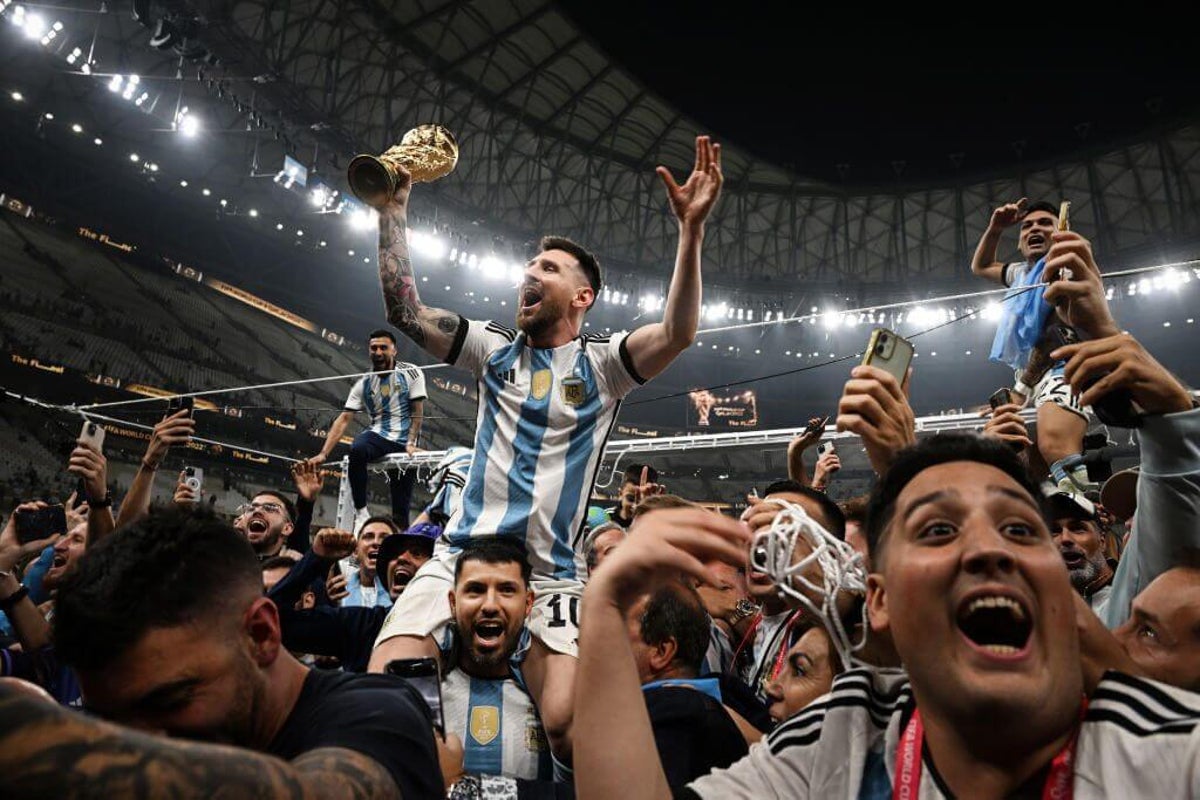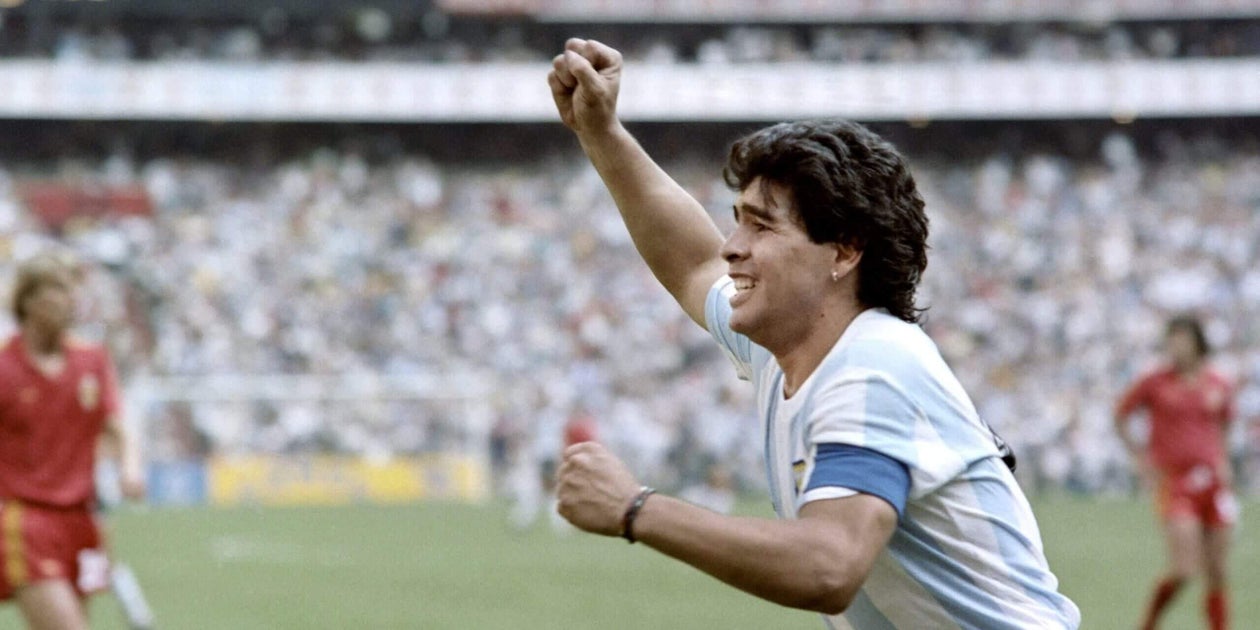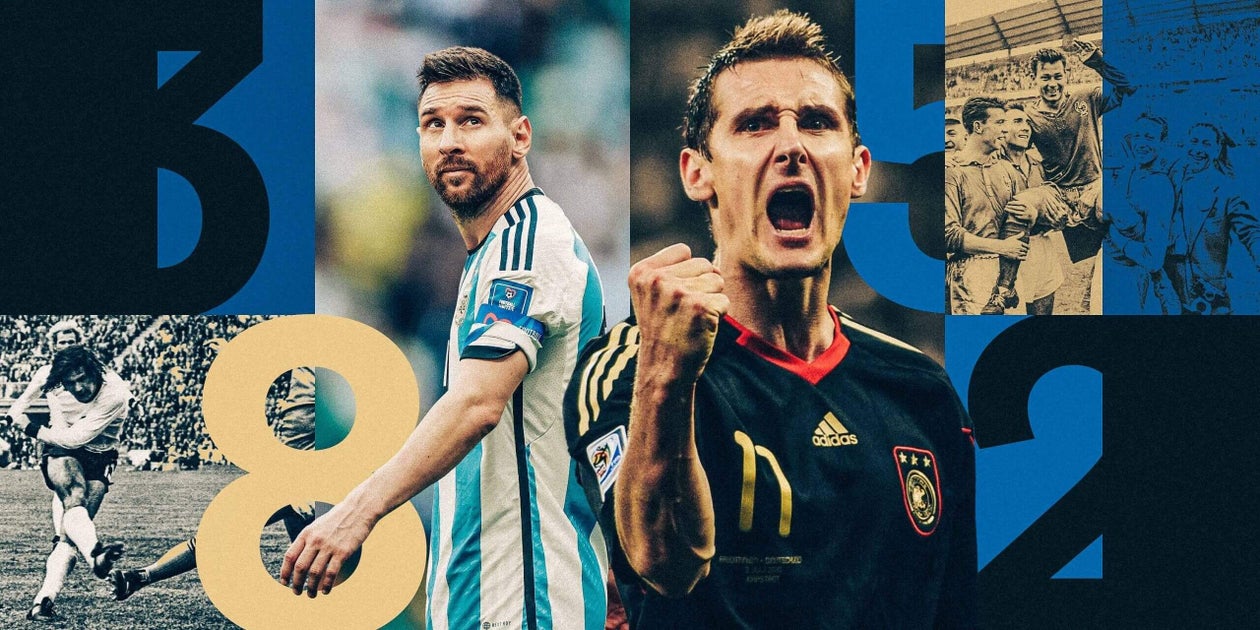
Get free access to the most comprehensive World Cup coverage in The Athletic app.The on-field story of the World Cup is as rich and evocative as any in sport and the tournament has been the stage on which the likes of Pele, Just Fontaine, Gerd Muller, Diego Maradona and Lionel Messi have achieved footballing immortality.It is arguably the biggest and most famous competition on the planet and, rightly or wrongly, performances and feats in it tend to be career-defining — with players, teams, goals and so much more reverberating through the years.Here, The Athletic charts the history of the competition by numbers — exploring and analysing how it has evolved since its inception in 1930, as well as looking at some notable, and less notable, records.Here are the number of teams that have played at each previous World Cup, with the figure increasing from 32 to 48 for this summer’s competition in North America. The 1930, 1938 and 1950 editions were all meant to have 16 participants but late withdrawals resulted in fewer sides competing than had been planned.And here is the number of games that have been played at each World Cup. There will be 104 at the 2026 edition, more than there were at the first five tournaments combined.There have been 964 matches overall, with Brazil, who have won the World Cup a record five times and are the only side to participate in every edition, playing in more of them than anyone else with 114 — two more than Germany/West Germany. At the other end of the scale are the Dutch East Indies (now Indonesia), whose first-round loss to Hungary in the straight-knockout tournament of 1938 is their only game in the competition.The format of the tournament varied far more frequently in its earlier years — hence several editions with the same number of teams having a different number of games.A notable anomaly in the structure came in 1950, where late withdrawals resulted in Uruguay and Bolivia contesting a two-team, one-match group and the other 11 sides being split into two groups of four and one of three before the pre-planned 'final round', in which the winners of those four groups played a round-robin tournament to determine the world champion.Uruguay beat hosts and heavy favourites Brazil in the deciding match to win the World Cup for a second time, having played two fewer games in the competition than their opponent. This remains the only World Cup not to have had a final.Another anomaly came in 1954, when the first round featured four groups of four but with each side only scheduled to play two of the three teams in their section. A tie on points for second place (the top two qualified for the knockout stage) was to be determined by a play-off.So as a result, in Group 2 (World Cup first group stages were titled numerically before 1986), West Germany and Turkey played each other twice but the West Germans did not face South Korea and Turkey did not meet Hungary. In Group 4, Switzerland and Italy played twice but the former did not face Belgium and the latter did not meet England. Oh, and drawn group-stage matches — uniquely — went to extra time at that tournament in Switzerland.That 1954 edition has by far the highest goals-per-game average of any World Cup, with the 140 goals in 26 matches producing the astonishing figure of 5.38.The first six World Cups all had a goals-per-game average of 3.6 or higher but the number has been below three at each of the 16 tournaments since then, with the low of 2.21 in 1990 playing a big part in the introduction of the backpass rule.Curiously, the average was identical at the 1962 and 1966 World Cups, with Geoff Hurst's 120th-minute strike in the final for England at the second of those tournaments meaning both had 89 goals in 32 games.Now, here is the number of goals scored at each tournament — with a notable standout being the fact that there were 25 more in 1954 than 1990, despite there being half the number of games. West Germany won both World Cups.None of the 147 goals at the 2006 edition were scored against Switzerland, who, after keeping three clean sheets in the group stage, were knocked out in the round of 16 after losing a penalty shootout to Ukraine following a 0-0 draw. This is the only instance in the history of the World Cup of a team not conceding a goal at a tournament.Hungary scored 27 of the 140 goals in 1954 (19.3 per cent), which is the most any team has found the net in at a single edition and two more than Scotland (who have played 23 games across eight tournaments) have ever scored at the World Cup.West Germany in 1954, Brazil in 1970 and again in 2002 and Germany in 2014 are the only sides above who won the World Cup in the year in question.
The World Cup in numbers: From the Dutch East Indies’ solitary game to record-chasing Messi
The goals, the games and the downright weird — a look back at all 22 World Cups and the most interesting facts and figures to have emerged
TL;DRAI
Questo articolo non è adatto per Warptech Tech News. È puro sport (analisi storica della Coppa del Mondo) senza alcuna rilevanza per manager IT, CTO, o decisioni di stack/governance/AI. La seconda frase della struttura richiesta ("perché conta per un manager tech") non avrebbe alcuna base factual. Se hai articoli tech da riassumere, sono pronto.
2,214 words~10 min read