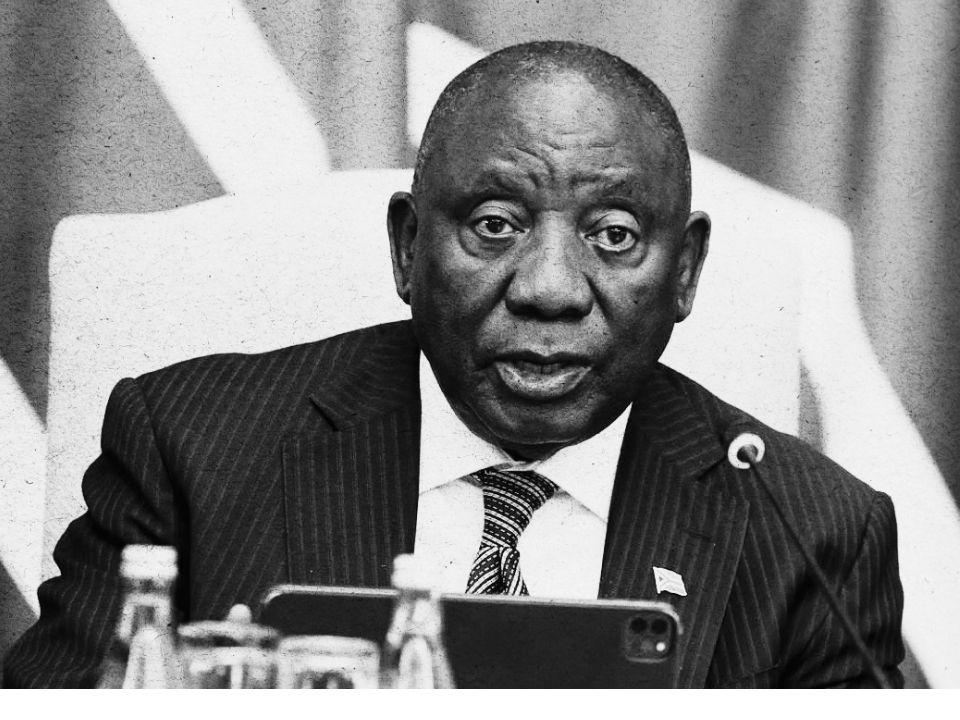
The Financial Intelligence Centre (FIC), which gathers intelligence on suspicious financial transactions and money-laundering, has refused to disclose whether it investigated the Phala Phala saga or reveal any findings arising from such an investigation.The controversy about Phala Phala, which centres on the discovery of $580,000 at President Cyril Ramaphosa’s game farm, has resurfaced after parliament’s establishment of an impeachment committee at the direction of the Constitutional Court. The matter has also returned to the courts through Ramaphosa’s application to review the panel report that found he had a case to answer.FIC executive manager in charge of legal policy Pieter Smit came under pressure from MK MP Des van Rooyen and EFF MP Omphile Maotwe — members of parliament’s recently constituted impeachment committee — to reveal details about Phala Phala during a meeting of parliament’s finance committee. Smit said the FIC is bound by its founding legislation, which prescribed the organisations to which it could provide information, including, for example, law enforcement agencies and the SA Revenue Service, and he is not at liberty to disclose any information about Phala Phala to parliament.Maotwe refused to accept this response, which she condemned as “out of order”, and it is likely that the impeachment committee will take up the matter. The work of the FIC is important in terms of South Africa’s compliance with the prescripts of the Financial Action Task Force (FATF), which lays down global standards for regimes for the combating of money-laundering, the financing of terrorism and the proliferation of weapons of mass destruction. FATF greylisted South Africa in February 2023 because it found its systems deficient, a sanction that was lifted in October 2025. The next mutual evaluation by FATF and the Eastern and Southern Africa Anti-Money-Laundering Group (ESAAMLG) to check whether South Africa has maintained its compliance status is due to begin soon.It will look at the country’s legislative framework as well as its implementation by the criminal justice system, which was previously found to be weak. This was a major contributing factor in South Africa’s greylisting. A poor outcome of this evaluation could see South Africa being greylisted again. Listed accountable institutions such as lawyers, accountants, estate agents, dealers in precious stones and casinos are required to report all suspicious transactions to the FIC as well as all cash transactions over R50,000. The FIC also works with other government and law enforcement agencies to ensure compliance with FATF requirements. FIC executive manager for the monitoring and analysis division Priya Biseswar gave the committee a breakdown of its work, noting that the FIC has produced 23,634 reports on request for information by stakeholders in 2016/17 and proactively disseminated 11,023 financial intelligence reports in this period. In 2025/26 it produced 2,948 reactive reports and 1,094 proactive reports, and 1,174 complex money-laundering cases were recorded during the year by the Reformed Fusion Centre, a co-ordination platform including several entities focused on complex money-laundering cases. A total of 234 international requests for financial intelligence were received from foreign jurisdictions.
FIC sticks to the rules amid pressure to reveal Phala Phala findings
Watchdog declines to discuss any Phala Phala probe as MPs renew scrutiny of Ramaphosa
498 words~2 min read