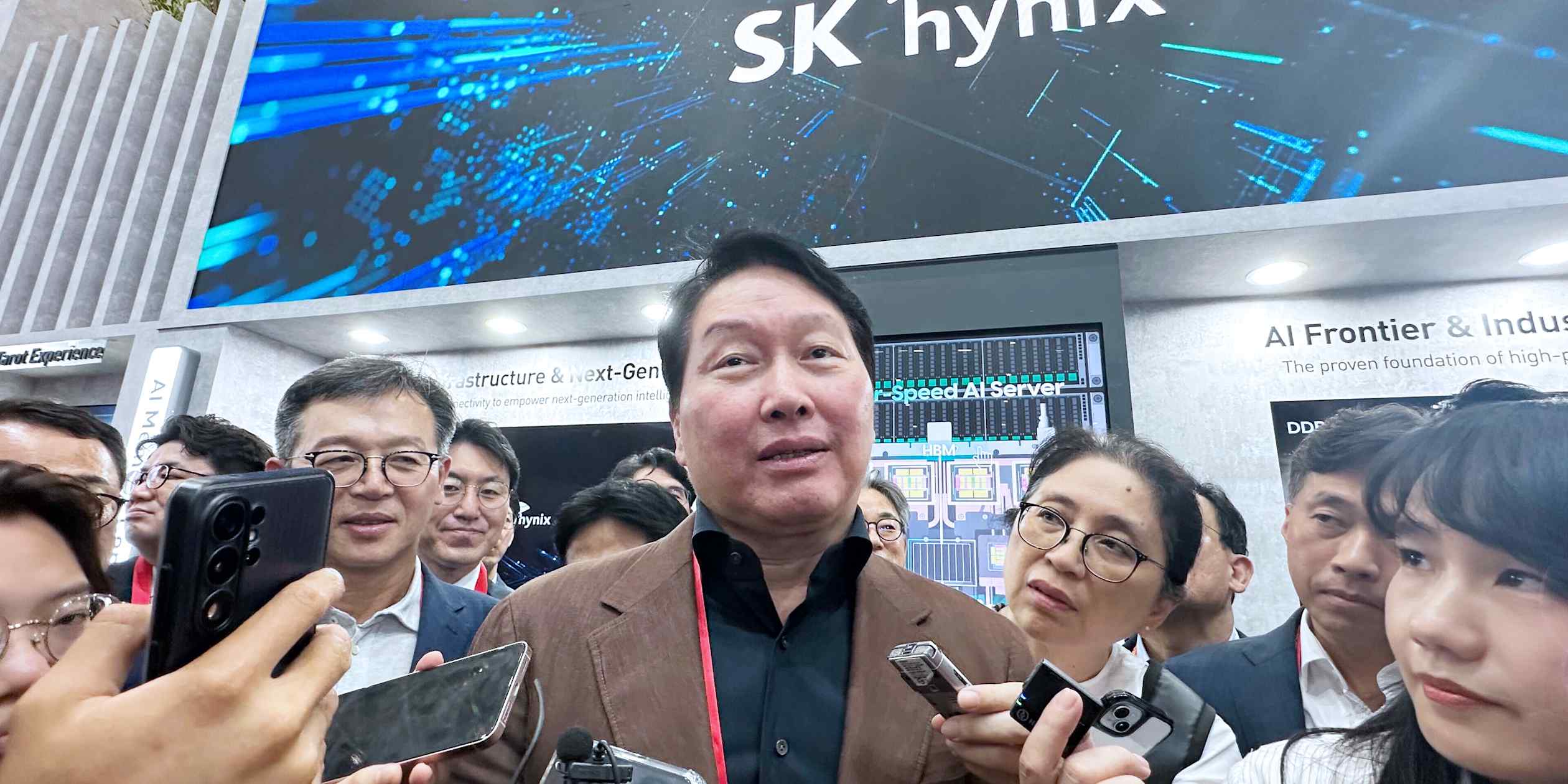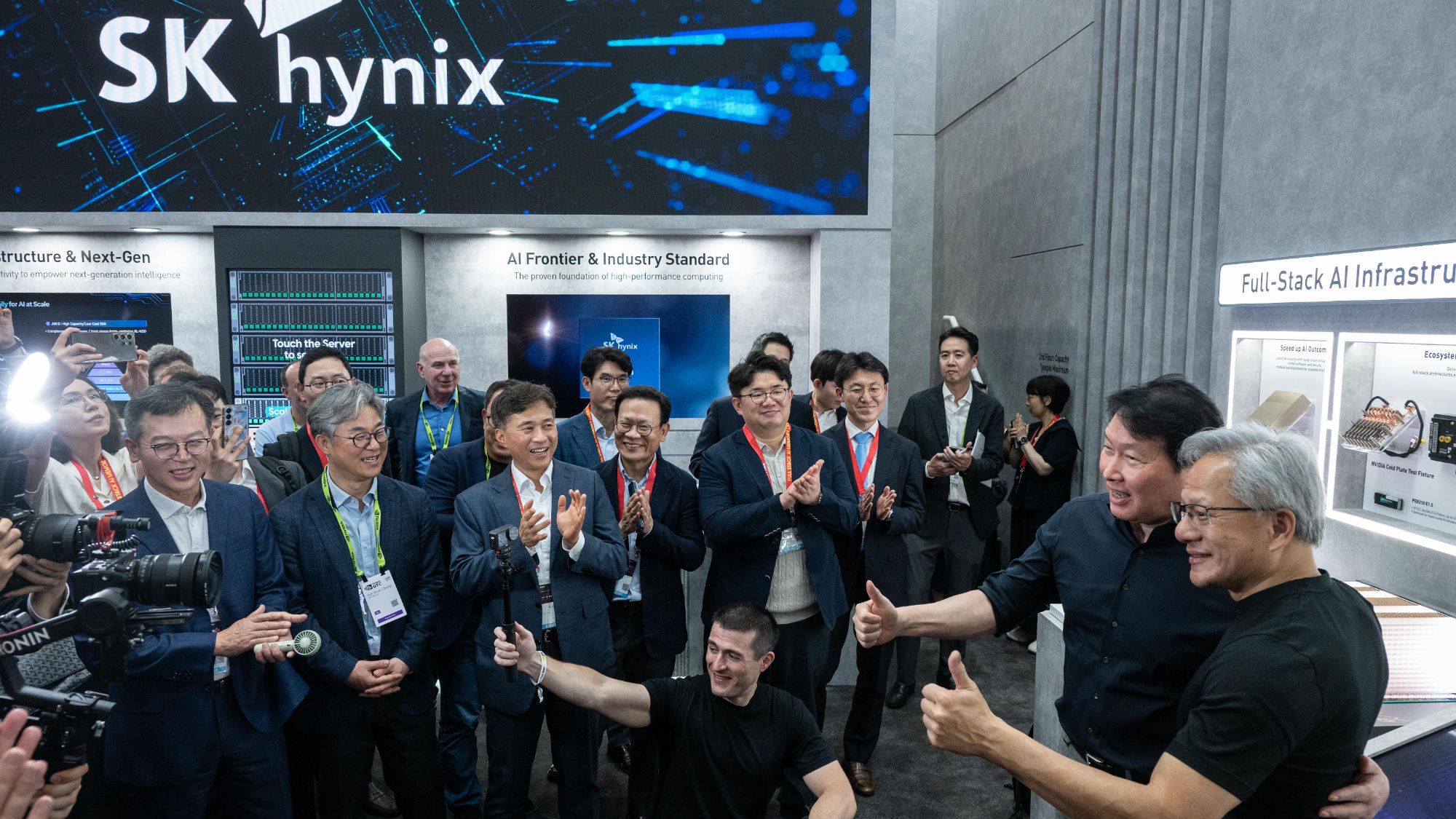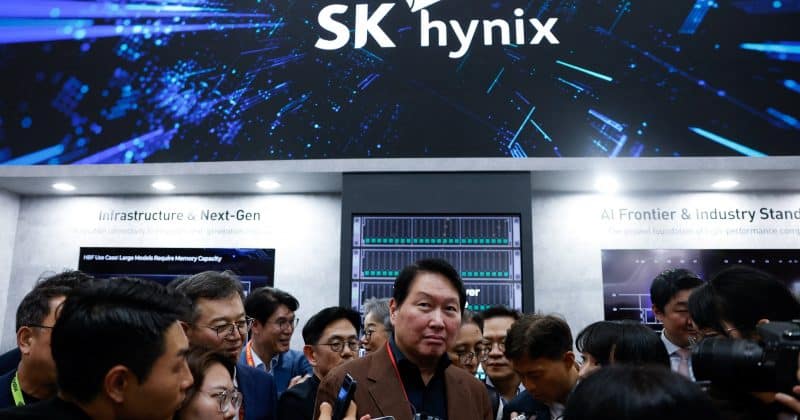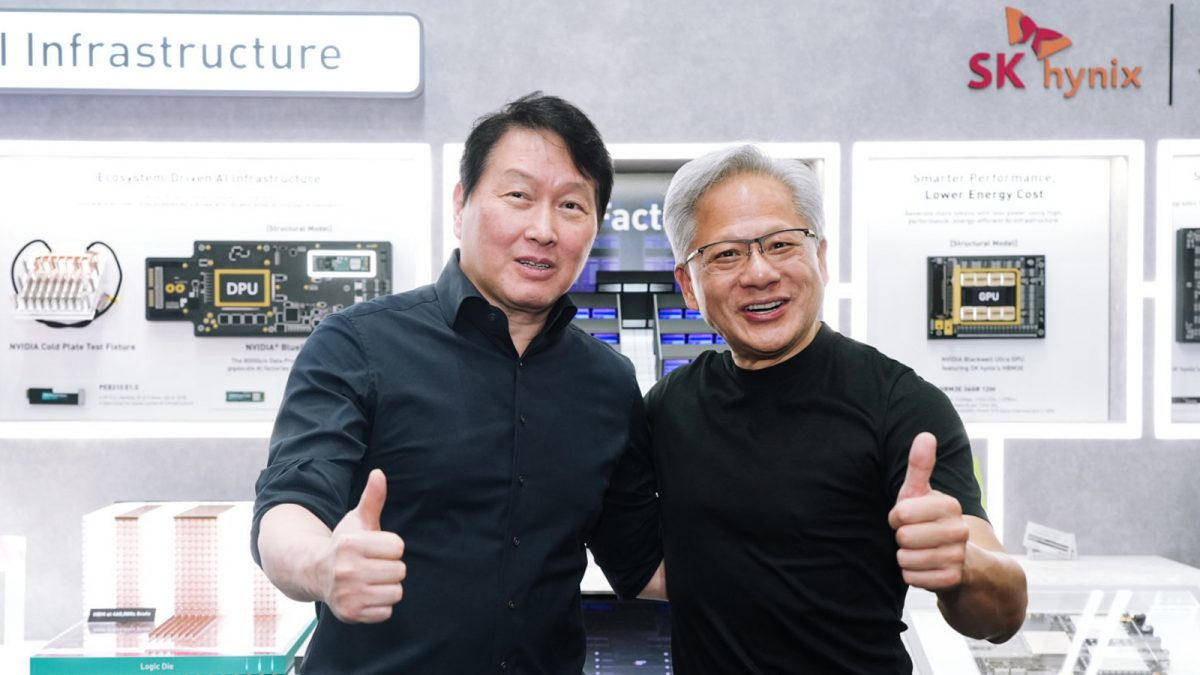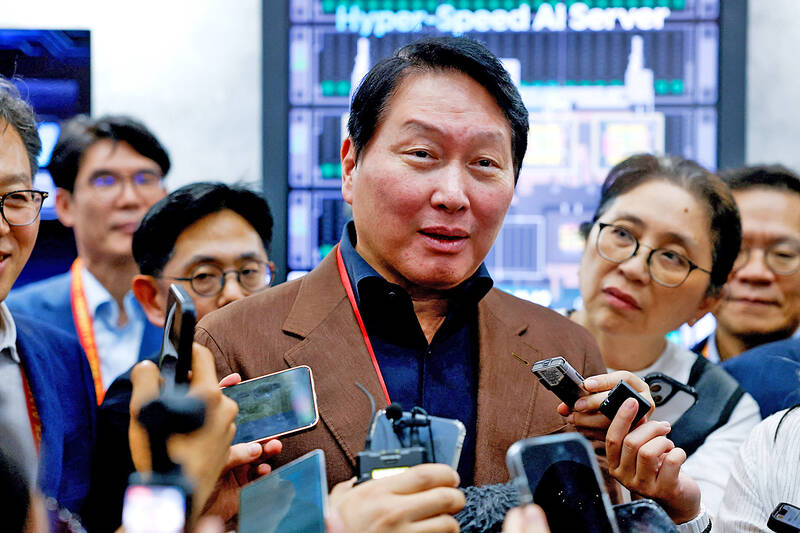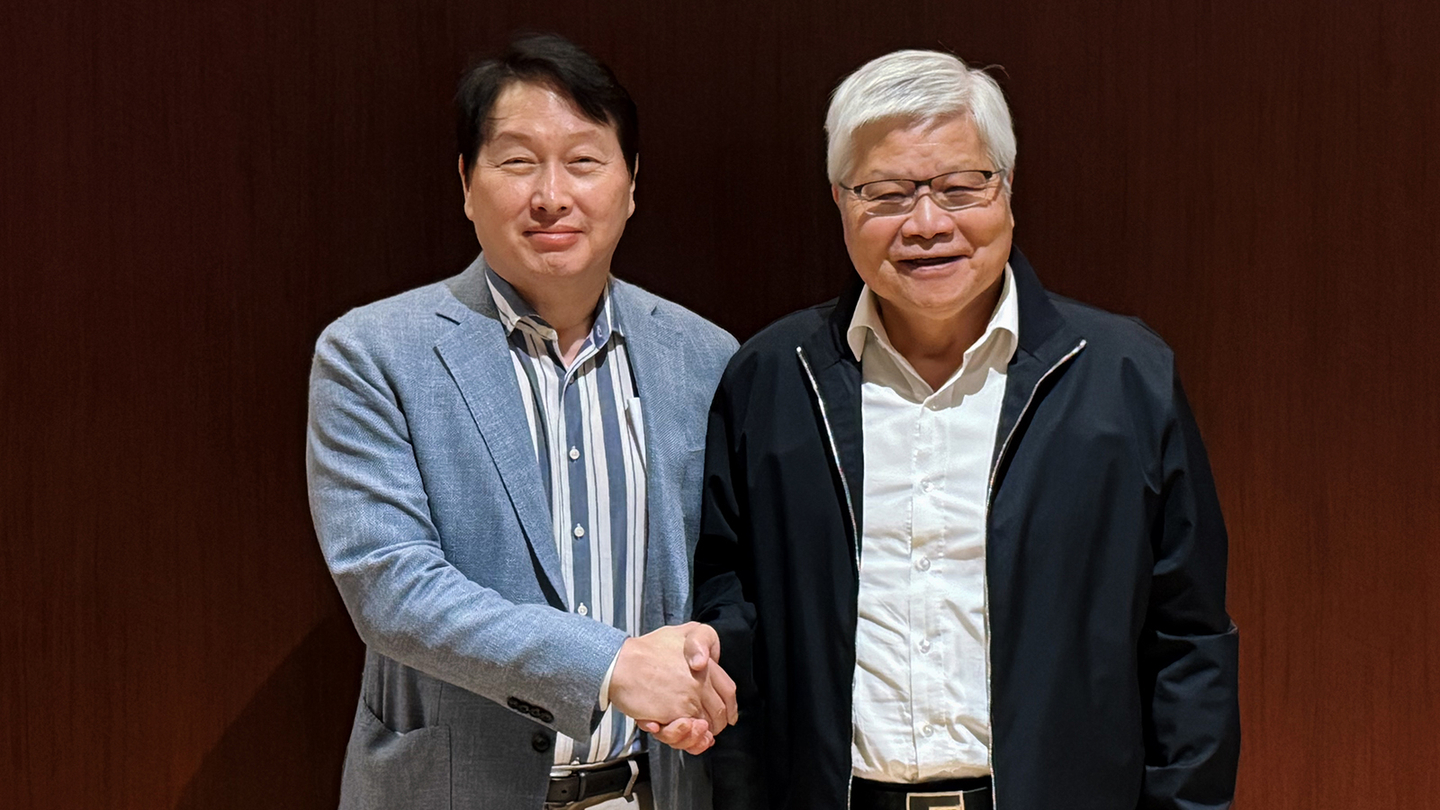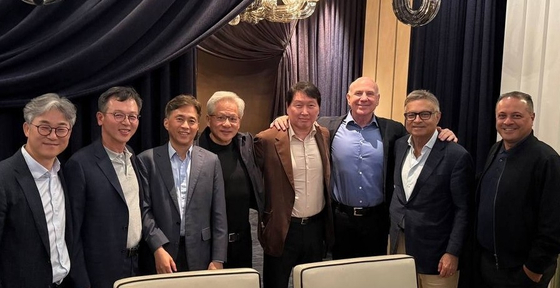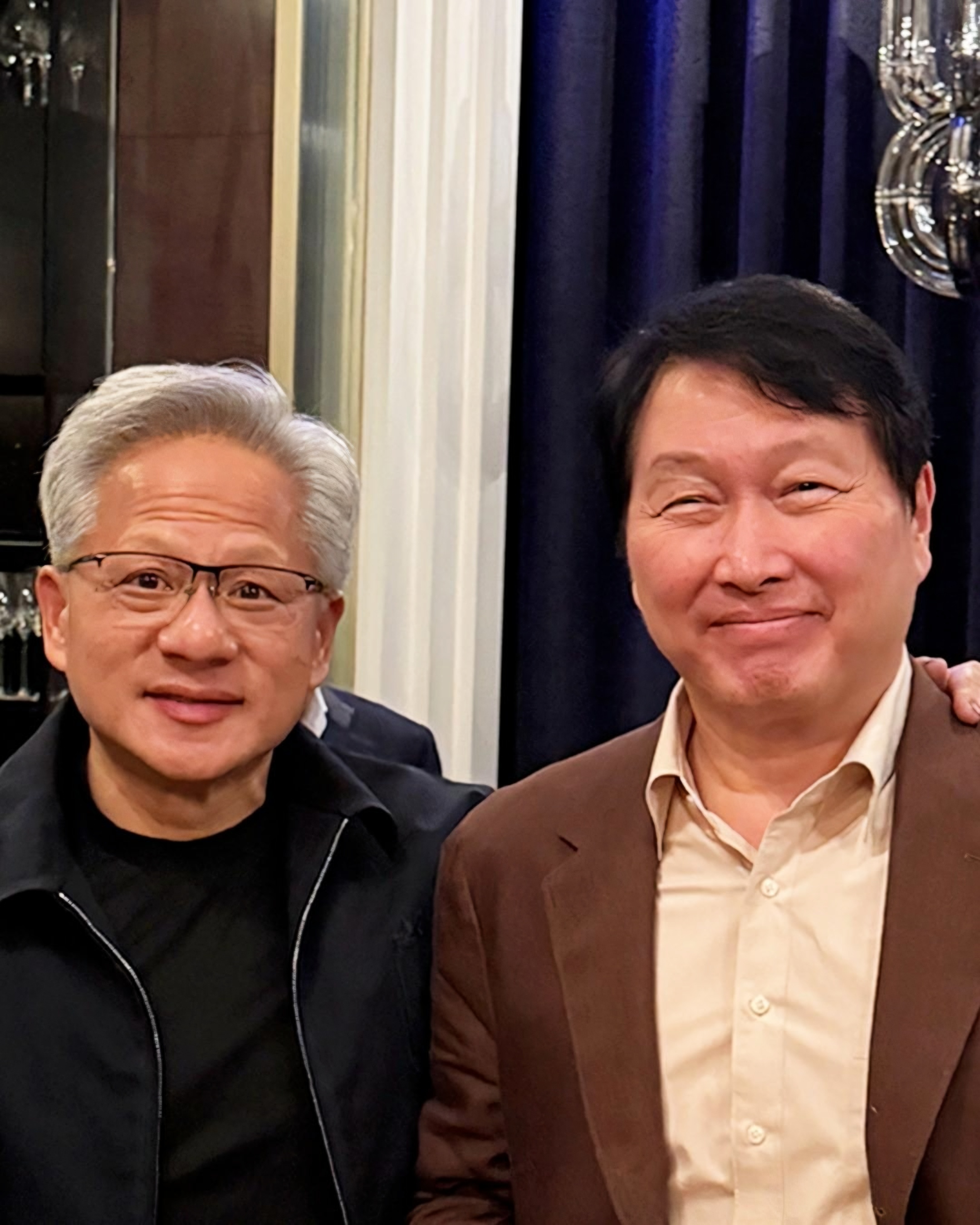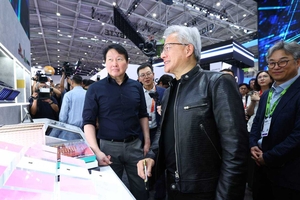
Chey Tae-won plans to double wafer output within five years, saying memory shortages could persist through 2030 SK Group Chairman Chey Tae-won speaks to reporters at Computex 2026 in Taipei, Taiwan, Tuesday. (SK hynix) SK Group Chairman Chey Tae-won said Tuesday that the conglomerate aims to move beyond supplying AI memory chips and eventually build "AI factories," while doubling wafer production capacity within five years to meet surging demand from the artificial intelligence boom.Speaking to reporters on the sidelines of Computex 2026 in Taipei, Chey said SK's ambitions extend beyond its current role as a key supplier of memory chips for AI systems."Today we produce memory chips for AI, but I want to challenge ourselves to build AI factories," Chey said. "In the future, there will be many AI factories producing intelligence, and I believe that will help humanity."His remarks come as SK hynix strengthens its position as Nvidia's leading supplier of high-bandwidth memory, or HBM, one of the most critical components in AI servers.Capacity expansion despite bottlenecksChey also reaffirmed plans to significantly expand semiconductor production."We will double our production capacity within the next five years," he said, clarifying that the target refers to overall wafer output rather than a specific memory product.While he declined to provide a detailed capital expenditure figure, Chey said SK would secure whatever funding is necessary to support the expansion.The chairman acknowledged that scaling production will not be easy, citing constraints ranging from electricity and water to manufacturing equipment and construction lead times."Building a new fab takes at least three years, and more than five years if starting from a greenfield site," he said.Memory crunch to last through 2030Chey also maintained his long-standing view that memory supply constraints could persist through the end of the decade."I still maintain that forecast," he said when asked about his previous prediction that shortages could continue through 2030.He pointed to expanding AI deployments, increasing use of memory-intensive caching technologies, growing AI data center investments and the emergence of AI-powered PCs as major drivers of demand."AI continues to expand, and more memory is needed as more caching is required," he said.'Better than ever' partnership with NvidiaChey also emphasized the strength of SK's partnerships with Nvidia and Taiwan Semiconductor Manufacturing Co. SK Group Chairman Chey Tae-won (left) and Nvidia CEO Jensen Huang are briefed at SK hynix's exhibition booth during Computex 2026 in Taipei, Taiwan, Tuesday. (SK hynix) "Our partnership is better than ever," he said when asked about cooperation with the two companies.Regarding his increasingly frequent meetings with Nvidia CEO Jensen Huang, Chey described the relationship as one built on trust and mutual dependence."It's a friendship based on trust and reliance on each other," he said. "We will maintain the partnership and continue together for a very long time."Asked whether SK hynix would remain a leading supplier of HBM for Nvidia's next-generation Vera Rubin platform, Chey said the decision ultimately rests with customers but expressed confidence in SK's position."We have been a major supplier, and I hope we can continue to remain one," he said.As chairman of the Korea Chamber of Commerce and Industry, Chey also urged Korean businesses to learn from Taiwan's ability to capitalize on the AI boom."Taiwan is capturing the AI momentum very well," he said. "Korea needs to seriously consider how to embrace the fact that we are now in the AI era and how to move into that era faster and better."
SK chief looks beyond chips to AI factories
SK Group Chairman Chey Tae-won said Tuesday that the conglomerate aims to move beyond supplying AI memory chips and eventually build "AI factories," while doubl
568 words~3 min read