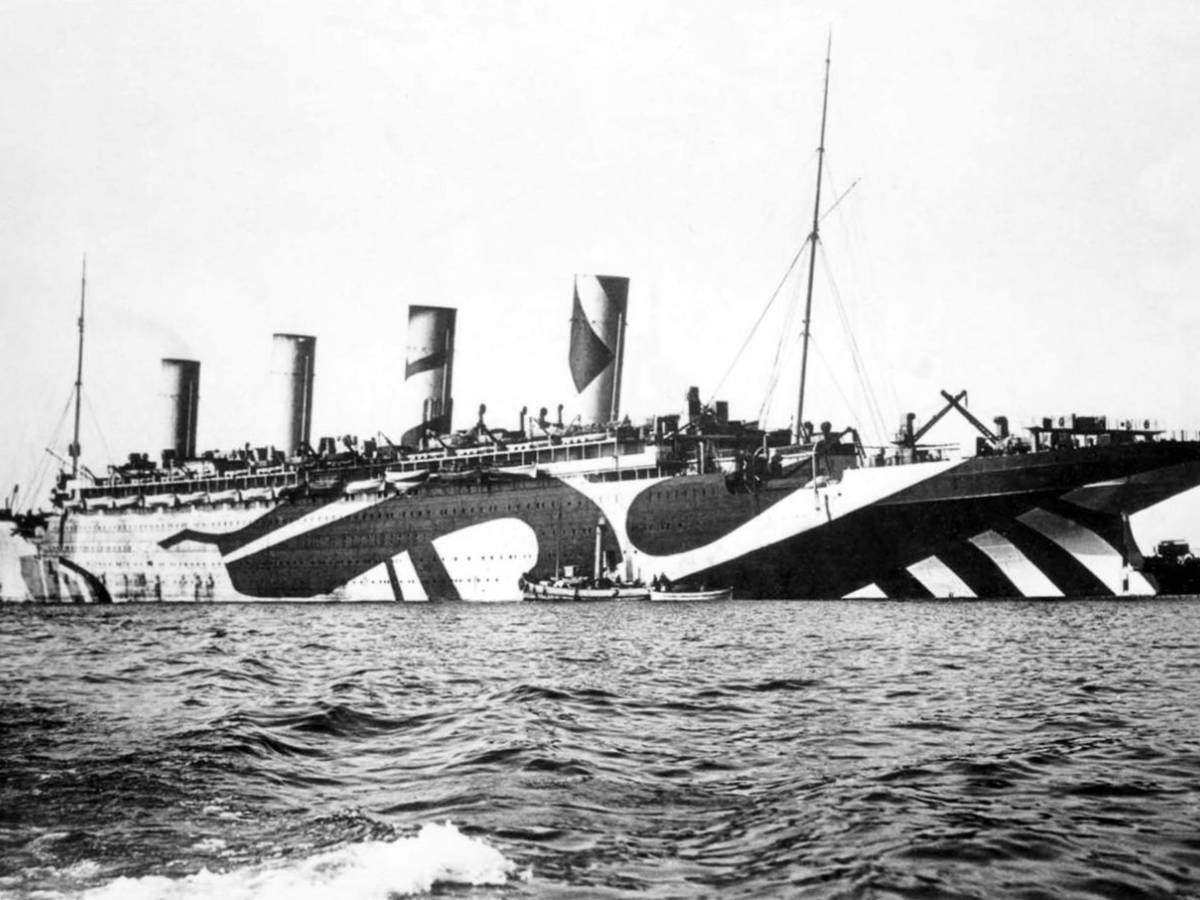
During World War I, Allied ships got flashy new paint jobs featuring bold zig-zagging stripes. Known as “dazzle camouflage,” the purpose of the makeover wasn’t to conceal the ships but rather to make their range, speed, and heading difficult to discern for anyone peering through the periscope of a German U-boat. According to new research published in Amphibia-Reptilia tree frog tadpoles may have adopted the same strategy—with a slight twist.DAZZLE DISGUISE: Artist’s rendering of a periscope view of ship with dazzle camouflage (left) and without (right). Image from Encyclopedia Britannica (1922). Credit: Encyclopedia Britannica, 1922.Tadpoles from the Japanese tree frog Dryophytes leopardus are usually a dull brownish color with translucent tails, but in the presence of their predators, dragonfly nymphs, their tails transform into a vivid orange color with black spots. “After seeing these tadpoles with orange tails at (Kyoto University’s) experimental farm, I wondered what role such a bright tail could have,” study author and Kyoto University graduate student Akihiro Noda said in a statement.Join to continue readingYou've run out of free articles. Read unlimited, ad-free stories (including this one) by becoming a Member. Join now
Tadpoles Use a World War I Naval Strategy to Dazzle Predators
Tadpoles Use a World War I Naval Strategy to Dazzle Predators: Sometimes all it takes is a new paint job
187 words~1 min read