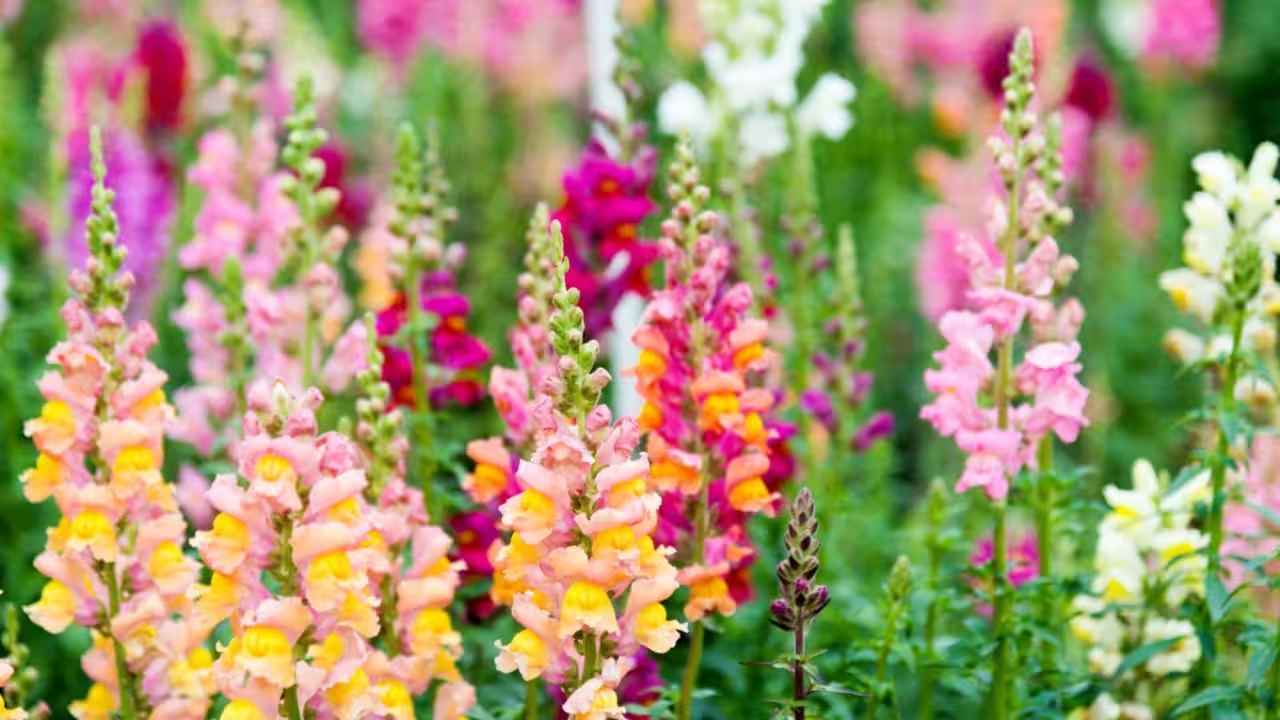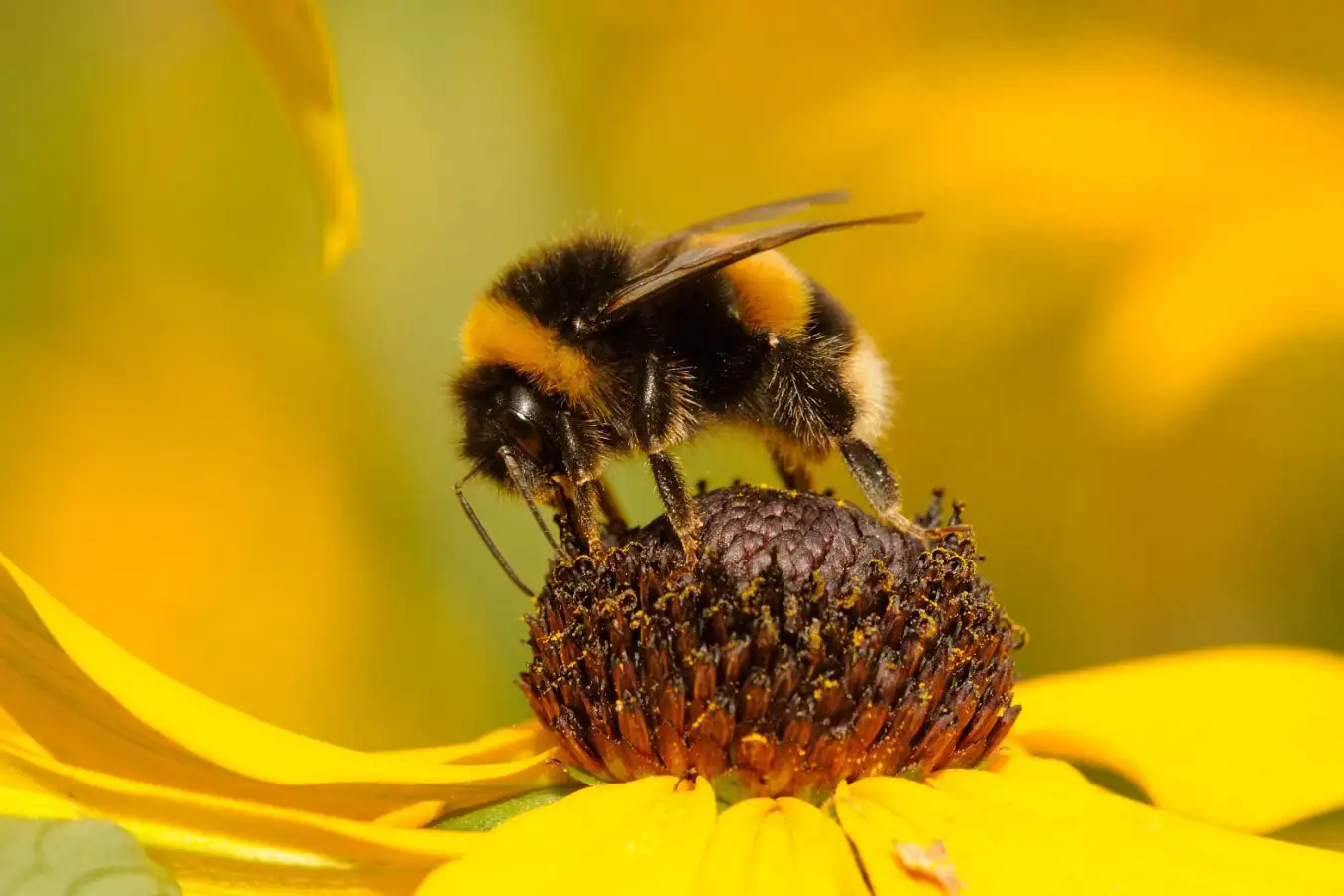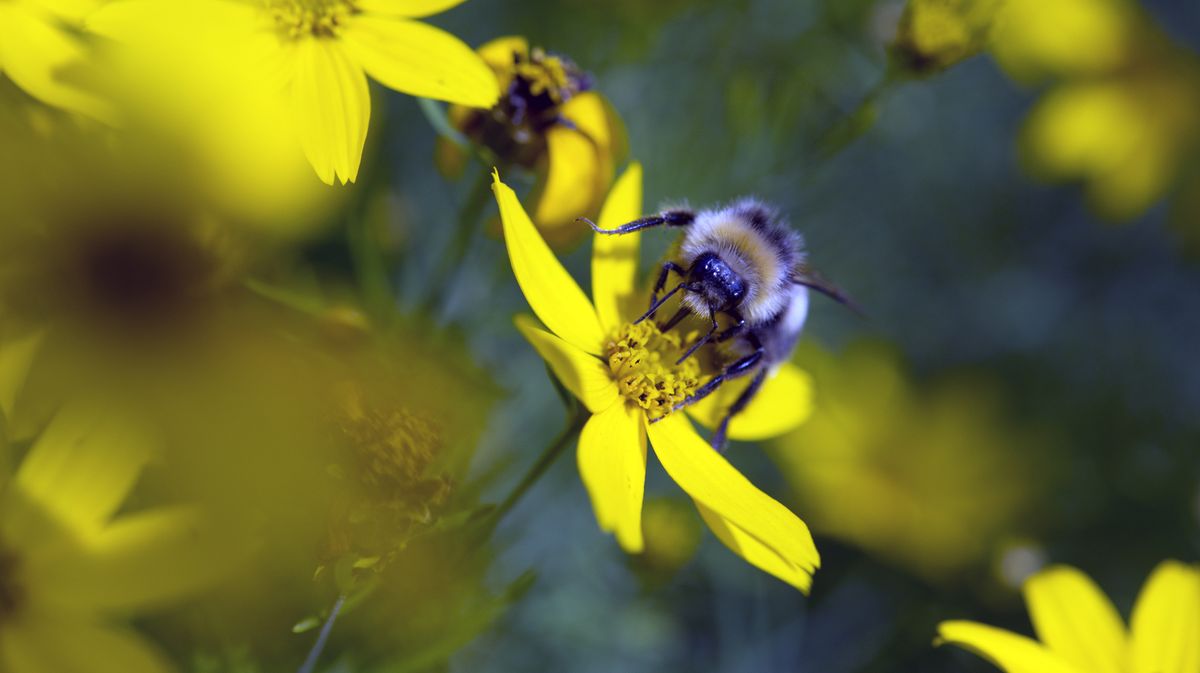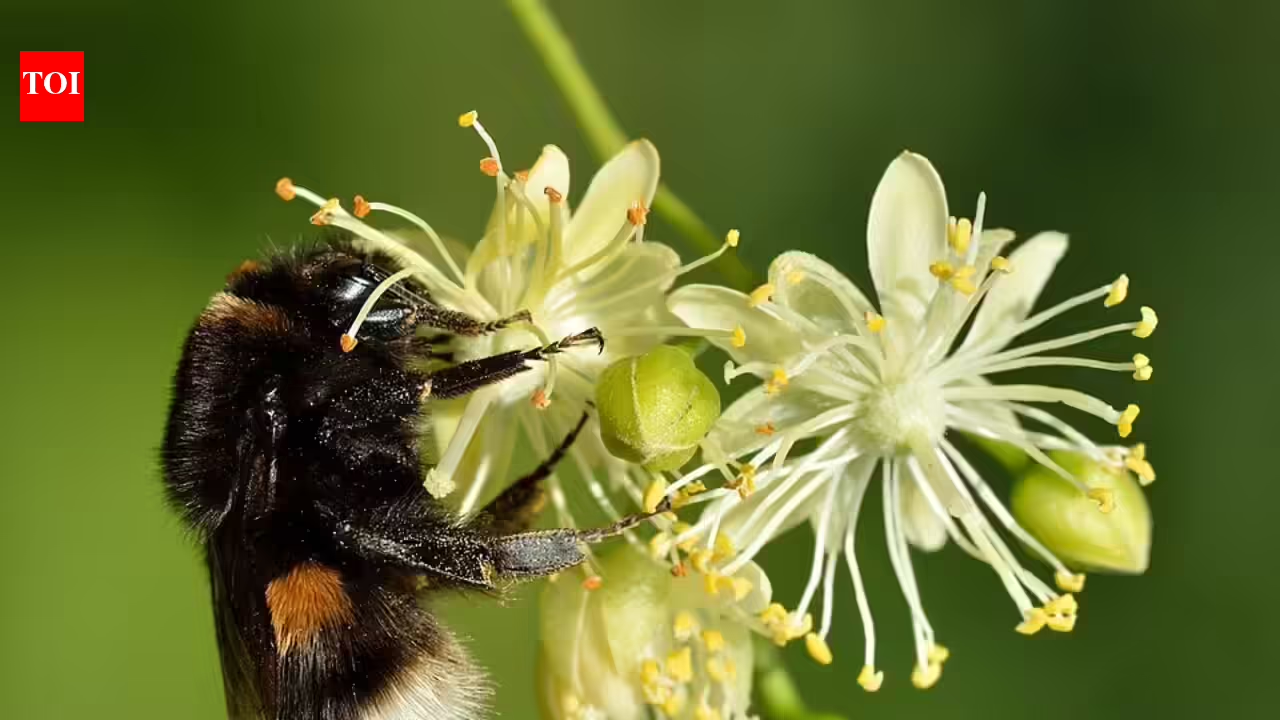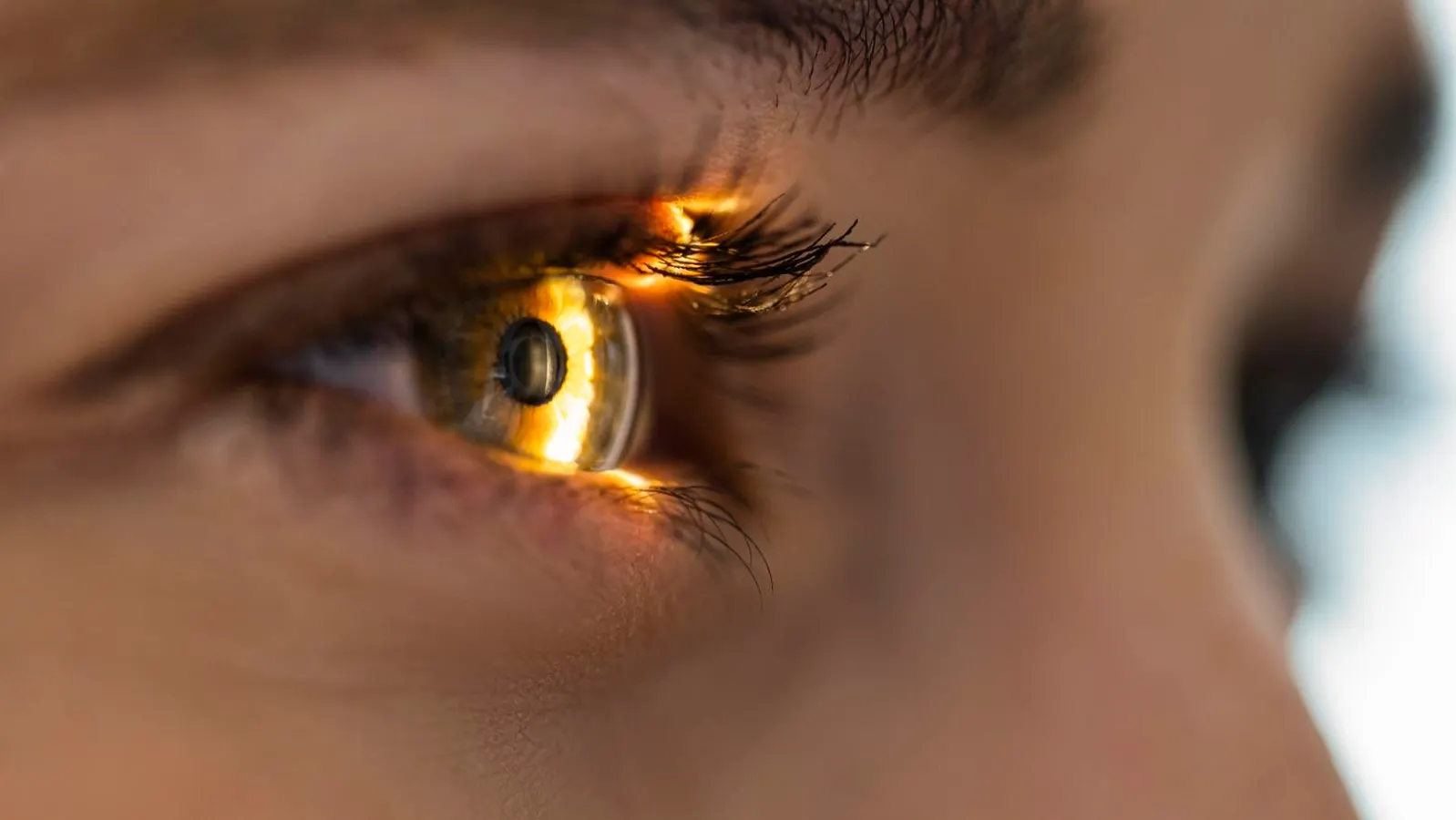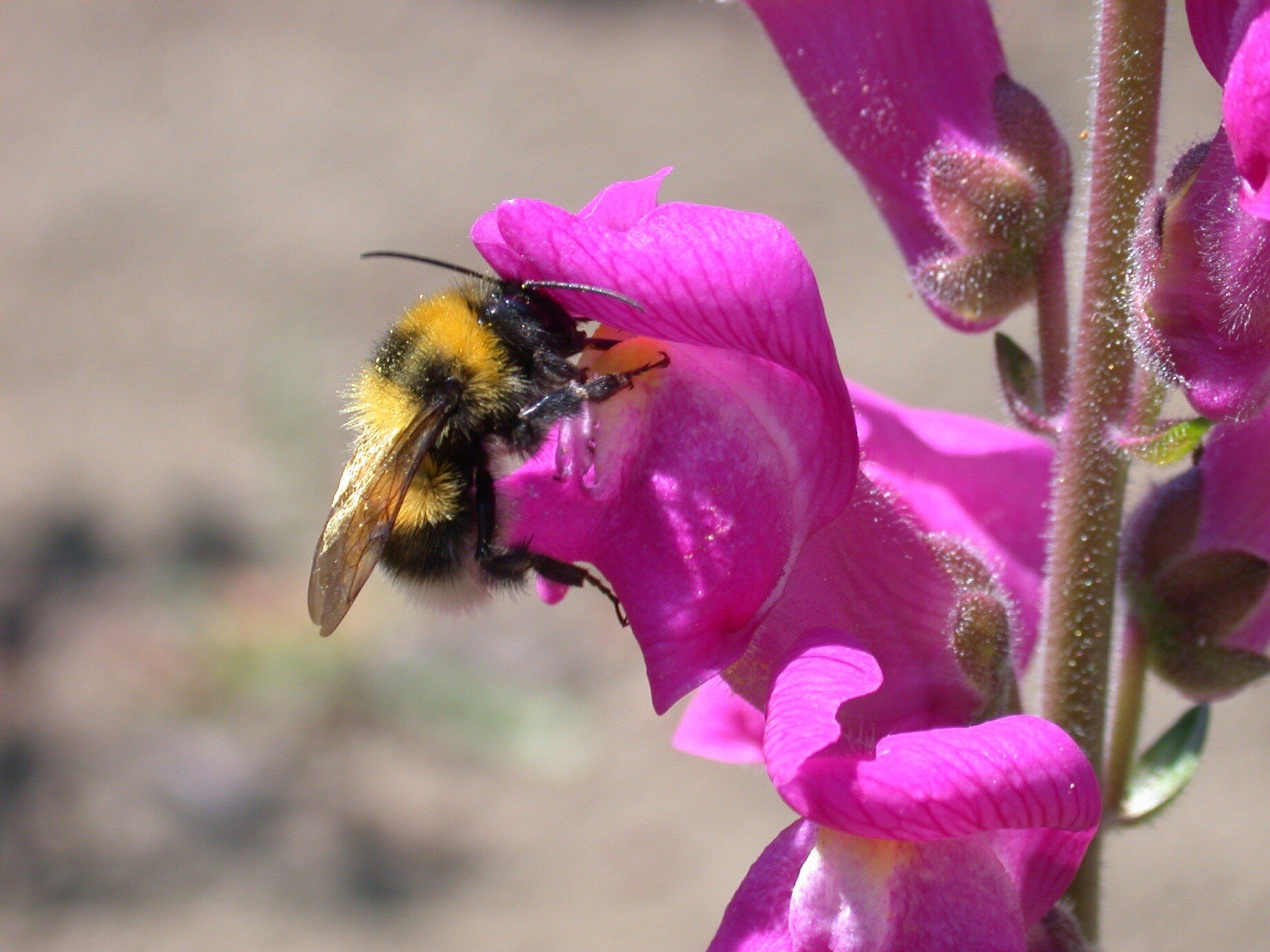
Flower color patterns have been selected over evolutionary time to favor the dance and visit of bees. Credit: Annabel Whibley
Just as careful blending of eye shadow can make a difference to our looks, a recent study has shown how flowers go to considerable trouble to fine-tune their shades. In the relentless competition to attract bees, a slight edge can make the difference between life and death for a gene.
Researchers at the John Innes Centre, in the group of Professor Enrico Coen, working alongside colleagues in Austria, China and Australia, investigated shades of yellow in wild populations of snapdragons (Antirrhinum majus). The work is published in the journal Science Advances.
The study uses a remarkable natural research resource in the Pyrenees—a hybrid zone where two varieties meet. One variety has yellow flowers with a magenta spot to highlight the bees' entry point; the other has a complementary signpost: magenta flowers with a yellow spot.
The color difference between varieties depends on seven genes that interact to control how the flower paints itself magenta and yellow. Three control the magenta paintbrush; four control the yellow.