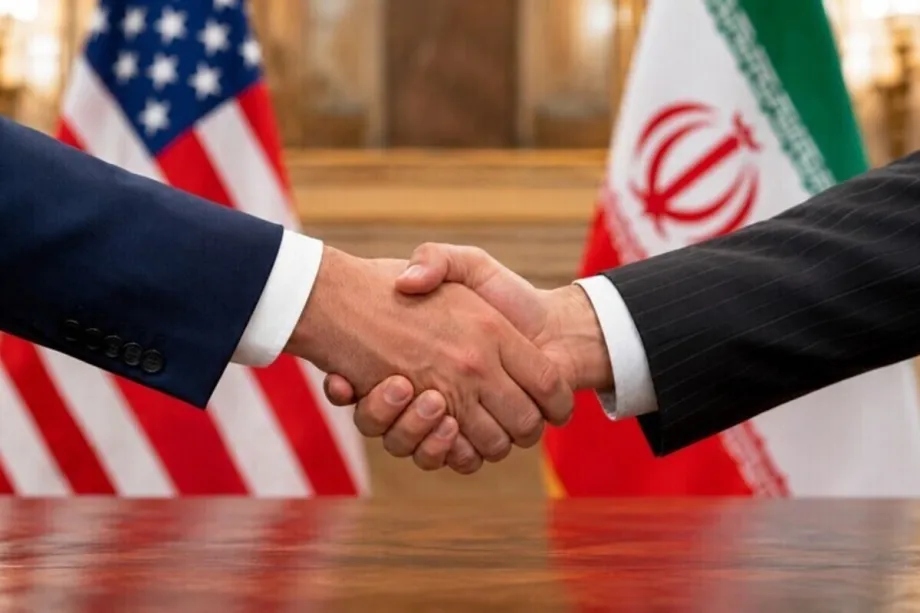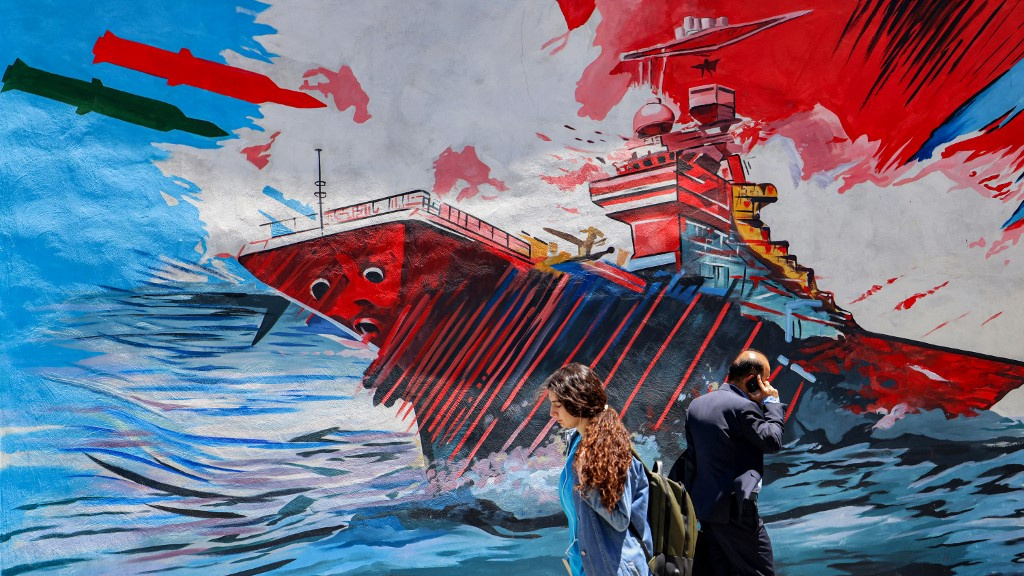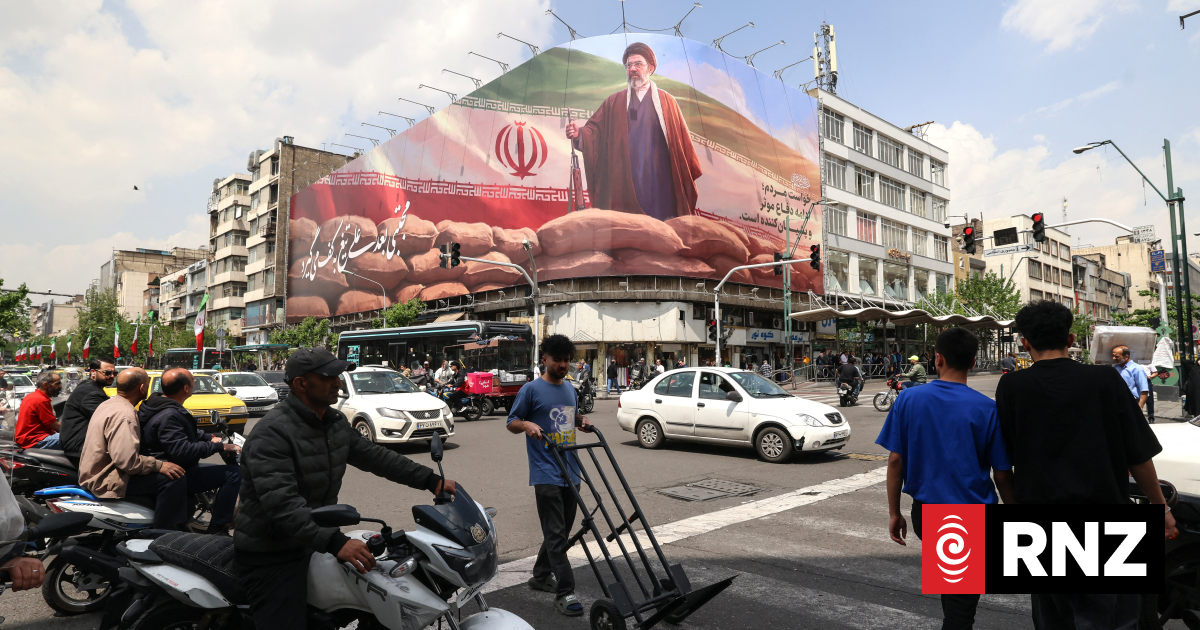
For nearly half a century, relations between Iran and the United States have oscillated between overt hostility and crisis management. Periods of confrontation were punctuated by brief diplomatic openings, only to be followed by renewed distrust and, more recently, war and devastation.In this context the current move towards a memorandum that could lead to an indefinite ceasefire and buy time to address the thornier issues bedevilling their relationship appears to be a significant step. However, even agreeing on a framework to enter into substantive negotiations has been far more difficult than anticipated thanks to vastly different expectations of the two sides.The cost of conflictWhat motivated Washington and Tehran to enter serious negotiations is the high cost in political and economic terms for both of renewed long drawn-out hostilities.The U.S. attacked Iran in cohort with Israel believing that the damage inflicted by superior military force would compel Tehran to accept fundamental constraints on its nuclear and missile programmes. Iran assumed that strategic resilience, regional networks, and its capacity to threaten energy flows would impose unbearable costs on its adversaries.Neither side fully obtained its objective. Iran suffered severe damage to parts of its military infrastructure and further economic deterioration. However, it retained sufficient capabilities to continue imposing costs through asymmetric means such as closing the Strait of Hormuz, attacking America’s allies in the Gulf and threatening continued instability in the region through its proxies. The danger of a prolonged conflict affecting shipping routes and energy markets created domestic and global pressures on Washington for de-escalation.There is, therefore, an unusual convergence of interests that has motivated both to look for ways to bring hostilities to an end. Memoranda are easier to sign than peace agreements. They are often signed precisely because they defer tough decisions. However, in this case, even signing a memorandum appears elusive because of the wide gap between the two sides.Hurdles to lasting peaceSeveral obstacles stand in the way of transforming the proposed U.S.-Iran memorandum even if it is signed into a lasting peace agreement. The first concerns mutual distrust. Decades of confrontation have created deep suspicions. Iranian leaders remain convinced that Washington ultimately seeks regime change and will use negotiations as a ruse for launching attacks as it did in June 2025 and February 2026. U.S. President Donald Trump’s habit of blowing hot and cold further complicates the problem. American policymakers continue to suspect that Tehran uses negotiations primarily to buy time, preserve its nuclear option, and rebuild its missile and other delivery capabilities.Second, any agreement will face opposition in both countries. In Washington, critics are already warning against repeating what they consider the perceived weaknesses of the 2015 nuclear agreement. In Tehran, hard-line factions, including many in the Islamic Revolutionary Guard Corps (IRGC), will portray compromises as surrender under pressure.The third and perhaps most serious obstacle involves regional actors, especially Israel. Israel has consistently viewed Iran’s missile and nuclear capabilities as the greatest threat to its aspiration for regional dominance. Israeli security thinking has historically favoured preventive measures that are designed to ensure that adversaries do not acquire capabilities that threaten its military superiority. In the case of Iran, this concern centres on preserving Israeli monopoly of nuclear weapons in West Asia.Israel need not oppose peace directly. It may instead seek to shape its terms in ways that make implementation impossible. Israeli military actions, such as its current invasion of Lebanon which has been expanding in scope and inflicting heavy damage, or covert operations, such as killing Iranian nuclear scientists, could potentially disrupt diplomatic momentum and eventually subvert the idea of a peace agreement.This danger is particularly acute because Israeli and American priorities do not always perfectly coincide. Washington may increasingly value stability and de-escalation, whereas Israel may place greater emphasis on eliminating perceived long-term threats even if it entails derailing a peace agreement between Iran and the U.S. and greater regional instability.Hardliners in the seatOn the Iranian side, the principal lesson that the regime must have learned from the U.S.-Israeli attack is that nuclear ambiguity does not assure security while nuclear weapons do. The example of North Korea is ample proof of the verity of this conclusion.Moreover, all indications point to the fact that the centre of power within Iran has shifted decisively in favour of hardliners in the IRGC who will call the shots regardless of the veneer adopted by the regime for tactical purposes.Tehran may, therefore, engage in long drawn-out negotiations about the nuclear issue but is unlikely to give up the weapons option. The aspiration may lie dormant for a period but is unlikely to disappear. Iran will give up this option only if a nuclear-weapon-free zone is created in West Asia that includes Israel, an eventuality unacceptable to Israel.In short, while the memorandum may be signed in the coming days, as it is essential to provide Mr. Trump with an off-ramp from an unpopular war, the prospects of it translating into a lasting peace remain minimal. That would require a fundamental change of attitude in both Washington and Tehran. There are no signs that such a transformation is on the cards soon.Mohammed Ayoob is University Distinguished Professor Emeritus of International Relations, Michigan State University, and author of ‘The Many Faces of Political Islam’ (2020)
U.S.-Iran negotiations, still a road to nowhere
Several obstacles stand in the way of transforming the proposed U.S.-Iran memorandum even if it is signed into a lasting peace agreement
871 words~4 min read