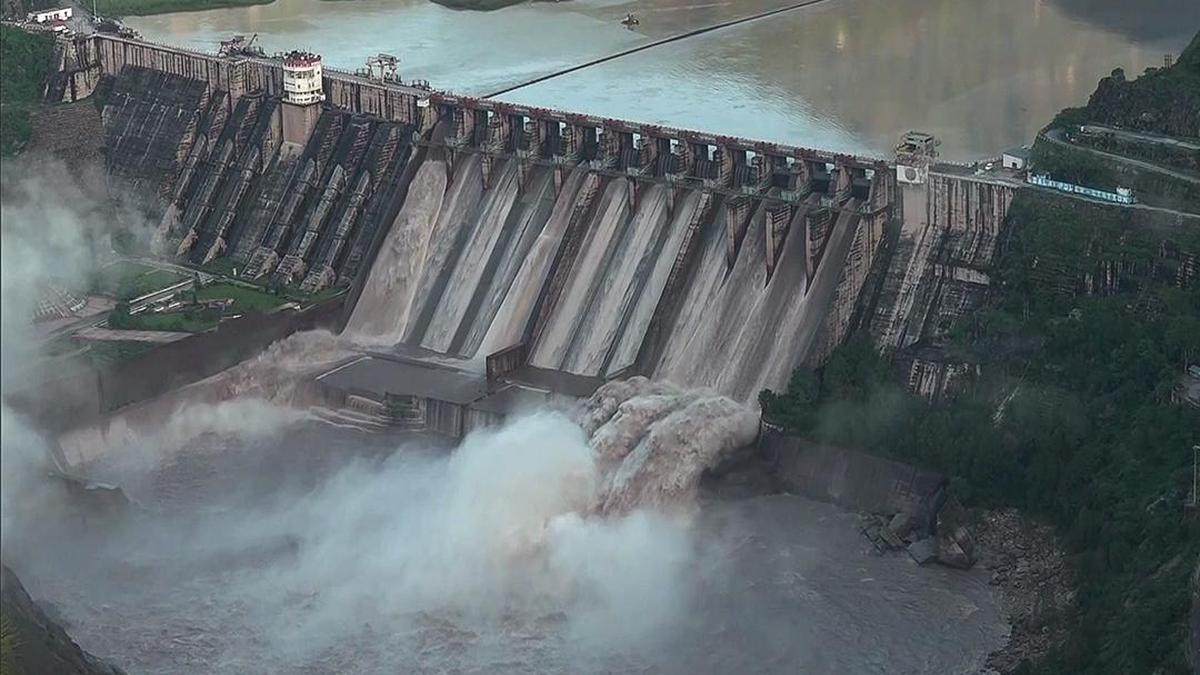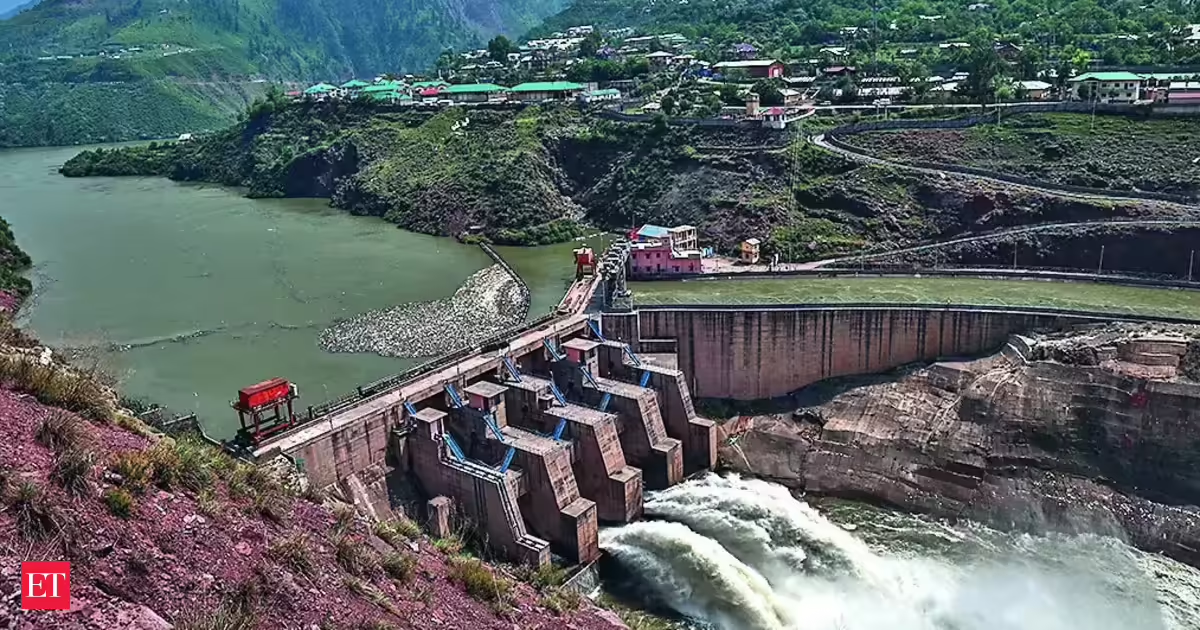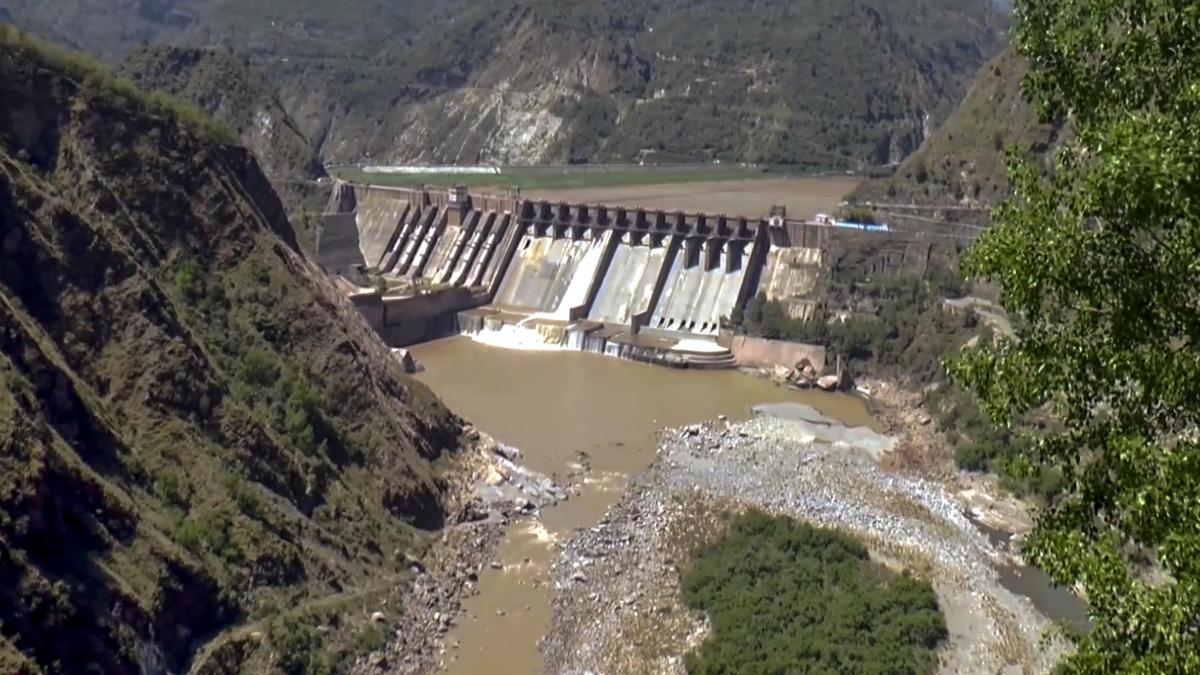
New Delhi: The Neutral Expert on the Indus Water Treaty (IWT) arbitration at the Hague has appointed three external experts from French engineering firm ISL Ingenierie to assess India's key arguments and verify Indian data -- on the need for deep bottom gates to clear sediment off the existing Kishenganga and the upcoming Ratle hydel projects, newly released documents from the Neutral Expert-Permanent Court of Arbitration (PCA) show.They will also check the authenticity of Indian data on sediment load at the Kishenganga run of the river hydel projects, documents indicate.The move comes days after the Permanent Court of Arbitration on May 15 issued an award on maximum pondage -- an unfavourable ruling that India categorically rejected given its stance on the illegality of the PCA on IWT.Even as India has stayed off all Neutral Expert proceedings since May 2025, following the Pahalgam terror attack, Neutral Expert Michel Lino has persisted with the hearings and work programmes, issuing Terms of Reference for Modelling Specialists on May 25 and appointing modelling specialists -- ISL's David Collomb, Oliver Brabet, Salah Shaiek and Marc Desne' -- to carry out three core calculations by March 2027.The trio will also participate in the upcoming Fifth Meeting of the Neutral Expert from June 8-10.Calculation A will pertain to 'Sediment Transit in the Chenab River & Future RHEP Reservoir', mainly to verify Pakistan's claims that instead of using deep drawdown spillways as proposed by India, sediment equilibrium can be maintained only by sluicing at Dead Storage Level (DSL) using a higher elevation crest spillway. It will use a Pakistan's SRH-1D model and rely on hydrological data given by India on Baglihar reservoir in 2024 for the same.Calculation B will look at Hydraulic Modelling Near the Ratle Dam & Intakes, again using the 3D geometric design given by Pakistan. The calculation will model 3D flow patterns near the dam to assess if the Ratle project's location on a river bend naturally takes care of sediment intake using a skimming wall.Calculation C will look into 'sedimentation volume' at Kishenganga hydel project. It seeks to openly contest India's claims on sediment load.TOR documents state that according to India, the average annual sediment load at the Kishenganga dam site is 0.73 MCM/year but "no source or justification for this statement is given". It adds that three bathymetric surveys of the KHEP reservoir are available (2019, 2021, 2023) and these have not been exploited by the parties.Calculation C will mainly be a calculation of the sediment volumes deposited in the reservoir between 2019 and 2021, and between 2021 and 2023, to verify India's data submission.The TOR also claims to bring in safeguards to check against bias or judicial overstepping by specialists and enforced confidentiality clauses in perpetuity.The three calculations, however, are central to the dispute between India and Pakistan on the Ratle and Kishenganga projects.Pakistan has repeatedly challenged India's right and need for deep drawdown spillways which India considers a necessary and efficient mechanism to flush out the heavy Himalayan river system sediment.
Indus Water Treaty expert ropes in external specialists to test India's data
External experts will now assess India's data on sediment management for the Kishenganga and Ratle hydel projects. The Neutral Expert at The Hague has appointed French firm ISL Ingenierie for this task. They will verify Indian claims regarding deep bottom gates for sediment clearance. This work is crucial for ongoing arbitration. The experts will complete their calculations by March 2027.
500 words~2 min read