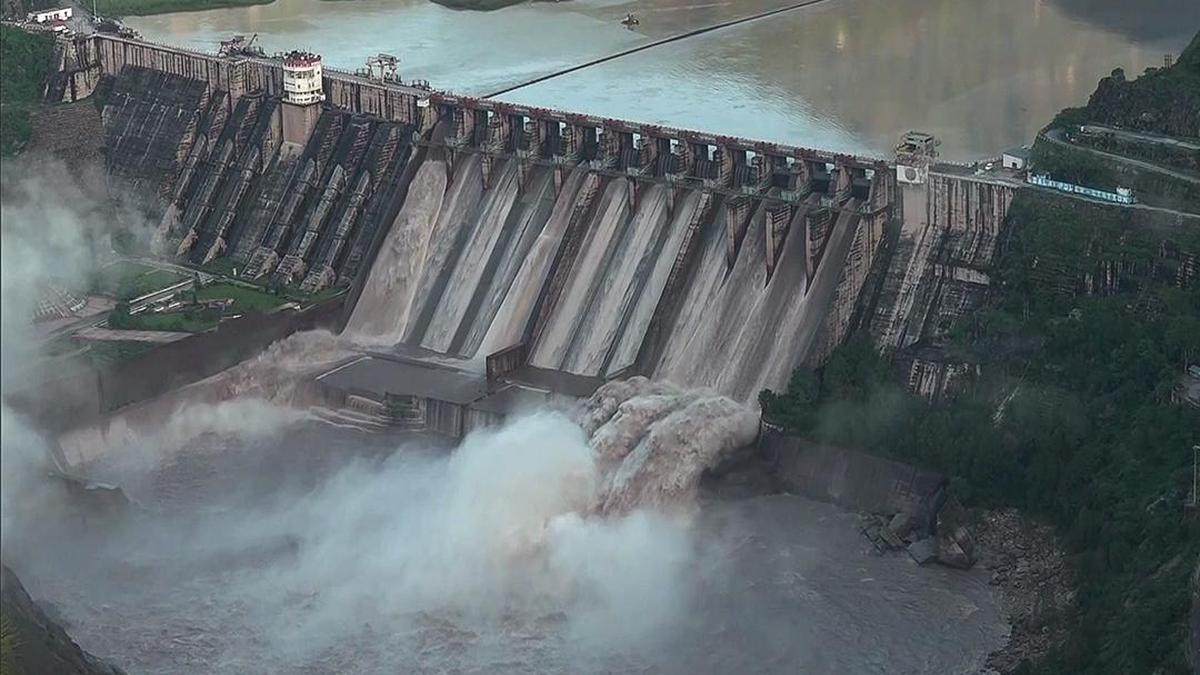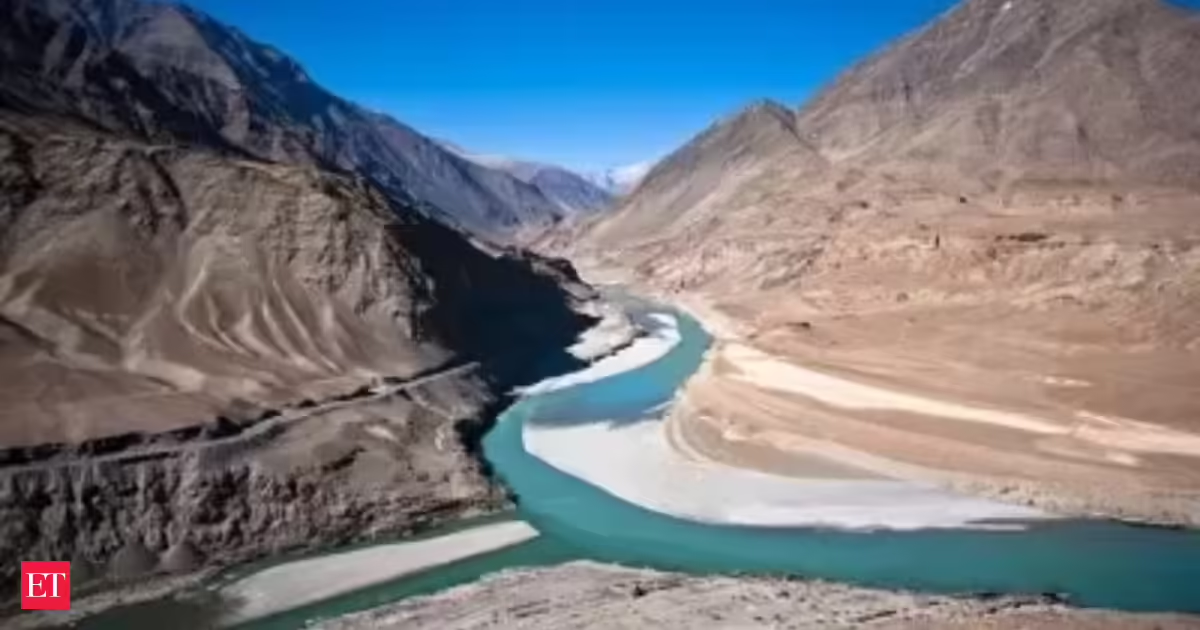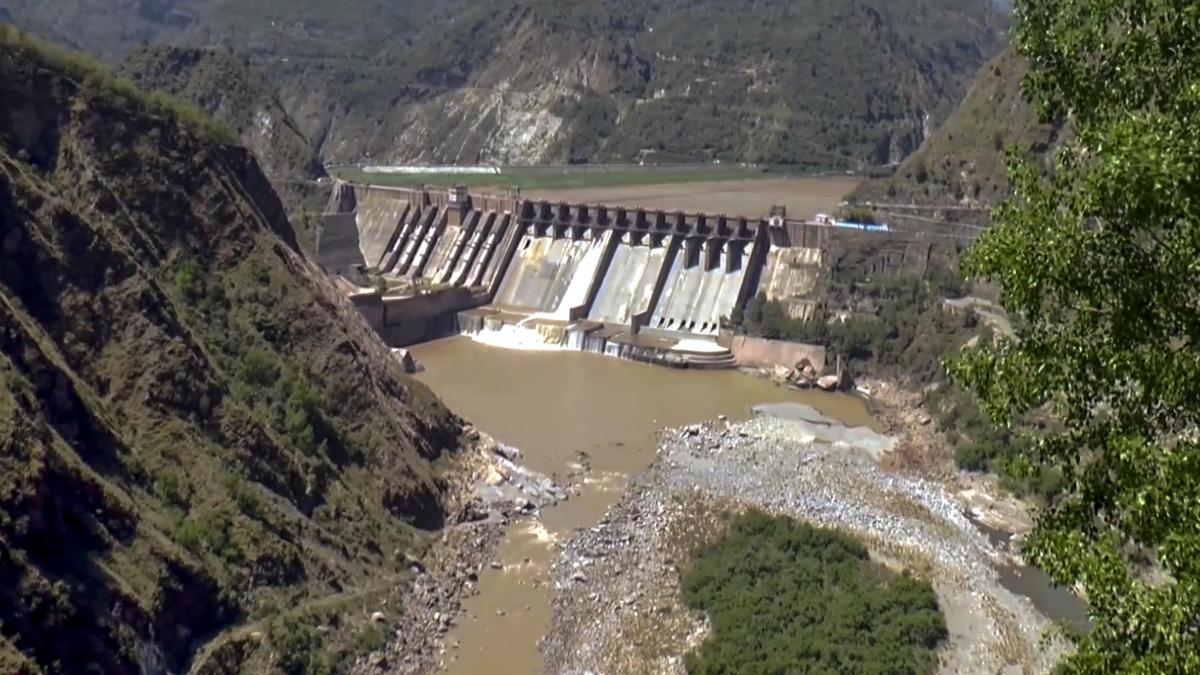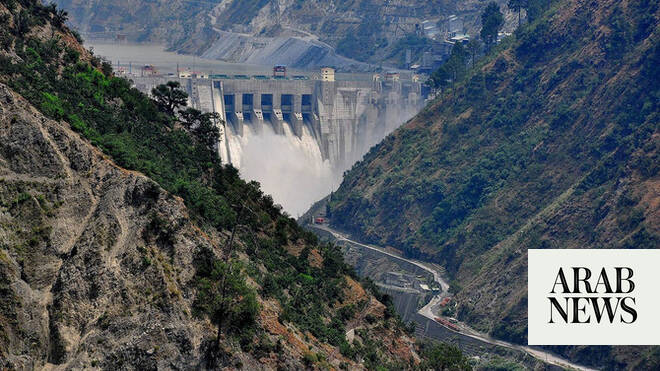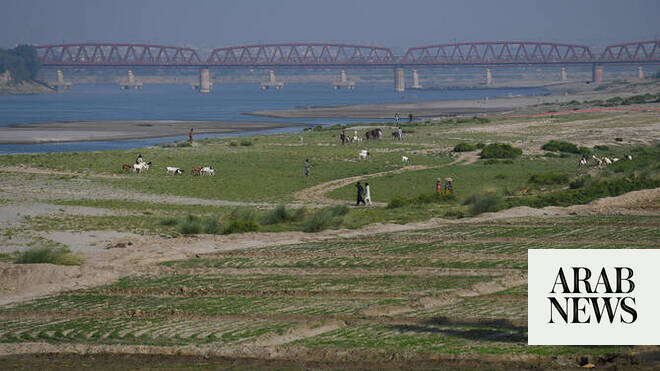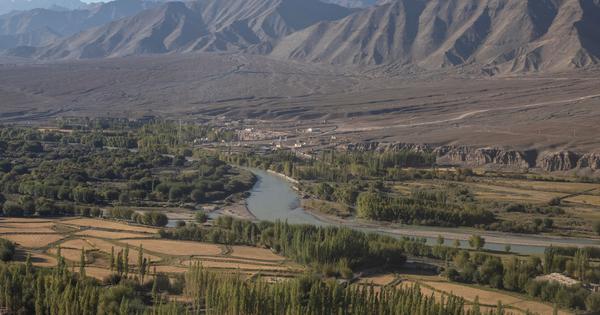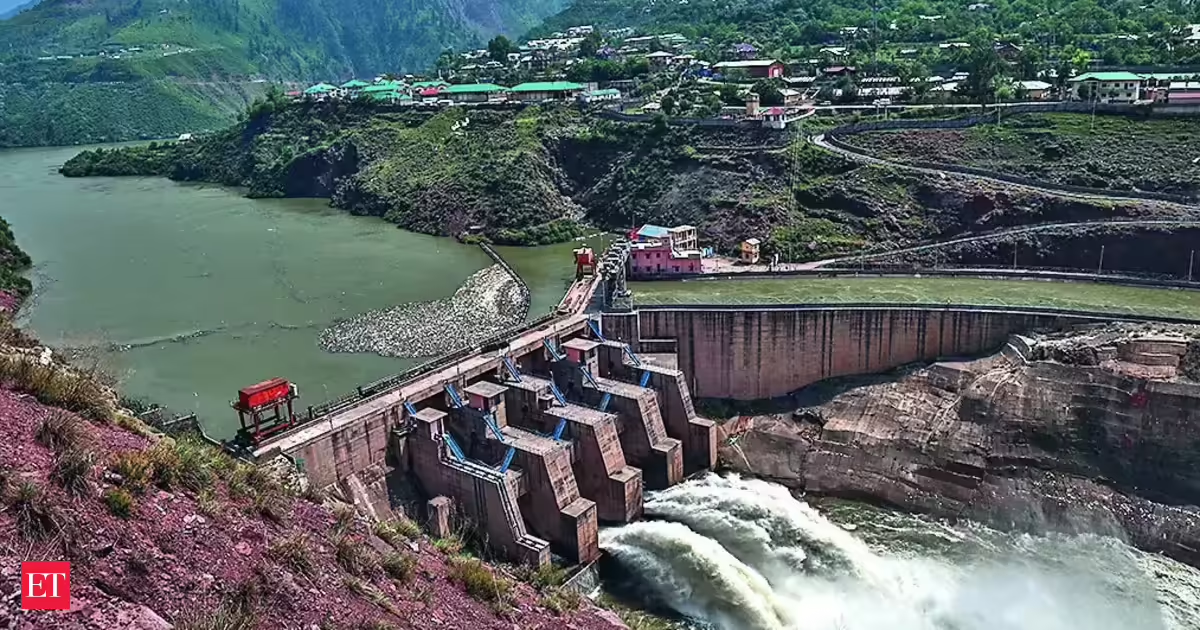
New Delhi: The detailed ruling in the Indus Waters Treaty proceedings at the Hague-based Permanent Court of Arbitration (CoA), already rejected by India, has deepened the Indo-Pak divide on the treaty further, severely restricting India's rights on water storage levels at its hydel plants besides mandating a minimum flow into Pakistan and sharing of water data and project design right from the planning stage.Top government sources told ET that the way the CoA was constituted and the way it went about its proceedings is one of the reasons why the treaty in this current form is not acceptable to India. New Delhi has already served a notice to Islamabad to re-negotiate the agreement. However, Pakistan is yet to respond. "The illegally constituted so-called Court of Arbitration (CoA) has, on 15 May 2026, issued what it termed an award concerning maximum pondage supplemental to the award on issues of general interpretation of the Indus Waters Treaty. India categorically rejects the present so-called award, just as it has firmly rejected all prior pronouncements of the illegally constituted CoA. India has never recognised the establishment of this so-called CoA. Any proceeding, award, or decision issued by it is null and void. India's decision to hold the Indus Waters Treaty in abeyance remains in force", the ministry of external affairs said in its statement on May 16.After India put the IWT in abeyance following the Pahalgam attack, it also expedited work on a string of hydel projects in J&K from Kiru to Kwar, fast tracking environmental clearances and tender processes besides initiating studies on new Hydro Electric Plants (HEP). Soon after, in June 2025, Pakistan sought CoA intervention on three technical questions related to methods India was using to calculate maximum Pondage under the IWT. The CoA declared itself competent to address the issue in June 2025 and held the IWT did not allow for 'unilateral' suspension of the treaty even as India boycotted its proceedings.At the root of this dispute is the contrasting position both countries have on IWT provisions for calculating "maximum pondage", notes the CoA. Pakistan argues that this volume of water should depend on "minimum mean discharge (MMD)", mainly lowest average natural water flow at that site. In contrast, India has always considered the HEP's installed capacity and anticipated load besides MMD.Deal breaker CoA orderFirst, on installed capacity, the COA has now held that a HEP's power generating capacity will include both- firm power (electricity it can deliver 100% of the time) as well as secondary power (surplus power it may deliver at some intervals). It has added that water storage or pondage required for firm power must be calculated based on a 'realistic, well-founded, and defensible projection of installed capacity'.Second, the CoA order has stated that this projection will be based on how the HEP is operated- adding that there should be no room to 'inflate' the water storage requirements and be based strictly on data-backed 'anticipated load' (Expected power demand).Third, in keeping with Pakistan's request, the COA has held that India's water storage plans and hydel project design must factor in a third element: the maintenance of a minimum downstream flow to Pakistan, necessary for environmental and agricultural purposes. It has held that India must adhere to 'minimum flow obligations' arising from inter-tributary diversions on the Jhelum River and ensure 'need to prevent significant environmental harm to Pakistan or Pakistan-administered territory'. It added that India must satisfy that obligation in ways that may even be unrelated to the calculation of pondage.Fourth, reaffirming its 08/08/2025 Award, the COA has reiterated India must at an early stage share "hydrologic data", "hydraulic data", and the "particulars of design" with Pakistan, including the estimated river discharge rate, the dimensional plan, and the installed capacity and anticipated load of the plant, along with the calculations for the operating pool.It must further give sufficient time for Pakistan to respond with its views on design compliance and allow scope for possible design modification in the face of valid concerns and to also consider 'timely objections, including any Pakistani position that a more treaty-compliant alternative exists'.
Court of Arbitration ruling on Indus Waters Treaty deepens Indo-Pak rift
A Hague court ruling has intensified the Indus Waters Treaty dispute between India and Pakistan. The decision restricts India's water storage at hydel plants. It mandates minimum water flow to Pakistan and data sharing on project designs. India rejects the ruling, calling the court illegally constituted. India has initiated talks to renegotiate the treaty, but Pakistan has not yet responded.
680 words~3 min read