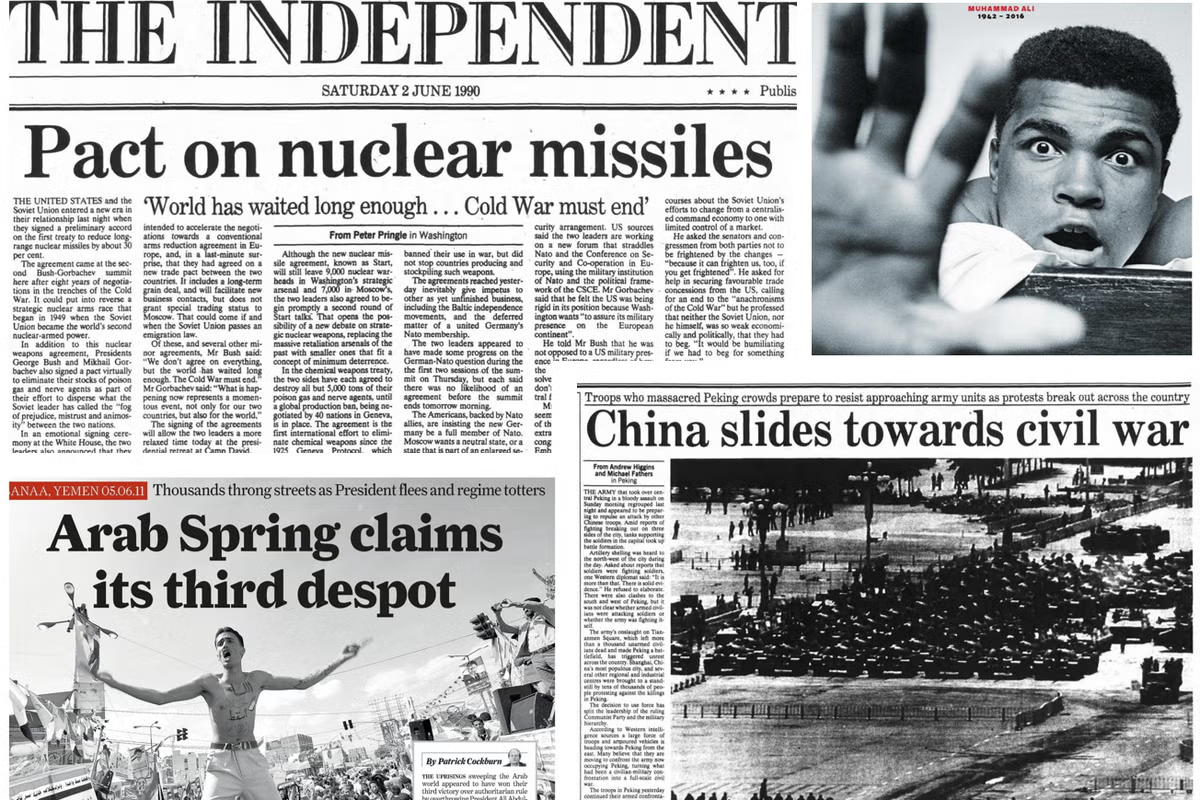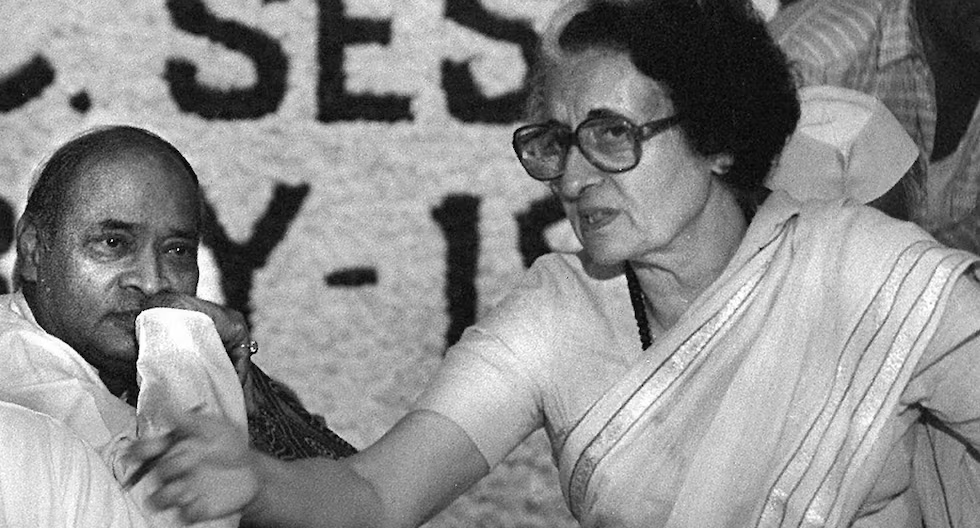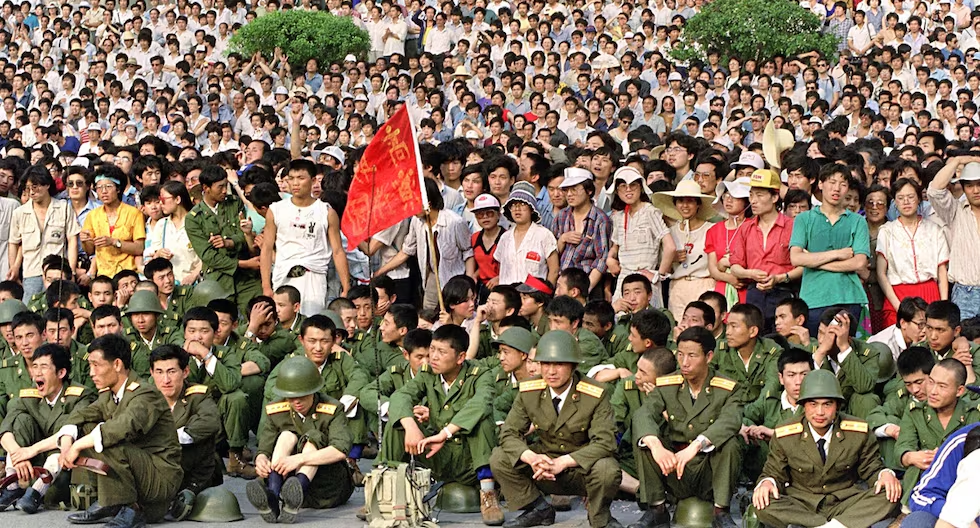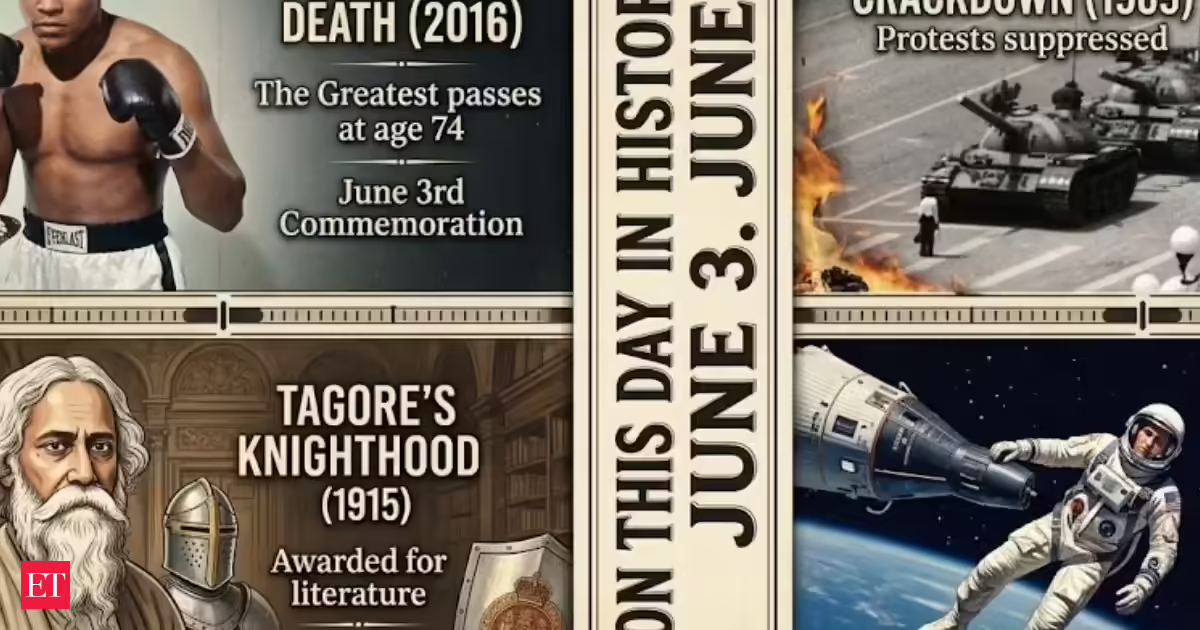
On This Day in History, June 3 stands out for several events that shaped politics, culture and exploration across the world. In 2016, legendary boxer and civil rights advocate Muhammad Ali passed away, leaving behind a legacy that extended far beyond the sporting arena. In 1989, the Tiananmen Square protests reached a critical turning point as Chinese authorities moved to suppress the student-led demonstrations. A major milestone in space exploration was achieved in 1965 when astronaut Ed White became the first American to perform a spacewalk during the Gemini 4 mission. June 3, 1947, also marked the unveiling of Lord Mountbatten’s plan for the partition of India, a development that eventually led to the creation of India and Pakistan. Earlier, in 1915, Rabindranath Tagore received a knighthood from the British Government, an honour he later renounced in protest against colonial rule.2016: Muhammad Ali passes awayLegendary boxer and social activist Muhammad Ali died on June 3, 2016. Widely regarded as one of the greatest athletes in history, Ali's influence extended beyond sport through his advocacy for civil rights and social justice, making him a global icon.2014: Rohan Bopanna reaches French Open quarterfinalsIndian tennis player Rohan Bopanna, alongside partner Aisam-ul-Haq Qureshi, advanced to the quarterfinals of the French Open on June 3, 2014. The achievement highlighted India's growing presence in international tennis and marked a notable milestone in Bopanna’s career.2006: Montenegro declares independenceMontenegro’s parliament formally declared independence on June 3, 2006, ending its 88-year union with Serbia. The move reshaped the political landscape of the Balkans and affirmed the republic’s sovereignty.2001: ‘The Producers’ sweeps Tony AwardsMel Brooks’s Broadway musical The Producers won a record 12 Tony Awards on June 3, 2001. Its unprecedented success underscored the enduring popularity of musical theatre and its cultural impact.1989: Tiananmen Square crackdown beginsChinese authorities deployed military forces against student-led demonstrations in and around Tiananmen Square on June 3, 1989. The crackdown became one of the most significant and widely discussed political events of the late 20th century.1985: India adopts a five-day workweekThe Government of India introduced a five-day workweek for civil administrative offices on June 3, 1985. The policy represented a major change in workplace practices and aimed to improve work-life balance.1977: Bob Marley’s ‘Exodus’ releasedIsland Records released Exodus, the ninth studio album by Bob Marley & the Wailers, on June 3, 1977. Featuring songs such as Jamming, Waiting in Vain, Three Little Birds and One Love, the album later earned recognition as one of the most influential records in music history.1976: US receives historic Magna Carta copyThe United States was presented with the oldest known copy of the Magna Carta on June 3, 1976. The document symbolised the enduring importance of constitutional governance and individual rights.1972: INS Nilgiri commissionedIndia commissioned INS Nilgiri, its first modern-age warship, on June 3, 1972. The development marked a significant advancement in the country’s naval capabilities and maritime defence infrastructure.1965: First American spacewalkAstronaut Ed White became the first American to perform a spacewalk during NASA’s Gemini 4 mission on June 3, 1965. His 23-minute extravehicular activity paved the way for future space missions and demonstrated the possibilities of human exploration beyond spacecraft.1947: Mountbatten unveils Partition planBritish Viceroy Lord Mountbatten announced the plan for the partition of India on June 3, 1947. The proposal eventually led to the creation of India and Pakistan, reshaping the political geography of South Asia.1947: Mountbatten visits PakistanLord Mountbatten also visited Pakistan on June 3, 1947, during a crucial phase of negotiations surrounding the end of British rule in the Indian subcontinent.1946: Bikini makes public debutThe bikini bathing suit was publicly displayed for the first time in Paris on June 3, 1946. The garment went on to become one of the most recognisable fashion innovations of the 20th century.1943: Zoot Suit Riots begin in Los AngelesThe Zoot Suit Riots erupted in Los Angeles on June 3, 1943. The disturbances reflected racial and social tensions in wartime America and remain an important chapter in US civil rights history.1915: Rabindranath Tagore receives knighthoodRabindranath Tagore was awarded a knighthood by the British Government on June 3, 1915. The Nobel laureate later renounced the honour in protest against British policies, further cementing his place in India’s freedom-era history.1784: US Army formally establishedThe Congress of the Confederation officially established the United States Army on June 3, 1784. The decision laid the foundation for the country’s permanent military force.1540: Hernando de Soto crosses Appalachian MountainsSpanish explorer Hernando de Soto became the first known European to cross the Appalachian Mountains on June 3, 1540. The journey expanded European knowledge of North America’s interior.1539: Florida claimed for SpainSpanish conquistador Hernando de Soto claimed Florida for Spain on June 3, 1539. The event marked an important phase in European exploration and colonisation of the Americas.1083: Henry IV captures St. Peter’s BasilicaHoly Roman Emperor Henry IV stormed Rome and captured St. Peter’s Basilica on June 3, 1083. The episode formed part of the broader power struggle between secular rulers and the papacy during the Middle Ages.
On This Day in History, June 3: Muhammad Ali’s death, Tiananmen Square crackdown, Tagore’s knighthood, Partition plan and first American spacewalk
On This Day in History, June 3 witnessed several landmark events that shaped the modern world. From Muhammad Alis death in 2016 and the Tiananmen Square crackdown in 1989 to Ed Whites historic American spacewalk in 1965, the date holds global significance. It also marks the unveiling of the Partition plan for India in 1947 and Rabindranath Tagores knighthood in 1915.
TL;DRAI
June 3 witnessed Muhammad Ali's death (2016), Tiananmen crackdown (1989), first US spacewalk (1965), and India-Pakistan Partition Plan (1947). Turning points across activism, geopolitics, technology, governance—inflections in how institutions navigate transformation and change.
830 words~4 min read