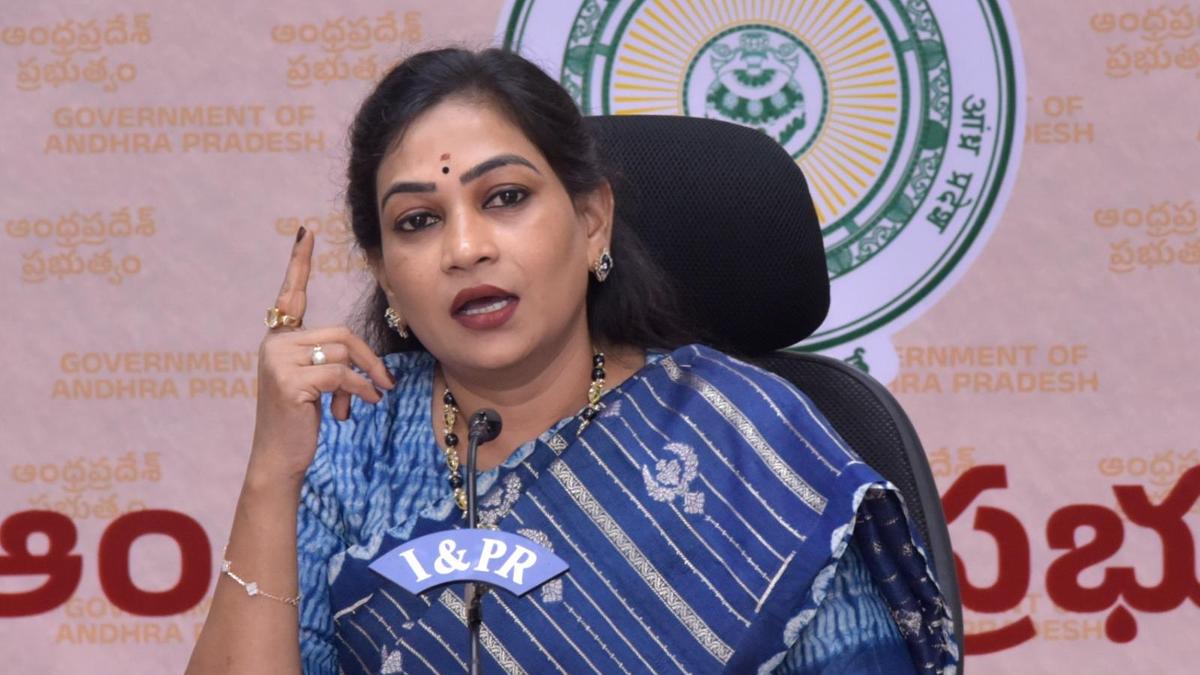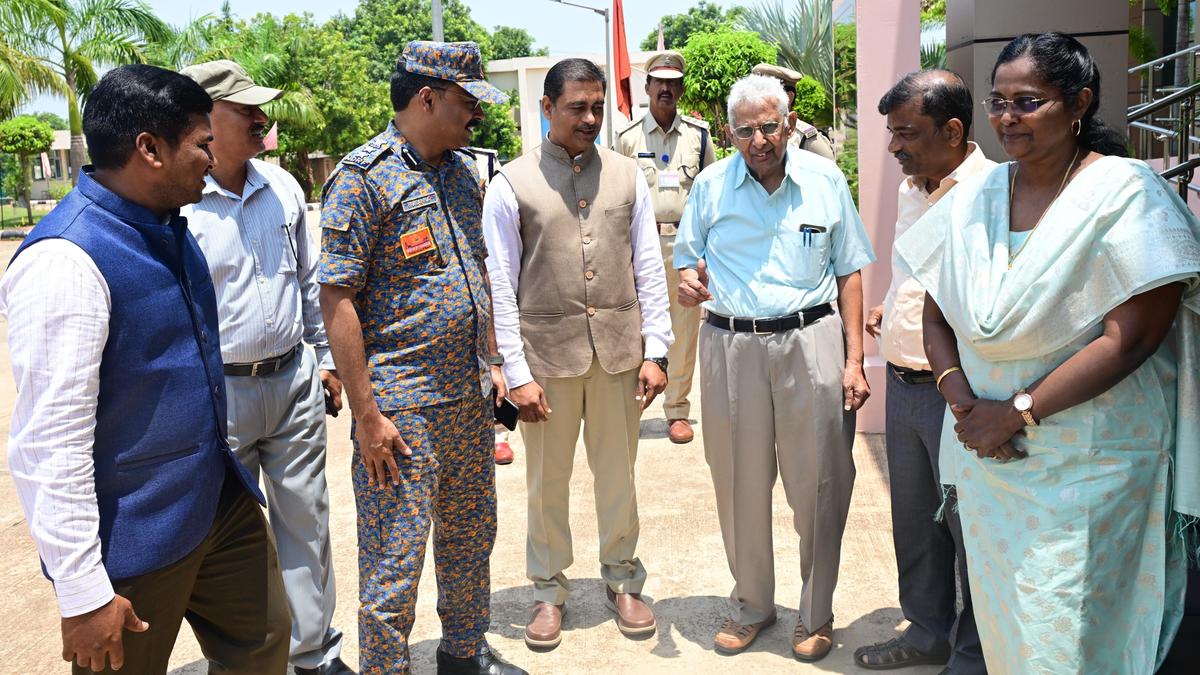
IMD-Amaravati Director S. Stella, Senior Scientist S. Karunasagar, meteorologists and officials from various departments interact ahead of a stakeholders’ meeting on the Southwest Monsoon at the NIDM Southern Campus near Agiripalli on Tuesday.
| Photo Credit: G.N. Rao
With the onset of the Southwest Monsoon, disaster management agencies and government departments should make effective use of advance weather information to minimise loss of life and property, said Mrutyunjay Mohapatra, Director General of Meteorology, India Meteorological Department (IMD).Participating virtually in a stakeholders’ meeting on ‘Southwest Monsoon 2026 Outlook – Preparedness & Multi-Hazard Weather Warning Services’, organised by the IMD-Amaravati and NIDM at the National Institute of Disaster Management (NIDM) Southern Campus near Gannavaram on Tuesday, Dr. Mohapatra said the timing and distribution of monsoon rainfall are influenced by climate systems such as El Nino, La Nina and the Indian Ocean Dipole.Referring to Andhra Pradesh, he said that 13 to 14 low-pressure systems form over the Bay of Bengal every year, most of them originating in the northern Bay. As these systems move along the monsoon trough, they bring heavy rainfall to north coastal Andhra Pradesh, Odisha, Chhattisgarh, Madhya Pradesh and Gujarat. The Godavari and Krishna river basins are particularly vulnerable to hazards such as coastal inundation and flooding.In this context, Dr. Mohapatra urged District Collectors, Tahsildars and agricultural officers to use early warning information to take timely decisions and minimise losses.Stressing the importance of early warning systems and inter-departmental coordination, B. V. Ramana Rao, retired professor at the ICAR-Central Research Institute for Dryland Agriculture and founder of the All India Coordinated Research Project on Agrometeorology (AICRPAM), said weather-related disasters place a heavy burden on the economy. If losses could be reduced even by 10-15%, those resources could be redirected towards development, he said.He also emphasised the need for scientific studies to identify vulnerable regions and populations in advance. Scientists should forecast the impact of droughts early and guide farmers on appropriate mitigation measures, he added.With the possibility of El Nino conditions developing during the monsoon, D. Sivananda Pai, Head of the Regional Meteorological Centre, Chennai, said overall rainfall in the country is likely to be below normal. However, he cautioned that even if seasonal rainfall declines, the risk of sudden floods would remain high. Therefore, sectors such as agriculture and water resources should not rely solely on forecasts but also take proactive measures at the field level.S. Stella, IMD-Amaravati Director, urged government departments and district authorities to take warnings issued by the IMD and the Andhra Pradesh State Disaster Management Authority seriously and ensure that precautionary information reaches farmers and the public promptly.V. V. N. Prasanna Kumar, Commandant of the 10th Battalion of the National Disaster Response Force (NDRF), Col. P. Srinivasulu Reddy, Joint Director of NIDM South Campus, and representatives of the A.P. State Disaster Management Authority and the departments of agriculture, animal husbandry, horticulture, water resources and civil supplies, among others, participated in the programme. Published - June 02, 2026 09:38 pm IST