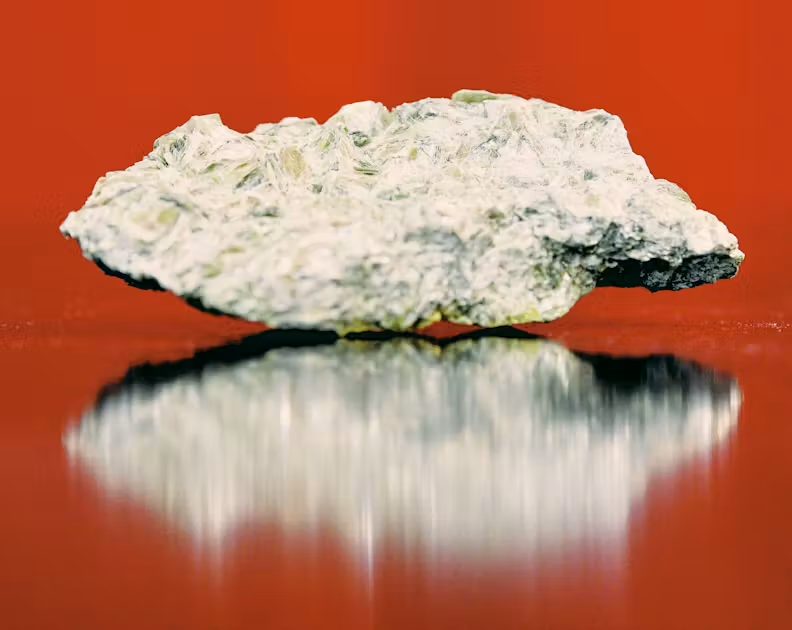
FORWARD-LOOKING: In parts of Germany and Poland, lithium exploration is moving away from remote deserts and salt flats and toward active industrial sites – directly beneath the battery plants that could eventually use the material. Atana Elements, a US-based exploration company, is betting that the future of lithium supply could be far more localized.
Using historical geological data and AI-driven analysis, the company identified prospective lithium-bearing areas spanning roughly 1.5 million acres around Salzgitter and Wroclaw. Both regions are home to major battery manufacturing facilities, including a plant linked to Volkswagen's battery subsidiary and another operated by LG Energy Solution.
The strategy is simple: search for lithium deposits near the factories that will ultimately need the material. "You've got all these markets here that are worried about where their feedstock is going to come from and suddenly you've got these minerals that sit underneath them," chief executive Tom Wilson, chief executive Tom Wilson, told the Financial Times.
Atana's approach differs primarily in how it uses data. The company combines historical oil and gas, geothermal, and mining records with AI tools to identify areas that may contain lithium reserves. Rather than starting from scratch, it is reanalyzing existing geological datasets.