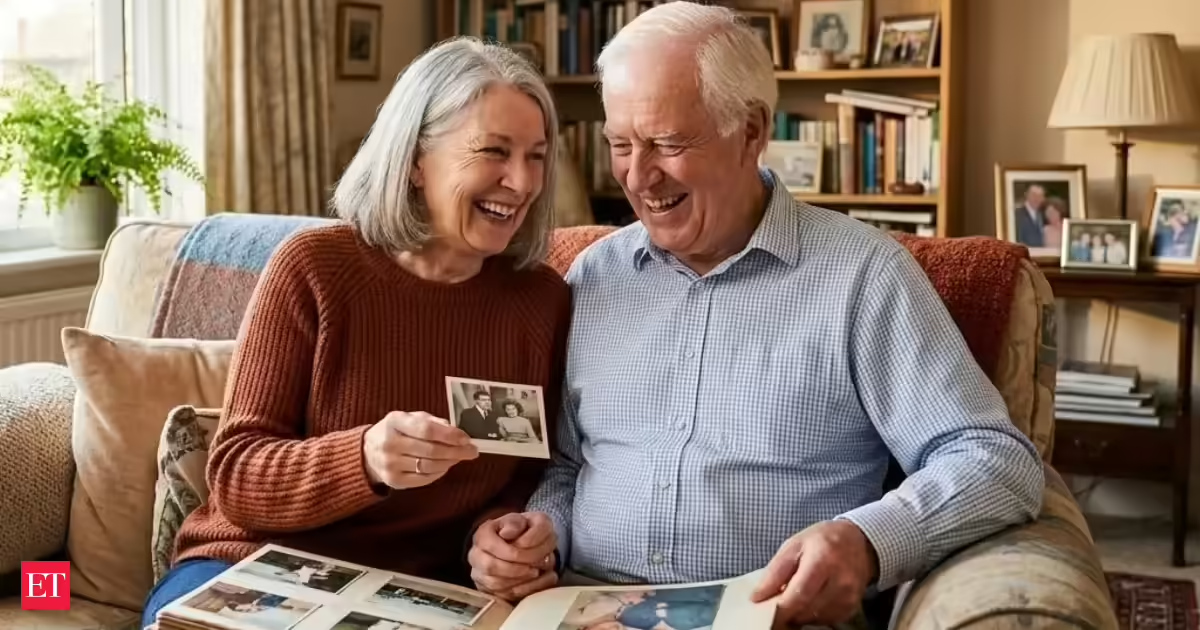
Long-time couples will have one or more stories which they always revisit repeatedly throughout their marriage. It could be a story about their accidental encounter, a funny first date or an unforeseen event which transformed their relationship forever. The family will be well aware of such stories, while friends have been listening to them for ages.In the eyes of an outsider, it seems like a tedious practice which serves no purpose. Everyone already knows how the story ends. However, psychologists argue that there could be reasons for repeated conversations apart from the obvious feeling of nostalgia. Studies show that the habit of revisiting meaningful past memories among married couples as they age could be part of efforts of maintaining connection, meaning and identity.The significance of shared memoriesAs couples spend more time in their relationship, they accumulate thousands of memories and experiences through the years. While some memories get forgotten with time, others play important roles in the definition of the couple's relationship. The significance of these recurring memories is attracting more attention within the scientific community dealing with aging and couples.A 2018 study published in PLoS One systematic review shows that meaningful shared experiences sometimes become an integral part of couples' collective identities through their role in autobiographical memory and relational narrative studies. Or rather, the process allows not only to describe events, but also to understand who the couple considers themselves to be.Memories beyond factual informationWhen discussing memories, psychologists talk about co-reminiscence, which describes the joint recall of experiences. In contrast to personal reminiscence, co-reminiscence is characterized by collaboration. People provide information, correct each other, make observations, and build up the narrative. It is noted that this process may positively influence relationship satisfaction and the feeling of sharing a history.What does co-reminiscence imply? Sometimes it does not involve exchanging previously unknown information. Indeed, both people are usually aware of these memories. However, the act of telling the story may increase the accessibility of significant experiences in relationships. The more thorough explanation is linked to findings on narrative identity.As psychologists believe, many individuals tend to make sense of their existence using stories. They allow for connecting the past and present periods of time. By continually telling stories, couples might be creating a phenomenon that scientists define as shared narrative identityIn the journal Current Directions in Psychological Science, there is an article explaining what narrative identity is and how it helps individuals to structure experiences in a personal narrative. For couples, such a story usually consists of different milestones, successes, and the beginning of their relationship. A story about meeting is of particular importance since it marks the start of a romantic experience. Recalling it may help individuals remember their path.The surprising reason older couples often revisit the story of their first meeting. Image credit - GeminiThe idea of 'we-ness'Another phenomenon studied by scientists is we-ness – the feeling of belonging to a couple. Research shows that we-ness correlates positively with closeness and relationship satisfaction. Storytelling, done again and again, might facilitate this process. Every time the couple tells an important story together, they reaffirm the notion that their destinies are intertwined and create a memory of shared experiences.An activity that may seem like a repetition on the surface turns out to be a subtle form of relationship maintenance. What matters is not the fact that the story was told before, but the connection that comes out of telling it once again.When repetition is no longer usefulSome research warns about the potential drawbacks of repeated conversations. According to studies on co-rumination, repeated talking about problems, anxiety, and ongoing issues can actually increase emotional strain.The secret lies in the topic and the goal of such conversation. While co-reminiscence revolves around meaningful experiences that cement relationships, co-rumination deals with problems that cannot be resolved.Why they continue to circulateThe persistence of origin stories may point toward some universal truth concerning interpersonal connections. Scholars have noted that origin stories allow for continuity. They provide partners with reminders of where their relationship started and why it's important.With age comes the importance of shared memories as a source of personal significance and identity. And that, too, is part of the reason why the same story remains relevant even after many retellings.According to the study findings, when older couples continuously recall how they came together, they do much more than merely look back at their past. Instead, by doing so, they maintain their bond's significance and emotional intensity in the here and now. Ultimately, it's because the relationship still means something.
Psychology says older couples who retell the story of how they met aren't just repeating themselves, they are often strengthening shared identity through co-reminiscence
Long-term couples often revisit shared memories, not just for nostalgia, but to maintain connection, meaning, and identity. This practice, known as co-reminiscence, strengthens their collective identity and the feeling of 'we-ness'. While repetition of problems can be detrimental, revisiting significant past experiences reinforces the bond and its ongoing importance in current lives.
753 words~3 min read