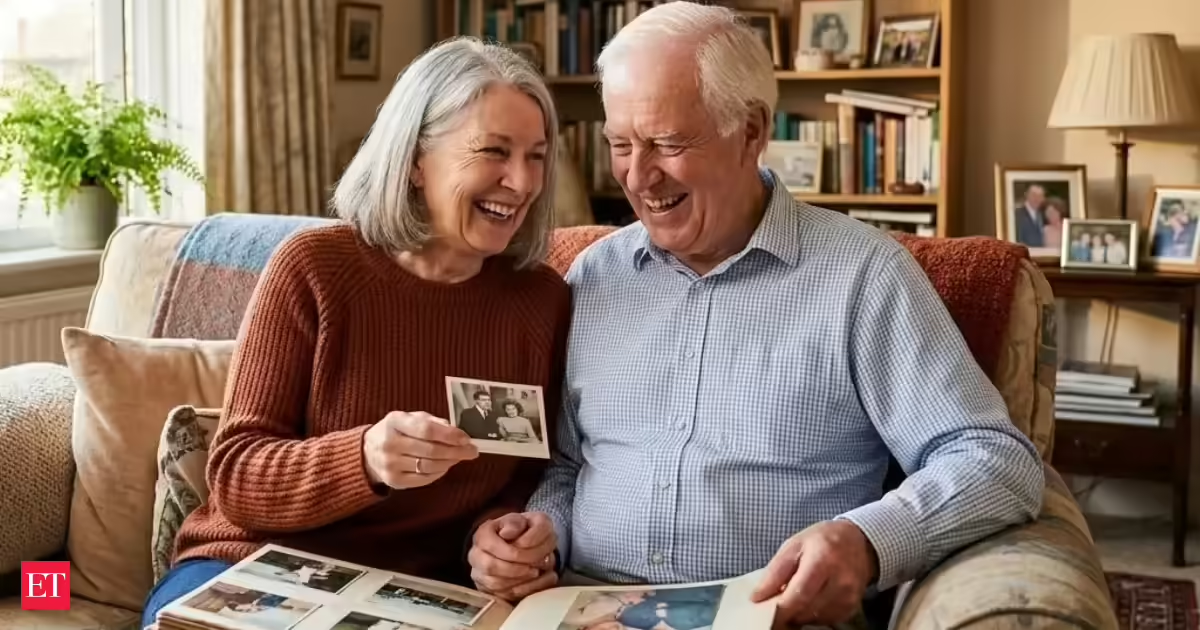
Everyone has a book that they enjoy reading over and over again. A book can be left aside for years until it is taken from its place during some difficult phase, life transitions or quiet weekends. Some individuals would wonder why someone would choose to read something they are already familiar with when there are many thousands of other options for them to read out there.According to psychologists, the reason why such a person engages in rereading is not due to the actual book but rather because of what familiar stories mean to them. Reading a familiar story might be a way for the person to maintain a certain continuity in their lives while at the same time going through numerous changes.More than just a familiar storyThe act of rereading seems very straightforward at a glance since one knows the plot and characters beforehand and will know what to expect. However, psychologists researching on nostalgia and self-continuity believe that there are many benefits that come with familiar experiences.In a study carried out in Self and Identity, it was observed that nostalgia enhances feelings of self-continuity, that is, continuity of the self between past and current selves. The researchers posit that nostalgia enables individuals to construct narrative coherence. This means that it makes life flow seamlessly as opposed to experiencing many events that appear to be unconnected.Why familiar books seem stableDuring times of transition, an individual may experience a sense of disconnection. Transition such as new jobs, relationships, new locations, loss, and personal change disrupt the certainty of identity. It is argued that self-continuity as a concept implies the continuity of the self between past and present, which is considered to be a psychological requirement.This explains why a familiar novel brings feelings of stability since the novel remains intact in the face of change. Reading through the novel reestablishes connection not only with the novel but with the person of the past. Sometimes the connection is subconscious. For instance, reading your favorite novel reminds you of your college days or childhood nights. It is used as a link between various stages of life.Psychology explains returning to the same book can feel so comforting. Image credit - GeminiNostalgia in relation to mental well-beingIt was discovered that nostalgia is much more complicated than simply longing for the good old days. In a neuroscience study published in the journal Frontiers in Psychology, it was suggested that nostalgia could bring joy to people through positive emotions, increased meaning of their lives, better social relations, and even enhanced emotional control.According to the study's leading author Dr. Krystine Batcho, a famous researcher who specializes in nostalgia, it acts as a valuable coping tool and a means of maintaining an intact personality despite changes in people's lives. Therefore, when one rereads their favorite book, they may use all the above-mentioned mechanisms, since a known story creates a familiar environment where one does not feel uncertain yet remains contemplative.Books as convenient memory triggersBooks are easier to use than places or people to evoke nostalgia. According to a number of studies, objects, music, smells, and media that are personally important can trigger nostalgic feelings. Books can serve as especially effective memories triggers since they represent both stories and feelings and personal experience.Just one phrase could awaken memories from years gone by. Rereading is unique in that the same text can generate new interpretations at various stages of one's life experience, while the text stays the same.Why rereading is not an indicator of stagnationCertain literary critics see the need for repeat reading as a lack of desire to move ahead in life. But scientific evidence tells another story. For example, there was a study published in the Journal of Personality and Social Psychology, which concluded that people tend to underestimate the amount of pleasure they derive from repeat encounters.On the first encounter, people focus on finding out what will happen. With repeated exposure, it becomes possible for individuals to identify themes, feelings, and other details that escape their attention the first time around. Such a shift radically changes the experience. People become aware of the characters, but also themselves.Psychological insights into the process of rereading old favoritesIt all comes down to a simple point based on scientific research data. Books that people have already read before can help them enhance their self-continuity, regulate emotions, and maintain identity amidst life changes. This is why re-reading is common during difficult and uncertain times. The book provides security without making demands.The psychological aspect explains why re-reading a particular book does not always mean that someone is looking back into the past. To many, re-reading the book means bringing back the past into relevance even as it is no longer what it used to be. As the reader changes, so too does the meaning of the book. This convergence makes a particular book much more than just a simple story to tell.
Psychology suggests people who reread the same few books aren't stuck in the past; they're keeping a few places that never asked them to perform, because familiar stories can reinforce self-continuity
People often reread favorite books. Psychologists explain this is not about the book itself, but what familiar stories mean. Rereading helps maintain continuity during life changes. It boosts feelings of self-continuity and makes life feel more coherent. Familiar books offer stability when identities are disrupted. This practice can bring joy and meaning. Books act as convenient memory triggers.
TL;DRAI
Psychology confirms rereading familiar books provides self-continuity during transitions, maintaining narrative coherence as external circumstances change. Familiar stories anchor identity without demanding performance, helping readers regulate emotions and preserve self through uncertainty.
817 words~4 min read