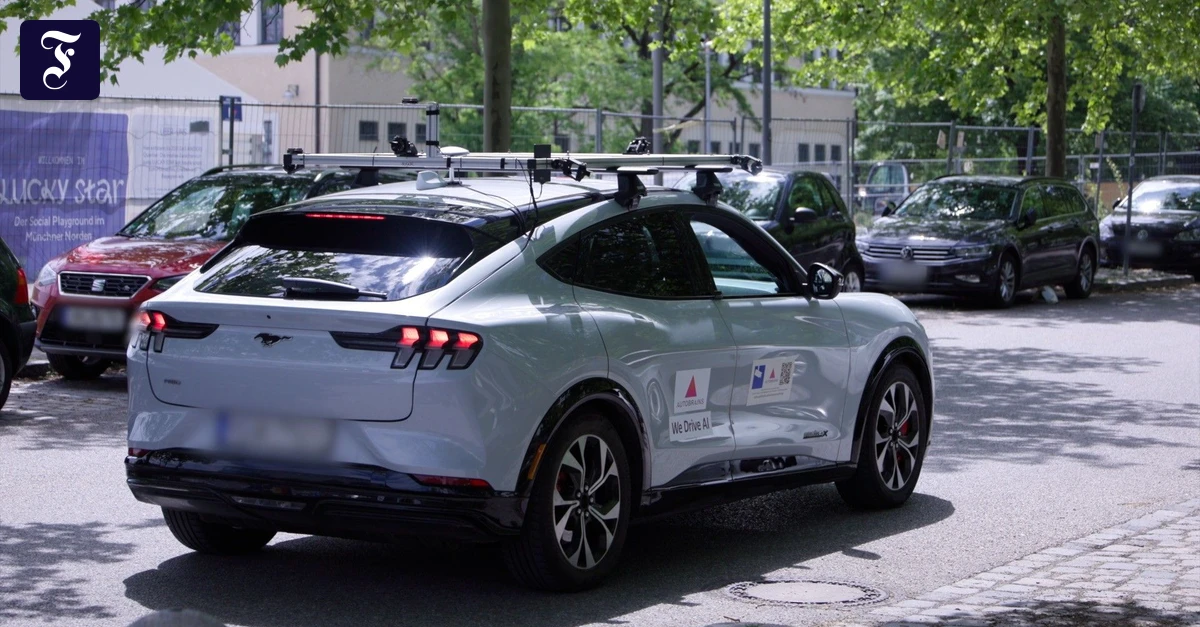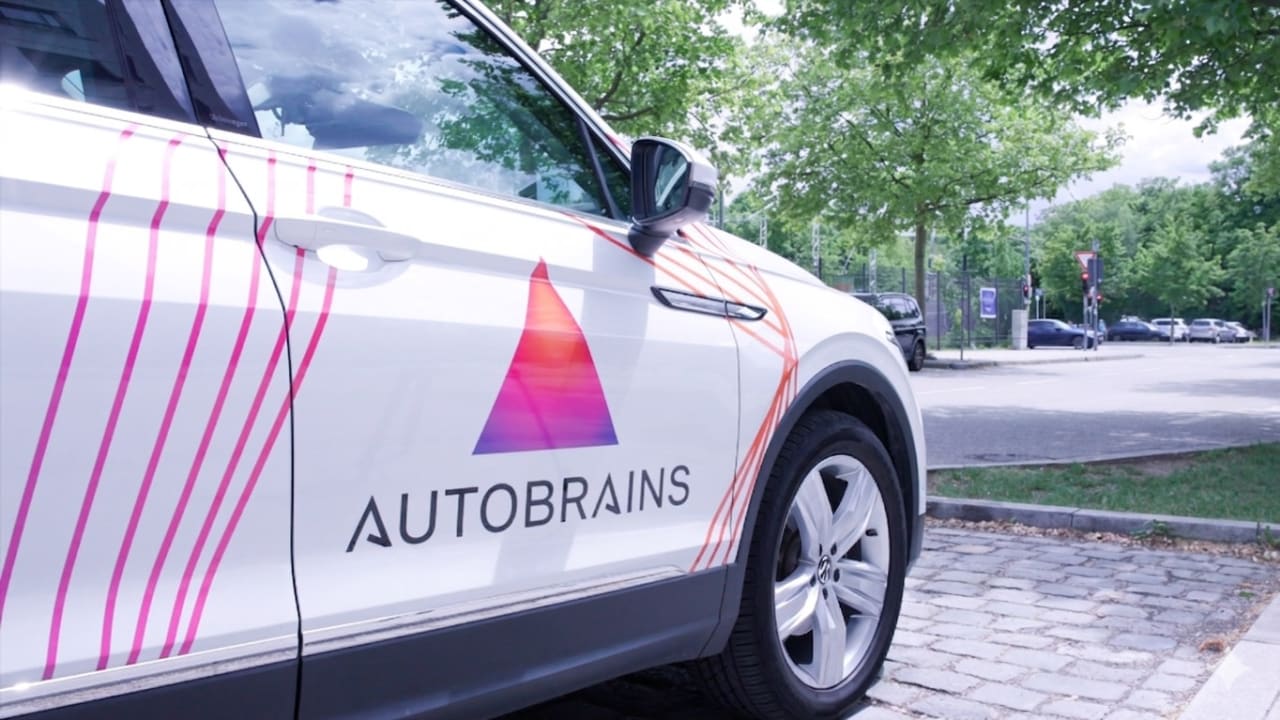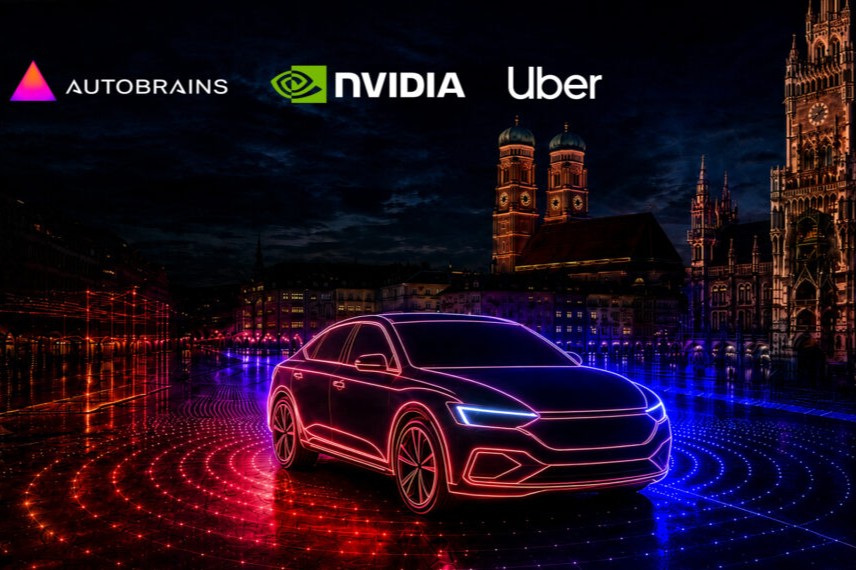
The ride-hailing service Uber has announced a robotaxi pilot project in collaboration with Israeli specialist Autobrains as well as Nvidia in Munich. This announcement is surprising, as Uber had originally planned to launch a robotaxi pilot project in Munich this year with Chinese provider Momenta.Image: AutobrainsLet’s begin with what is already known about the new project: the partners plan to combine Uber’s ride-hailing platform, Autobrains’ autonomous driving intelligence, and Nvidia’s robotaxi-ready Hyperion platform at SAE Level 4 to make robotaxis available in Munich via the Uber app. Further details about the selected automotive manufacturer will be announced later this year.If the authorities approve, Munich will become the first deployment location for the robotaxi programme involving the three partners. As one of Europe’s leading automotive hubs, Munich offers dense urban traffic, high-speed road networks, and a well-considered regulatory framework, making it an ideal environment for launching commercially scalable autonomous mobility, the partners explain.New S-Class Is CompatibleA key aspect of the ‘Agentic AI’ platform developed by Israeli company Autobrains lies in its OEM-agnostic nature. This means the technology can be integrated into various production vehicles from different automotive manufacturers (OEMs), provided they rely on Nvidia’s Hyperion platform. The most likely candidate for the Munich project is Mercedes-Benz, which already collaborates closely with Nvidia and uses the Hyperion platform in its new S-Class – with the goal of making it available as a robotaxi via Uber.The programme developed by Uber, Autobrains, and Nvidia is designed to integrate with various vehicle platforms from different manufacturers and operate within Uber’s ride-hailing ecosystem. For automakers, this provides a practical pathway to participate in autonomous ride-hailing by combining vehicle platforms with autonomous technology, market access, and fleet operations.“Autonomous driving will not scale by relying on a single model to solve every driving scenario,” says Igal Raichelgauz, CEO and founder of Autobrains. “It requires systems that can reason, adapt, and make decisions under uncertainty. With Uber and NVIDIA, we are bringing this approach into autonomous ride-hailing – combining Agentic AI with the mobility platform and automotive compute needed to support scalable robotaxi operations across cities, vehicles, and real-world conditions.”Sarfraz Maredia, Global Head of Autonomous Mobility & Delivery at Uber, adds: “For automakers and autonomy developers, the challenge is not just building autonomous vehicles – it’s bringing them into a commercial network where they can reliably serve riders at scale. This programme creates a new path to do that by combining vehicle-agnostic autonomy, leading AI compute, and Uber’s ride-hailing platform.”What next for Uber’s Munich project with Momenta?The collaboration between Uber, Autobrains, and Nvidia in Munich comes as something of a surprise. After all, Uber had already announced a robotaxi trial in Munich with Momenta last September, a Chinese specialist in autonomous driving and a competitor of Autobrains. It remains unclear whether Uber plans to launch two robotaxi projects in Munich simultaneously or whether the project with Autobrains and Nvidia will replace the initiative with Momenta. An enquiry from electrive to Uber is already underway, and any response will be added here promptly.Uber and Momenta had already announced in May 2025 their intention to collaborate on various robotaxi projects outside China and the USA. However, growing political resistance in the EU regarding highly sensitive key technologies from China could complicate Momenta’s efforts to implement projects in the EU.uber.com (DE), autobrains.ai, nvidia.com, heise.de (DE)
Uber and Autobrains to partner on Munich robotaxi pilot project - electrive.com
The ride-hailing service Uber has announced a robotaxi pilot project in collaboration with Israeli specialist Autobrains as well as Nvidia in Munich. This
553 words~3 min read