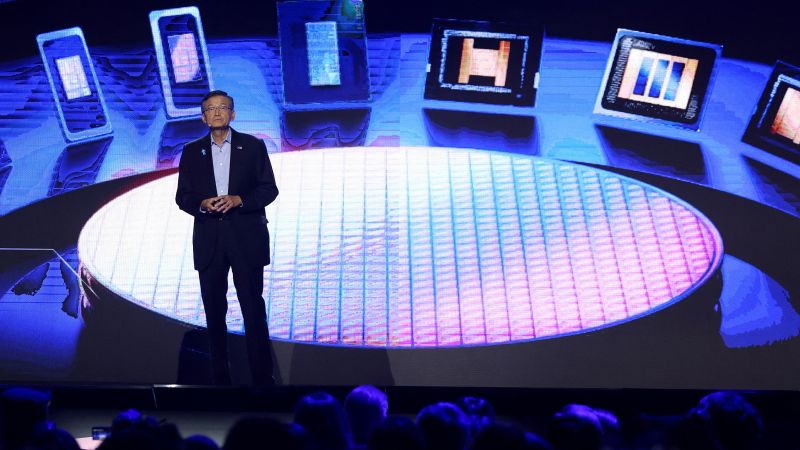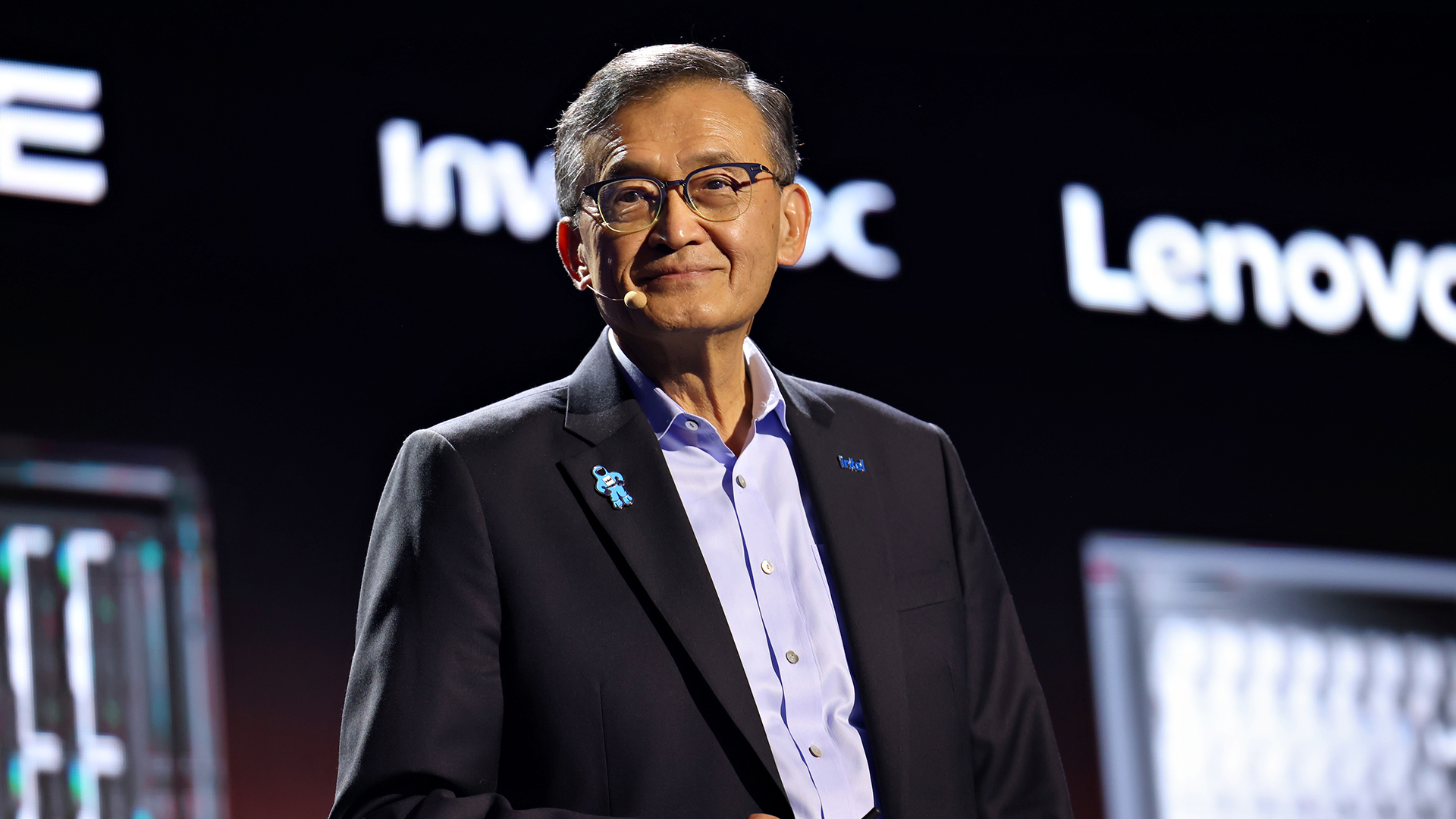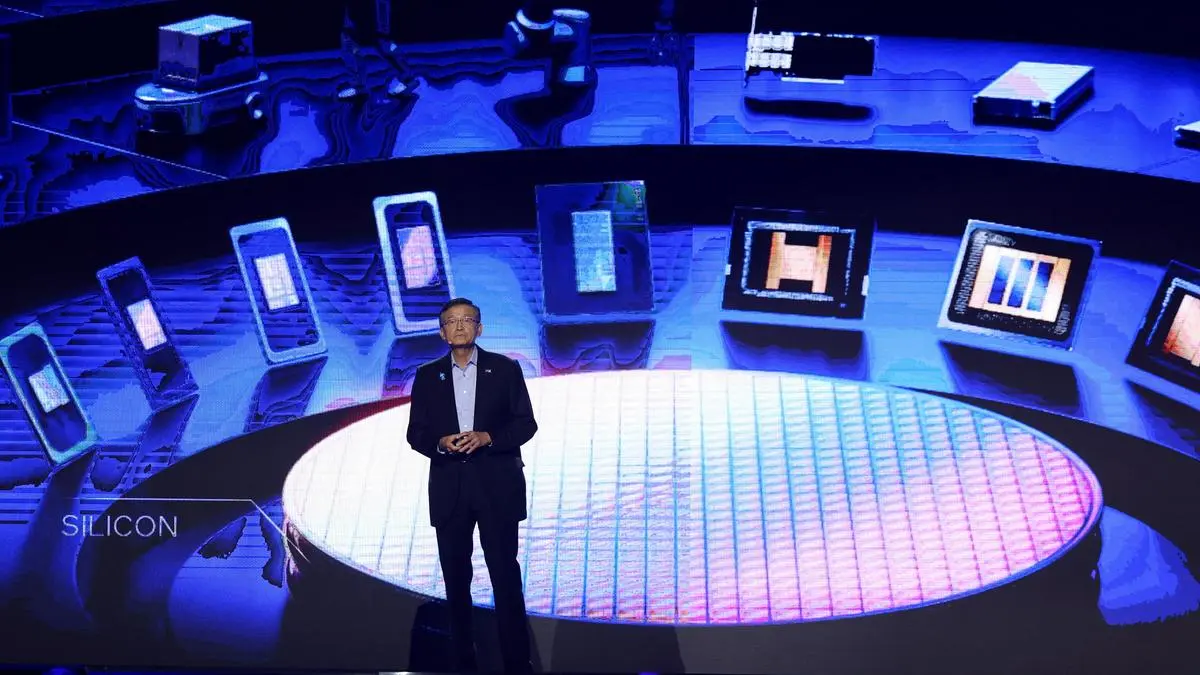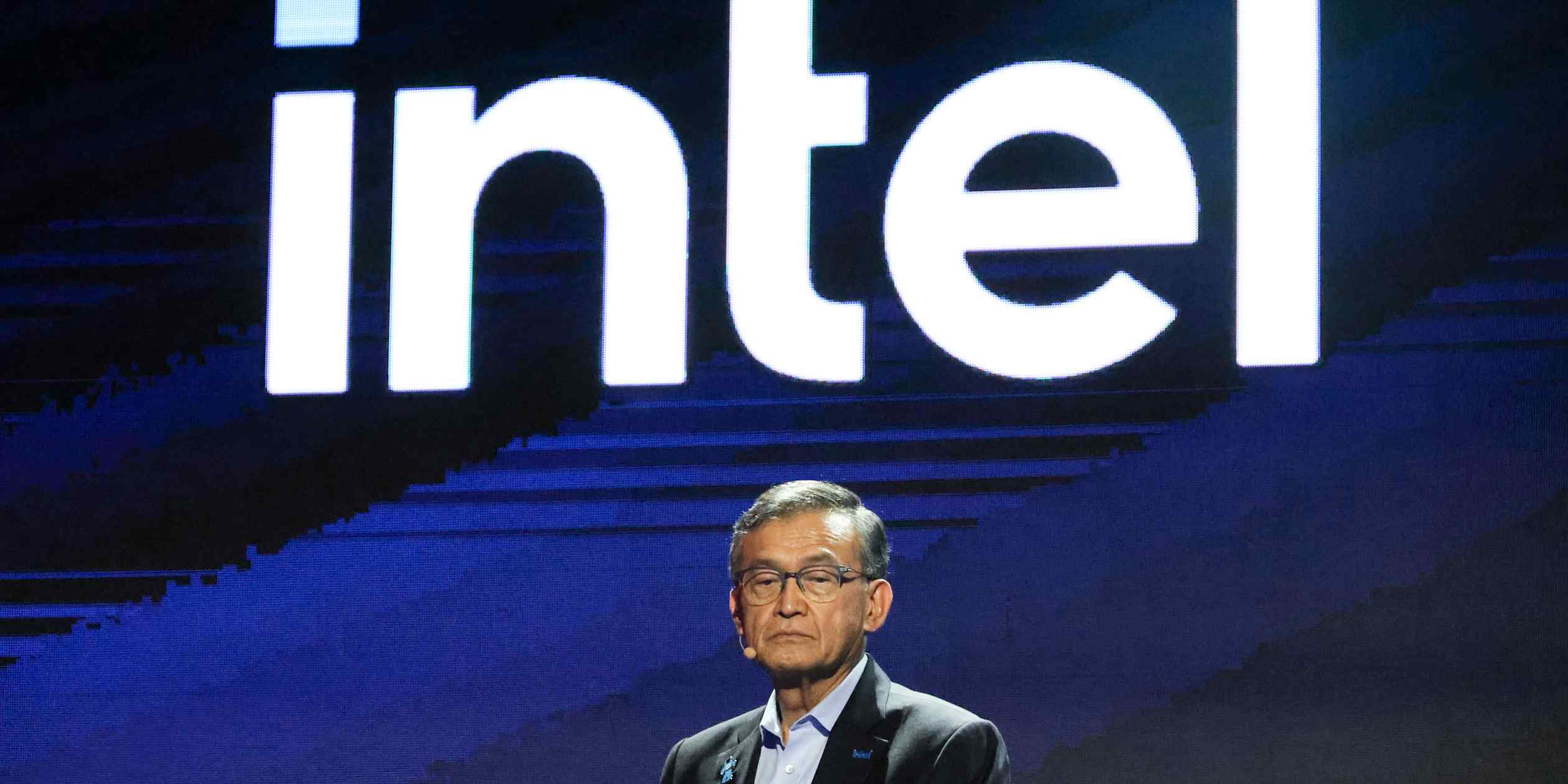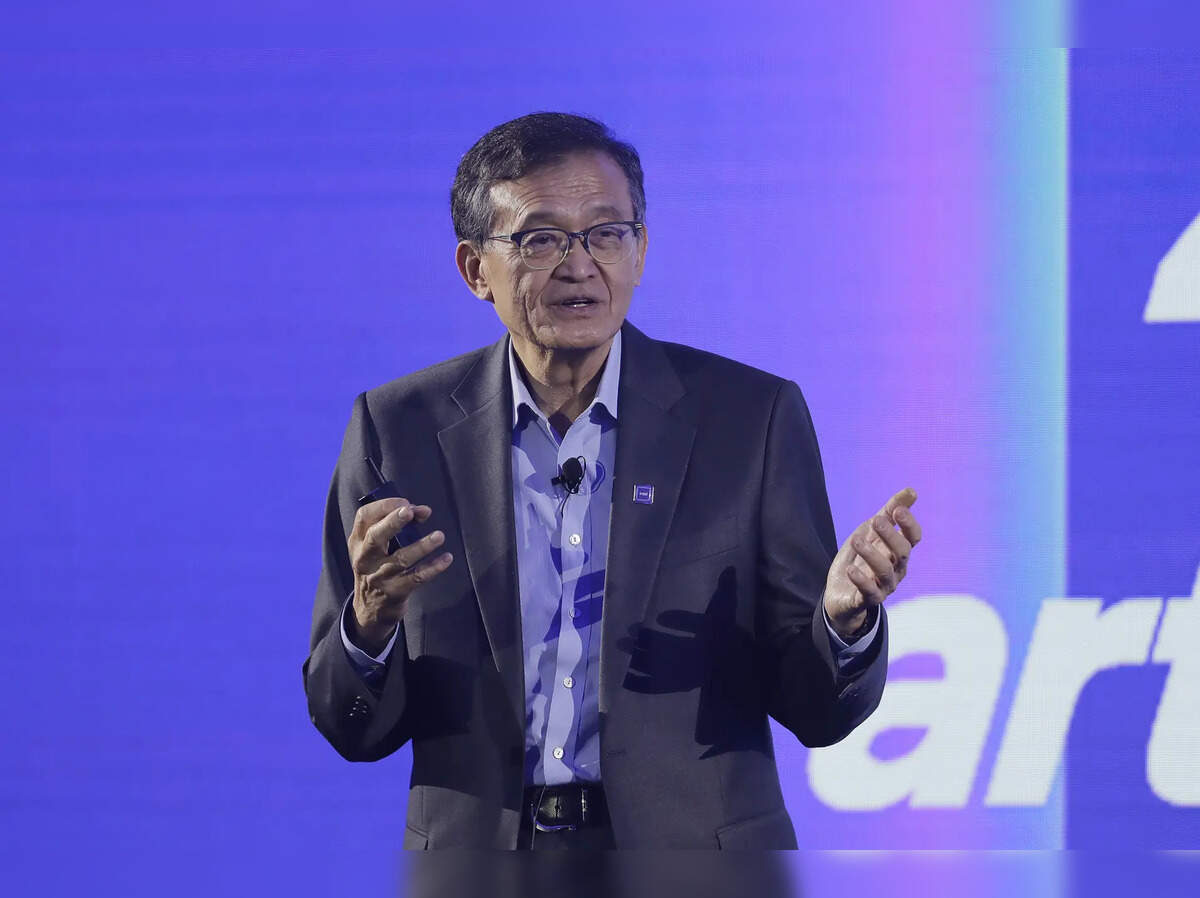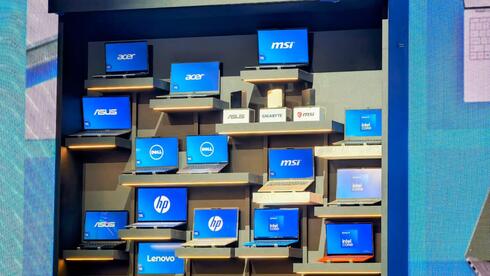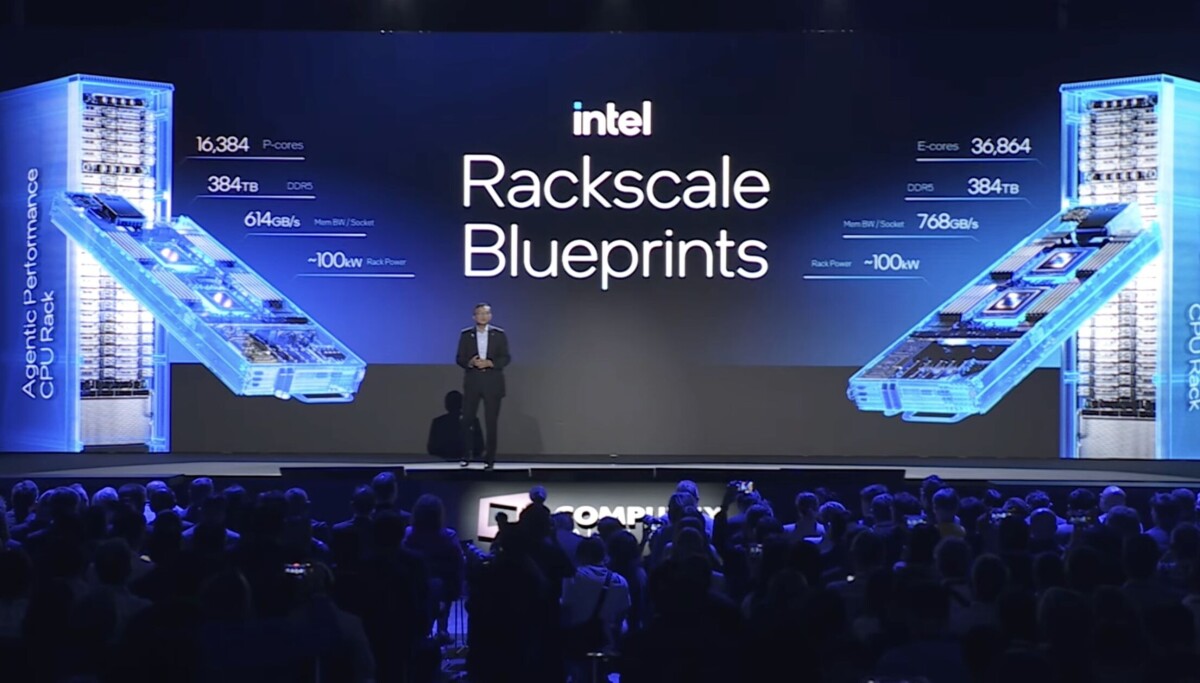
Intel's real Computex headline never made the keynote slides. It surfaced in the unscripted hour afterwards, when Lip-Bu Tan admitted that the agentic-AI era has handed the CPU back its crown — and that Intel now sits short of supply on the very thing everyone suddenly wants. I was in the room for that hour, a press Q&A with Tan and three of his most senior lieutenants — client and physical-AI chief Alex Katouzian, a Qualcomm veteran of more than two decades who is weeks into the Intel job, alongside data-centre chief Kevork Kechichian and custom-silicon lead Srini Iyengar — where the company spoke with less polish than the stage allows. After two years of obituaries, Intel arrived in Taipei with the problem most chipmakers dream about: more demand than it can fill. Everything else this week — Xeon 6+, the SambaNova racks, the open-ecosystem sermon — orbits that single reversal.Key TakeawaysIntel is supply-constrained on data-centre CPUs. CEO Lip-Bu Tan told the room that over the past four weeks multiple chief executives have phoned him asking for more CPUs, describing Intel as short of supply for agentic-AI workloads.The Intel Xeon 6+ processor — built on the Intel 18A node, Intel's first data-centre CPU on that process — anchors the agentic pitch, with a single liquid-cooled rack delivering 36,864 cores in 32U at roughly 100-kilowatt rack power.Intel Crescent Island, a 350W air-cooled PCIe inference GPU carrying 160GB to 480GB of LPDDR5X memory on the Xe3P architecture (customer sampling in the second half of 2026), sidesteps the global HBM shortage by design.The Intel Arc G3 Extreme, a Panther Lake handheld chip on Intel 18A with a 12-core Arc B390 integrated GPU at 2.3GHz, shows Intel's Xe3 graphics IP scaling from handhelds to the data centre; a new discrete desktop gaming card stayed off the roadmap.Tan handed analysts a tell for tracking foundry wins — watch capital expenditure — because he declines to disclose customers before the fabs are equipped.From obituary to order bookDemand flipped. A company written off as a follow-on candidate has walked back out to set its own field. "Over the last four weeks, I've had multiple CEOs calling me saying, 'I need more CPUs,'" Tan said, describing a scramble that has him leaning on chief revenue officer Greg Ernst to optimise allocations. "We are actually quite supply-constrained on that front right now," he added. For a business whose central question two years ago was whether anyone still wanted its silicon, that sentence is the innings.Why has agentic AI handed the CPU back its crown?Agents run on orchestration, and orchestration is CPU work. Tan put the architecture plainly: "for reinforcement learning, orchestration, and agents, the CPU is a much better fit. So, the ratio is becoming more like one-to-one, or shifting even more toward the CPU." Through the training boom, deployments leaned roughly one CPU to four GPUs. Inference and agents compress that toward parity. From the stage, Tan noted that a single agent can burn up to a thousand times the tokens of a one-shot query — every turn needing a processor to direct traffic. Kevork Kechichian, who leads the data-centre group, claimed the incumbency that follows: "we are the de facto standard for the enterprise. Xeon dominates there, and we know what those workloads look like because we've been doing this for decades."Inside the 18A allocation fightIntel rations 18A capacity through a standing forum that convenes several times a week. The node now carries three families at once — Panther Lake, Wildcat Lake and the Clearwater Forest data-centre part — and someone has to decide who bats first. Kechichian described captaincy under pressure: "We have a constant decision forum that meets a few times a week to look at our short-term allocation," he said, while projecting demand several quarters out. The revealing line came next. "We aren't strictly playing a short-term margin game right now," he said — Intel picking run-rate and roadmap over the fat boundary of the highest-margin chip. He even cast the contest in dressing-room terms, joking that with client chief Alex Katouzian now beside him, "I have to get used to negotiating with him on whether he gets more allocations over Clearwater Forest or not."The ex-Qualcomm bench Tan is betting onThat dressing-room joke carries a real backstory. Katouzian and Kechichian spent more than 12 years as colleagues at Qualcomm, both shaped by the Snapdragon era — Katouzian running mobile, compute and extended-reality products, Kechichian leading the Snapdragon system-on-chip engineering teams that shipped more than 100 SoCs. Two old teammates now run Intel's two largest product groups, and the capacity they negotiate across a table is the same 18A. Katouzian is the newer arrival, weeks into the role after Tan announced the hire in early May, and the move fits a deliberate pattern: Tan has rebuilt Intel's bench by signing from rivals, with Katouzian his second senior Qualcomm recruit. The irony needs little help. The Snapdragon X platform Katouzian once shepherded spent years outrunning Intel's own x86 PC chips on battery life and efficiency, and its architect now owns Intel's client roadmap.How can you tell whether Intel Foundry is winning?Follow the capital expenditure. Pressed on whether NVIDIA — a long-courted foundry prospect — is any closer to placing orders, Tan offered tradecraft instead of a headline. "I have a philosophy from when I ran Cadence: I don't prematurely disclose customers," he said. Then the tell: "The best way to track our success is to look at when we start increasing our CapEx. When I start equipping our fabs and expanding CapEx, you can tell we have customers locked in." It is the line a card player slides across the table — read the chips, ignore the chatter. The signal lives in the cash-flow statement, while the names stay sealed in the dossier. Tan reported progress with multiple prospects on 18A and the coming 14A node, every identity kept dark.Where Intel is really pointing its GPU effortAt the places its graphics IP already wins — integrated laptops, handhelds, and now data-centre inference. Asked about the future of dedicated gaming GPUs, Katouzian made the commitment direct: "I think the GPU is a super important part of the PC product line... the gaming side generates massive amounts of revenue across mobile and PC gaming. We want to make sure we're participating in that in a major way." He pointed to momentum: "right now, the traction of our GPU cores is really, really good. Gamers and game engine developers are all cooperating with us. The examples we showed on stage today are just the beginning... we're just going to continue on that path."The proof sits in where the same Xe3 lineage keeps turning up. The Arc G3 Extreme, Intel's first purpose-built handheld chip, runs a 12-core Arc B390 integrated GPU that has out-gunned AMD's Radeon 890M in early Panther Lake benchmarks — above 80fps in Cyberpunk 2077 at 1080p with XeSS, against roughly 28fps for the AMD part. Panther Lake's integrated graphics carried that performance into mainstream laptops first. And the performance-tuned sibling, Xe3P, is what powers Crescent Island in the data centre. One architecture, three destinations. A new discrete desktop card stayed off this week's bill, yet Katouzian's read was a batting order finding the gaps rather than a side packing up its kit.What Intel put on the table, chip to rackA full stack. The data-centre centre of gravity is Xeon 6+, Intel's first data-centre CPU on 18A, built to host agents at density. Around it, Intel, SambaNova and Foxconn announced rackscale infrastructure pairing Xeon with SambaNova SN-50 RDUs, Foxconn handling integration and planning a CPU-dense variant for workloads that skip acceleration. The boldest economics belong to Crescent Island, an inference GPU engineered around the memory most rivals are short of — so Intel can build it in volume while competitors queue for supply. The same scarcity logic runs through every line of the bill.ProductWhat it isKey specificationRoleAvailabilityXeon 6+ (Clearwater Forest)Data-centre CPUIntel 18A; 36,864 cores in 32U at ~100kW per rackAgent hosting at density, orchestrationAvailable nowCrescent IslandInference data-centre GPUXe3P; 160–480GB LPDDR5X; 350W air-cooled PCIe; FP4–FP64Cost- and power-optimised inferenceSampling H2 2026Xeon + SambaNova SN-50 rackRackscale infrastructureXeon plus SN-50 RDUs; Foxconn integrationHigh-density inference and agentic racksShipping later in 2026Arc G3 ExtremeHandheld gaming SoCPanther Lake on 18A; 12-core Arc B390 Xe3 iGPU at 2.3GHzClient and handheld gaming, on-device AIPartner devices from June 2026The showcase customer was Vector Core Compute, the inference cloud formed by Vista Equity Partners and Cambium Capital, which staged disaggregated inference across Intel Xeon, SambaNova RDUs and NVIDIA Blackwell GPUs from a Los Angeles data centre, with Together.ai as its first commercial tenant.Is custom silicon a side-project or a second engine?A second engine, and Intel wants it counted that way. Srini Iyengar, who runs the central engineering group, positioned bespoke chips as long-standing work now being scaled: "Custom silicon is not new to Intel; we have been doing this behind the scenes for a long time. What is new is the scale, the focus, and how we bring this to the rest of the world." The public proof points exist — Intel is delivering infrastructure processing units to Google, announced earlier this year, and supplying wireless-infrastructure silicon to Ericsson, both named from the keynote stage. Iyengar's argument leans on Intel's integrated-device model: when the industry fights over wafer supply, owning fabs becomes a hedge. "when wafer shortages are a massive industry issue, it's a lot easier for us to work around it," he said. That advantage feeds the same scarcity thesis powering everything else.Why the edge — and India — sit inside this storySeries 3 is the volume engine beneath the headline silicon. Intel says Core Ultra Series 3 now powers more than 325 consumer and commercial PC designs, with the same IP reaching edge customers in manufacturing, robotics and smart cities — over 130 of them already signed for edge AI and robotics work. For India, the live thread is the regional build-out. Asked about expansion across Southeast Asia and India, Kechichian returned to partnership over going alone: "We look to establish footprints where the core competencies exist; no single company can do everything on their own." Tan sharpened it to two words — "open standards" — the promise that partners and customers stay free to leave. For Indian enterprises weighing agentic infrastructure, an air-cooled inference GPU that spares a liquid-cooling retrofit and a CPU-dense rack that spares an accelerator read as cost lines rather than slogans.The one risk that could undo itThe clock. Tan keeps describing a "5 to 10-year journey" and casts himself as the patient type: "I don't pay attention to quarter-to-quarter metrics; I focus on the longer-term vision." That is the temperament of a Test captain content to bat two sessions for position. Markets keep T20 hours. A turnaround built on rationing scarce capacity, deep partnerships and a node ramp asks investors to grade Intel on the innings rather than the over — and a wobble on 18A yields, a partner defection or an HBM-style crunch reaching LPDDR5X could each force a follow-on. His posture toward rivals fits the same theory of the game: Morris Chang and C.C. Wei are trusted friends, NVIDIA a good friend and shareholder, AMD's Lisa Su a close friend. "At the end of the day, this is a trust business," he said. Generosity comes cheap when you hold the supply.Frequently Asked QuestionsIs Intel really supply-constrained on CPUs in 2026?At Computex 2026, CEO Lip-Bu Tan said multiple chief executives had called him over the previous four weeks asking for more CPUs, and described Intel as supply-constrained for agentic-AI workloads. He attributed the surge to agents and orchestration favouring CPUs over GPUs. Intel says it is expanding supply to catch up with the demand.What is the Intel Xeon 6+ and why does 18A matter?Intel Xeon 6+ is the company's next-generation data-centre CPU and its first built on the Intel 18A process node. A single liquid-cooled rack can deliver 36,864 cores in 32U at roughly 100-kilowatt rack power, aimed at hosting AI agents at maximum density. Because 18A also carries client chips like Panther Lake, Intel must ration the node's capacity across competing product lines.How is Intel Crescent Island different from NVIDIA and AMD AI GPUs?Intel Crescent Island is an inference-focused data-centre GPU using 160GB to 480GB of LPDDR5X memory and air cooling in a 350W PCIe card, where high-end NVIDIA and AMD parts rely on HBM and liquid cooling. The trade swaps peak memory bandwidth for lower cost, simpler deployment and volume production during an HBM shortage. Intel expects customer sampling in the second half of 2026.Did Intel announce a new discrete desktop gaming GPU at Computex 2026?A new dedicated desktop gaming card stayed off the Computex 2026 line-up. Intel's fresh graphics hardware leaned on the Arc G3 and Arc G3 Extreme handheld chips and Panther Lake integrated graphics, while client chief Alex Katouzian affirmed continued heavy investment in the GPU line and called the on-stage examples "just the beginning."Who are the ex-Qualcomm executives now running Intel's product groups?Alex Katouzian leads Intel's Client Computing and Physical AI Group and Kevork Kechichian leads the Data Center Group; both joined under CEO Lip-Bu Tan after long careers at Qualcomm, where they overlapped for more than a decade in the Snapdragon era. Katouzian, a Qualcomm veteran of over two decades, started at Intel in May 2026 as Tan's second senior Qualcomm hire. Kechichian arrived in 2025 by way of Arm.What did Lip-Bu Tan say about Intel Foundry customers?Tan declined to name foundry customers, citing a philosophy from his Cadence days of avoiding premature disclosure. He told the room to track Intel's success through capital expenditure, since equipping fabs and expanding CapEx signals locked-in customers. He reported progress with multiple prospects on the 18A and 14A nodes.end of article
Intel Computex 2026: How Agentic AI Left Lip-Bu Tan Rationing 18A Capacity
After two years of obituaries, Intel arrived in Taipei supply-constrained on the one thing the agentic era wants most — the CPU. Inside the buried Computex 2026 story, and how Lip-Bu Tan is turning scarcity into leverage.
2,295 words~10 min read