Live from Lip-Bu Tan's Keynote at Computex 2026
In this article:
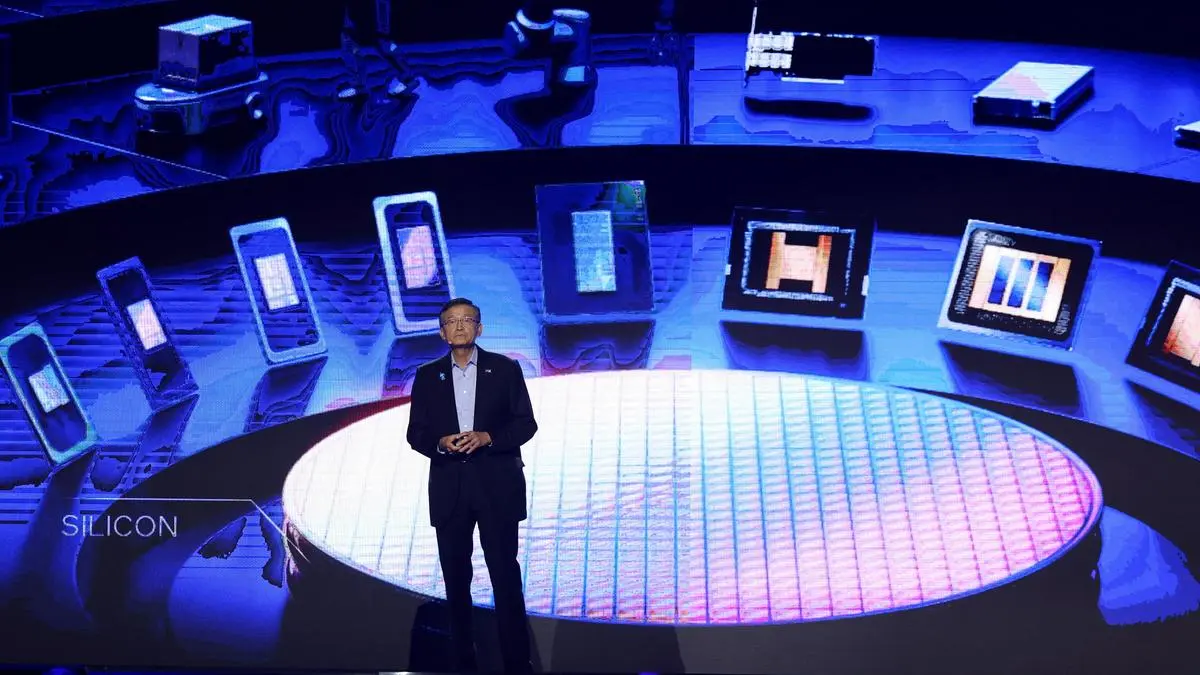
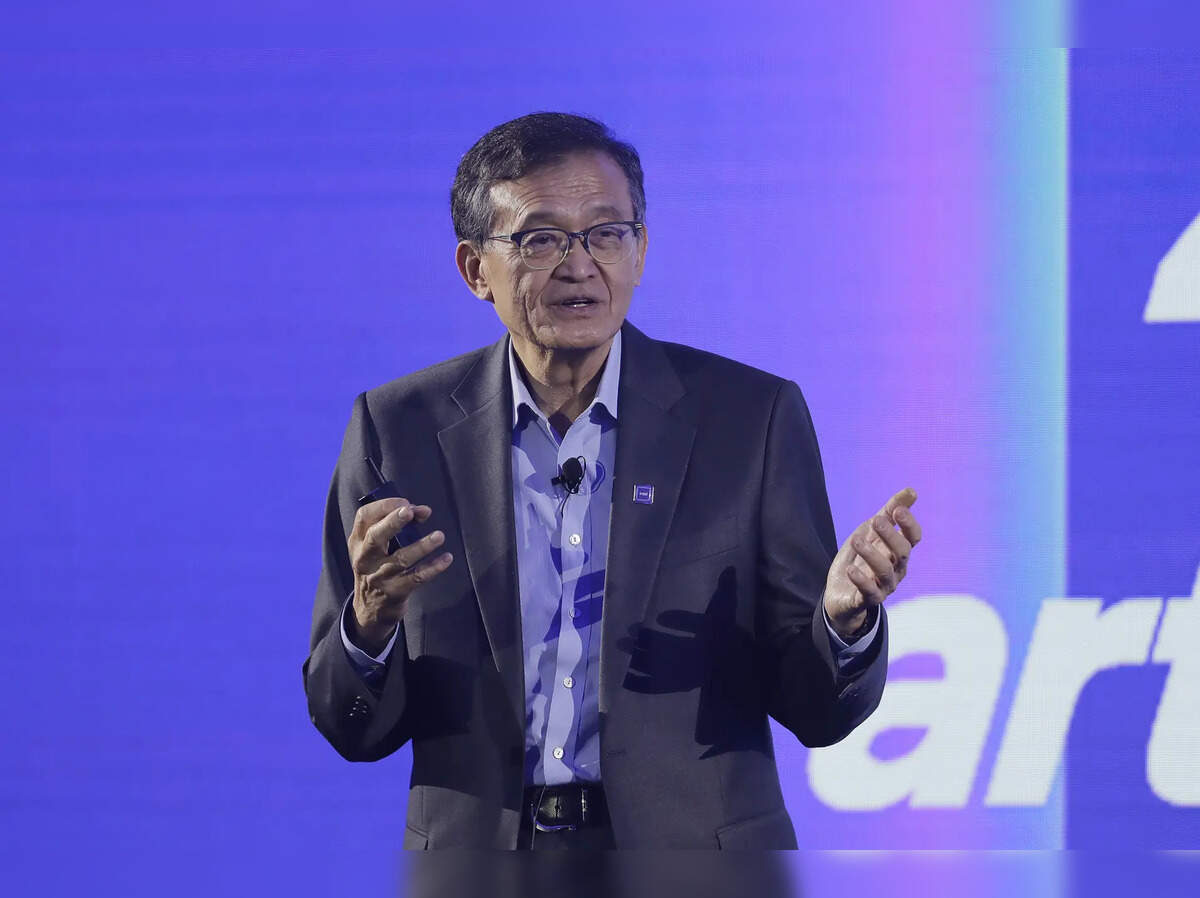
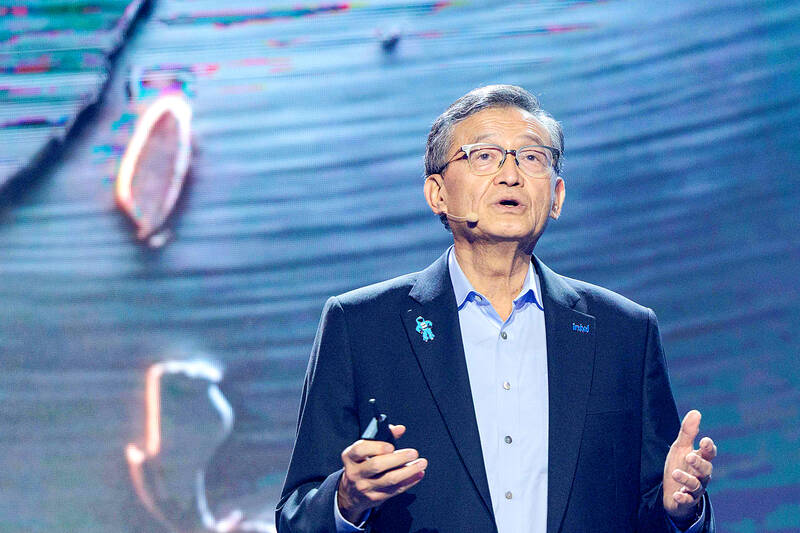
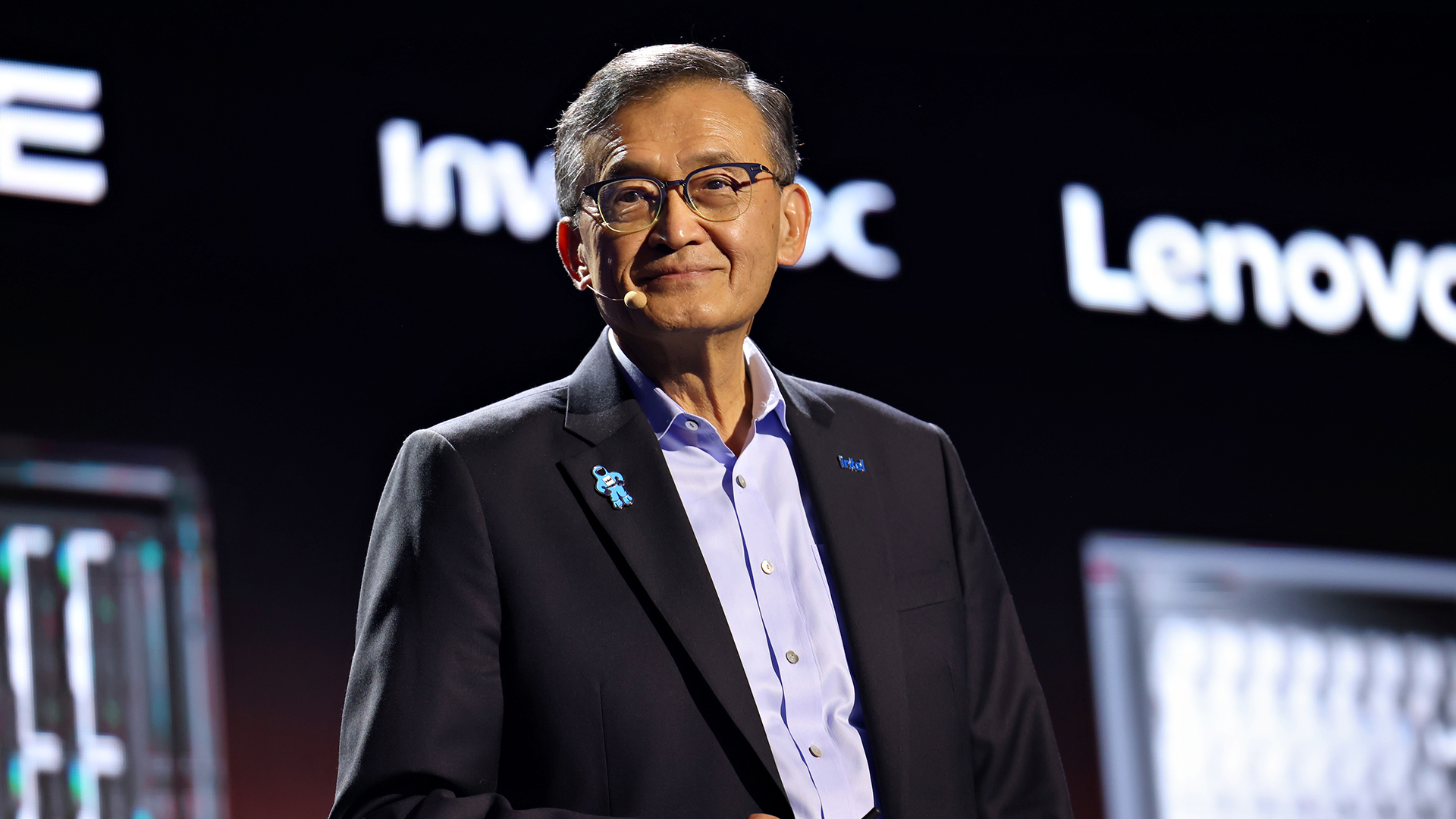
This week at Computex, Intel CEO Lip-Bu Tan took to the keynote stage to showcase the innovations that Intel has shared with the world over the past five-plus decades.Lip-Bu noted the immense contributions x86 has brought the world, the United States, and Silicon Valley, before turning his attention to our host, and thanking Taiwan for the pivotal role it has played partnering with Intel over the years across desktops and notebooks and every form factor that has followed.Today, Taiwan stands as one of the great pioneers of computing: not only in building systems, but also in manufacturing the silicon itself.A Burgeoning PC EcosystemLip-Bu then welcomed Intel’s new leader for Client Computing and Physical AI, Alex Katouzian, to the stage for a discussion of client computing, edge, and physical AI.Alex began by looking back at the launch of the Core Ultra Series 3, the first product built on Intel 18A. He noted that it provides the full XPU experience, including a fast response CPU, high throughput GPU, and low power processing NPU. The Core Ultra Series 3 set a new standard for premium mobile performance, graphics, and battery life. Already it is featured in more than 325 designs across consumer and commercial.Alex then reintroduced the Intel Core Series 3, which first debuted in April. The Core Series 3 leverages all the same IP as the Ultra, and it features all day battery life, ample ports for connectivity, and great performance—delivering a premium look and feel into an incredibly thin form factor for mainstream PCs.Alex then introduced the latest processor to join the family, highlighting the Intel Arc G3 series, based on the same Intel Core Ultra Series 3 architecture, but optimized for handheld gaming, delivering strong battery life and immersive gaming on the go. It offers consistent performance, a great user experience, and will be available later this month.The Growing Edge and Physical AI OpportunityShifting his focus to the edge and physical AI, Alex discussed how 18A already has over 130 edge designs. Just as it has done at the edge, Intel also plans to extend its technology into physical AI. Today, Intel counts over 4,000 edge ecosystem partners with over 100,000 edge deployments in areas like manufacturing, robotics, retail, and more. Alex explained that Intel plans to grow these markets into new physical AI form factors, including robotics, autonomous machines, and other AI devices.Hybrid AI Computing Optimized from Cloud to EdgeThanking Alex, Lip-Bu returned to the keynote stage alongside Perplexity CEO Aravind Srinivas. The two CEOs discussed how concerns like privacy, security, compliance, and cost are driving the need for hybrid compute, where inference can take place locally on the device for sensitive data and in the cloud for workloads that can benefit from greater scale and context.Aravind explained how Perplexity created the first-ever hybrid local server for inference orchestration, enabling workloads to dynamically scale between local and cloud environments based on device capabilities and features. Aravind emphasized that the capability demonstrated on the stage at Computex is only available on Intel processors and in the Perplexity for Windows PC application.A New Processor for the Data CenterWhen most people think of general-purpose computing they think of Intel because x86 has powered data centers for more than five decades.Lip-Bu welcomed the Executive Vice President of the Data Center Group Kevork Kechichian to the stage to discuss the enduring legacy of x86 in the data center. Kevork wasted little time dwelling on this storied past before announcing the arrival of Intel® Xeon® 6+ processors.With 288 e-cores, a massive 576MB L3 cache, and built on Intel 18A technology, Xeon 6+ delivers world-class compute density and efficiency. This is critical for enterprises that need to balance AI readiness with day-to-day mission critical workloads.Toward Rackscale and Intelligence CentersRecent research forecasts that AI inference workloads are expected to become nearly 40% of all data center power demand by 2030. As agentic AI moves into real workflows, data, tools, and governance, the computing foundation also needs change. That’s because agentic AI is iterative in nature and requires thinking, planning, acting, and reflecting.This change in workload creates a rapid increase in CPU demand because the CPU orchestrates and coordinates the reasoning process—leading to a situation where the 1 CPU to 8 GPU ratio in frontier model training has shifted CPU density to 1:1 or better for agentic AI.To discuss the need for new rackscale solutions, Kevork welcomed Lip-Bu back to the stage. Lip-Bu explained how compute must be reinvented beyond the socket to rackscale systems to accommodate the needs of agentic AI workloads.Lip-Bu was then joined by Foxconn Chief Product Officer Jerry Hsiao to talk about how the two companies are partnering on rackscale AI infrastructure. Jerry shared how Foxconn, the world’s largest electronics manufacturer, is working with Intel and its partners to provide systems integration capabilities for rackscale AI infrastructure built for inference and agentic AI workloads.Lip-Bu thanked Jerry before continuing to explain that, while the CPU–GPU ratio stabilizes for agentic AI, we also see token usage rapidly growing, with recent reports showing that compared to single turn reasoning, an agent consumes up to 1000x more tokens. Delivering compute solutions optimized for token consumption and generation alongside CPUs is critical.To this end, Intel recently announced a collaboration with SambaNova, Vista Equity Partners, and Cambium Equity to provide cost and energy efficient inference solutions. Lip-Bu welcomed SambaNova CEO Rodrigo Liang to the stage to talk more about the company’s recent announcements with Intel. Rodrigo was joined by Robert Smith of Vista Equity Partners who explained how the companies plan to use new rackscale AI infrastructure from Intel, Nvidia, and SambaNova to offer customers fully disaggregated inference via a new inference cloud offering known as Vector Core Compute.Purpose-built Silicon for Customer WorkloadsWhile new rackscale and cloud offerings promise to reset the economics of inference and agentic AI, companies are increasingly viewing their workloads as strategic assets and seeking purpose-built silicon tailored to address the needs of their specific businesses. Lip-Bu welcomed Intel Senior Vice President Srini Iyengar to talk more about the work we are doing around purpose-built silicon. Srini discussed our efforts in purpose-build silicon, including how Intel is working with Google to deliver IPUs, which are necessary for the cloud providers' optimal performance. He also discussed how Intel is partnering with telecommunications customers like Ericsson to deliver state-of-the-art wireless infrastructure chips on a global scale.Industry-specific Vertical SolutionsLip-Bu then returned to the stage to explain how purpose-built silicon is increasingly forming the basis of vertical solutions that help customers adapt to the needs of their specific industries. Along those lines, Lip-Bu shared how Intel is collaborating with Hitachi, Siemens, Echo Neurotechnologies, and Greenstone Biosciences to reinvent fields as diverse as energy, industrial automation, biomedical engineering, and drug development.An Intelligent World Built on SiliconLip-Bu closed his keynote by returning to the opportunity for Intel and its partners across all ecosystems – PC, edge and physical AI, data centers, and emerging intelligence centers. From silicon to systems-on-a-chip to systems and applications, Intel is an iconic company that has laid the foundation for modern-day computing.But the company isn’t standing still. Intel is doubling down on creating new business opportunities across existing and emerging domains. It is striking new partnerships across multiple industries. Intel with help from its partners is building an intelligent future out of a world built on silicon.