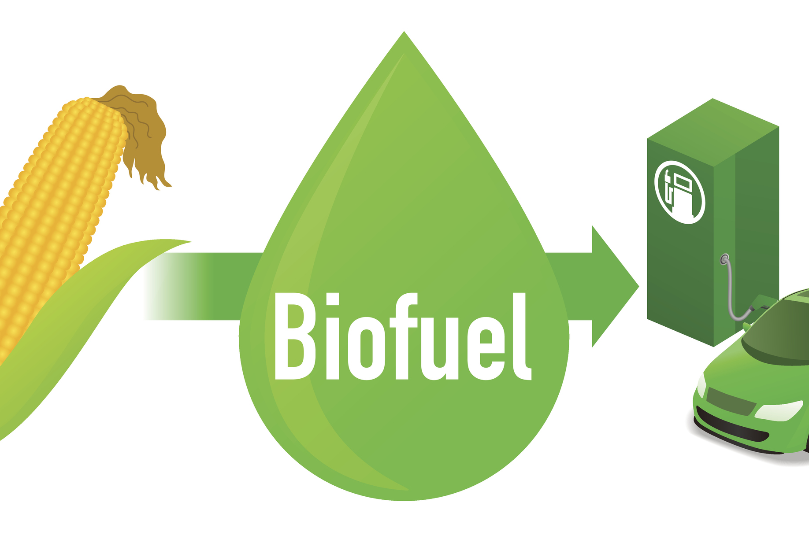
South Africa could unlock significant economic value by building a domestic bioethanol industry using locally grown sorghum and sugarcane.According to research by the Localisation Support Fund (LSF), every litre of locally produced bioethanol could generate between R6 and R8 in economic value, create thousands of jobs and reduce the country’s dependence on imported refined fuel.Because South Africa relies heavily on imported crude oil and finished petroleum, locally produced biofuel could join Sasol in helping ensure the country is not entirely at the mercy of global supply chains and oil price fluctuations.However, biofuels are being promoted as an energy-security strategy rather than a fuel-price reduction measure. The study acknowledges that establishing the industry may require a fuel levy that could add between 2c and 7c a litre to petrol prices under an initial 2% blending mandate.The findings were presented to industry stakeholders in Johannesburg last week. While bioethanol cannot fully shield South Africa from global oil price movements, it can introduce a locally produced fuel component into the country’s energy mix, the study claimed.In the longer term, and at higher blending mandates, domestic biofuels production could shield South Africa from rising global oil prices, as a greater share of the fuel pool would be drawn from locally produced feedstocks rather than internationally priced imports.The research, commissioned by the LSF and conducted by Blueprint Holdings, said that South Africa has the agricultural capacity, regulatory framework and commercial viability required to establish a domestic bioethanol industry.Irshaad Kathrada, CEO of the LSF, said the findings come at a time when South Africa has undergone a major shift from domestic fuel refining to imported finished fuel following the recent closures of its two largest coastal refineries: Sapref and Engen, both located in Durban.Kathrada said that South Africa now imports nearly three quarters of its fuel from geopolitically exposed sources and every price shock at the pump is a reminder of how little control we have over that supply chain.He said the retail price of 95 Unleaded Petrol has risen from less than R11 per litre in January 2015 to more than R27 per litre in June 2026.“With approximately 75% of liquid fuel now imported in refined form, South Africa remains increasingly vulnerable to global oil price volatility, exchange rate pressures and geopolitical disruptions,” he said.Recent conflict in the Gulf region has further exposed these vulnerabilities by disrupting shipping routes and increasing freight costs.The mandatory blending mandate calls for between 2 and 10% of petrol to be blended with bioethanol should it be available. The LSF said this is consistent with a number of other countries, including the US, which has a standard blend of 10%, with some states going up to 15% for newer model cars. It noted that most vehicles can handle bioethanol blended up to 10% without any modifications.The gazetting of a regulated transfer price for bioethanol under the Petroleum Products Act in August 2025 removed one of the final obstacles to establishing a functional domestic market, said the LSF, allowing bioethanol to be blended into fuel. The policy framework is now largely in place, with the next phase requiring co-ordinated implementation across government, agriculture, industry and finance, said the LSF.The study examined the commercial viability of several feedstock options, with a particular focus on sorghum because of the opportunity to expand production on underutilised agricultural land.The research draws on lessons from countries that have successfully established domestic bioethanol industries, including Brazil, India, Kenya, the US and Zimbabwe.A domestic bioethanol industry could also help create new demand for sugarcane while improving long-term market certainty for both sugarcane and sorghum producers, the research found.Once widely cultivated in South Africa, sorghum production has declined over the past three decades. Land under cultivation has fallen from about 170,000 hectares in the early 1990s to about 41,000 hectares today.Josie Rowe-Setz, MD of Blueprint Holdings, said: “The research and evidence is very clear that there is a window of opportunity now where South Africa can ensure national energy sovereignty and security, while supporting the growth of a viable and sustainable local industry.”The LSF has begun engaging government departments on implementation, with officials reportedly considering the revival of a biofuels task team.Business Day
Energy security may come with a price at the pump
Motorists could be asked to subsidise reduced fuel import dependence
694 words~3 min read