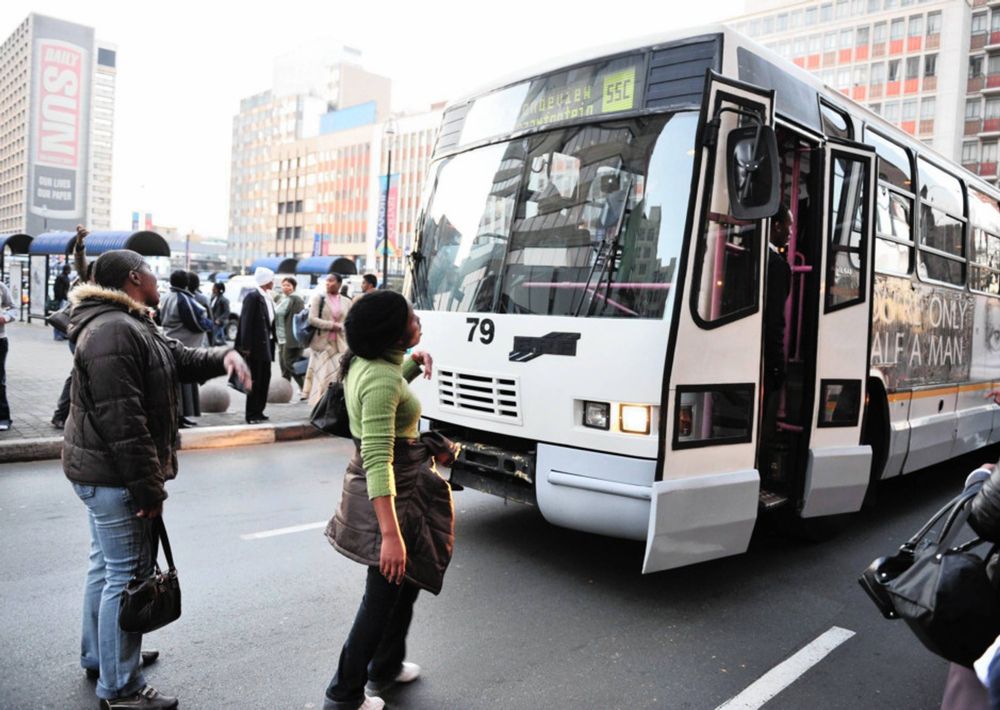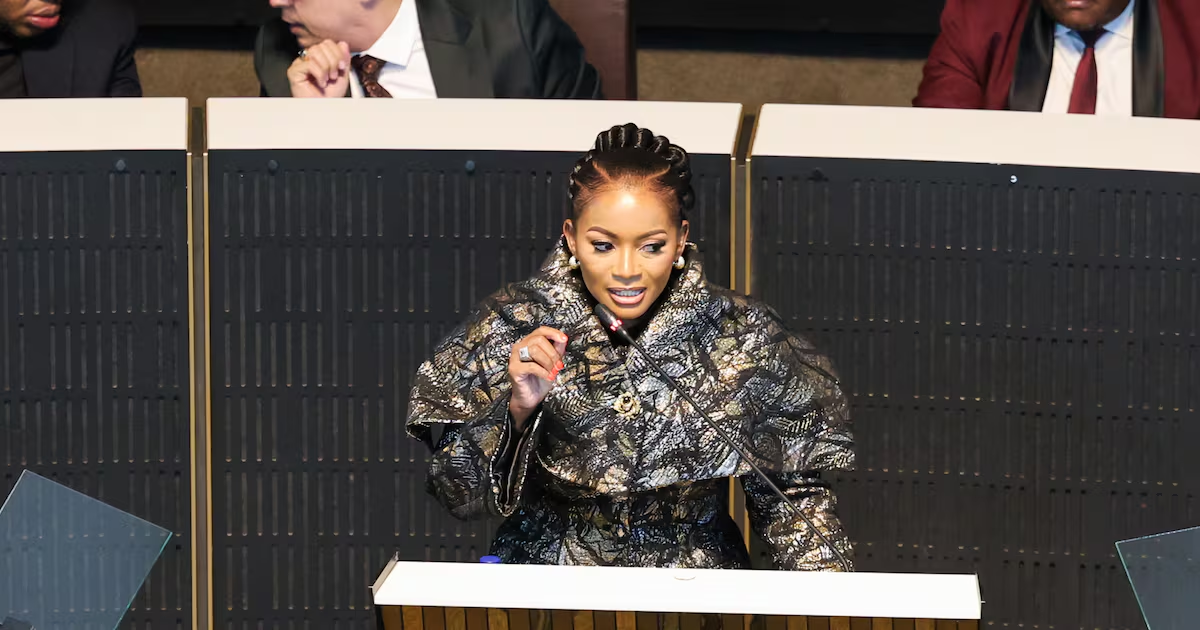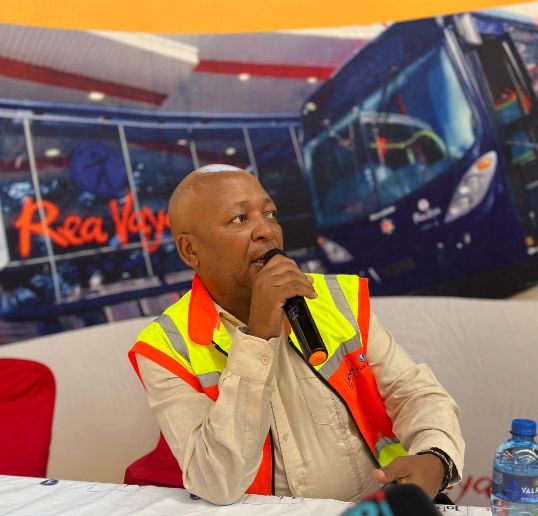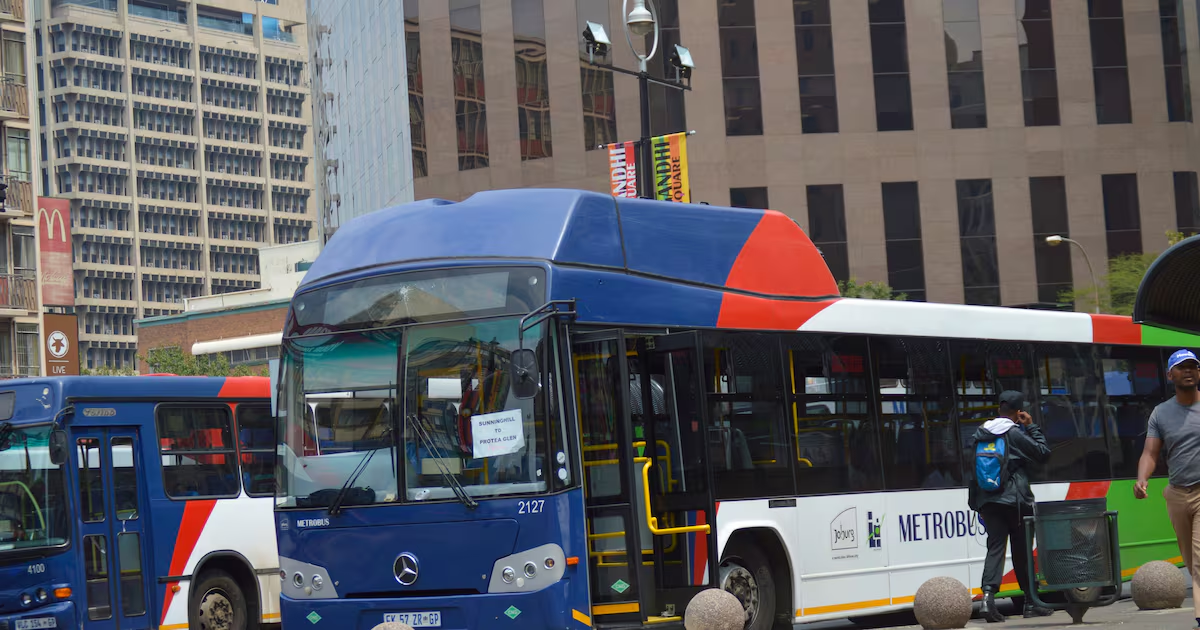
Joburg’s financial challenges are starting to affect its bus services as temporary service reductions across city routes will be implemented due to what it calls “sustained” budget reductions over the past financial years. Metrobus, which transports between 12,000 and 16,000 passengers a day, also blamed the ongoing significant rise in diesel costs for the decision that came into effect on June 1. “The recent significant rise in diesel costs has made matters worse. Despite implementing cost-saving and efficiency measures, the current financial position requires a temporary adjustment to service levels to ensure the bus service’s sustainability and prevent further financial instability,” Metrobus MD Bongani Radebe said in a statement. From the metro’s budget of R80.9bn for 2023/24, Metrobus received R663m for operations and a three-year capital budget of R354m to buy new buses and refurbish the engines and gearboxes of its fleet, and to implement a cashless ticketing system.For the 2024/25 financial year, Metrobus received an allocation of R214.8m for capital projects, including the purchasing of new buses, engine and gearbox refurbishment, building upgrades, and introducing a cashless ticketing system.In the 2025/26 financial year, the bus service was allocated an operating budget of R779m.“The service reductions are not permanent. Metrobus will continuously monitor passenger demand and financial performance, and services will be reviewed as the organisation’s financial position improves,” Radebe said. This after Gauteng Cogta MEC Jacob Mamabolo told Business Day at the weekend that he will not put the Joburg metro under administration because it is working “hard” to address its governance failures and financial challenges.The city is technically insolvent as revenue collection levels do not meet budgeted targets, and it has an over-expenditure of about R3.9bn on employee-related costs, bulk electricity purchases, inventory consumed and operational costs. The council’s finances are severely constricted, with poor revenue collection resulting in its failure to meet service delivery targets. In April, GCR Ratings revised the city’s ratings outlook from stable to “rating watch negative” because of the metro’s delays in finalising its annual financial statements. The city, which has been battling water challenges, has an infrastructure backlog of more than R200bn. It owes Eskom R5.3bn plus a current account of R1.6bn. Deputy mayor and finance political head Loyiso Masuku last week tabled a R97.1bn budget for the 2026/27 financial year, with operating revenue set at R90.4bn, operating expenditure R88.3bn, projected surplus R2.1bn (before taxation and capital grants) and capital budget R8.8bn, rising to R25.3bn over the medium term. Radebe said the temporary changes would see reduced off-peak services on selected routes and fewer trips during low-demand periods, particularly during the midday session of operations. However, peak-hour services will be prioritised to “reduce inconvenience for working commuters, learners and vulnerable passengers”. “We sincerely ask for your patience and understanding during this difficult period. These measures are necessary to ensure Metrobus remains operational and able to continue to serve the citizens of Johannesburg.”In 2021, Metrobus approached the courts to stop a costly four-week industrial action that resulted in the company losing up to R300,000 a day.In October 2023, the Joburg metro launched Metrobus’ new Intelligent Transport System, which includes an automated fare collection system. Said to be the first of its kind in Africa, the state-of-the-art system also comprises Eye-On-The-Bus real-time monitoring of buses and Wi-Fi for passengers. Eye-On-The-Bus allows Metrobus to track and locate buses, monitor fuel consumption and schedule maintenance efficiently.
Metrobus cuts services as Joburg’s financial crisis deepens
Budget constraints and soaring diesel costs force temporary reduction in Metrobus services
560 words~3 min read