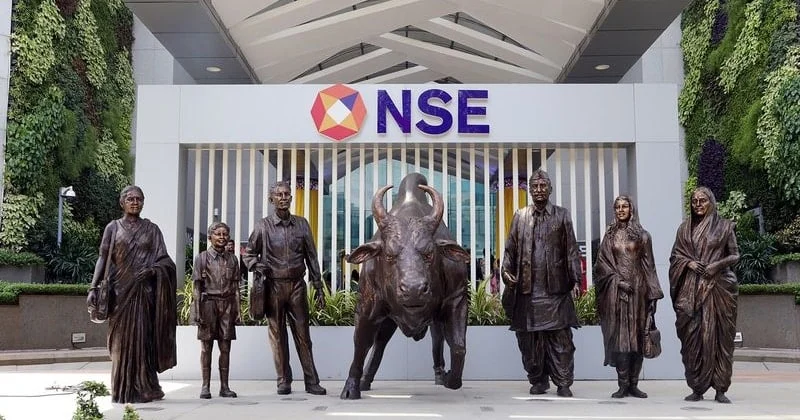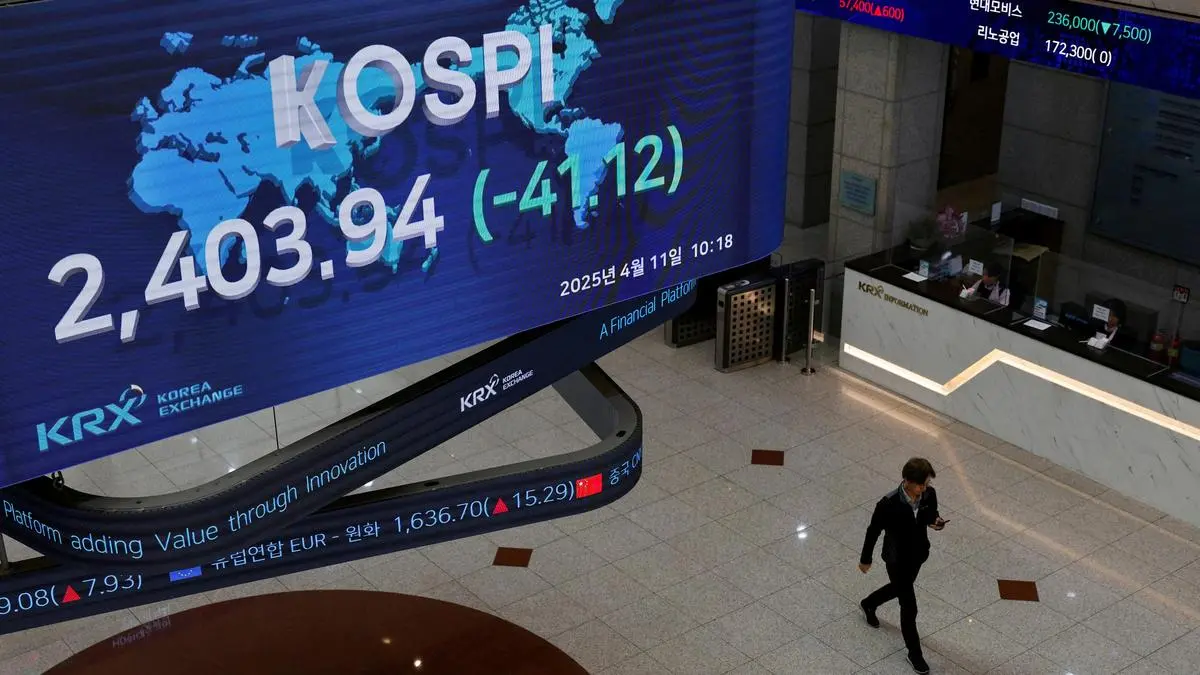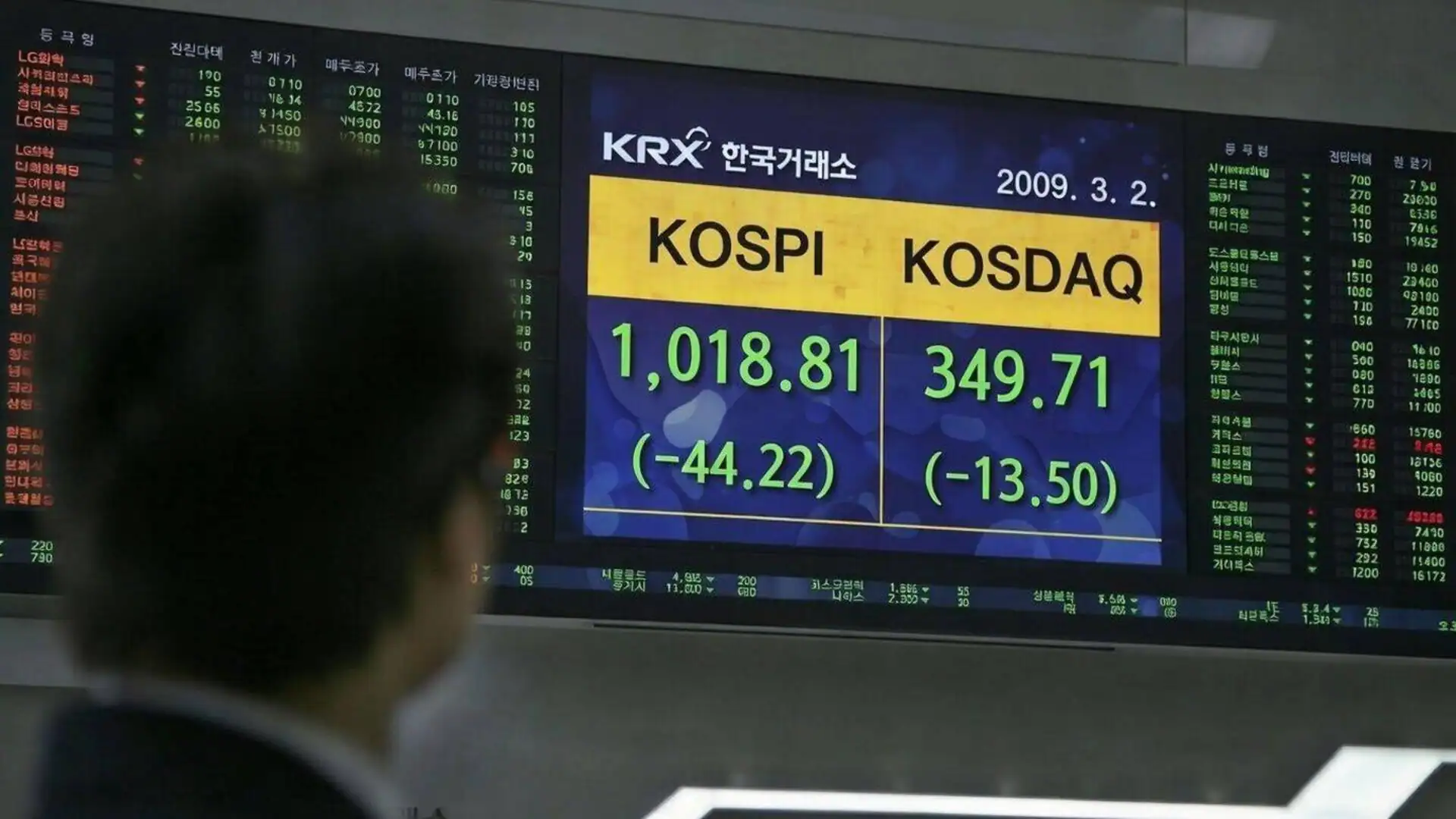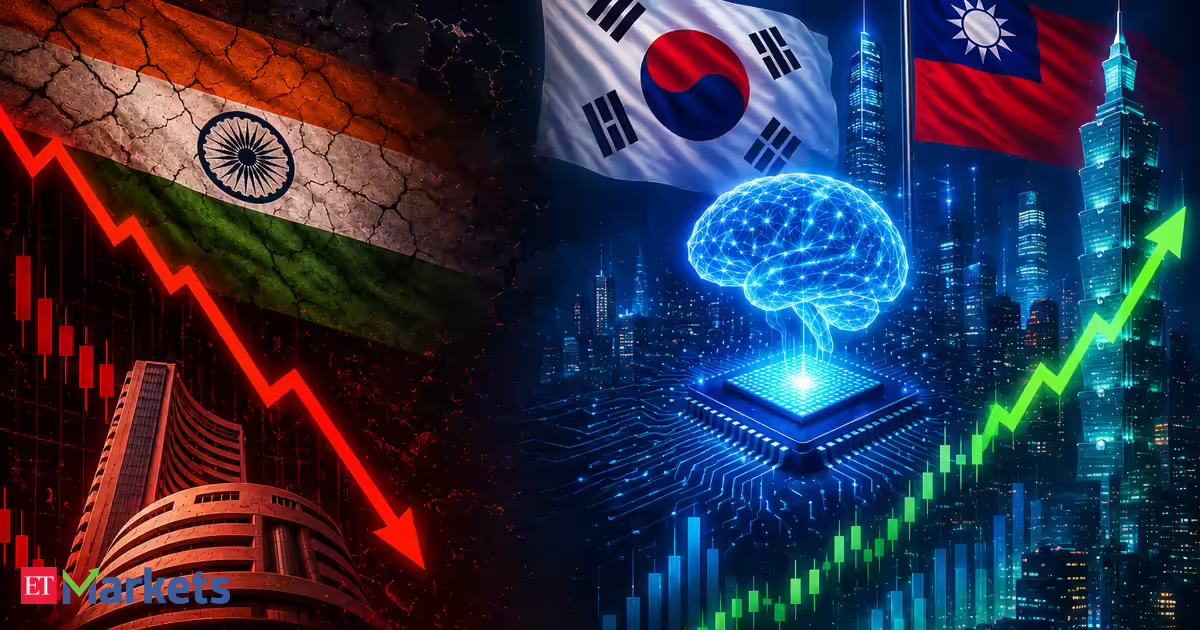
Just days after Taiwan overtook India to become the world's fifth-largest stock market, another Asian rival has surged ahead.South Korea's equity market has now surpassed India to become the world's sixth-largest, pushing India down to seventh place in the global rankings. The shift has been driven by a relentless rally in South Korea's semiconductor giants, which sit at the heart of the global artificial intelligence buildout.Data compiled by Bloomberg shows the total market capitalization of South Korean-listed companies has surged 86% this year to $5 trillion, while India's market value has slipped to $4.8 trillion.At the centre of South Korea's rally are Samsung Electronics Co. and SK Hynix Inc., both now members of the $1 trillion valuation club. Their dominance in AI memory chips has powered the Kospi's gains of more than 100% in 2026, helping South Korea leapfrog Canada, Germany, the UK and France this year.This year's rally, though, has been heavily carried by the memory cycle. Samsung and SK Hynix have done the heavy lifting. The real test now is whether Korea can sustain this re-rating through genuine corporate governance reform.India, meanwhile, has been weighed down by a weakening rupee, record foreign outflows and the absence of large listed companies directly tied to the AI infrastructure boom.Why has India been eclipsed?The change in rankings reflects a broader shift underway across emerging markets, where investors are increasingly allocating capital to economies with direct exposure to the AI and semiconductor supply chain.Global funds have pulled nearly $24 billion from Indian equities so far this year, redirecting capital toward East Asia's technology manufacturing hubs.Taiwan has been one of the biggest beneficiaries. Driven by a 49% rally in Taiwan Semiconductor Manufacturing Co. (TSMC) this year, Taiwan has already overtaken India and now ranks behind only the United States, mainland China, Japan and Hong Kong in stock market value.India's benchmark index, in contrast, is down more than 8% and is headed for its first annual decline after a decade of gains. Its weight in the MSCI Emerging Markets Index has fallen sharply to about 12% from 19% last year.According to Kotak Securities' Sanjeev Prasad, India's lack of exposure to the AI and semiconductor cycle remains a key concern for foreign investors.Prasad described India's AI and semiconductor exposure as "negative" and warned that the trend could persist for another one to three years, limiting foreign portfolio investor interest. He also pointed to weaker relative earnings growth expectations for FY27 and India's negative exposure to commodity cycles, particularly crude oil and natural gas."The continued large FPI outflows from Indian equity markets reflect the steady deterioration of relative returns amid continued compression of relative earnings growth expectations," Prasad said.Elara Securities shares similar concerns, highlighting earnings quality, exclusion from the AI cycle and commodity sensitivity as structural rather than cyclical challenges. The decline in India's MSCI Emerging Markets weight reflects both the market's recent underperformance and the growing preference among global investors for AI-linked economies.At home, investors have also grappled with elevated valuations, a weakening rupee, rising energy costs that have fuelled inflation concerns and slowing corporate earnings growth, creating additional headwinds for equities.Better times ahead?Despite the recent underperformance, Morgan Stanley believes the outlook for Indian equities remains constructive.In its latest India Equity Strategy Playbook, the Wall Street brokerage said India appears well-positioned for a sustained upcycle, supported by improving corporate earnings, a supportive policy environment, strong domestic inflows and a favourable long-term growth outlook.Earnings cycle turning positiveMorgan Stanley believes Indian corporate earnings are entering a fresh upcycle after a period of weakness. While the brokerage flagged risks including a prolonged Middle East conflict and the possibility of a severe drought affecting summer sowing, it expects earnings growth to accelerate over the coming quarters.It remains constructive on capital expenditure trends across sectors such as energy, defence, semiconductors, fertilisers and data centres. Morgan Stanley expects India's investment-to-GDP ratio to rise to 37.5% over the next five years, providing a strong foundation for economic growth.Macro support remains intactThe brokerage also highlighted several macroeconomic factors that could support equities, including an undervalued currency, moderate real interest rates and fiscal stability.Morgan Stanley sees a favourable combination of broad-based earnings growth, strong domestic equity inflows, an expanding IPO pipeline, attractive relative valuations and historically low foreign investor positioning.It also noted that India's share of global profits exceeds its weight in global equity indices by the widest margin since 2009.Long-term growth story remains strongMorgan Stanley argues that India's long-term investment case remains intact despite concerns around artificial intelligence and the country's dependence on imported oil.Also read: Morgan Stanley says Indian stock market poised for strong year ahead. Here’s whyWhile acknowledging that the absence of a direct AI play remains a challenge for Indian equities, the brokerage believes India stands to benefit from an increasingly multipolar global economy. It expects manufacturing to account for a larger share of GDP over the next decade.The report also cited India's young population and rising incomes as key structural advantages. According to Morgan Stanley, India contributed 18% of global GDP growth in 2025, a share it expects to rise further in the coming years.AI and data centres offer new opportunitiesMorgan Stanley expects India to emerge as one of the fastest-growing markets for energy infrastructure investment, creating favourable conditions for a data centre boom.The brokerage also believes India could benefit significantly from AI-driven productivity gains given its relatively low starting point in labour productivity. According to the report, if India can raise nominal growth to 12%, the equity market could become a strong long-term compounder through the remainder of the decade.At the same time, Morgan Stanley cautioned that India's key risks remain largely external, including geopolitical tensions, slowing global growth and the country's dependence on oil imports. Domestic risks include low agricultural productivity, judicial capacity constraints and the potential impact of embodied AI on labour markets.Also read: Relentless Selloff: FIIs pull out 10 years' worth of India equity inflows In a report published last month, Morgan Stanley projected the Sensex could rise to 89,000 over the next 12 months as India emerges from a six-quarter earnings slowdown and enters a stronger growth phase. The brokerage described the recent weakness in corporate earnings as a "mid-cycle" pause rather than a structural slowdown.(Disclaimer: Recommendations, suggestions, views and opinions given by the experts are their own. These do not represent the views of The Economic Times)
Explained: Why Indian stock market has fallen prey to South Korea, Taiwan’s AI prowess
South Korea's stock market has surged past India's, becoming the world's sixth-largest, driven by its semiconductor giants' AI boom. India faces headwinds from a weakening rupee and lack of AI exposure. Despite current challenges, Morgan Stanley remains optimistic about India's long-term growth prospects, citing improving earnings and macro support.
TL;DRAI
South Korea's market ($5T, +86%) overtook India ($4.8T) on Samsung and SK Hynix AI chip dominance, reflecting capital reallocation toward semiconductor supply chains. For tech leaders: India's absence from the AI/semiconductor cycle poses a three-year FPI outflow risk; earnings recovery and capex alone cannot offset this structural shift.
1,054 words~5 min read