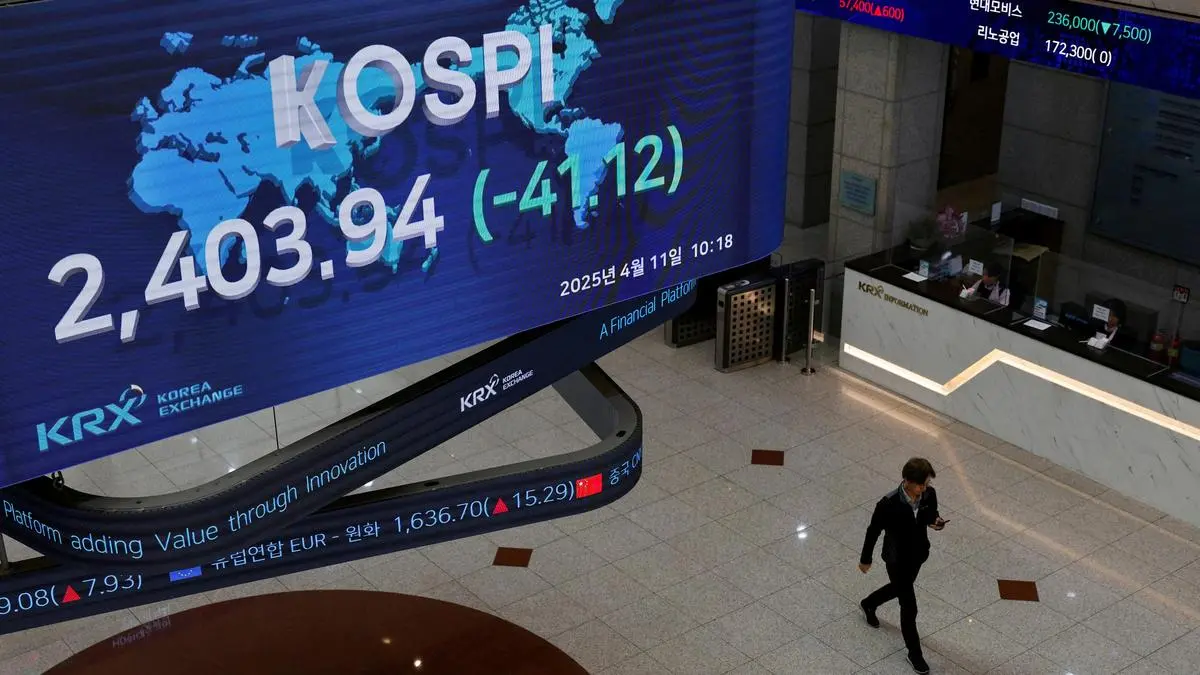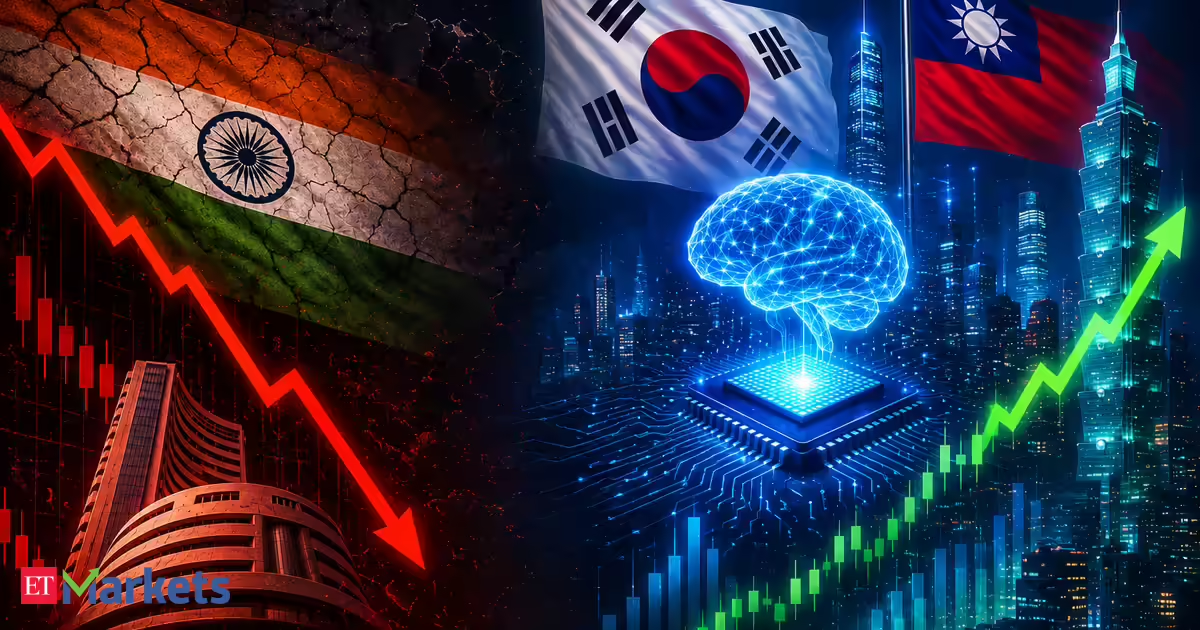
South Korea and Taiwan have overtaken India in global stock market rankings, riding high on booming artificial intelligence (AI)-driven semiconductor stock surge. South Korea’s Kospi has soared past India to become the world’s sixth-largest market, mainly due to two stocks, Samsung and SK Hynix, while Taiwan last week claimed the fifth spot, propelled largely by Taiwan Semiconductor Manufacturing Company (TSMC).Also Read: South Korea overtakes India as world’s sixth-largest stock marketIndia, despite being one of the fastest-growing major economies, has been sidelined in this global rally due to decades of missed opportunities in semiconductor manufacturing. The rise of South Korea and Taiwan illustrates how strategic state-backed investments and long-term industrial policy can translate into outsized equity market gains. Meanwhile, India is finally accelerating its chip ambitions but remains years behind its East Asian peers.Riding the AI-chip waveSouth Korea’s leap past India is almost entirely driven by its dominant memory chip producers, Samsung Electronics and SK Hynix. According to Bloomberg, the Kospi has gained over 100% this year, lifting South Korea’s total market capitalization to $5 trillion, surpassing India’s $4.8 trillion. Both Samsung and SK Hynix have recently entered the $1 trillion valuation club, benefitting directly from surging demand for AI memory chips. Analysts note that while Korea’s economic output remains smaller than India’s, the explosive market surge demonstrates how concentrated exposure to high-demand tech hardware can generate enormous investor returns.Also Read: SK Hynix, Micron Technology join trillion-dollar clubTaiwan’s ascent is similarly tied to semiconductors, particularly TSMC, which accounts for 42% of the Taiwan Stock Exchange index. Bloomberg reports that TSMC shares have surged 49% this year alone, a reflection of its unrivaled position in contract chip manufacturing for AI applications. Taiwan’s government has also supported market inflows by easing restrictions on fund investments in top-weighted stocks, further enhancing TSMC’s valuation. In both cases, the combination of government foresight, decades of industrial focus and global investor access to leading chip companies has created a virtuous cycle of equity market growth.Also Read: Big tech gives South Korea, Taiwan the edge over IndiaIndia’s lost decadesIndia’s semiconductor journey has been marked by a long trail of missed opportunities with leading global firms that once showed serious interest in establishing a chip-making footprint in the country. From the 1960s through the early 2000s, India repeatedly failed to convert strategic interests from companies such as Fairchild, Texas Instruments and Intel into actual manufacturing plants.Fairchild, the Silicon Valley pioneer, approached India in the late 1960s to set up a semiconductor facility. However, wary of foreign capital and constrained by socialist economic policies, India turned it down. Fairchild instead chose Malaysia, setting the stage for Southeast Asia’s rise in chip manufacturing. In the early 1990s, Texas Instruments reportedly offered to co-invest in a semiconductor fab in India. The plan required the Indian government to fund half the project. The government’s indecision and lack of urgency led TI to abandon the proposal.India’s own Semiconductor Complex Limited (SCL), established in the 1980s in Chandigarh, was seen as a stepping stone toward chip manufacturing. Global players such as Motorola, STMicroelectronics and Matsushita showed interest in collaborating. However, persistent delays in forming joint ventures and lack of ecosystem support drove these companies away. A fire in 1989 gutted the SCL facility, and efforts to revive it with modern tech fizzled out.Intel co-founder Robert Noyce visited India in 1969, but left disappointed due to restrictive policies. Decades later, in the mid-2000s, Intel again explored a fab investment, but government sluggishness ended in that investment going to China and Vietnam. India’s Fab City in Hyderabad attracted attention from AMD, which was expected to partner in a $3 billion semiconductor project. Despite initial fanfare and state support, the project never took off due to delays in securing technology partners and lack of coherent government support. A South Korea-based company, Intellect Inc., had also proposed building a $1.6 billion fab in Andhra Pradesh. It never moved past the planning stage due to regulatory and approval hurdles.Over five decades, India had multiple windows of opportunity to emerge as a serious semiconductor manufacturing hub, with active interest from global heavyweights. Yet, a recurring pattern of policy hesitancy, bureaucratic delay and lack of strategic clarity ensured that each opportunity slipped away. While the recent launch of the Vikram chip marks a significant advance, it comes after decades of costly inaction that allowed other countries such as Taiwan, South Korea, China and Malaysia to race ahead.This historical inertia left India without listed champions in semiconductor manufacturing. Unlike Korea and Taiwan, Indian equity markets lacked marquee companies directly benefiting from the AI boom. Consequently, despite strong GDP growth, foreign investors largely shifted their attention toward markets with pure-play chip leaders.India tries to catch upIndia has now embarked on a determined effort to establish itself in chip manufacturing. The India Semiconductor Mission, launched in 2021, along with the Production Linked Incentive (PLI) and Design Linked Incentive (DLI) schemes, aims to develop a domestic semiconductor ecosystem. The first made-in-India chip, the Vikram 32-bit processor, was unveiled in 2025, alongside several test chips from approved projects. Nearly 10 semiconductor plants are under construction across Gujarat, Assam, Uttar Pradesh, Punjab, Odisha, and Andhra Pradesh. Major international companies such as Micron and AMD are setting up manufacturing or design centers, while domestic players like Tata-Powerchip and CG Power-Renesas are establishing OSAT units.These initiatives position India at multiple points along the semiconductor value chain, from fabrication to chip design and assembly. The government is now preparing a second phase of the Semiconductor Mission to attract component suppliers and raw material producers, further strengthening the ecosystem. These efforts come at a time when global supply chains are shifting away from China and Taiwan due to geopolitical tensions, presenting a strategic window for India to carve out a meaningful presence.The strategic value of chipsIndia's late entry into chip manufacturing is reflected not merely in South Korea and Taiwan overtaking Indian equities, but also in India's strategic dependence. Semiconductors underpin virtually every modern technology, from smartphones and automobiles to defense systems and satellites. The pandemic revealed the global economy’s vulnerability to chip shortages, affecting everything from car manufacturing to weapons supply. The AI revolution has amplified this dynamic, with high-performance chips becoming the backbone of AI infrastructure. Countries like the US, China and members of the EU now treat semiconductors as critical strategic assets.India’s delayed entry has left it dependent on foreign suppliers for chips, constraining its technological and strategic autonomy. The current push to build domestic capacity is not just economic priority but geopolitical too. If executed successfully, India could reduce its dependency, integrate into global supply chains and potentially develop its own equity champions in the semiconductor sector over the next decade.The surge of South Korea and Taiwan ahead of India in global equity rankings shows the value of early, sustained investment in semiconductor manufacturing. Both countries reaped the rewards of long-term, state-backed industrial policy, producing companies that global investors could directly buy into as AI demand surged. The coming years will determine whether India can translate its chip initiatives into market-leading companies capable of reshaping its equity market profile.
South Korea, Taiwan leapfrog India, but the race was lost decades ago
South Korea and Taiwan have surged ahead of India in global stock markets, driven by AI-powered semiconductor booms. Their success stems from decades of strategic state investment and industrial policy, creating market leaders like Samsung, SK Hynix, and TSMC. India, despite recent efforts, faces a long road to catch up after historical missed opportunities in chip manufacturing.
TL;DRAI
South Korea and Taiwan surpass India in stock rankings; Kospi at $5T via Samsung and SK Hynix, Taiwan's TSMC up 49% amid AI chip demand. Global semiconductor supply now centers on TSMC and Korean makers, forcing tech leaders to depend on East Asia while India remains years behind.
1,181 words~5 min read