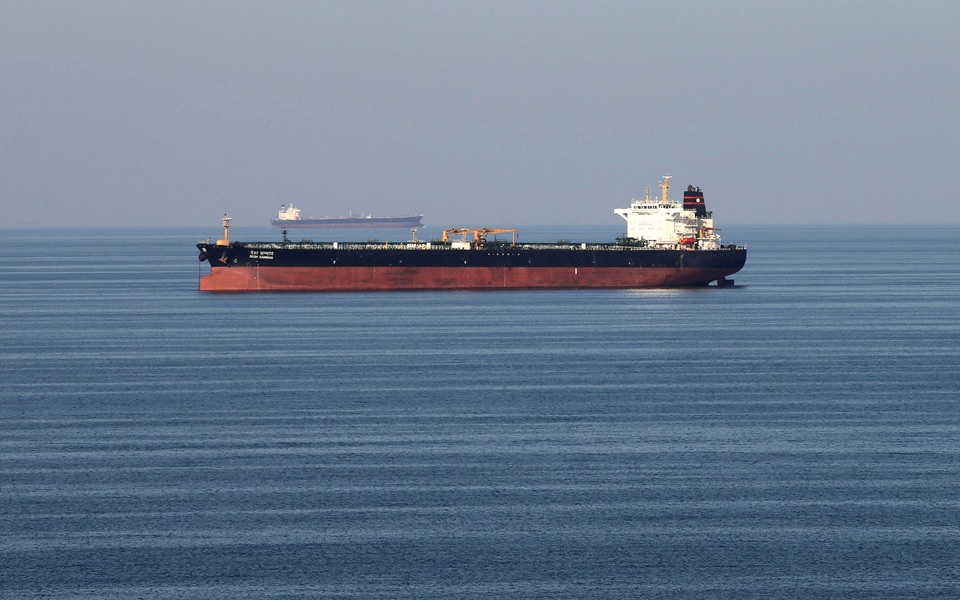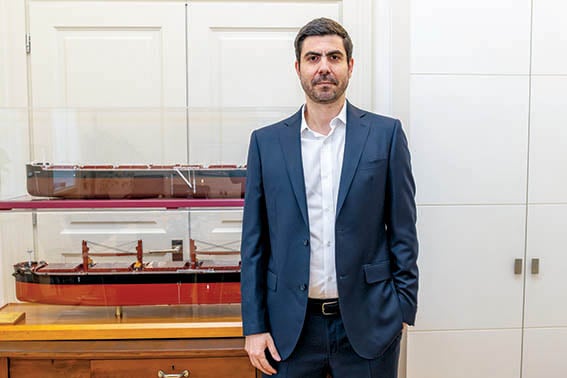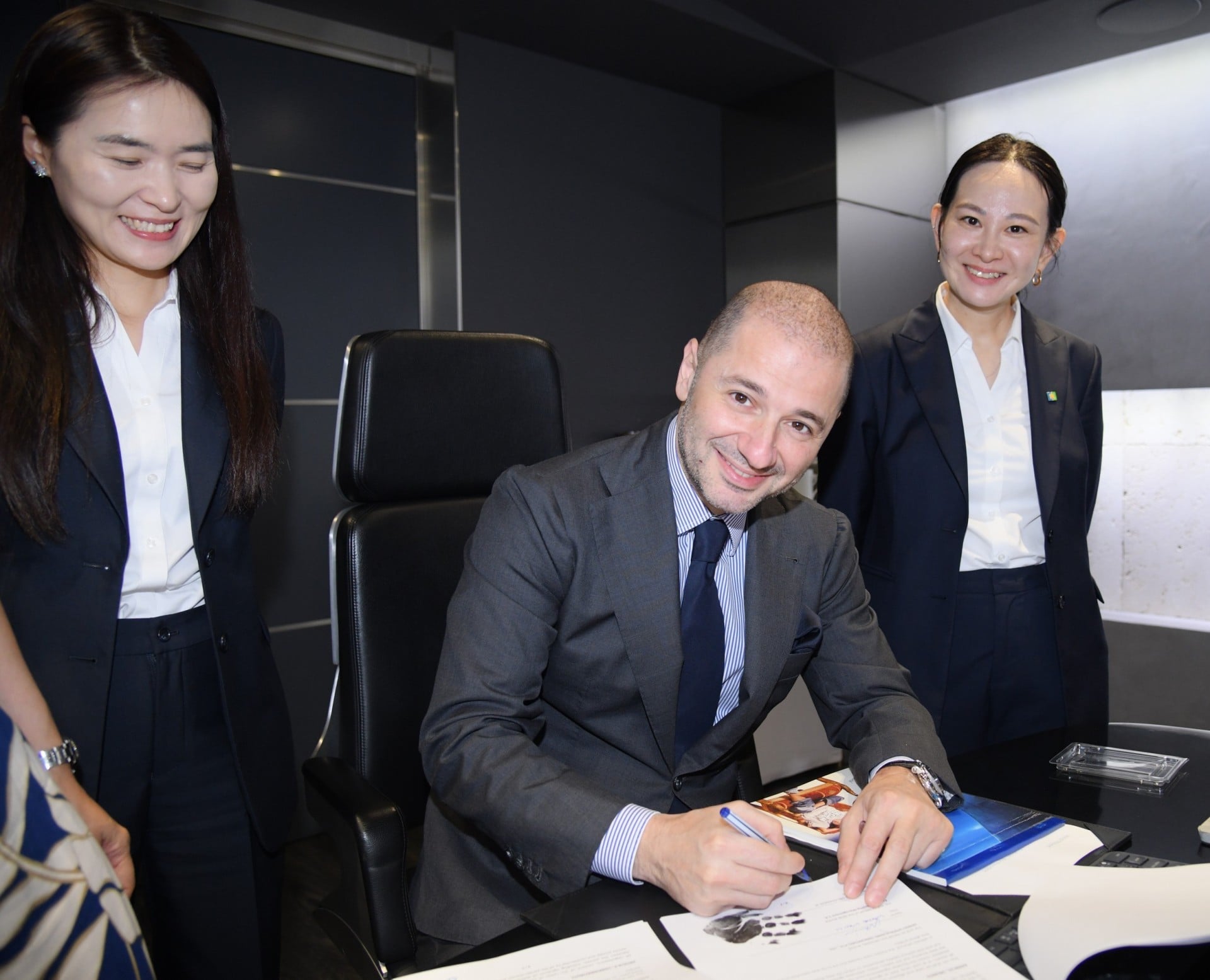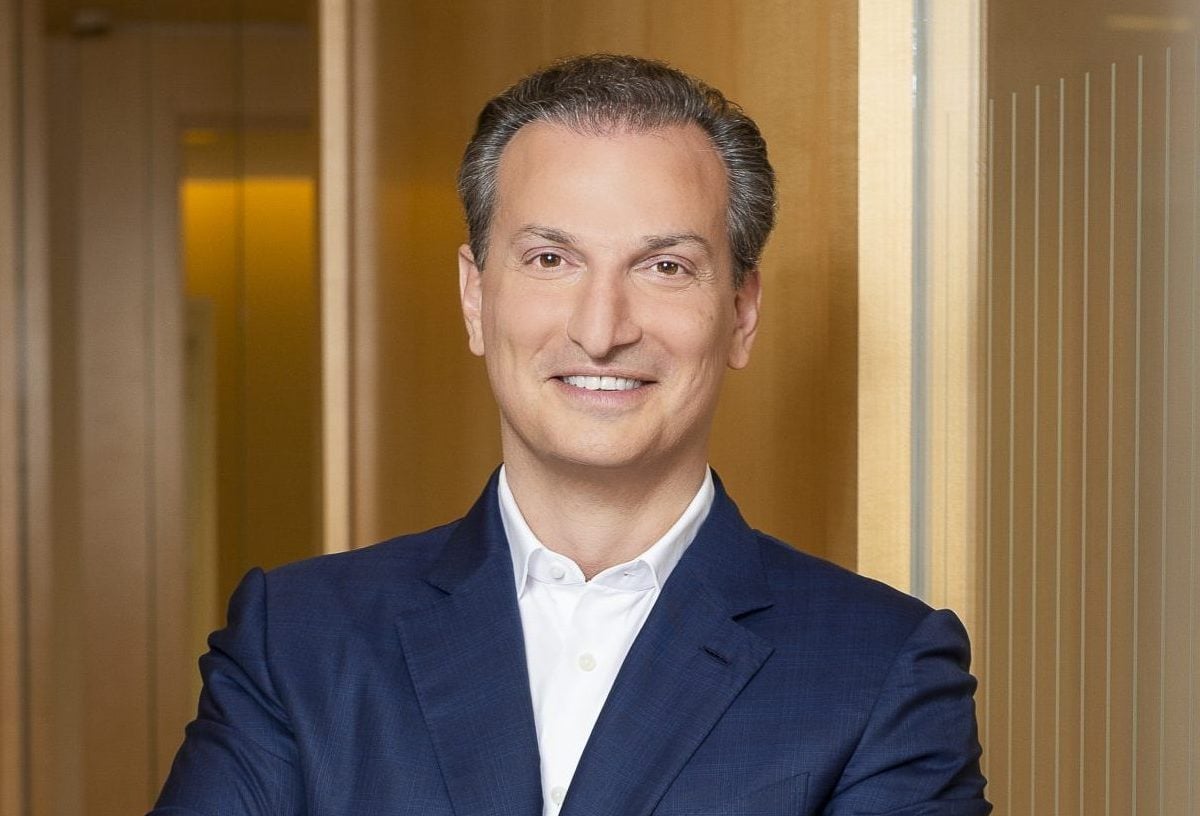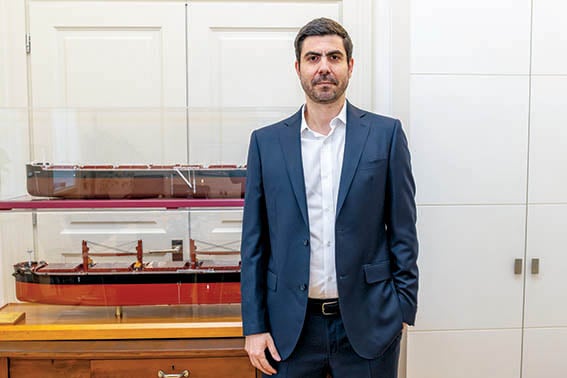
Within the span of five years, the Alimia Group has built a modern fleet comprising both bulk carriers and tankers, investing primarily in newbuild orders.With Odysseas Laskaridis at the helm, the Group now counts a fleet of 37 vessels, including those on order, of which 34 are newbuilds. Notably, Laskaridis Maritime, which manages the Group’s dry bulk fleet, operates one of the most modern fleets globally, with 27 vessels and an average age of three years.In an interview with Naftemporiki, the Chief Executive Officer of Laskaridis Maritime, Mr Odysseas Laskaridis, explains that the focus on newbuild vessels is largely driven by fuel consumption. Compared with ships delivered just a few years ago, consumption levels are approximately 25% lower. “This was one of the primary reasons we continued to invest,” Mr Laskaridis notes.Regarding the company’s entry into the tanker segment, Mr Laskaridis explains that this move reflects the family’s broader investment philosophy of diversification. On this basis, the Group initially invested in product tankers, specifically LR2 and MR2 vessels, and has more recently entered the crude segment through orders for VLCCs-so-called supertankers-capable of carrying around 300,000 tonnes of cargo. At the initial stage, these tankers will be managed by third-party managers; however, as he underlines to “N”, the intention is for in-house management to follow in due course.Mr Laskaridis does not shy away from addressing the element of business risk inherent in shipping. As he candidly reveals to “N” in relation to the Group’s investments in bulk carriers: “We had set ourselves a ceiling on vessel prices, above which we would not invest. That ceiling, however, we exceeded. Whether that proves right or wrong will be seen in the future.”With regard to the selection of shipyards, Mr Laskaridis explains: “In our current operations, we have chosen to work exclusively with Chinese shipyards.” The Group has maintained a close relationship with Jinglu Penglai for approximately fifteen years. “We started working with them at the very beginning of their venture, and this has helped build a relationship of mutual respect,” he notes. At the same time, Laskaridis Maritime was the first Greek company to place its trust in Hengli during the yard’s “revival”-“something they value highly,” Mr Laskaridis emphasises.Reflecting on the course of the new shipping company and his own role in the venture, Mr Laskaridis also refers to his father, Mr Athanasios Laskaridis: “There has been something else very important in our new company, which may sound self-evident, but anyone who has worked in a family business knows that it is not. That is the trust and absolute freedom of action I have been given by my father.”As for the next day, Mr Laskaridis underlines: “After five years, I can say that we have shaped an organisation with our own identity and direction, and we have laid the foundations for the future.”Mr. Laskaridis, how was the decision made for the large-scale investment in bulk carriers that the group carried out within a very short period of time, resulting in it now controlling one of the most modern fleets in the world?We began our new venture in 2021 in a somewhat unconventional way; we had no office, no team, and no clearly defined plan following our sale at Lavinia.One investment led to the next, and almost before we realized it, we had ordered a considerable number of vessels and subsequently had to build a team to manage them.We began our investments on the back of positive underlying market momentum, with vessel prices below USD 30 million offering attractive entry levels for newbuilding ultramax and kamsarmax bulk carriers. We had set for ourselves a sort of price ceiling above which we would not invest-one that we ultimately exceeded. Whether that was the right decision remains to be seen.Our bulk carrier fleet consists of ultramax, kamsarmax and capesize vessels. 90% of our fleet comprises of newbuilding vessels. The difference in fuel consumption between new vessels and those delivered just a few years ago is substantial-around 25% lower-and this was a decisive factor in our continued investment.The group has been dynamically expanding into the tanker sector as well, a field in which the family did not previously have a strong presence. What led you to this decision?As a family, we have always had and maintain up to today diversified business activities. We followed the same approach in our new shipping venture. We operate three ship repair yards in Panama, in Spain and a logistics company in Uruguay, and similarly, we decided to diversify across vessel types.We began with LR2 tankers, the workhorse of the tanker market, then invested in MR2 vessels, and a few months ago made a small entry into larger vessels with VLCCs. We are building a modern eco fleet composed exclusively of newbuildings, which we believe will provide us with a competitive advantage.Initially our tanker fleet will be managed by third-party managers, however we intend to bring management in-house in the near future.Relationships with shipyards: how the company selects its partners?Over the years we have developed strong relationships with several shipyards. Historically the vast majority of the family bulker fleet has been built in China, and we continued with this strategy in our current establishment for both bulkers and tankers. Nonetheless, prior to my involvement, we also built numerous vessels in Korea and Japan, as well as reefer vessels in Ukraine.Our relationship with Jinglu Penglai is particularly noteworthy, having built nearly 40 vessels together over the past 15 years. We partnered with them from the early stages of their development, building a relationship based on mutual respect. Similarly, in recent years we have developed a very close cooperation with Hengli. We were the first Greek shipowners to place trust in Hengli during the shipyard’s “revival” – something they value highly. Beyond our confidence in them, we provided positive recommendations to peers, recognizing at an early stage their strong potential and ambitious plans. It is important for us to have open communication and the ability to express views freely at all levels. The perception among Greek shipowners regarding Chinese shipyards and their quality has improved significantly in recent years.Spot market or period charters: when and why?In the bulk carrier sector, we follow a clear strategy focused on index-linked charters. Our vessels are exposed to a daily fluctuating spot market index, while we retain the ability-through Forward Freight Agreements-to lock in fixed rates for varying periods, from one month to several years.This approach provides us with exposure to the spot market without the complexity and additional risks associated with voyage charters. At the same time, our analysis suggests that consistent outperformance over the long term is difficult, or at least that’s what we believe. Admittedly, this is a less exciting chartering approach as it lacks the excitement of individual voyage fixtures. As a younger professional, I tend to be optimistic about the market direction so we don’t “lock in” the rates from spot to period too often, but experience is gradually teaching me that markets do not move only upwards.With the tankers, such approach is less common, so initially we have opted for period charters. This reflects our intention to pursue a more balanced and conservative strategy, particularly given the high value of our newbuilding vessels.Is the market, as it stands today, more suitable for a wait-and-see approach, investments, or asset sales?We are currently in a market environment characterized by relatively high prices across almost all vessel types. It is difficult to give a concise answer on whether to buy, hold or sell, as it ultimately depends on one’s strategy, how their capital is deployed, their current liquidity and their risk profile. Shipping is a fundamentally cyclical business, and therefore timing your investments is particularly important.However, it is hard to always correctly time such investments, which is part of what makes shipping such an interesting business.Our company primarily focuses on the acquisition of newbuildings. Shipyards worldwide are operating at high capacity with limited expansion capability, driving vessel prices upwards.There has been a surge of orders in containerships and tankers at shipyards that traditionally built bulk carriers, altering the shipbuilding landscape. Additionally, new orders placed today will have a delivery date in 2029/2030, which is quite far out.It is important to note that new vessels now incorporate Tier III engines, scrubbers, eco-saving devices, and generally more advanced specifications. These factors need to be taken into consideration when analyzing price levels.In bulk carriers, particularly kamsarmax vessels, prices are high but not prohibitive. In previous cycles we have witnessed higher prices for less advanced vessels, so investment at current levels would not be unreasonable. In contrast, capesize vessels are at historically high price levels taking into account the freight market over the last few years. If you buy a vessel at today’s price with bank financing, to breakeven, you need a rate which exceeds USD 23,000 per day. Such levels have not been consistently sustained over the past 15 years.In tankers, prices are also at historical highs. However, the situation differs from bulk carriers, as current freight markets can support these valuations. Both spot and time charter rates are strong, reducing investment risk, particularly when securing employment for newbuildings.MR2 vessels have a relatively reasonable orderbook-to-fleet ratio. LR2 vessels have a high one; however, it was widely expected that in 2026 there would be a market collapse as a significant number of vessels would enter the market, whereas the exact opposite occurred.VLCCs also had a reasonable ratio up until a few months ago. However, the strength in the freight market together with the large capacity availability of Hengli have led to an increase in the number of vessels on order.Group Investments abroad: ship repair yards and logisticsBesides the vessels owned by Alimia Group, we control three ship repair yards located in Santander (Spain), Las Palmas (Spain), and Panama City (Panama). All three are strategically located and the sector has experienced strong growth over the past five years.The majority of markets are performing well, shipowners are maintaining their vessels in good condition, and the implementation of new regulations have all contributed positively to the results.In Uruguay, we control Christophersen Group, a diversified logistics group with origins dating back to 1892 as a port agency. Through strategic investments in terminals, storage facilities, and rail transport, it has evolved into one of the country’s leading logistics groups.Green transition and shippingOur strategy is clear: investments in modern vessels with significantly lower fuel consumption-on average about 25% less than previous-generation ships.Regarding alternative fuels, given the absence of a clearly established solution, we are not prepared at this stage to assume the risk of investing in vessel types that may not be viable in the near future.The issue of seafarers and the recruitment of crews today. How difficult is it to secure them? What procedures do you follow?One of the most significant challenges facing the shipping industry today is crew availability. There is a substantial shortage and intense competition among companies.The procedures we follow are straightforward and focus on the human element. What does a seafarer primarily want in order to be satisfied with a company? To be paid on time-a requirement that may sound obvious, but is not always the case. They also want to feel that they are part of a living, functioning organization.We achieve this through the open communication we strive to maintain with our seafarers, both on a professional and personal level. We also have a significant advantage: we have a very modern fleet with new vessels.Family company vs. new ventureI have been working in shipping for 16 years and have had the opportunity of experiencing two different family professional environments.I began my career in 2010, joining our established family business which had strong foundations from before I was even born and which featured significant family involvement. My focus was on understanding the organization, adapting, and finding my role within an already efficient structure. The timing was ideal, as I joined during the company’s expansion into dry bulk, allowing me to contribute from an early stage to its commercial development.Five years ago, following a family restructuring, we proceeded to establish a new venture from scratch. There were no vessels, no office, no team, and no processes. Of course, there was one very important element-capital. Another equally important factor in our new company which may sound obvious but anyone who has worked within a family business knows it is not, was the trust and complete freedom of action granted to me by my father.We started with new ideas, new systems, and new people, focusing on how we could create a pleasant working environment and carry out our work in an efficient and well-organized manner. We developed processes with future requirements in mind. We have placed particular emphasis on recruitment interviews, as over the past four years we have been hiring one executive per month.The growth has been rapid and demanding. Within a short period of time, we were called upon to manage both the establishment of the company and the continuous expansion of the fleet. After five years, I can say that we have formed an organization with its own identity and direction, and we have laid solid foundations for the future.
Odysseas Laskaridis: Alimia Group: Investing in 37 ships within five years
With Odysseas Laskaridis at the helm, the Group now counts a fleet of 37 vessels, including those on order, of which 34 are newbuilds. Notably, Laskaridis
2,222 words~10 min read