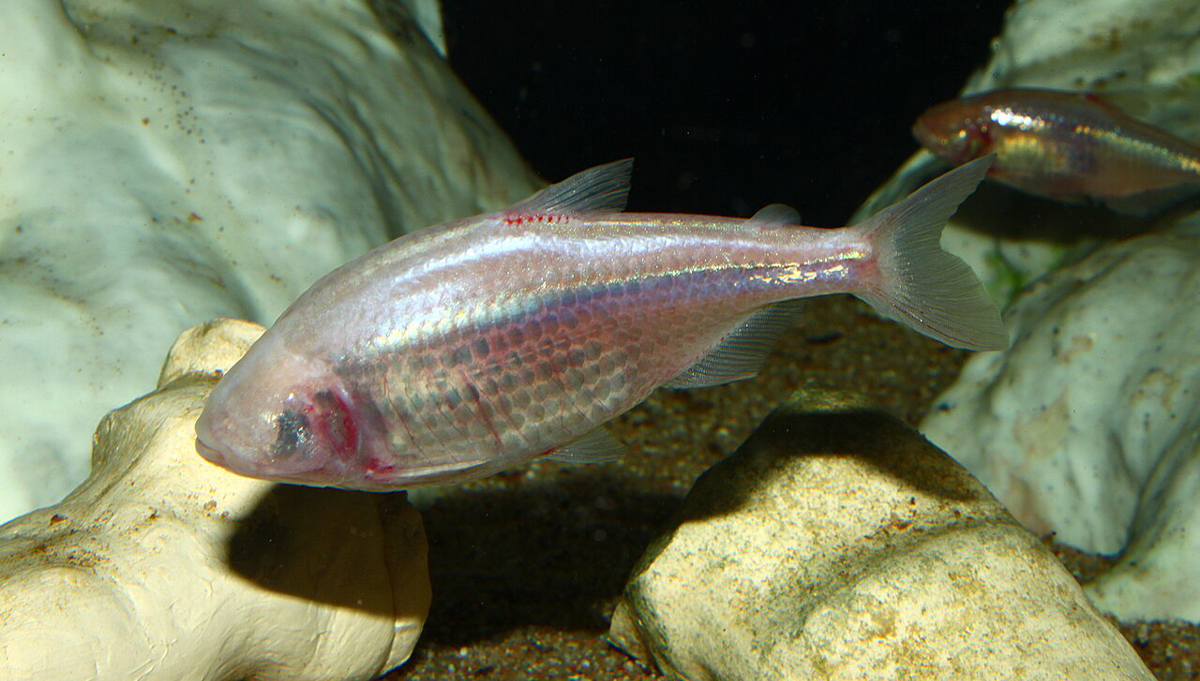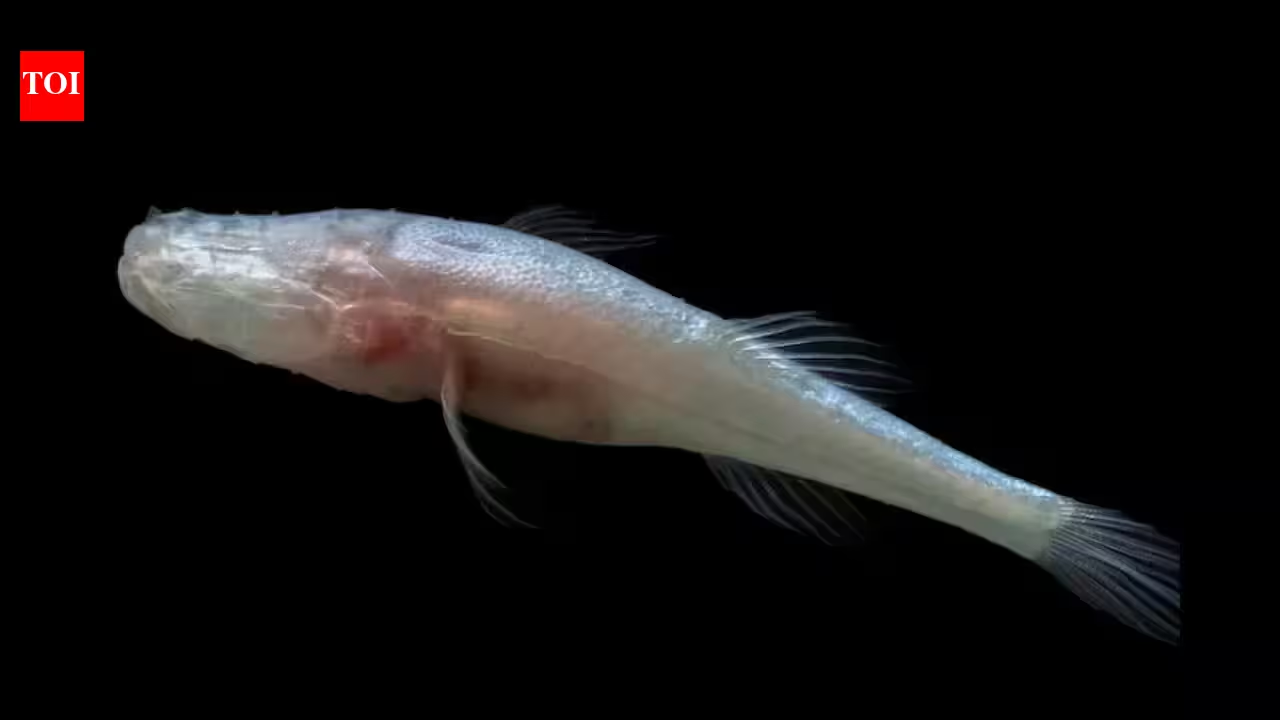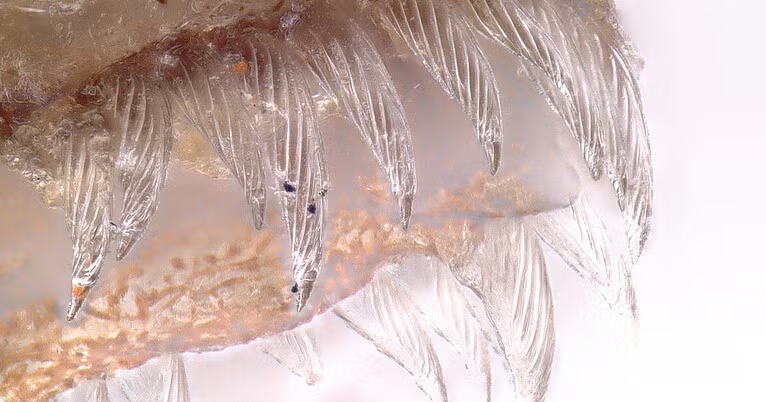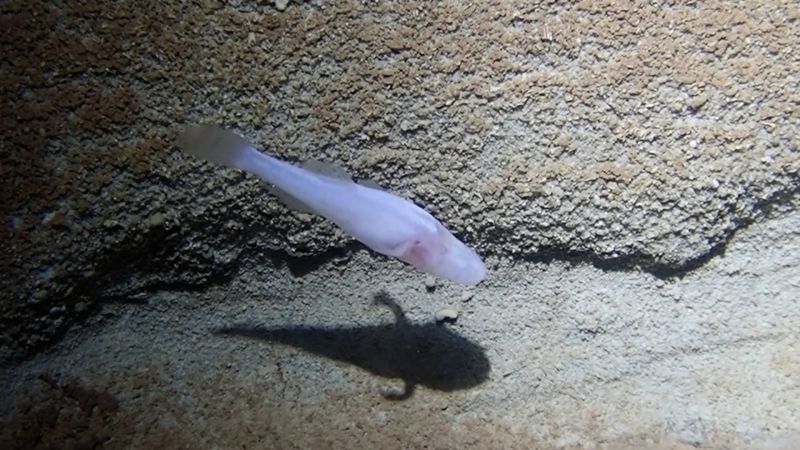
A new Yale study identifies a distinct species of eyeless cavefish, a discovery that challenges long-held conventional wisdom that caves and other subterranean ecosystems are evolutionary dead ends.The study shows that three species of Southern cavefish, including the newly discovered species, Typhlichthys styx, evolved from a common ancestor that had adapted to life underground and dispersed through aquifers in soluble subterranean rock formations in the southeastern United States. It provides the best evidence to date that speciation — when a single species splits into two or more species — can occur in species adapted to only survive in subterranean ecosystems.
The findings contradict a widely held hypothesis that underground ecosystems are ‘evolutionary dead ends.’
“We show that, in terms of evolution, what’s happening underground matters,” said Chase Brownstein, a graduate student in ecology and evolutionary biology in Yale’s Graduate School of Arts and Sciences, and the study’s lead author. “In this case, our analysis found that three species diverged from each other after their ancestor had invaded caves. It also found that underground geology was key to facilitating this speciation.” The findings are published in the journal Integrative Organismal Biology. Thomas Near, professor of ecology and evolutionary biology in Yale’s Faculty of Arts and Sciences (FAS), is the study’s senior author. The process of speciation in underground ecosystems is poorly understood, the researchers explained. In his pathbreaking 1859 book, “On the Origin of Species,” Charles Darwin described cave-dwelling organisms as “wrecks of ancient life” — the remnants of old lineages that had survived by adapting to isolated environments while their related species went extinct. A widely held hypothesis developed that underground ecosystems are “evolutionary dead ends” because species that have adapted to them seem to stop diversifying into new species.