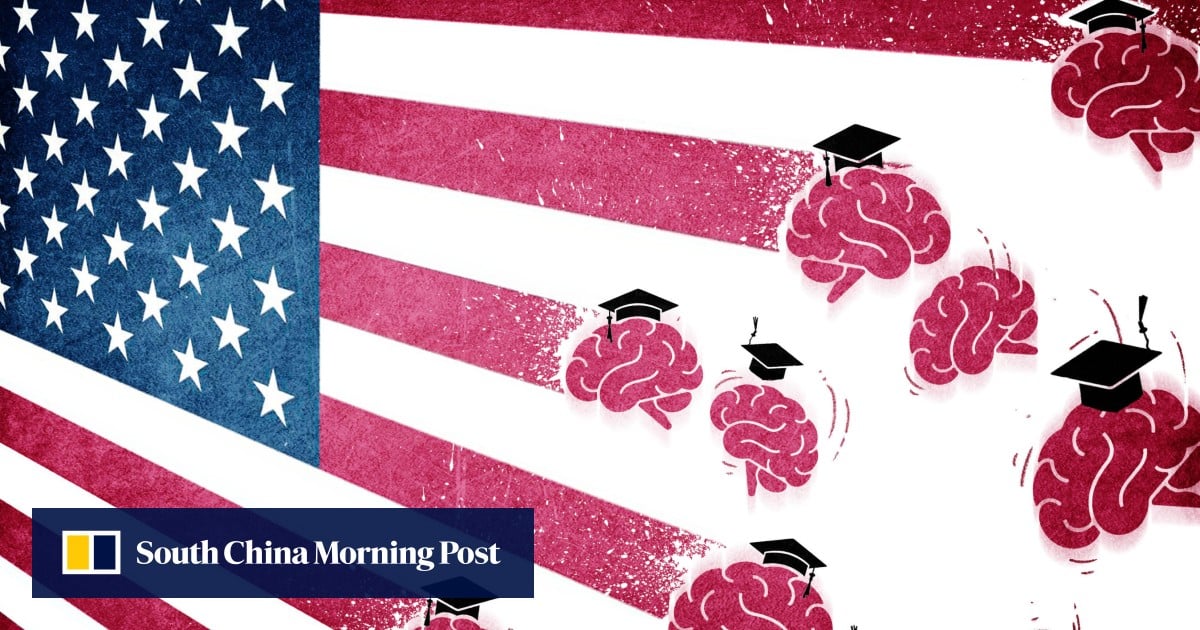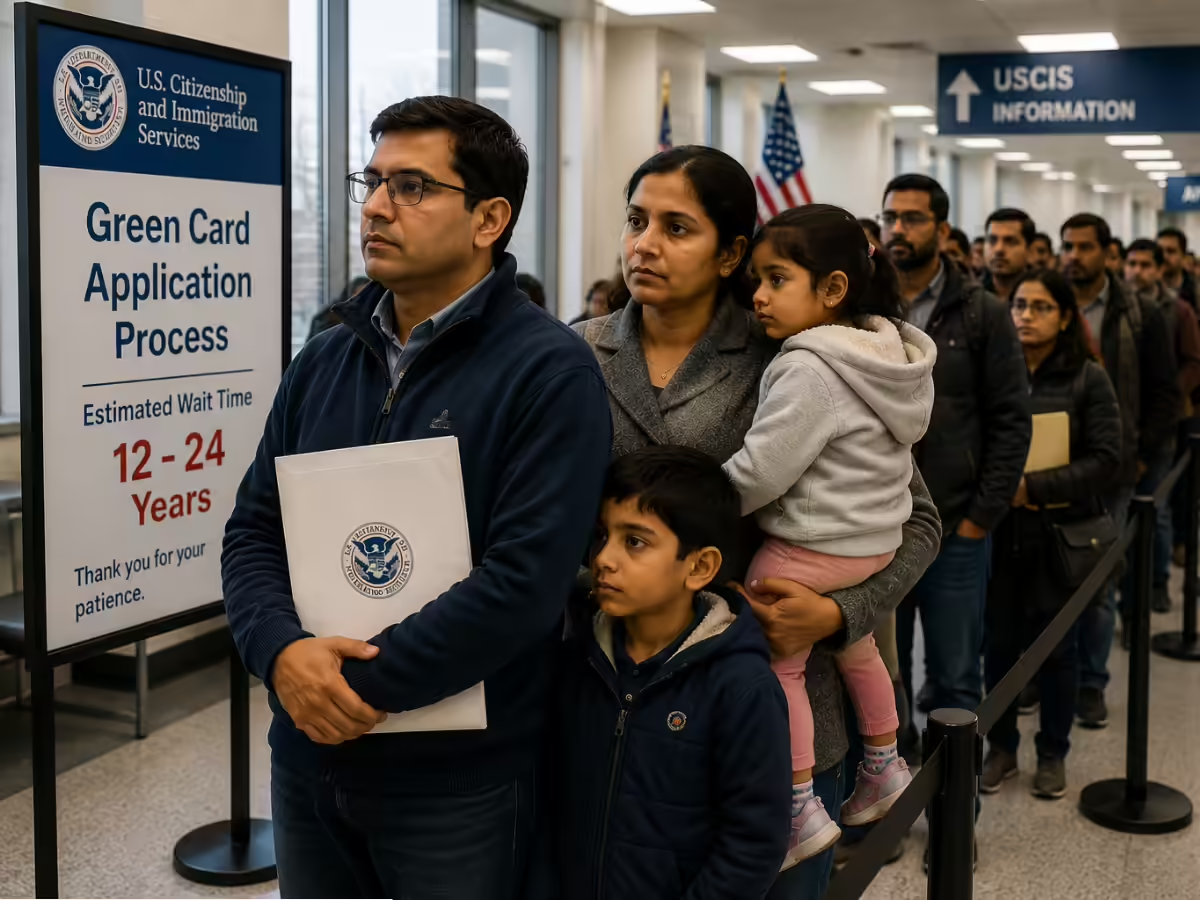
The traditional path to a US passport is no longer as straightforward as it once appeared. A decade ago, many skilled workers could reasonably expect that an H-1B visa would eventually lead to a green card and, later, citizenship. Today, immigration lawyers and policy experts say the biggest challenge is not entering the US workforce but navigating the long and uncertain journey from temporary status to permanent residency. While recent reforms have made the H-1B lottery more orderly, long employment-based green card backlogs, country-based caps and evolving immigration policies have introduced uncertainty into the transition from temporary status to permanent residency.The June 2026 Visa Bulletin highlights the extent of the backlog. For Indian applicants, the employment-based second preference (EB-2) category was processing cases with a final action date of September 1, 2013, while the employment-based third preference (EB-3) category was processing cases with a final action date of December 15, 2013, according to the US Department of State. The shift is particularly significant for Indian professionals, who make up the largest share of H-1B visa holders and face some of the longest waits for permanent residency.Also Read| US Visa Bulletin June 2026: Green card backlog worsensGetting in has become a lottery The first challenge now begins before a foreign professional even starts working.According to US Citizenship and Immigration Services (USCIS), employers submitted 343,981 eligible registrations covering 336,153 unique beneficiaries during the FY2026 H-1B cap season. USCIS selected 118,660 beneficiaries, resulting in a selection rate of about 35.3%, according to USCIS data.The figures marked a significant decline from FY2025, when USCIS received more than 470,000 eligible registrations. The drop followed the agency's move to a beneficiary-centric selection process aimed at reducing duplicate registrations and abuse of the system.The numbers show that demand for H-1B visas continues to exceed supply, with more than 343,000 eligible registrations competing for 85,000 available visas. However, they also suggest that the lottery has become less crowded and more predictable than during the surge years of 2023 and 2024.Even with improved selection odds in FY2026, employers still face uncertainty because demand continues to far exceed available visas. USCIS received 343,981 eligible registrations against an annual cap of 85,000 visas, meaning many qualified candidates were not selected despite having job offers.When merit meets probability For international students graduating from US universities, lottery selection remains an important hurdle. The latest Open Doors 2025 report shows that 363,019 Indian students were enrolled at US colleges and universities in the 2024–25 academic year, up 9.5% from 331,602 a year earlier. Indian students accounted for 30.8% of all international students in the US and remained the largest international student group. The pathway into the United States may have become somewhat more predictable. The pathway to permanent residency has not. Immigration lawyers increasingly argue that the larger challenge now begins after workers secure an H-1B visa.Uncertainty increasingly extends beyond visa availability and into processing timelines. "Applicants are, in effect, paying a surcharge to receive the timely service the agency should be providing as a matter of routine," Khanna said. "It has become a tax on urgency, and that urgency is one that the government itself created."The green card traffic jam If obtaining an H-1B is the first hurdle, securing a green card has become the largest bottleneck. The June 2026 Visa Bulletin shows the US government is still processing many Indian EB-2 and EB-3 cases with priority dates from 2013, highlighting the depth of the employment-based backlog.A 2023 analysis by the Cato Institute estimated that the employment-based green card backlog had grown to approximately 1.8 million applicants. The backlog reflects a mismatch between demand for permanent residency and the annual number of employment-based green cards available under US law.Recent policy uncertainty has added another layer of concern. Last month, USCIS issued guidance stating that temporary visa holders seeking permanent residency should generally complete the green card process through consular processing outside the United States rather than through adjustment of status inside the country. The move raised concerns among immigration lawyers and employers that workers already living and working in the US could face additional travel, costs and processing delays. Days later, the administration clarified that adjustment-of-status applications would continue to be reviewed on a case-by-case basis, leaving many applicants uncertain about how the policy might be applied in practice.For many applicants, especially those born in India, the wait extends far beyond what policymakers originally envisioned when the current system was designed.According to Cato Institute immigration researcher David J. Bier, employment-based green-card backlogs have created a situation in which many highly skilled workers remain in temporary visa status for years while waiting for permanent residency.Also Read| India's brain-gain moment may be starting with a crack in the American dreamWaiting longer than a career The challenge becomes even more pronounced for Indian professionals. Research cited by Cato Institute and immigration policy organizations has projected that portions of the Indian employment-based green card backlog face waiting periods extending beyond a normal working lifetime.One widely cited estimate from research referenced by the Cato Institute projected that portions of the Indian employment-based green card backlog could face waits of up to 134 years under current allocation rules and country-based caps. About 1.1 million Indians are waiting for US employment-based green cards. While such projections depend on future application volumes and policy assumptions, they underscore the scale of the problem.A pathway that no longer functions like one Historically, the promise of the H-1B system rested on the expectation that temporary status would eventually lead to permanent residency. When wait times stretch across decades, immigration lawyers argue that the pathway effectively stops functioning as a pathway. Instead, workers spend significant portions of their careers renewing temporary visas while waiting for permanent status.The growing reliance on premium processing has become another sign of how the system is changing. "Premium processing has quietly shifted from an optional convenience to a functional necessity across virtually every major immigration category," said Rajiv Khanna, a US-based immigration attorney. Khanna said his firm increasingly sees applicants using premium processing for F-1 OPT, STEM OPT, H-1B, L-1, National Interest Waiver, EB-1 and I-140 petitions because standard processing timelines often stretch for months. "When USCIS standard processing times stretch to several months, applicants who need their work authorization or status approved before a job start date, a visa expiry, or an OPT gap deadline have no real choice," he said. "They pay, or they lose ground they cannot recover."The rise of the 'Permanent Temporary Resident' Long waits create consequences beyond immigration paperwork. Because employment-based immigrants often depend on employer sponsorship, changing jobs, starting businesses or pursuing entrepreneurial opportunities can become more complicated. Immigration attorneys frequently point to cases involving delayed home purchases, postponed family decisions and career choices shaped primarily by immigration considerations. The issue is not simply administrative delay. It affects how individuals plan their lives.Delays can also affect workers waiting for visa extensions and employment authorisation. "We are seeing a recurring pattern: employers who filed H-1B extension petitions are increasingly relying on the 240-day automatic work authorisation rule while the extension cases remain pending — sometimes well past what anyone anticipated," said Poorvi Chothani, managing attorney at LawQuest."The uncertainty takes a real toll. In some situations, the employer steps in and upgrades to premium processing; in others, the employee decides to pay out of pocket simply to get a resolution," she said.Children growing up in the backlog Perhaps one of the least discussed consequences of the employment-based green card backlog involves children of legal immigrants.Known as "Documented Dreamers," these are children who enter the United States legally as dependents of temporary visa holders such as H-1B workers. Under US immigration rules, dependent children typically lose eligibility for their visa status when they turn 21, even if their parents remain in legal status and are still waiting for green cards.The problem has become more pronounced as employment-based green card backlogs have expanded. Families that entered the US expecting to obtain permanent residency within a few years are increasingly finding that their children may age out of the system before a green card becomes available.A 2023 analysis by the Cato Institute estimated that roughly 250,000 children of employment-based immigrants could age out of dependent status before their families receive green cards. The issue disproportionately affects Indian families because of the long waits created by per-country caps on employment-based immigration.Children who age out may be forced to obtain their own student visas, secure employer sponsorship independently, or leave the United States altogether despite having spent most of their lives in the country. Advocacy groups argue that many have little connection to their parents' countries of birth and consider the US their home.The issue has attracted bipartisan attention in Congress, leading to repeated efforts to provide protections for Documented Dreamers. While some temporary measures have been introduced, lawmakers have yet to enact a permanent solution for children caught in the green card backlog. Reporting by The New Yorker and advocacy organisations has documented cases of students who grew up in the United States but faced uncertainty about their future immigration status because of delays in their parents' green card applications.Also Read| A crackdown on dreamers is a crackdown on the American dreamWhen the clock runs faster than the system The Documented Dreamer debate illustrates a broader challenge facing the US legal immigration system. Many parts of the system were designed around the assumption that employment-based immigrants would obtain permanent residency before their children reached adulthood.For a growing number of families, that assumption no longer holds. As green card queues stretch into decades for many Indian applicants, children are increasingly reaching adulthood before the immigration system reaches their place in line. Despite the decline in registrations, demand remains strong. USCIS still received nearly four times as many eligible registrations as the number of visas available under the annual H-1B cap, underscoring the continued appeal of the US labour market for skilled foreign workers.The uncertainty is affecting employers as well. Large technology companies including Microsoft and Google have publicly supported immigration reforms aimed at addressing green card backlogs and improving pathways for skilled workers. According to reporting by Axios, business leaders have argued that prolonged immigration delays make it harder to attract and retain global talent. The concern is no longer limited to bringing talent into the United States. Increasingly, it is about preventing talent from leaving.
The traditional path to a US passport looks less certain than it did a decade ago - The Economic Times
The US immigration pathway for skilled professionals, once a clear ladder, is now fraught with uncertainty. Lottery-based H-1B visas and massive green card backlogs, particularly for Indian professionals facing decades-long waits, are forcing a rethink. This unpredictability impacts career choices, entrepreneurship, and even children's futures, prompting a global talent exodus.
1,725 words~8 min read