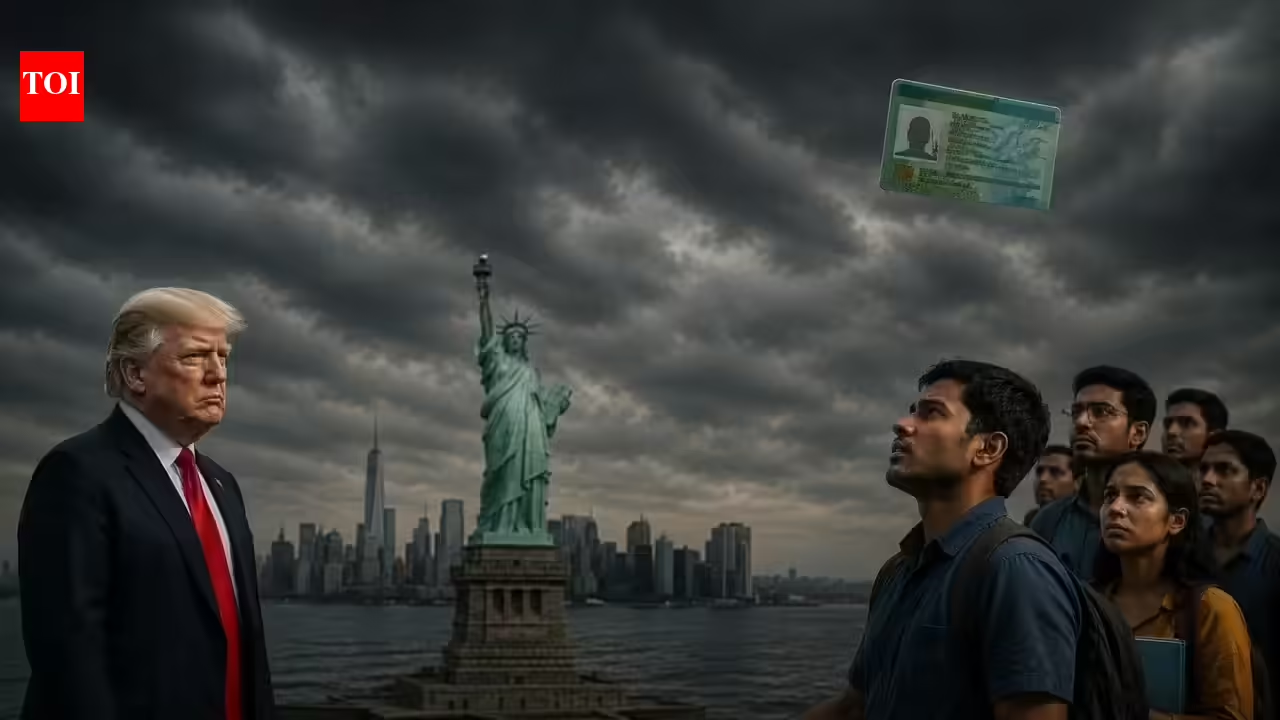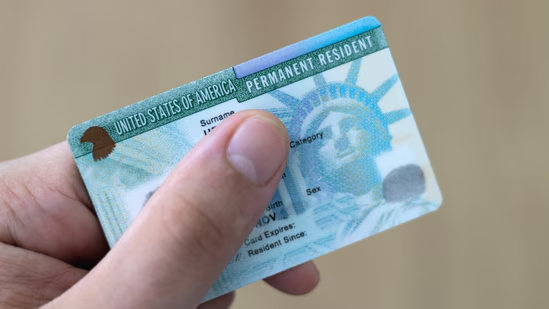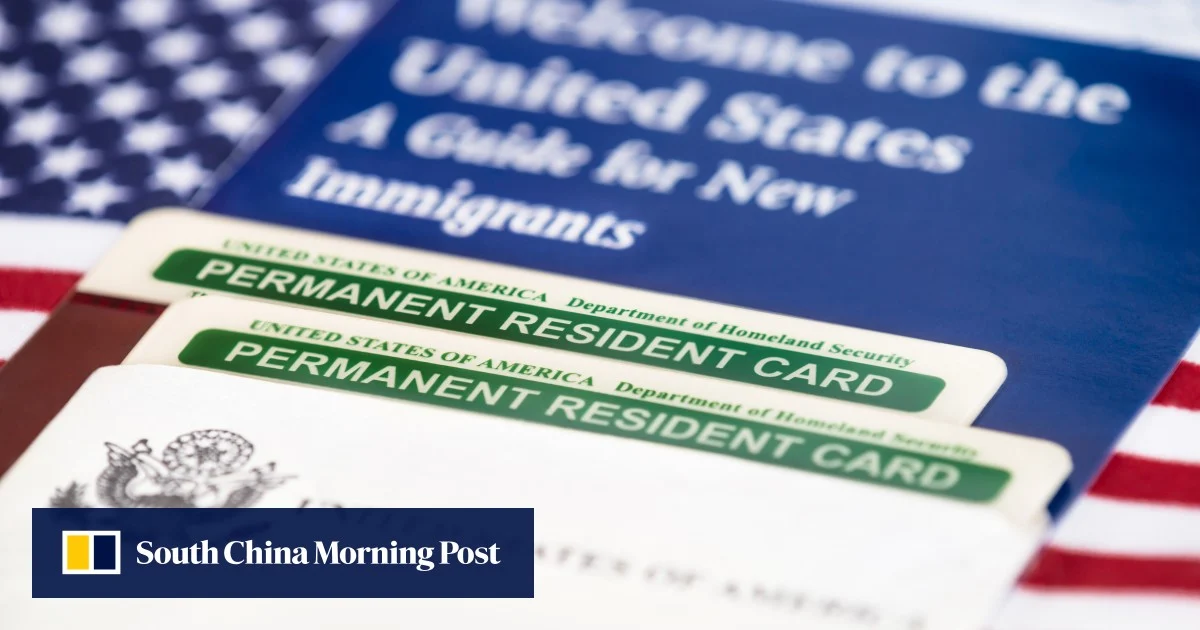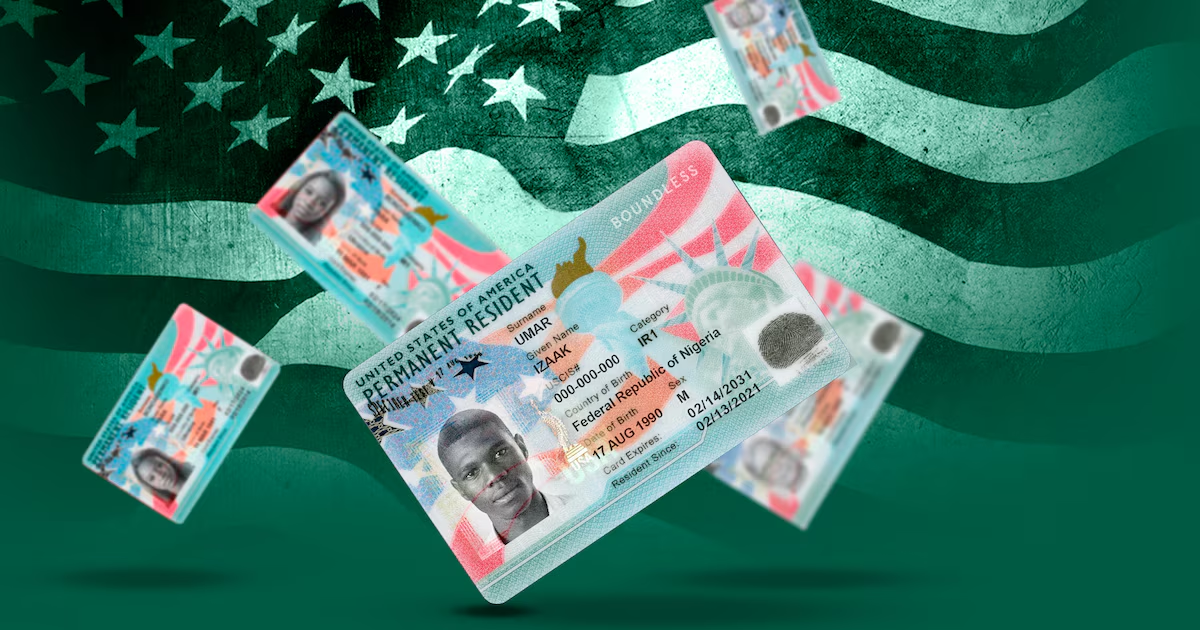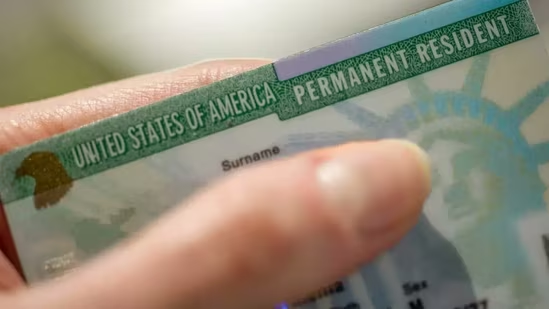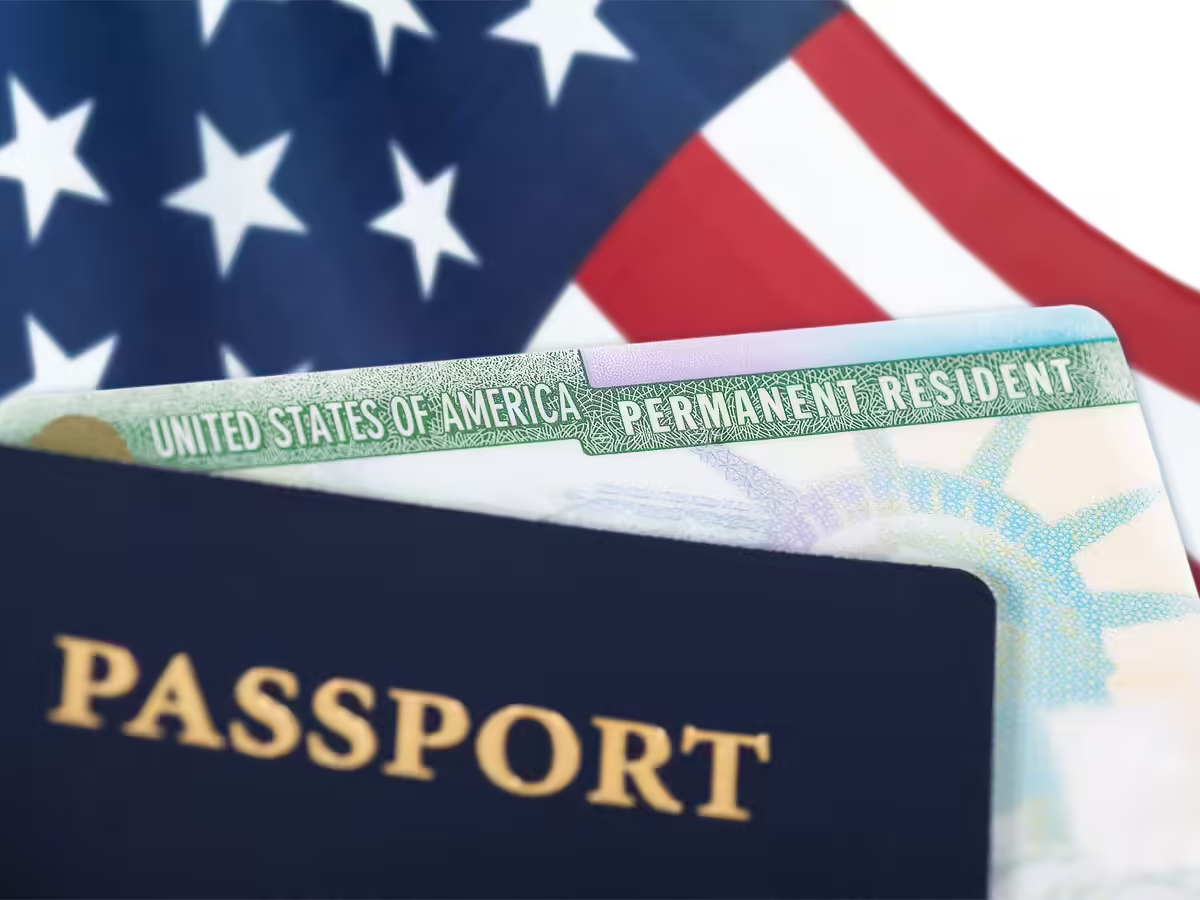
New Delhi|Bengaluru: The Trump administration's latest immigration rules may raise the procedural hurdles and scrutiny for Indian professionals, students and their families currently living in the United States and seeking permanent residency.Under a new policy announced Friday by the US Citizenship and Immigration Services (USCIS), foreigners seeking permanent residency, or green cards, while already living in the US will be required to return to their home countries and complete the process through US consulates there. For Indians, who make up one of the largest pools of employment-based green card applicants, this will have both short- and long-term implications, experts said.Also Read: ‘Self-respect’, ‘hurts competitiveness in AI’: Sridhar Vembu, Andrew Ng sound alarm over new US Green Card rulesCareer disruptions are a major concern as professionals may be forced to leave the US abruptly or face employment interruptions, undermining years of effort and investment. For international students, the inability to secure stable post-study employment lowers the value of their education and may deter future applicants.
Multinational employers, confronted with increasing unpredictability and compliance burdens, may hesitate to hire foreign talent or restructure their operations to reduce reliance on US-based immigration pathways."Perhaps the most profound long-term consequence is the potential weakening of the United States' attractiveness as a destination for global talent," said Ankit Rajgarhia, partner, Bahuguna Law Associates.Also Read: US lawmakers, immigration advocates slam new green card policy, seek reversalAccording to Rohit Jain, managing partner at law firm Singhania & Co, the hardest-hit groups are likely to be lawful temporary visa holders already in the US, particularly H-1B, F-1, J-1, O-1 and L-1 holders who are transitioning to employment-based or family-based green cards."Indian professionals may be disproportionately affected because they form a large share of the H-1B and employment-based green-card backlog, often waiting many years while maintaining lawful temporary status," he said. "Families of US citizens and permanent residents may also face separation if applicants are required to process abroad."According to Sukanya Raman, country head for India at immigration-focused law firm Davies & Associates, while applicants may still meet all statutory requirements, the USCIS may increasingly treat approvals as discretionary decisions rather than automatic outcomes. The focus would shift toward weighing "positive and negative factors", making the process more subjective and uncertain for individuals, employers and employees.Heightened Scrutiny“Eligibility alone might no longer be enough; applicants must demonstrate why they merit favourable discretion. Since the guidance is still new, its real-world impact remains unclear and will only become evident over time through actual case adjudications,” Raman said.The USCIS may have heightened scrutiny of applicants with prior immigration violations, overstaying, unauthorised employment, etc. Even minor mistakes that may previously have been overlooked could now be facing increased scrutiny.Poorvi Chothani, managing partner at immigration law specialist LawQuest, said she doesn’t see this as the “death knell for green cards” for all high-tech employees. “Most people working in the high-end tech world are on H-1B and L-1 visas. Those are relatively protected categories,” she said.Some experts flag the ambiguity around the USCIS memo, which they said is exacerbating people’s anxiety, more so considering the perceived anti-immigration sentiment that seems prevalent.“There is a fair bit of ambiguity around the USCIS memo, but the overall message is very clear: the US wants to plug all loopholes where people are misusing the system and staying illegally,” said Rajneesh Pathak, founder and CEO of immigration advisory firm GlobalNorth Residency & Citizenship.It is targeted more at two categories: illegals, which Indians do not fall into really in a large way, and people who are misusing visa statuses. The worry is more for the temporary and blue-collar kind of visas, he said.A USCIS spokesperson clarified that people who bring economic impact and contribute to the national interest may be allowed to apply for AoS (adjustment of status). Also, the current EB5 law, passed by Congress in 2022 and set to expire in five years, also allows concurrent AoS. The law provides for foreign investors to obtain green cards lawfully.(Additional reporting by Neil Ghai in New Delhi)