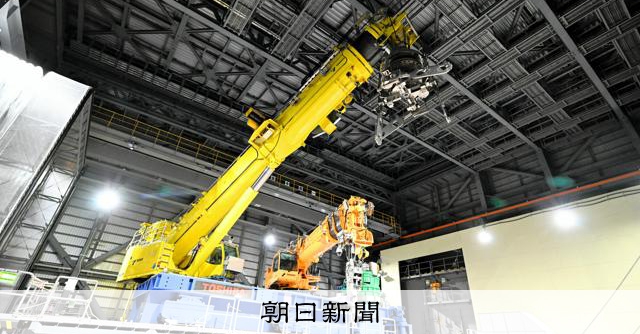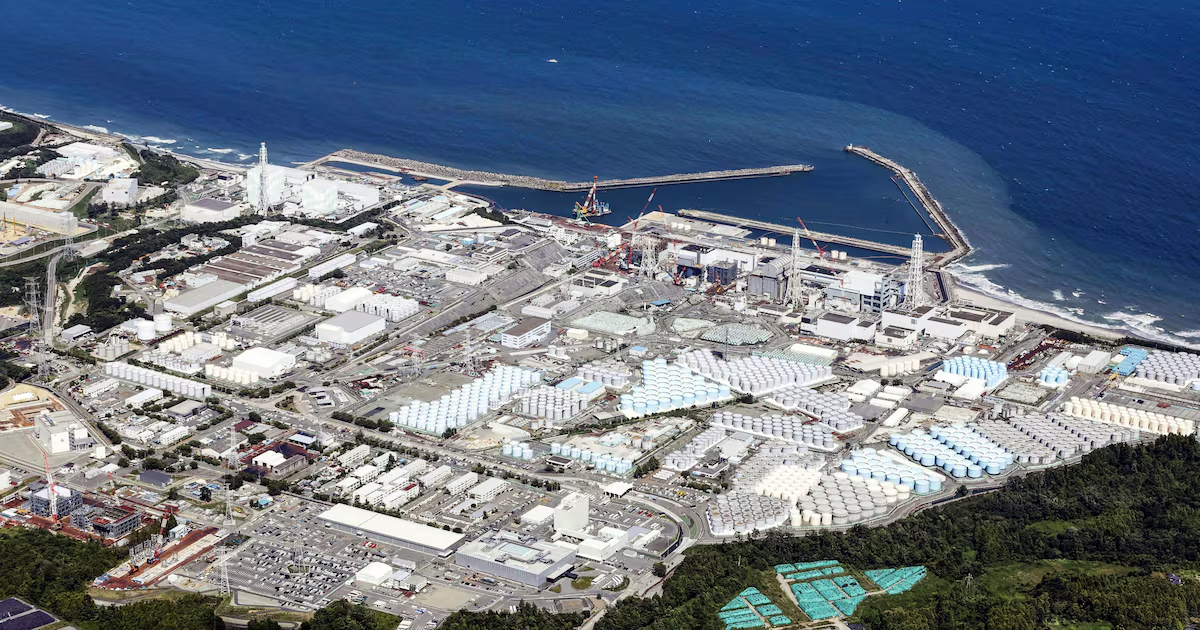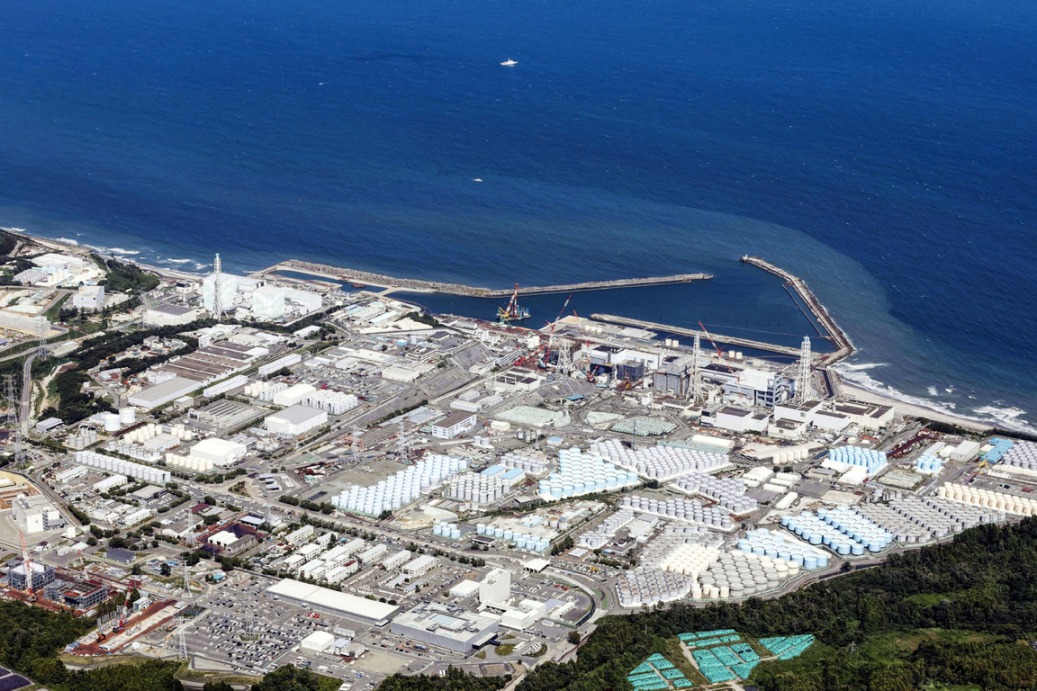
Tokyo, June 2 (Jiji Press)--Tokyo Electric Power Company Holdings Inc. on Tuesday began removing nuclear fuel from the spent fuel pool of the No. 2 reactor at its tsunami-stricken Fukushima No. 1 nuclear power plant in northeastern Japan. The work is considered a key step in the decommissioning of the reactors at the plant in Fukushima Prefecture. TEPCO aims to complete the removal of all fuel assemblies from the No. 2 reactor by fiscal 2028. The No. 2 reactor's spent fuel pool currently stores 587 spent fuel assemblies, which are highly radioactive, and 28 unused fuel assemblies, according to TEPCO. The unused fuel is being removed first because it poses a lower risk in the event of an accident. Radiation levels at the No. 2 reactor building are still high after the nuclear fuel in the reactor melted down in the March 2011 accident. Radiation on the fifth floor, where the fuel pool is located, measures as high as 3 to 5 millisieverts per hour, making it difficult for workers to stay there for a long time. Against this background, a crane for removing fuel assemblies is remotely controlled, and the assemblies are placed one by one in a transport container called a cask inside the pool. The cask will be lifted out of the pool and then lowered onto a trailer from a platform installed next to the building. The trailer carrying the cask will move to a common pool at the plant to cool and store the fuel. Since spent fuel continues to generate heat, it must be continuously cooled. At the time of the accident at the plant, the loss of power prevented the pools from being cooled, so TEPCO injected seawater. As the common pool has limited capacity, TEPCO plans to transfer fuel that no longer generates significant heat to containers called dry casks, which can be cooled by air, in order to secure storage space in the common pool. END [Copyright The Jiji Press, Ltd.]
N-Fuel Removal from Fukushima No. 2 Reactor Pool Begins
Tokyo, June 2 (Jiji Press)--Tokyo Electric Power Company Holdings Inc. on Tuesday began removing nuclear fuel from the spent fuel pool of the No. 2 reactor at its tsunami-stricken Fukushima No. 1 nuclear power plant in northeastern Japan. The work is considered a key step in the
330 words~2 min read