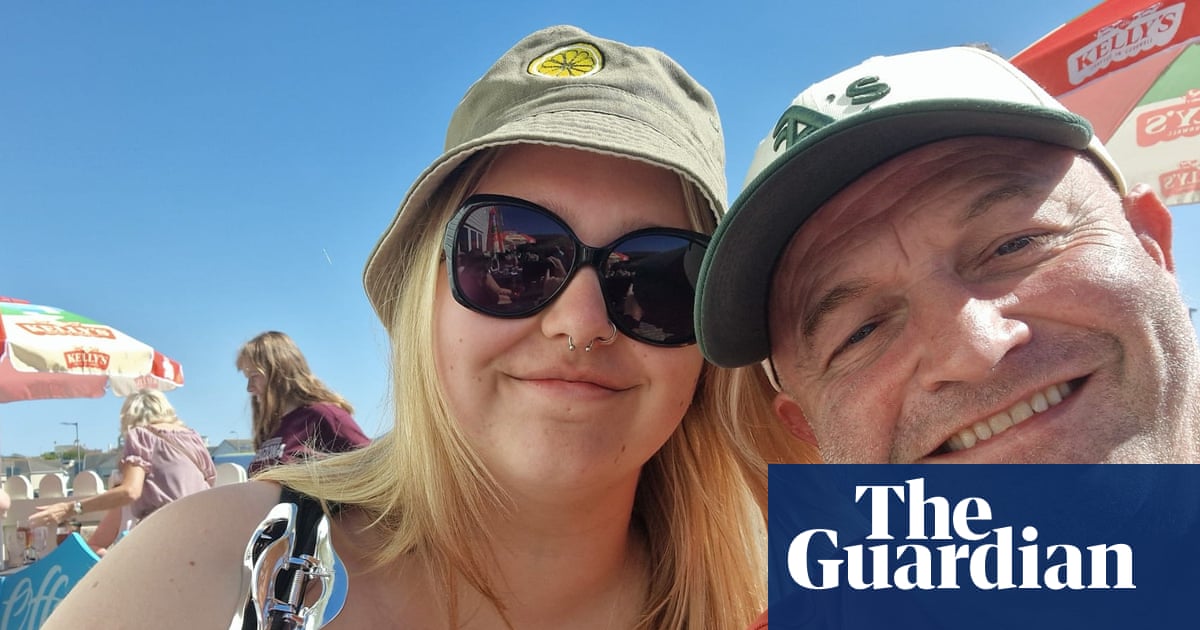
My husband, Craig, didn’t want to spend his last days in the hospital. His fight with bladder cancer then became a battle to get him hospice care at home Composite: Rita Liu/The Guardian/Getty Images/Quyn Duong“This isn’t where I want to die,” my husband, Craig, whispered to me.We were in a shared room on the top floor of NYU Langone hospital in Manhattan, the window obscured by a long privacy curtain. I barely had space to stand next to his hospital bed under the bright fluorescent lights, our thoughts interrupted by the constant beeping of machines.Tall and athletic, Craig loved staying out dancing until the early mornings at Bushwick clubs. He moved from England in his 20s for a PhD in comparative literature and never left. “As a bloody foreigner I grew up with the National Health Service, and thus did not immediately understand the US concern with healthcare costs,” he once wrote years ago. “In Britain, it’s free.”Craig Sinclair and the author, Shannon Carroll. Photograph: Quyn DuongNearly three months after that day in the hospital, I helped him pass away from bladder cancer in the home hospice of our Brooklyn apartment, exactly where he wanted to be. I was 37 and Craig was 49.It cost over $65,000 – money we didn’t have, raised in a panic from friends and family – to give him the death he deserved.Before we could bring him home, we first had to survive that hospital room.It was December 2024, and our fourth emergency hospital stay of the year. By then, we were veterans. We had established a packing list: sleeping masks, toothbrush, warm sweater, ginger chews for nausea, ostomy supplies. When we arrived by cab, Craig got out and hugged the closest tree on the sidewalk. That was the final time he walked outside.In the emergency room, a man was pleading with the receptionists, angry that he wasn’t being prioritized for his painful toe. I breathlessly explained Craig’s medical history to the intake nurses. By then, I knew it by heart. They wheeled him in immediately.He was transferred to the ICU in the middle of the night. I paced the familiar, wide corridors to grab food and drinks. I ran into our ICU nurse from November, who saw me and said: “Of course I remember you and Craig. I always remember the best ones.”Craig after his first major surgery in Manhattan, 2022. Photograph: Shannon CarrollSara, our friend who drove Craig to all 39 of his radiation appointments, came to visit. I took out my kraft sketchbook and wrote down his wishes for his burial. He wanted a chant and response. He wanted people together. He specifically wanted to end in a raucous singalong to Death Is Not the End, just like in that 1995 music video with Nick Cave, Kylie Minogue and Shane MacGowan – mournful but elated.The NYU palliative team came in and told us it was a miracle Craig still had any cognitive function. When they first visited him, they thought he would be in a vegetative state. He had just enough blood transfusions to temporarily relieve his severe anemia that caused profound fatigue. His hemoglobin was half of what it should be. Even crossing the room was exhausting.“Now is the time,” Sara said. He had prepared a message on his phone to share with family and friends.Craig took out his phone under the fluorescent lights. Multiple IV lines ran from both arms, disappearing under his hospital gown. His unwashed hair was swept back and body was thin from food restrictions. His face was swollen from immunotherapy, a final attempt at treatment after more than two years of major surgeries, radiation and chemotherapy.He lifted his phone up with shaking arms and spoke haltingly. I stood next to the hospital bed and began filming.
To die with dignity: my young husband’s final wish came with a $65,000 price tag
My husband, Craig, didn’t want to spend his last days in the hospital. His fight with bladder cancer then became a battle to get him hospice care at home
TL;DRAI
Craig Sinclair dies of bladder cancer; widow raised $65,000 for home hospice instead of hospital. US healthcare catastrophic cost exposure vs NHS contrast signals talent retention risk for tech employers; drives relocation decisions.
2,602 words~12 min read