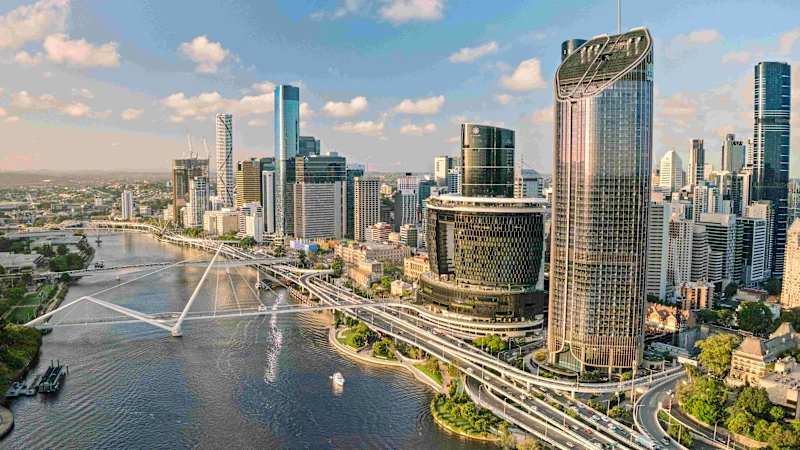
“Business prospers when delivering products and services to expanding cohort markets,” Salt says in the report.The Demographics Group, chief Bernard Salt AM. He points to growth in younger demographics driven partly by international students, alongside rising numbers of Millennials entering their 40s and Baby Boomers moving into their 80s.Migration is also reshaping workforce capability and consumer demand. The report notes India is expected to replace Britain as Australia’s leading source of immigrants by the end of this decade, bringing significant information and communication technology capability into the country.The report suggests these demographic shifts are occurring alongside broader changes in business formation and entrepreneurial activity. Australia now has roughly one Australian Business Number for every 10 residents, while around 400,000 new businesses are projected to emerge by 2036.At the same time, organisations are reassessing how they approach investment, staffing, operations and long-term planning amid changing economic conditions.Jeff Hurdis, managing director commercial banking at Westpac, says many businesses are balancing caution in the current cycle with longer-term planning.“In my conversations with business owners and leaders across Australia, I see a consistent theme: pragmatism paired with ambition,” Hurdis says.Jeff Hurdis, managing director commercial banking at Westpac. “Many are moving carefully through the current cycle, focused on resilience, cash flow and discipline. At the same time, they are keeping one eye firmly on the horizon, thinking about where demand will emerge next and how to position their businesses for sustainable, long-term growth.”The report also identifies infrastructure investment as a factor influencing where future economic activity may concentrate.Australia’s infrastructure pipeline is expected to exceed $120 billion over the coming decade, with projects linked to construction, logistics, healthcare, professional services and advanced manufacturing.The Western Sydney Aerotropolis is identified in the report as one example of how large-scale infrastructure projects may contribute to the development of new economic precincts and business activity.Western Sydney’s population is expected to rise from 2.8 million people in 2025 to 3.4 million by 2041.David Borger, executive director of Business Western Sydney, says the region’s diversity and entrepreneurial culture continue to shape business conditions across the area.“That fosters a practical, opportunity-focused mindset,” Borger says in the report.David Borger, executive director of Business Western Sydney. “Unlike some more established business communities, opportunity here is less dependent on legacy networks or long-standing insider relationships. New entrants with strong ideas and execution capability can gain traction.”Some businesses are also adjusting their operations around changing demographic patterns and shifting consumer preferences.Australian biscuit company Cookie Man transformed its operating model in recent years as it sought to appeal to younger consumers.Cookie Man managing director Michael Elligett says the 68-year-old business shifted from a retail franchise model built around more traditional biscuit offerings into a wholesale business focused on indulgent “loaded” cookies aimed at younger customers.“We went from zero to more than 150 key retail customers and 600 café customers pretty quickly,” Elligett says in the report.Cookie Man managing director Michael Elligett. “Our target is to have 1000 customers by 2027.”The report also points to procurement and service activity linked to major international events, including the Brisbane 2032 Olympic and Paralympic Games.Pre-Olympics expansionAustralian security company Site Sentry expanded into Queensland partly in anticipation of infrastructure and event-related demand linked to the Brisbane Games.“Our first project in Queensland happened about a year ago and we could see that there was a lot happening over there,” says Paul McKiernan, the company’s director and co-founder.“The Brisbane Olympics are around the corner, so we found a factory to buy, and we pushed the button to get started.”Technology is also influencing how organisations assess operational efficiency and capability.Rather than pursuing wholesale transformation, many businesses are taking a more measured approach to artificial intelligence and automation, focusing on practical applications that support day-to-day operations and existing business processes.“We are seeing growing interest in the practical use of artificial intelligence, particularly where it can support decision-making and operational processes,” Hurdis says.The report argues businesses are increasingly assessing how long-term demographic, technological and infrastructure changes may affect customer demand, workforce requirements and operational planning over time.“These forces are already reshaping where people live, work and spend, and they are creating new pockets of opportunity for businesses prepared to plan beyond the immediate cycle,” Hurdis says.To learn more or to read the report, The Scale-up Opportunity: Australia’s Next Decade, please visit Westpac.
Planning beyond the cycle
Businesses are navigating uneven conditions and assessing how demographic change and infrastructure investment may influence the economy over the decade ahead.
TL;DRAI
Australian businesses balance immediate caution with long-term planning: demographic shifts, $120B infrastructure, 600k new businesses by 2036. Tech leaders are adopting pragmatic AI for operations over transformation—while workforce diversity and infrastructure spending create opportunities in logistics, healthcare, manufacturing.
714 words~3 min read