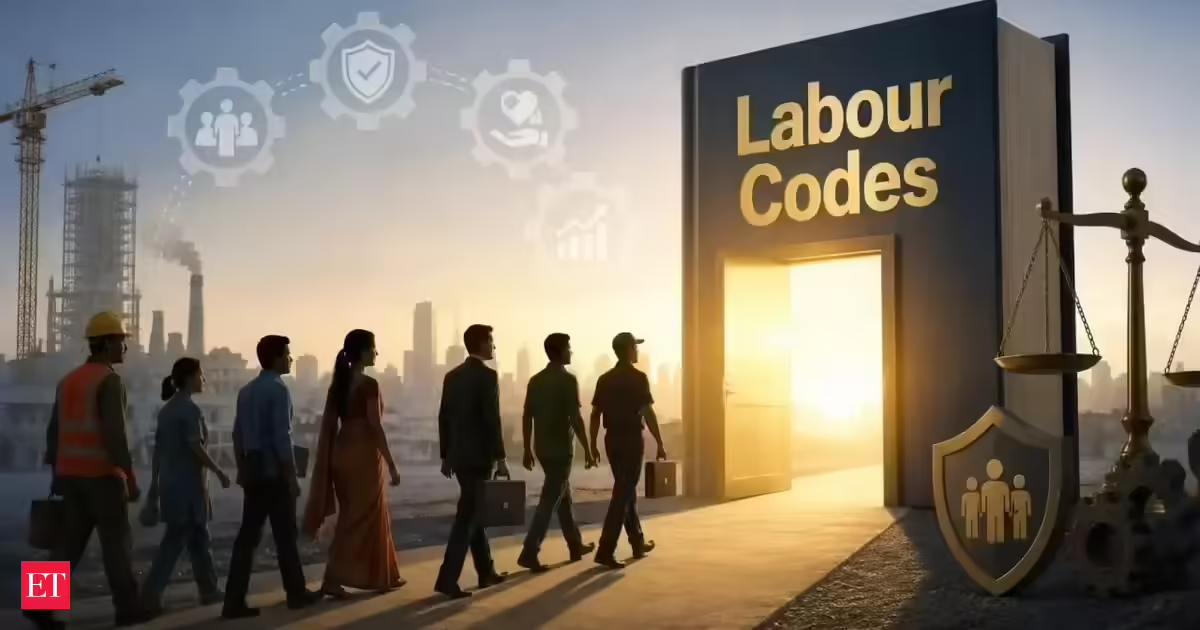
Social security – the provision of a safety net against retirement, health expenses, and income shocks – is a foundational principle of formal employment. In India, this net remains out of reach for most workers. With 88% informally employed in 2024, down only marginally from 91% in 2010 (Figure 1), the vast majority of the workforce lacks pension, health insurance, or any income protection. India’s principal social security schemes (that is, Employees’ Provident Fund (EPF) and Employees’ State Insurance (ESI)) cover formal establishments only above a size threshold, structurally excluding informal, casual, and platform workers.
The Code on Social Security, 2020 is an attempt to address the poor coverage of social security benefits by widening its reach beyond formal establishments, making accumulated benefits portable so workers do not lose protection when they change jobs and bringing gig and platform workers under statutory coverage for the first time.Figure 1. Informal employment rate: India versus other developing economies
Source: Authors’ compilation based on state government gazette notifications on the Code on Social Security issued by state labour departments (2020-2025).Notes: The map shows the year in which states and union territories issued draft or final rules under the Code on Social Security, 2020. Where both draft and final rules were notified, the year of the first notification is reported.