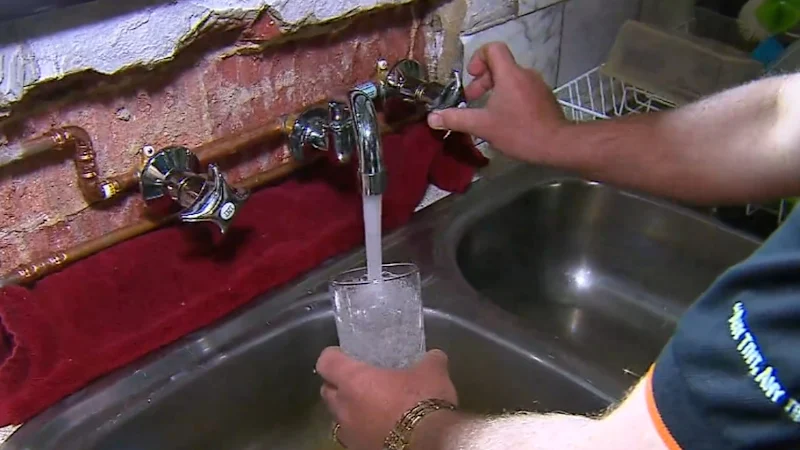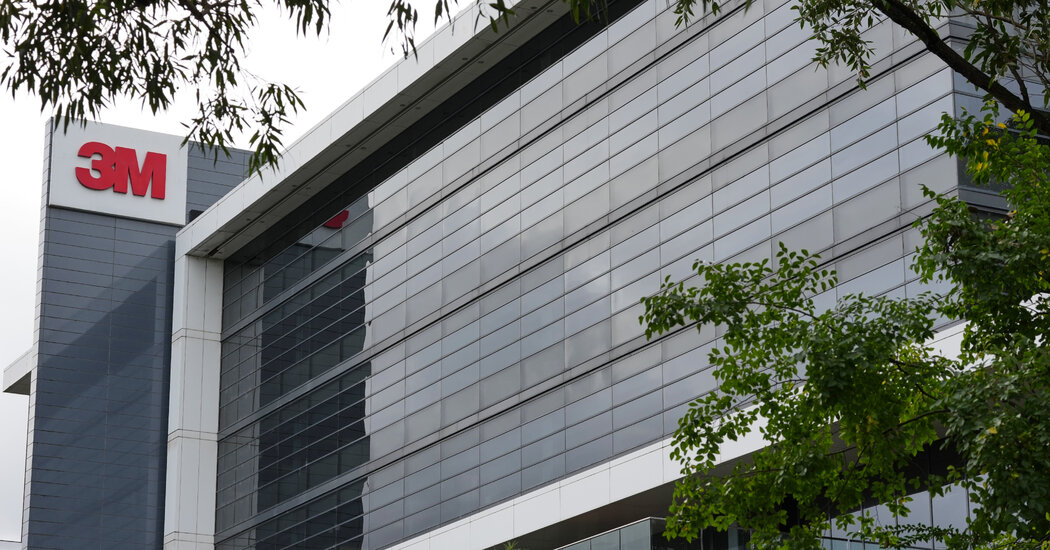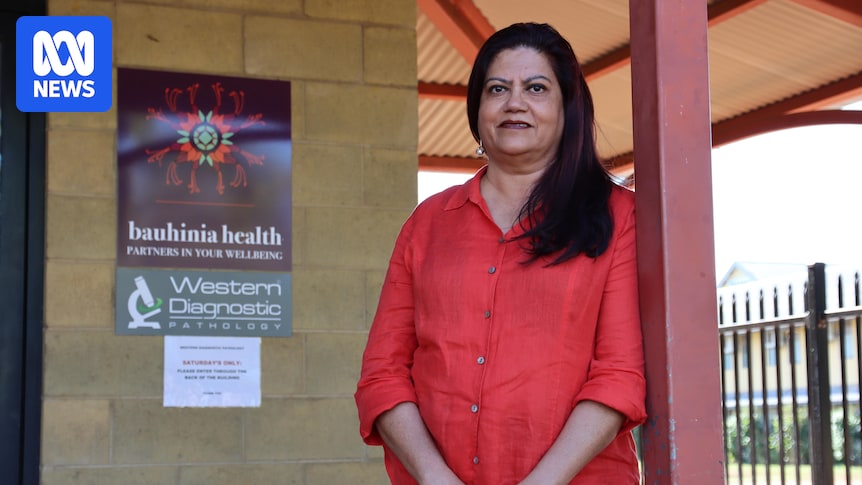
When news broke on Thursday that the federal government would take the company 3M to court over PFAS contamination, seeking $2 billion in damages, Katherine resident and GP clinic owner Anjali Palmer was pleasantly surprised. "I think that's awesome," she said."I think it's about time we started holding large corporations to account. "The damage done to the environment and to people's health has been so concerning for residents."Anjali Palmer says she's pleased the government is taking 3M to court over PFAS contamination. (ABC News: Isabel Moussalli)The federal government recently said it would seek damages to claw back the $1.3 billion the Department of Defence has already spent on tackling PFAS contamination at bases around the country, as well as projected future spending on the issue.But Ms Palmer said she would like to see some of the money from any potential win go towards initiatives focused on the health of locals and the environment in Katherine, not just shoring up Defence's bottom line. "What has been done about setting aside funds to repair the environment, and what's the recompense going to be for people whose health has been affected?" she said.At RAAF Base Tindal, near Katherine, government sources say Defence has so far spent $107 million on PFAS treatment — with two treatment plants on the base having processed more than 3.6 billion litres of contaminated groundwater.In a statement released last week, 3M said it would defend itself against the Australian government's claims.RAAF Base Tindal is about a 15-minute drive south-east of Katherine. (Supplied: Defence/OFFCDT David Campbell)A contaminated townPFAS contamination in Katherine was first announced by Defence in 2016 — the result of decades of use of PFAS-containing firefighting foam at Tindal, which sits above a large and interconnected aquifer.In the immediate aftermath, Katherine's town pool was closed and Defence trucked in bottled water.A class action, settled in 2020, resulted in Defence paying $92.5 million to Katherine home owners and businesses to compensate for lost property value, as part of a broader class action that also included Williamtown in NSW and Oakey in Queensland.Today, Katherine's town drinking water supply is thoroughly treated using a specialised plant to keep PFAS levels below minimum thresholds.But residents with bores in the contamination zone are still advised not to drink their groundwater or eat eggs from chickens that drink water from the bores.A 2018 health assessment commissioned by Defence also found there was an "elevated risk" for anyone who ate fish caught in the Katherine River on a regular basis, defined as one fish per week.A Senate inquiry into the issue last year heard evidence that assessment had affected Aboriginal people in the region, who had historically eaten large quantities and varieties of fish and crustaceans from the river.Calls for compensation for those who previously missed out Katherine-based veterinarian and environmentalist Sam Phelan said, if the litigation was successful, the Commonwealth should put the funds towards compensating groups that missed out in the class action in 2020. "The only people who received compensation were home owners, so anybody living in public housing — who were drinking contaminated water for decades — received nothing," Dr Phelan said."[It could compensate] people living on the river, who are hunting and fishing from Binjari community, from Rockhole community."Dr Phelan said there should also be money put aside for a "decent longitudinal health study" to monitor Katherine residents over coming decades, to check for health impacts from their exposure to PFAS.Sam Phelan says further compensation is needed for those who were not covered by the 2020 class action. (ABC News: James Elton)An Australian National University (ANU) blood serum study released in 2021 — which took 2,587 samples from residents in Katherine, Oakey and Williamtown — found PFAS levels were higher in residents of those towns than in comparison towns.In Katherine and Williamtown, higher levels of PFAS were also found to be associated with higher levels of uric acid, which is a marker of poor kidney function.However, the researchers said the differences were "small and unlikely to be important to health".More broadly, the ANU research team conducted a systemic review of existing literature on PFAS and human health and found there was "sufficient" evidence to show a link between higher PFAS levels and higher cholesterol, but only "limited" evidence on uric acid and reduced kidney function.Lidia Thorpe has called for more blood testing of Katherine residents to identify any health impacts from PFAS. (ABC News: Ian Cutmore)Independent senator Lidia Thorpe, who chaired the Senate select committee on PFAS last year, said she would be pushing for further blood testing in Katherine.She said she also wanted to see the federal government invest in improved access to traditional food sources for Aboriginal people around Katherine.Marion Scrymgour, the federal member for Lingiari, which includes Katherine, said she welcomed the government's legal action.Marion Scrymgour says Katherine residents deserve answers around the real impact of PFAS on their community. (ABC News: Pete Garnish)"PFAS have had a long-lasting impact on the Katherine community, and people deserve answers," she said."The taxpayer has had to fork out huge sums to clean up Defence sites contaminated with PFAS and 3M must be held accountable."NT Member for Katherine Jo Hersey has been contacted for comment.
In this PFAS-affected town, locals still can't eat too many fish from the river
Residents in Katherine have welcomed a $2 billion lawsuit over PFAS contamination in the town, saying "it's about time we started holding large corporations to account".
TL;DRAI
Australia sues 3M for $2B over PFAS contamination from firefighting foam at Defence base; remediation cost $107M treating 3.6B litres. Signals escalating environmental accountability for corporations managing manufacturing, facilities, or hazardous materials.
864 words~4 min read