This article is part of our coverage of the latest in AI research.
The dominant narrative of AI progress in recent years has been model building larger models and feeding them more data. But for long-horizon agentic AI, model scaling alone is not the ultimate solution.
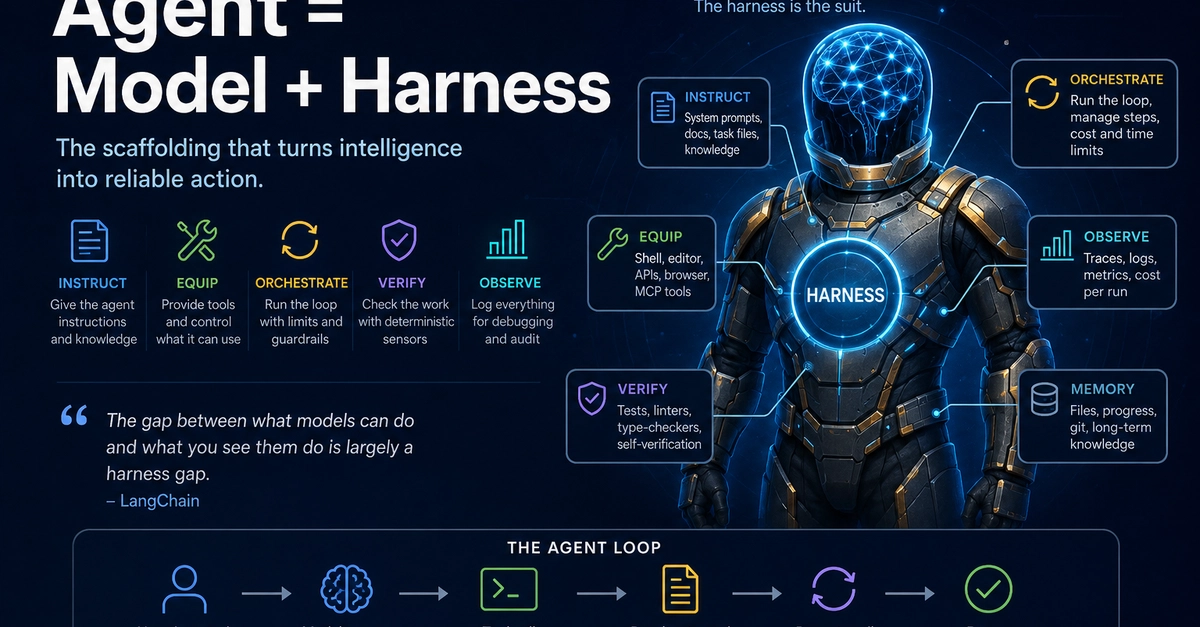
AI agents don’t get their abilities from next-token prediction alone but from the system that wraps around the model to translate its answers into real-world behavior.
The next major bottleneck in agentic AI is “system scaling,” or scaling the “harness,” according to a new paper from UC Berkeley. This approach treats the structured execution layer as a first-class object of design and optimization. As the author notes, “The dominant story of recent AI progress has been model scaling… For agentic AI, this story is now incomplete”.
Furthermore, “Once foundation models are embedded into tools, terminals, browsers, repositories, memory stores, and external services, their behavior is no longer determined by the model alone. It is determined by a system.”