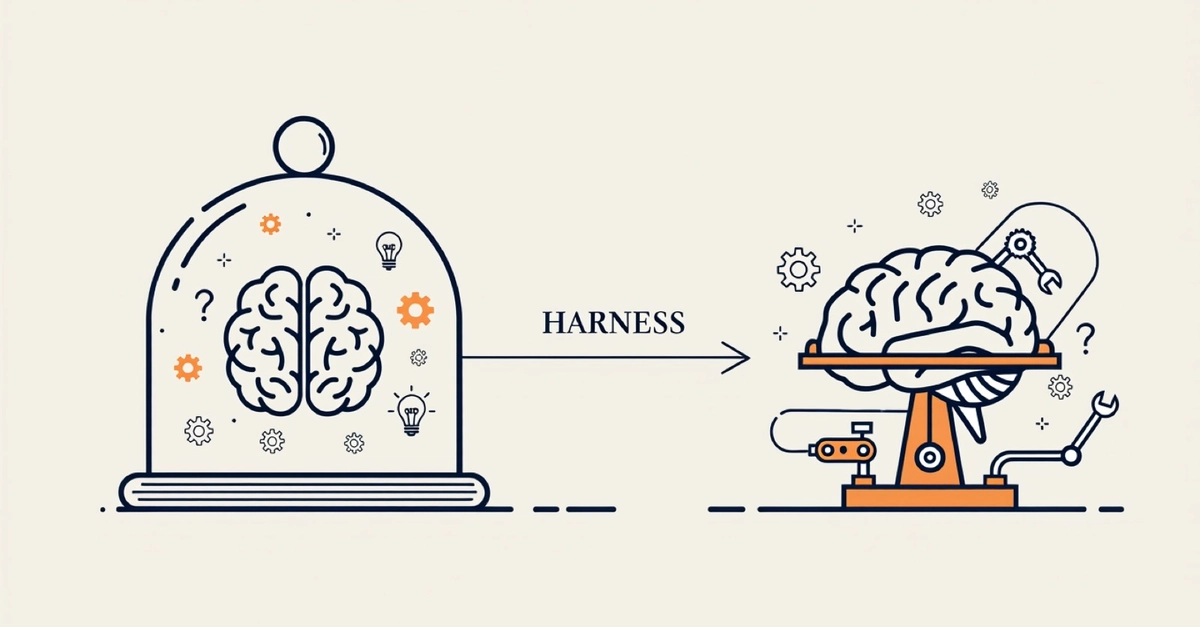
A new term has entered the AI lexicon: the agentic harness. It’s the scaffolding around a model that gives the AI access to the tools, data, and other elements that render it useful.
Ethan Mollick, the Wharton business professor whose hands-on research on AI adoption has made him a leading voice in the field, describes the harness as what enables an AI agent to “take actions and complete multi-step tasks on its own.”
If the AI foundational model is the engine, the harness is everything else: the chassis, the wheels, the drive shaft, the brakes. Increasingly, it’s the harness and not the model that determines what actually gets done.
That shift is already visible in a new class of products. Early examples of harnesses in practice include Anthropic’s Claude Code, which can generate, run, and refine code. Another is OpenClaw, an always-on agent that operates across applications with memory and persistence. Such products are defining a competitive environment that’s moving beyond offering the most capable model to building the most effective harness around it.
Not all harnesses are created equal, though, and the gap among them is larger than the current conversation acknowledges. What’s more, those products, for all their promise, were built for use by individuals.