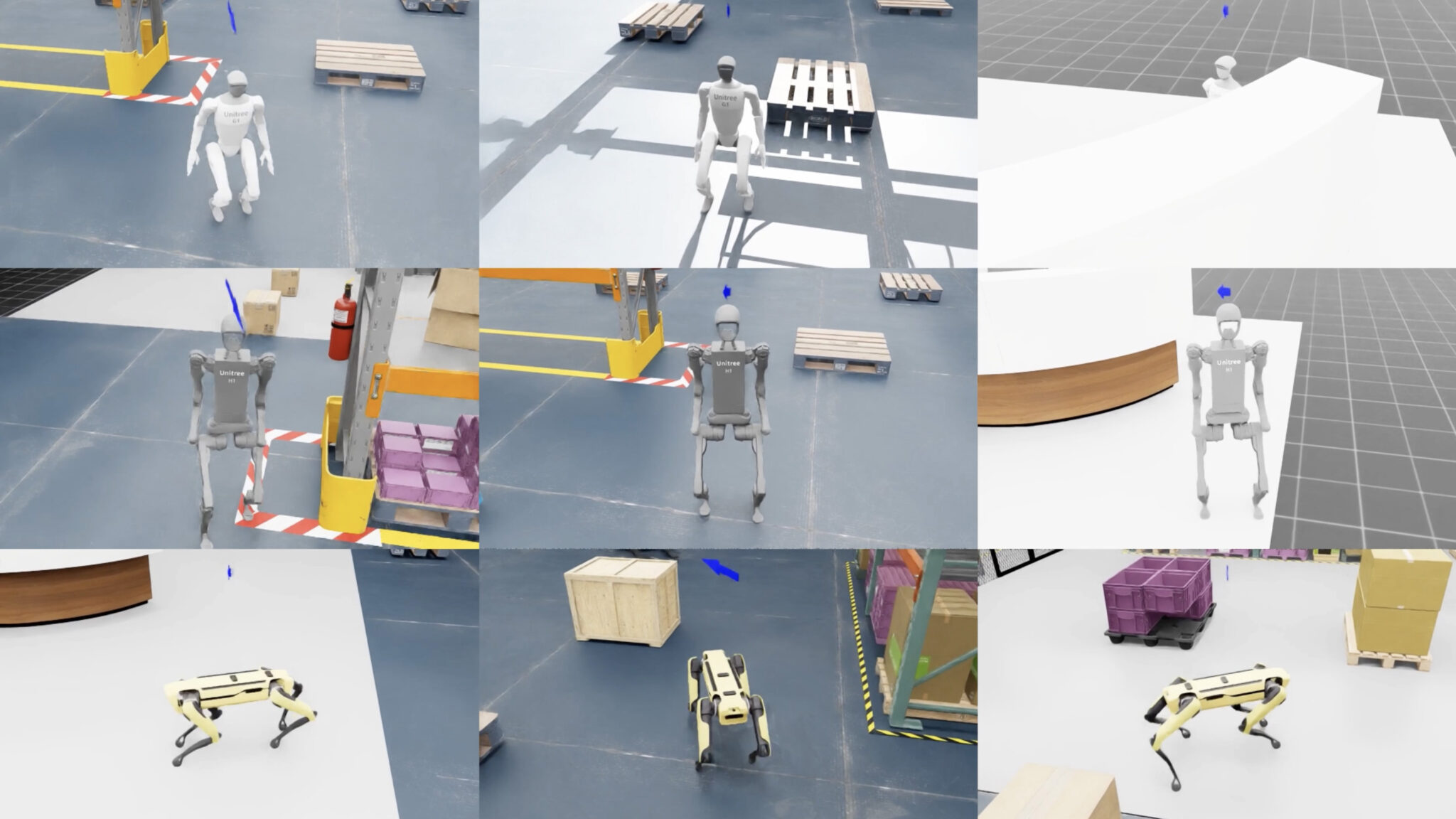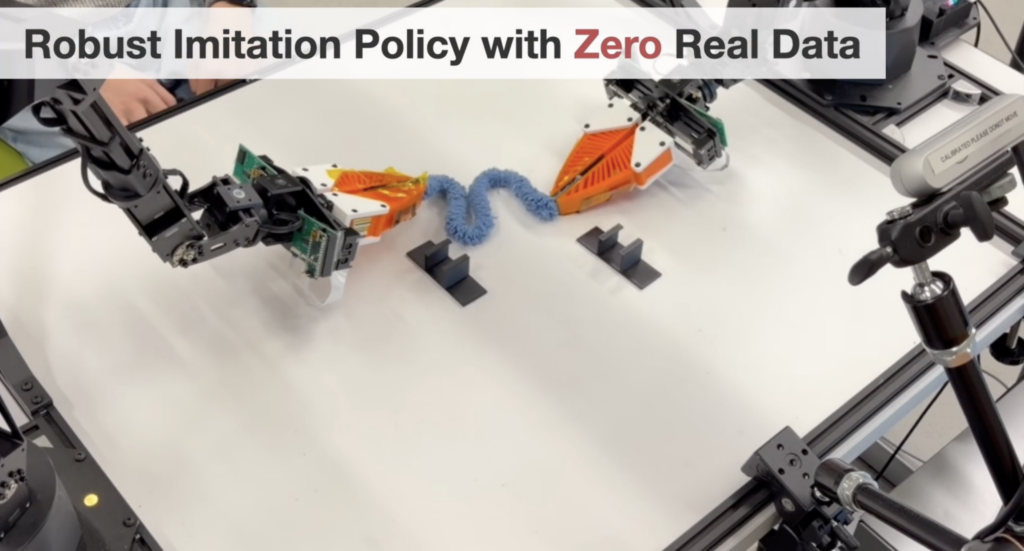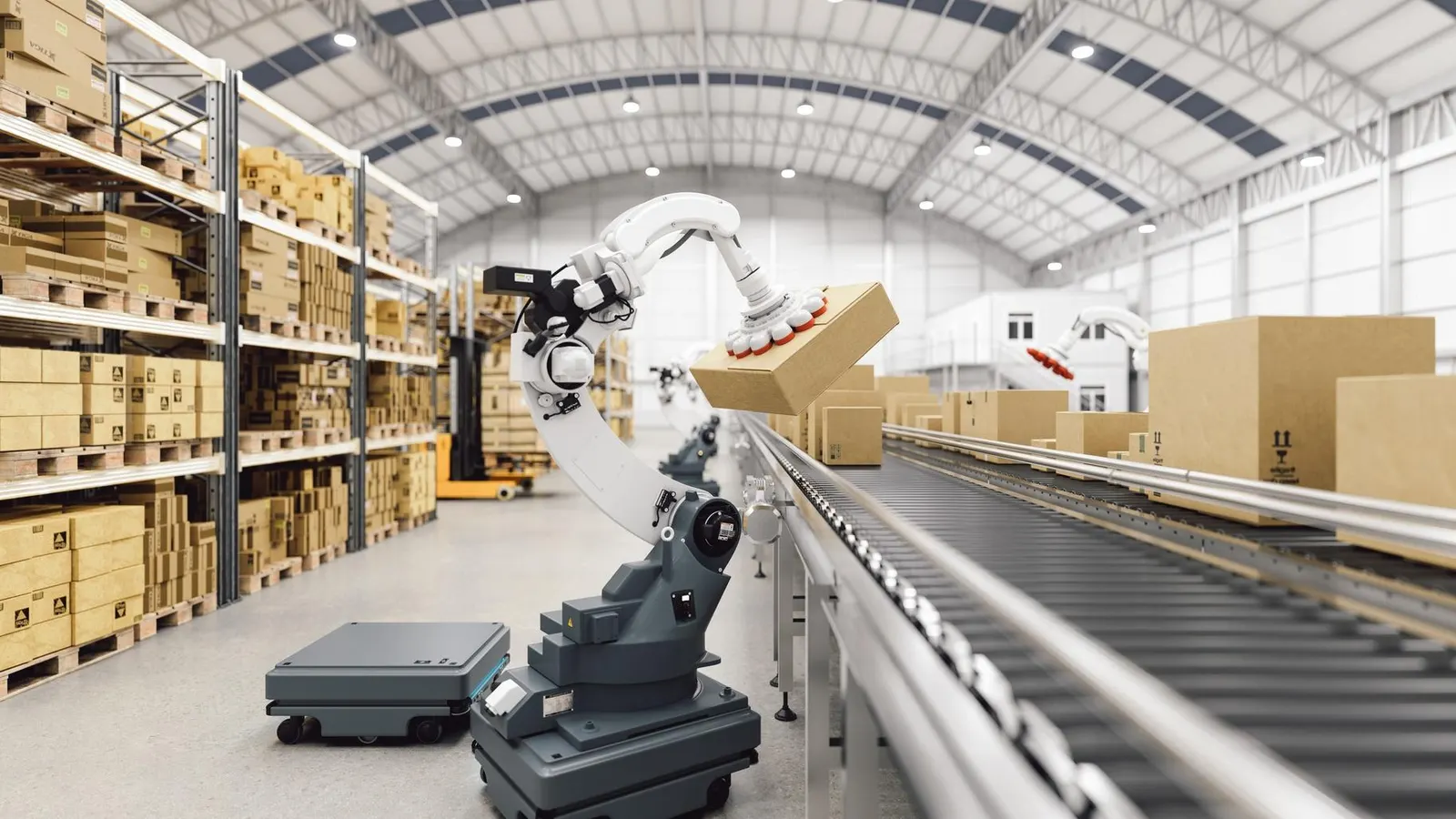
gettyRobots are no longer limited to carefully controlled lab settings. They’re sorting packages, navigating warehouses, assisting on factory floors and supporting a growing range of business operations, but the real world remains one of their toughest training grounds.A robot that performs well in a controlled simulation can struggle when conditions change, people behave unpredictably or the environment doesn’t match what it was trained to expect. Below, Forbes Technology Council members share the challenges companies often underestimate when training robots for real-world environments and how leaders can better prepare for them.Sensory VariabilityA big challenge is sensory variability. Robots are trained under conditions including inconsistent lighting, surfaces and object placement, and they tend to fail when real conditions shift. To address this, robots must be trained with diverse, real-world data. Use sim-to-real transfer and build in adaptive learning so robots update continuously from live feedback rather than static training. - Ambika Saklani Bhardwaj, Walmart Inc. Low-Fidelity SimulationsMany companies underinvest in simulation and digital twin infrastructure. Low-fidelity “clean” simulations fail to capture real-world friction, contact and variability, hurting deployment. Leaders should treat simulation as a strategic capability: a staged-fidelity pipeline anchored by high-fidelity digital twins and synthetic data to surface edge cases before deployment, not just boost benchmarks. - Brandon Wang, Synopsys Forbes Technology Council is an invitation-only community for world-class CIOs, CTOs and technology executives. Do I qualify?Real-World Training RequirementsA major challenge is underestimating the amount of training required prior to real-world deployment. When I was working at Amazon, our Robomaker team built a simulation engine that customers could use to test various real-world scenarios. Companies would run tens of thousands of simulations to train and tune their robots, including a rigorous assessment of edge cases. All companies should follow this path to deployment. - Mark Francis, CaregiverZone Messy Operating ConditionsCompanies underestimate the “tourist with a suitcase” problem: Robots behave fine in the lab, then meet a wet floor, bad lighting and one human doing something weird. Train them like travel agents. Simulate the itinerary, then shadow real, messy trips with human override before full autonomy. - Joel Frenette, TravelFun.ai Everyday Physical ComplexityPicking up a cup seems trivial—until you teach a robot to do it. Grip, weight, angle, fragility—humans process this unconsciously, perfected by evolution. We underestimate robotic complexity because we’ve taken our own for granted. Leaders must approach robot training with humility. Reverse-engineering nature is the hardest engineering problem there is. - Aruna Veerappan, Upwork Critical Human JudgmentI’m always impressed by how fast robots can think and make decisions, but I can’t help wondering what’s behind those choices—was the data complete, were all situations considered, did we miss any edge cases? For everyday tasks, it works well, but for critical situations, I still believe we need human judgment—someone who can think beyond just logic. - Prashanthi Kolluru, KloudPortal Technology Solutions Pvt Ltd. Constant Context DriftOne challenge companies underestimate is context drift: The world changes faster than the training set. Floors wear down, layouts shift, people improvise and “normal” keeps moving. The answer is not just better models, but a learning system: narrow rollout, live edge-case capture, human override and rapid retraining from field reality. - Anna Drobakha, Groupe SEB One-Time Training LimitsCompanies often underestimate how unpredictable real environments are. Models trained in controlled settings fail with noise and edge cases. The solution is to train with diverse real-world data, use simulation plus live feedback, and design systems that continuously learn and adapt rather than relying on one-time training. - Harvendra Singh, Publix Super Markets Inc. Real-Time LatencyThe challenge is latency. Even small delays between sensing, processing and response can undermine robot performance in real-world deployments, and training without accounting for that delay creates a gap between simulation and reality. To address this, organizations need low-latency, high-performance connectivity across edge and cloud so models can be trained and refined using real-time conditions. - Ivo Ivanov, DE-CIX AG Adversarial ManipulationThe challenge is adversarial inputs, not just edge cases. Real environments include people who study how to fool your robot: adversarial patches that defeat vision, spoofed markers, sensor jamming and social engineering of the safety stop. CMU and MIT published the playbook. Red-team against deliberate deception, not just natural variability. - Dan Sorensen, Nexus Security Advisors Overtraining Instead Of Environmental DesignMake the world more robot-ready versus making the robot more world-ready. Companies spend millions training robots on edge cases, failures and adapting to chaos. But small changes in physical spaces, such as lighting, floor markings or shelves, could dramatically improve performance. Don’t overengineer the robot and underengineer the environment. Train on edge cases, but also consider real-world fixes, too. - Amy Gu, Dynamsoft Small Operational ChangesCompanies often underestimate how humans easily adapt to change, while robots do not. Even small shifts like object placement or timing can cause failure. To solve this, they should build systems that learn continuously, use real-time feedback and update behavior so robots can adjust instead of relying only on fixed training. - Amit Samsukha, Emizen Tech Legacy Infrastructure IntegrationCompanies underestimate integration friction across physical systems, where robots must interact with legacy infrastructure not designed for automation. Training rarely includes such constraints. The fix is to simulate operational ecosystems, not isolated tasks, and co-design interfaces that allow robots to negotiate, adapt and interoperate seamlessly. - Jagadish Gokavarapu, Wissen Infotech Fragile Automation SystemsI’ve seen this repeatedly: Companies celebrate a successful POC, only to watch ROI erode under ongoing bot maintenance. Traditional screen-scraping automation is inherently fragile, breaking with every UI change or system patch, increasing risk and cost while limiting scale. The answer isn’t incremental fixes but a shift toward AI-driven, self-healing solutions providing enterprise-grade RPA. - Mia Urman, AuraPlayer Inc. Human Behavior And IntentRobots fail at social physics because of their training. If a pedestrian yields, an overly cautious robot freezes, stuck in a “politeness penalty.” A paused human isn’t a static obstacle; it’s a social negotiation. This should be addressed by embedding behavioral psychology into spatial algorithms, teaching robots “calibrated audacity” to read human intent and confidently accept the right of way. - Mojeed Abisiga, DataGlobal Hub Edge Case ExplosionEdge case explosion is the blind spot. Real environments produce rare, messy scenarios that never appear in training data. Teams overfit to clean simulations. Build continuous learning loops with real-world data capture, human labeling and rapid retraining so robots improve from long-tail failures, not just average cases. - Nirmal Jingar, Wayfair Unnecessary Environmental ComplexityTeams often spend too much time training robots to handle edge cases that shouldn’t exist in the first place. Simplifying the environment or removing unnecessary variability early can save significant time and resources. - Benedetto Biondi, Folks Finance Limited Flexibility And ConfigurabilityCompanies consistently underestimate the impact robots can make when they are “not” trained for a high level of flexibility and configurability. In manufacturing as a service, the organization sets up and operates a software-defined factory, which is largely a collection of highly programmable robots, cobots, humanoids, AGVs and AMRs, offering an unlimited range of manufacturing jobs in an OpEx model. - Jo Debecker, Akkodis Overly Smooth SimulationsCompanies often train robots in controlled, picture-perfect simulations, but the real world is far less predictable, with shifting light, uneven surfaces and a mix of textures. When a robot leaves that environment, it can struggle to adapt and get easily confused. The smarter approach is to make those training simulations imperfect on purpose so the robot learns to handle real-world surprises. - Sharat Priya, EY Poor Data Lifecycle ManagementThe problem is that the system cannot leverage edge cases as knowledge because most companies lack a well-thought-out data lifecycle management strategy. Teams need a structured way to capture experience instead of just logging events, since this data will train future robotic systems. - Kostiantyn Gitko, Devox Software
Robots For Real-World Work: Training Challenges And How To Solve Them
A robot that performs well in a controlled simulation can struggle when real-world conditions don't match what it was trained to expect.
TL;DRAI
Leader tech come Walmart, Amazon, Synopsys identificano 12 sfide nel robot training reale: low-fidelity simulation, context drift, latency e adversarial inputs. Per i CTO: il training statico fallisce, occorrono high-fidelity digital twins, continuous learning e human override per stare dietro al cambio ambientale.
1,286 words~6 min read