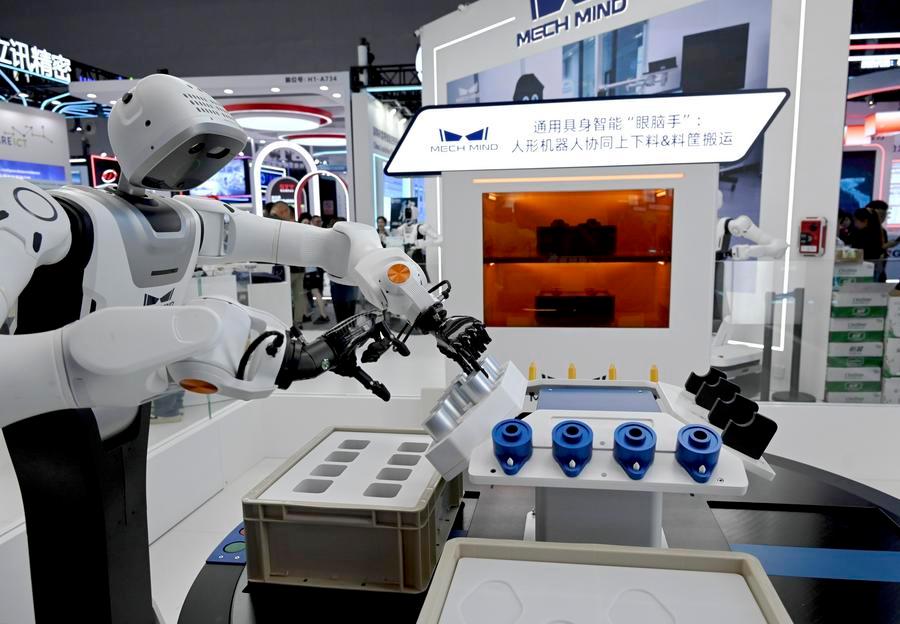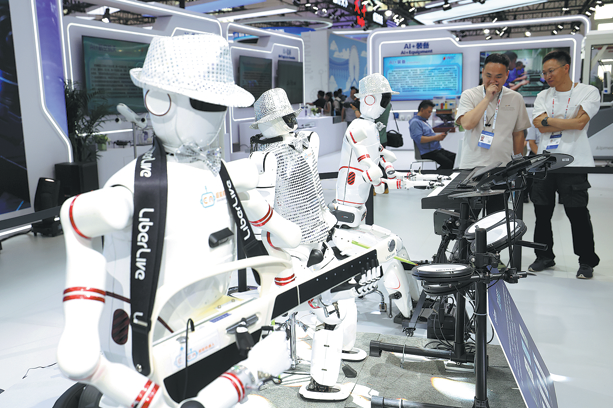
STEELY AIDE. A robot on display at Computex 2026 in Taipei, Taiwan
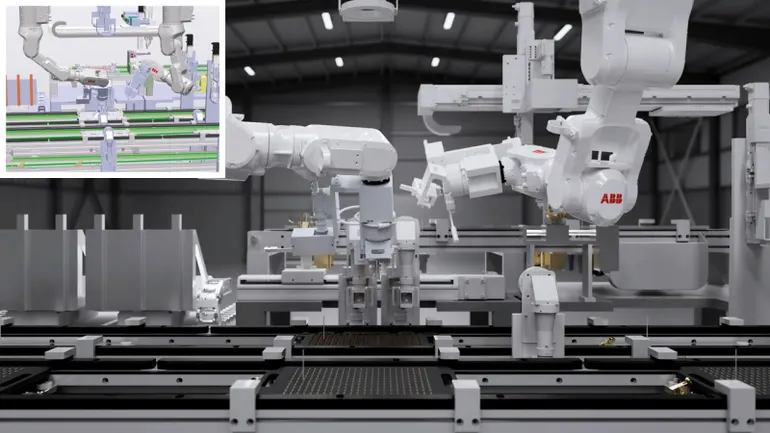
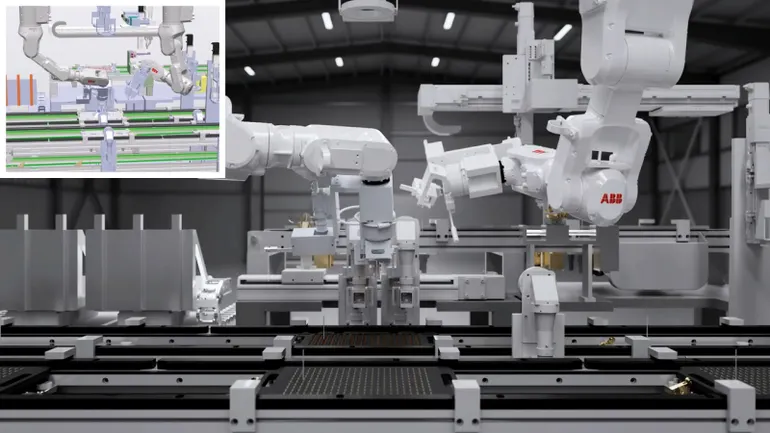
As AI advances, its capabilities are spreading beyond the software landscape to the physical world — be it humanoid assistants for everyday tasks or specialised robots for undesirable, dangerous jobs or even entire factories powered by automated robo fleets.At Computex 2026, Taiwan’s annual technology and computing conference, tech leaders working at the intersection of AI, robotics and automation suggested that advanced foundational models, alongside improved data and simulation technology to train, test and deploy robots, are helping fuel real-world automation.Deepu Tala, VP and GM–Robotics and Edge AI, Nvidia, suggested that the industry has made progress in robotics over the past 10 years, but deployments have been brittle and difficult to scale up.“But now, with large language models having evolved into vision and vision action models that can understand and act in the physical world, the opportunity is huge,” he said.One of the biggest tailwinds, Tala believed, comes from improved simulation and digital-twin technologies. “Building and testing robots in the real world is slow, expensive and unsafe. Simulation is now good enough to become the primary development environment that can run thousands of experiments simultaneously, faster and cheap. The ‘sim-to-real’ gap has narrowed significantly,” he said.Physical AI models can now be trained on internet data like LLMs. Tala said he expects simulation and generative AI to help companies gather and use a small amount of human data to create massive amounts of the synthetic data needed to train the models.The chip giant had, in March, announced a partnership with robotics firm ABB to co-develop simulation technologies for industrial automation. The solution is expected to help manufacturers scale up production, reduce costs by up to 40 per cent and accelerate time-to-market by 50 per cent.Craig McDonnell, Managing Director for Industries at ABB Robotics, said at Computex that advances in simulation, alongside improved compute, mean the company can, for example, replicate robot movements in a virtual environment with up to 99 per cent accuracy, allowing it to be digitally optimised before being deployed on factory floors.“The boom in data centre construction, which was only partially automated due to lower production volumes, is causing increased robotisation demand,” he added.Meanwhile, Nakul Duggal, Group GM–Automotive, Industrial and Embedded IoT and Cloud Computing, Qualcomm, suggested that the intelligence powering physical AI will require more processing at the edge (running AI and machine learning models on local hardware devices) compared to the cloud.“As robots, cameras, industrial equipment and factories become AI-enabled, they will have to make decisions locally with greater privacy and latency. The edge has to be intelligent,” he said.(The writer was in Taipei at the invitation of Synology)Published on June 29, 2026