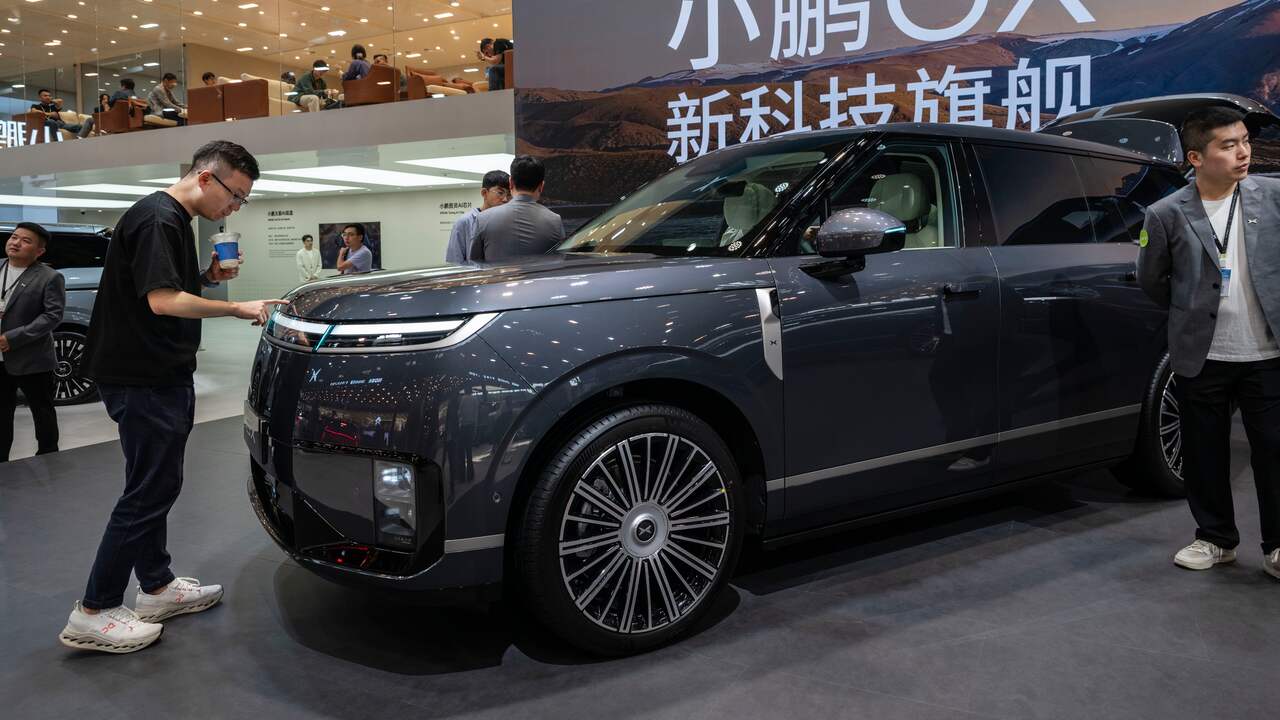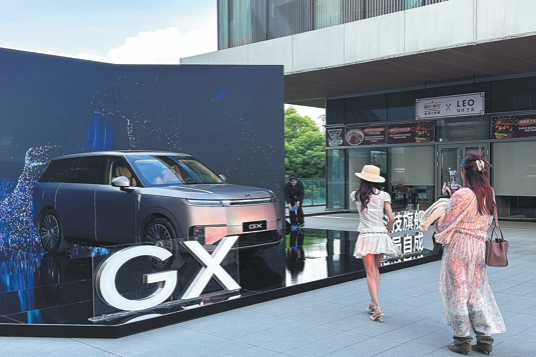
Visitors take a picture of XPeng's flagship GX SUV in Beijing on May 20. LI FUSHENG/CHINA DAILY
Automakers in China are rolling out larger new energy vehicles with longer driving ranges and more smart functions and comfort features. But bigger battery packs, larger bodies and extra equipment are pushing up vehicle weight, raising concerns over energy use and ownership costs.
Data from the Ministry of Industry and Information Technology show that the average curb weight of new passenger vehicles produced in China reached 1,704 kilograms in 2024, up from 1,312 kg in 2012. The pace has also accelerated, with the weight gain during 2020-24 exceeding that recorded between 2012-20.
Several large NEV models from brands including Nio, XPeng, Li Auto and BYD are now approaching the 3-metric-ton mark in curb weight, underscoring the growing challenge facing the sector.
Han Zhiyu, a professor at the School of Automotive Studies at Tongji University, said the rise in vehicle weight reflects the popularity of larger models, especially SUVs, the pursuit of longer driving ranges and the addition of features such as refrigerators, large screens and premium seats.