The net number of jobs AI is eliminating each month is shrinking. That sounds like good news. It isn’t — at least not for Gen Z.
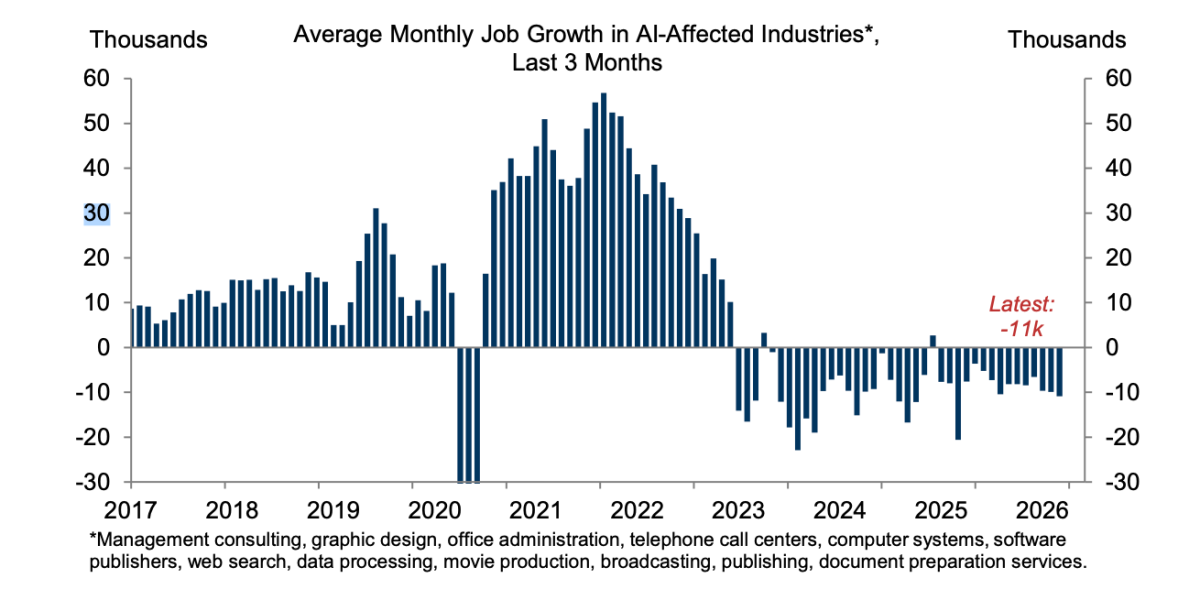
Two months ago, Goldman Sachs economists estimated that artificial intelligence was wiping out roughly 16,000 net U.S. jobs per month, with entry-level and young white-collar workers bearing the brunt. Goldman’s latest AI Adoption Tracker, released Friday, puts that net figure at around 11,000 jobs per month. Progress, on paper. But the reason the number improved has almost nothing to do with AI slowing its march through white-collar work. Rather, it has to do with hard hats and conduit wire — and the offset may not be so permanent.
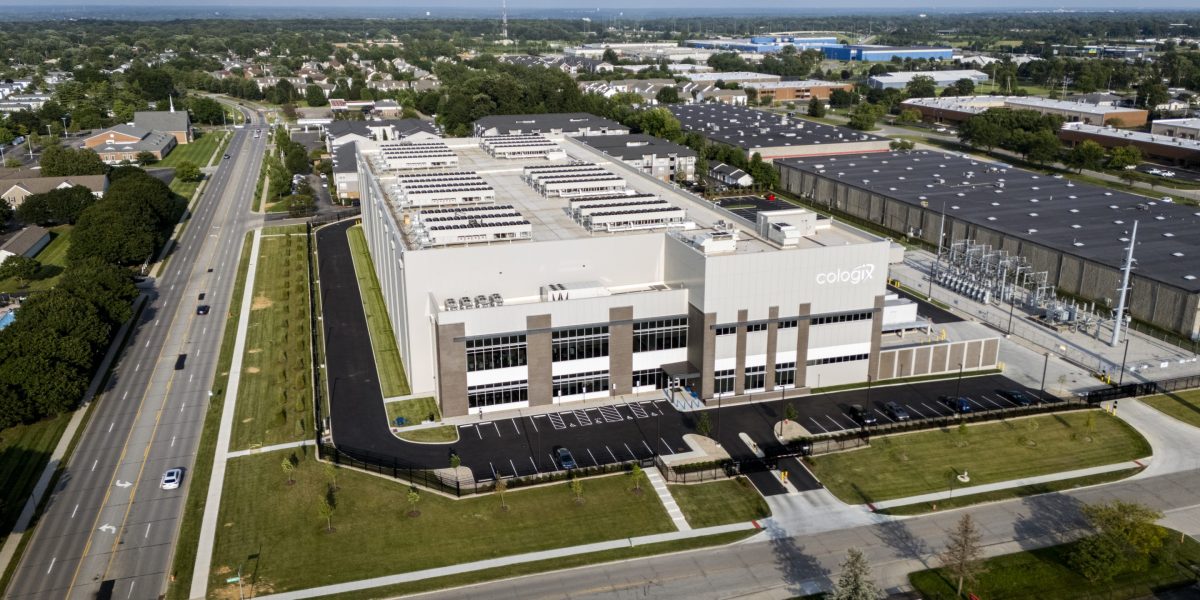
Data center construction — the physical infrastructure required to run the AI systems displacing office workers — has added 212,000 jobs since 2022 and is now generating roughly 9,000 new positions a month, according to Goldman economists Sarah Dong and Joseph Briggs. That looks like electrical contractors, HVAC specialists, and utility and commercial building construction workers.
Experts who study the data center labor market, though, warn that these probably aren’t lasting jobs — once the data center buildout is done, employment shrinks. The American Edge Project estimates the data center boom will generate roughly 4.7 million temporary construction jobs — but only around 697,000 permanent operations positions. Once a facility is running, the ongoing workforce is lean: technicians monitoring servers, facility engineers managing cooling systems, security and maintenance staff.