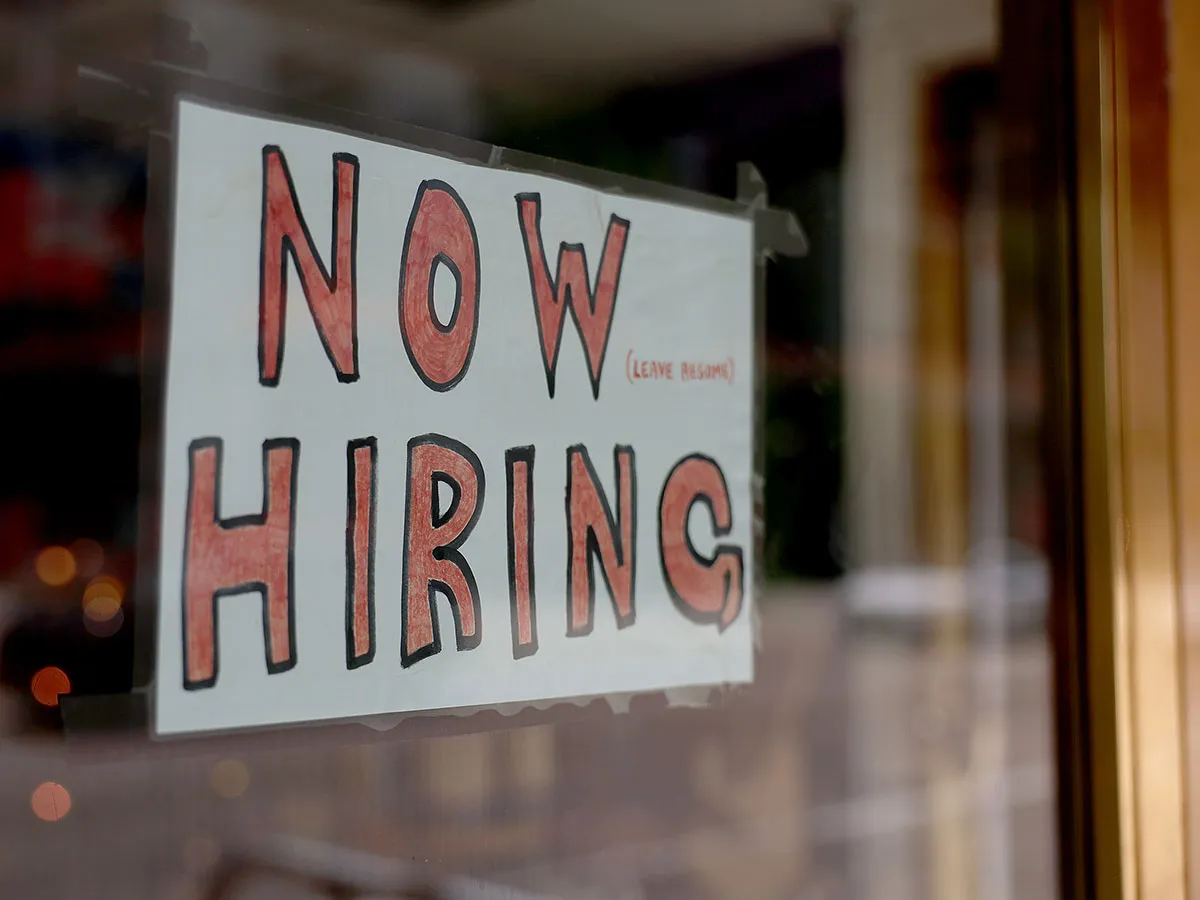
Skip to Content News Archives Economy Energy Oil & Gas Renewables Electric Vehicles Mining Commodities Agriculture Real Estate Mortgages Mortgage Rates Finance Banking Insurance Fintech Cryptocurrency Work Wealth Smart Money Wealth Management Investor Personal Finance Family Finance Retirement Taxes High Net Worth FP Comment Executive Women Puzzmo Newsletters Financial Times Business Essentials More Innovation Information Technology FP500 Podcasts Small Business Lives Told Tails Told Shopping Financial Post Store Obituaries Place a Notice Advertising Advertising With Us Advertising Solutions Postmedia Ad Manager Sponsorship Requests Classifieds Place a Classifieds ad Working Profile Settings My Subscriptions Saved Articles My Offers Newsletters Customer Service FAQ News Economy Energy Mining Real Estate Finance Work Wealth Investor FP Comment Executive Women Puzzmo Newsletters Financial Times Business Essentials HomeEconomyAtlantic Canada job growth in small and medium-sized businesses is beating the nationEmployment Hero report suggests growth in N.B. and N.S. compared to decreases in larger markets, but CFIB isn't quite as optimisticLast updated 5 hours ago You can save this article by registering for free here. Or sign-in if you have an account.New Brunswick recorded 2.5 per cent job growth while businesses in Nova Scotia recorded 4.7 per cent. Photo by Getty ImagesSmall and medium-sized businesses in Atlantic Canada are outperforming the country’s larger regions when it comes to employment growth, according to a global employment solutions leader. Subscribe now to read the latest news in your city and across Canada.Exclusive articles from Barbara Shecter, Joe O'Connor, Gabriel Friedman, and others.Daily content from Financial Times, the world's leading global business publication.Unlimited online access to read articles from Financial Post, National Post and 15 news sites across Canada with one account.National Post ePaper, an electronic replica of the print edition to view on any device, share and comment on.Daily puzzles, including the New York Times Crossword.Subscribe now to read the latest news in your city and across Canada.Exclusive articles from Barbara Shecter, Joe O'Connor, Gabriel Friedman and others.Daily content from Financial Times, the world's leading global business publication.Unlimited online access to read articles from Financial Post, National Post and 15 news sites across Canada with one account.National Post ePaper, an electronic replica of the print edition to view on any device, share and comment on.Daily puzzles, including the New York Times Crossword.Create an account or sign in to continue with your reading experience.Access articles from across Canada with one account.Share your thoughts and join the conversation in the comments.Enjoy additional articles per month.Get email updates from your favourite authors.Create an account or sign in to continue with your reading experience.Access articles from across Canada with one accountShare your thoughts and join the conversation in the commentsEnjoy additional articles per monthGet email updates from your favourite authorsSign In or Create an AccountorEmployment Hero – an AI powered all-in-one platform for payroll, HR, and benefits – says small and medium businesses (SMB) in Nova Scotia and New Brunswick both saw increases in year-over-year employment growth in April compared to decreases seen in larger markets like Ontario and British Columbia over that same period. New Brunswick recorded 2.5 per cent growth while businesses in Nova Scotia recorded 4.7 per cent. Get the latest headlines, breaking news and columns.By signing up you consent to receive the above newsletter from Postmedia Network Inc.A welcome email is on its way. If you don't see it, please check your junk folder.The next issue of Top Stories will soon be in your inbox.We encountered an issue signing you up. Please try againNationally, employment at small and medium-sized businesses declined 0.9 per cent over the same period. The findings are based on Employment Hero’s analysis of 3,000 businesses using its platform across Canada. “SMBs are the backbone of the economy. They often have to respond quicker and they also make up the largest majority of employers,” said Employment Hero spokesperson Megan Felsing. “I think SMBs in Canada can be a really, really prominent signal for where the broader labour market might be heading.” While the Employment Hero report suggests positive employment trends in some Atlantic provinces, the Canadian Federation of Independent Business (CFIB) isn’t quite as optimistic. Louis-Philippe Gauthier, Atlantic vice-president at CFIB, said businesses face challenges with minimum wage increases, the need for skilled labour and a slowdown in the Temporary Foreign Worker program. “Minimum wage increases are pushing up salaries (and) the government is closing the tap on TFWs,” Gauthier said. “How are employers going to find the labour when they’ve been struggling to find the people and the skills they need?“The top two constraints in the country right now are fuel cost concerns, with everything happening in the Middle East, and low consumer demand. Consumers have been pinched for a long while now. It’s the same story for businesses,” he said. “The reality is that costs are up. Look at wages, insurance costs (and) occupancy costs. They’re all high and the pressure on businesses has not gone down. Consumers are spending less, and businesses are seeing less revenue.” Last month, the CFIB released a report noting business closures had outpaced new openings across the country for six straight quarters, since 2024. Fewer businesses were being created than were being closed. Business exit rates reached 5.6 per cent in the second quarter of 2025, while the rate of new business entries dropped to 4.8 per cent by the fourth quarter of the year. The CFIB said the figures reflected some of the highest closures and weakest startup activity since the pandemic. But it’s not all doom and gloom from the federation. It reported hiring intentions for both part-time and full-time work are higher this year than they were in 2025. “How will that translate into actual hiring in the coming months? We’ll have to see,” Gauthier said. “Are there going to be people getting hired? Yes. Will there be people getting laid off? Yes. How it all shakes out in the end is the big question. “But at least the intentions of hiring over the next few months are higher than last year.” Economist David Campbell said looking at employment data from Statistics Canada paired with data and commentary from CFIB, it’s clear there are headwinds for small and medium-sized businesses. Prince Edward Island was the only Atlantic province, according to Statistics Canada’s Labour Force Survey, to see an increase in employment growth in businesses, excluding health, public administration and education, employing under 20 people. P.E.I. saw a two per cent increase from April 2025 to April 2026, while other Atlantic provinces and the country as a whole saw a drop. Looking at the same category for businesses employing between 20 and 99 workers, both New Brunswick and Nova Scotia saw large increases in employment with Nova Scotia reporting an increase of 8.7 per cent and New Brunswick seeing a 12 per cent increase. “So if you combine 0-99 employees as the SMB data, N.B. and N.S. have seen an increase in private sector employment while the country overall has seen a slight decline,” said Campbell. Campbell, the former chief economist of New Brunswick and current president of Jupia Consultants Inc. – a New Brunswick-based economic development, planning and consulting firm – said he thinks it’s fair to say these numbers will soften throughout the year. “Something like 95 per cent or more of small businesses only work in the province. Their market is in the province. These are restaurants, these are lawyers, these are accounts and small retail shops, so small businesses mostly focus on the local market and the local market is very soft right now because population growth has declined to basically zero in New Brunswick and across Atlantic Canada,” he said. Campbell said combine that with trade issues and tepid investment levels and it translates into both a weaker consumer and business market for smaller businesses. “It’s certainly possibly, and likely that we will see soft employment growth throughout the year and soft growth in revenue and GDP contribution from small private sector employers,” he said. Guests at Brix Experience in downtown Moncton taking part in culinary experience. The business is expanding its staff with the opening of a new cafe in Dieppe. SUBMITTEDBased on its findings, Employment Hero said its data suggests some smaller regional economies may be proving more resilient amid broader uncertainty. Felsing, the company’s spokesperson, said small and medium-sized businesses are deeply connected to the communities, customer demand on the ground and local workforce needs. One Moncton business is proving growth is possible. Brix Experience is continuing its expansion this year with the opening of a new café inside Chapters bookstore in Dieppe. Eric Effinger, operations manager, said the business opened its doors in a historic downtown building in 2022. He said the new café will hire another six to 10 employees. The business has also set itself apart by taking full advantage of its space with a small hotel and event space that offers immersive wine experiences, cocktail tastings and cooking classes under the same roof. He said on top of that, they collaborate with others working in the community.“We really utilize our spaces as a stage to try to deal people in. We work with local chefs who are either starting restaurants or have existing restaurants … We work with local florists to make sure their products are shown, local roasters and other Canadian roasters,” he said.Effinger, who has lived in New Brunswick for three years, praised the province’s culture and people. “It’s just a great place to be and you’ve got a community here,” he said. “We find people are willing to work with each other and support local businesses more.”Campbell said the café industry in Moncton is a good example of a dynamic sector where consumers have options from large chains to local spots. “That’s what I would call a healthy, dynamic industry,” he said. “You don’t want to see that dissipate.” He said small businesses are an important part of that ecosystem because they create competition.“If you only have one big accounting firm or one pizza place in your town or city there’d be no incentive to keep prices down and there would be no incentive to work on quality because you don’t have any competition.” Join the Conversation This website uses cookies to personalize your content (including ads), and allows us to analyze our traffic. Read more about cookies here. By continuing to use our site, you agree to our Terms of Use and Privacy Policy.
Atlantic Canada job growth in small and medium-sized businesses is beating the nation
Employment Hero report suggests growth in N.B. and N.S. compared to decreases in larger markets, but CFIB isn't quite as optimistic
1,734 words~8 min read