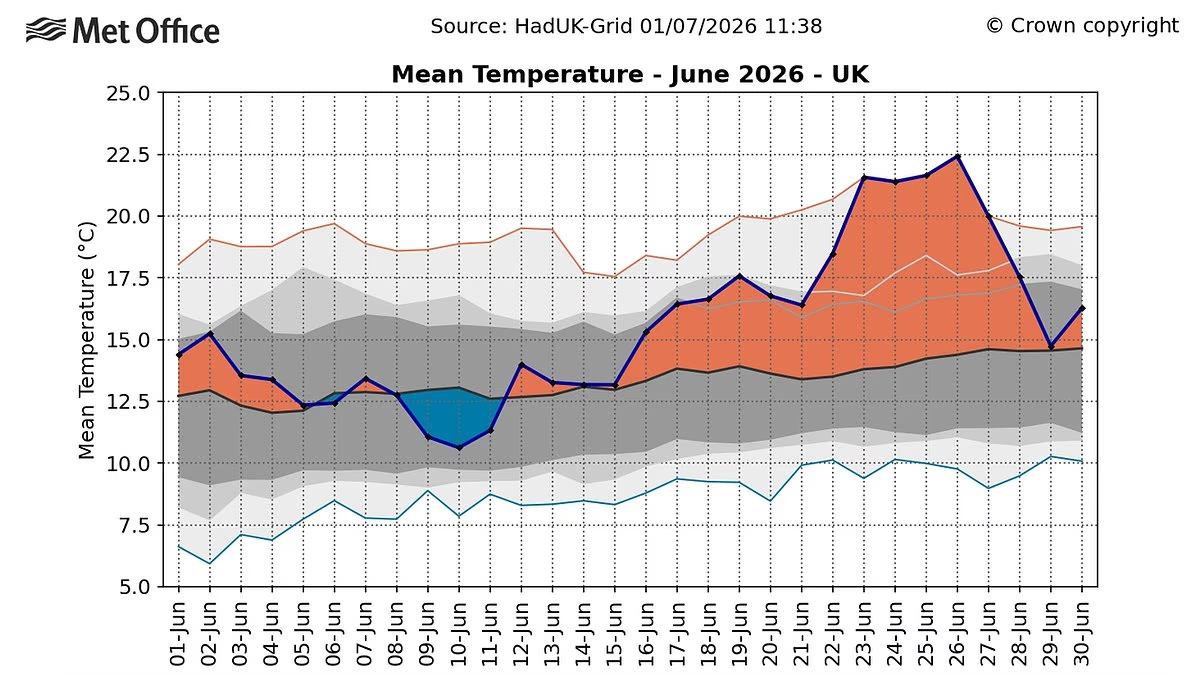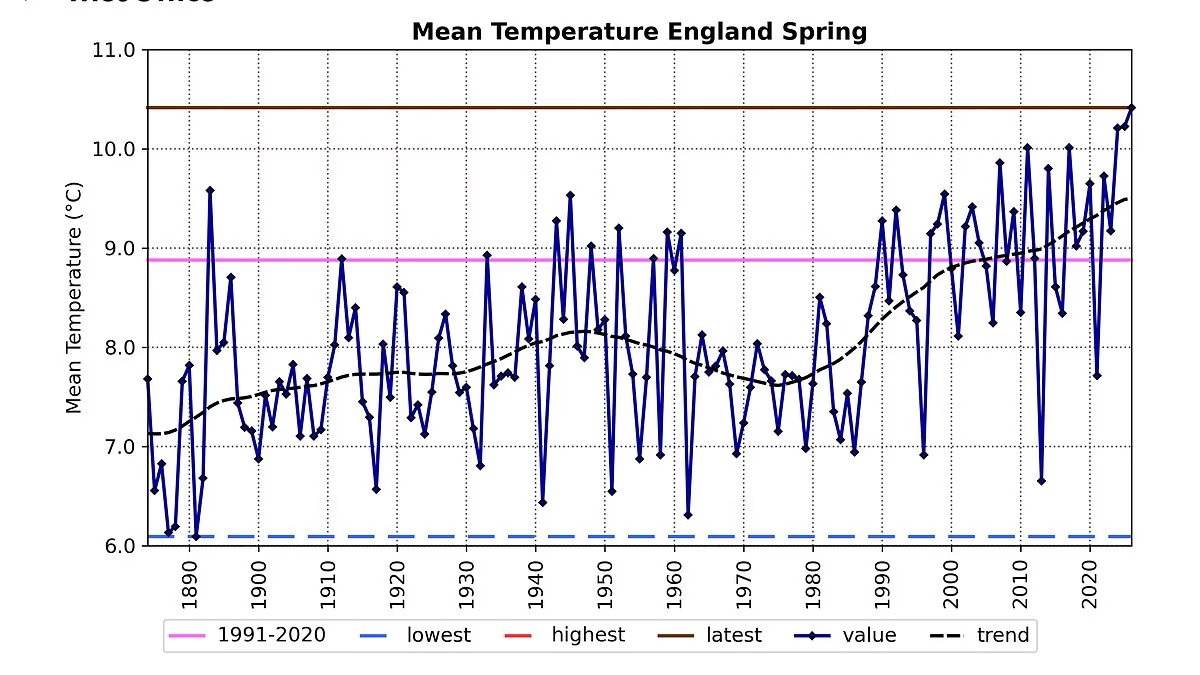
It's official – this spring was the warmest on record for England and Wales. Across the entire season, England's average temperature was 10.41°C – 0.18°C higher than last year's record of 10.23°C. That means the three warmest springs on record now stand as 2026, 2025, and 2024. The record–breaking average temperatures were nudged up at the end of May, when an 'exceptional' heatwave saw parts of the UK bake in six consecutive days above 30°C.'This spring highlights both the natural variability of the UK's weather and the longer–term warming we are observing,' said Dr Emily Carlisle, a scientist with the Met Office.'While conditions varied through the season, all three months of meteorological spring recorded mean temperatures within the UK's top ten warmest on record.'While we expect fluctuations from year to year, this spring shows some of the changes we're seeing in our weather patterns, with more extreme conditions becoming more frequent. 'The fact that nine of the ten warmest springs in England have occurred since 2007 illustrates this ongoing shift in the UK's climate.' While this spring was the warmest on record for England and Wales, it was a different story in other parts of the UK Across the entire season, England's average temperature was 10.41°C – 0.18°C higher than last year's record of 10.23°CWhile this spring was the warmest on record for England and Wales, it was a different story in other parts of the UK. Northern Ireland's spring was its joint sixth warmest on record, while Scotland's was only its eighth warmest on record. Overall, this means this spring was the UK's third warmest on record. In terms of rainfall, this was down 14 per cent across the UK, although again, there were huge regional differences. There was a 'pronounced' north–south split in England, with Northern England seeing 90 per cent of average rainfall, compared to just 50 per cent in Southern England. According to Helen Wakeham, Environment Agency Director of Water and Chair of the National Drought Group, this below–average rain leaves parts of England at risk of drought.She explained: 'No parts of England are currently in drought, but the risk increases the longer it remains hot and dry. 'The recent heatwave has seen significant peaks in demand for water, while river flows have fallen due to the very dry spring, and reservoir levels are reducing. The record–breaking average temperatures were nudged up at the end of May, when an 'exceptional' heatwave saw parts of the UK bake in six consecutive days about 30°CThe new record means the three warmest springs on record now stand as 2026, 2025, and 2024 Spring 2026 average temperatures UK – 9.33°CEngland – 10.41°CWales – 9.73°CScotland – 7.46°CNorthern Ireland – 9.06°C 'We continue to closely track the situation and have convened a National Drought Group meeting in the coming weeks, so we are prepared if the dry conditions remain. 'We must continue to adapt to our changing climate and all be wise with our water use.'Sunseekers will be happy to hear that sunshine was above average for the UK and all four nations. Overall, the UK had its fourth sunniest spring since records began in 1910. England saw its third, Wales its joint eighth and Scotland its ninth. Looking at May alone, you might be surprised to learn that it was only the joint third warmest May in the UK, and the second warmest in England – despite the late heatwave.Ms Carlisle explained: 'May was a month of two distinct phases. 'After a relatively cool and unsettled start, conditions changed quickly, with high pressure allowing temperatures to rise sharply into an exceptional late–month heatwave. Looking at May alone, you might be surprised to learn that it was only the joint third warmest May in the UK, and the second warmest in England – despite the heatwave'This led to temperatures reaching levels not previously recorded during May, with long–standing May records broken in several locations.'While individual weather events are influenced by natural variability, our climate attribution studies show that the likelihood of exceeding UK May temperature records has increased significantly as the climate warms, meaning such extremes are now becoming more likely.'So, what's behind the record–breaking heat?According to the Met Office, the answer is climate change. Their research found that the 32.8°C May record is around three times more likely now in our current climate than it would have been in a natural climate not impacted by greenhouse gas emissions. So, what was around a one–in–100 year event is now around a one–in–33 year event, they say. Why does heat 'hit different' in the UK? Humidity: High humidity short–circuits the body’s cooling system because sweat cannot evaporate efficiently. So temperatures in the high twenties can place significant stress on the body, particularly overnight when people rely on cooler air to recover.Lack of infrastructure: Buildings trap heat overnight, and because air conditioning is still relatively uncommon, there is often little relief indoors.Climate change: Climate change is making UK heatwaves more frequent, more intense and longer lasting.
England has warmest spring on RECORD due to exceptional May heatwave
It's official - this spring was the warmest on record for England and Wales. Across the entire season, England's average temperature was 10.41°C - 0.18°C higher than last year's record.
832 words~4 min read