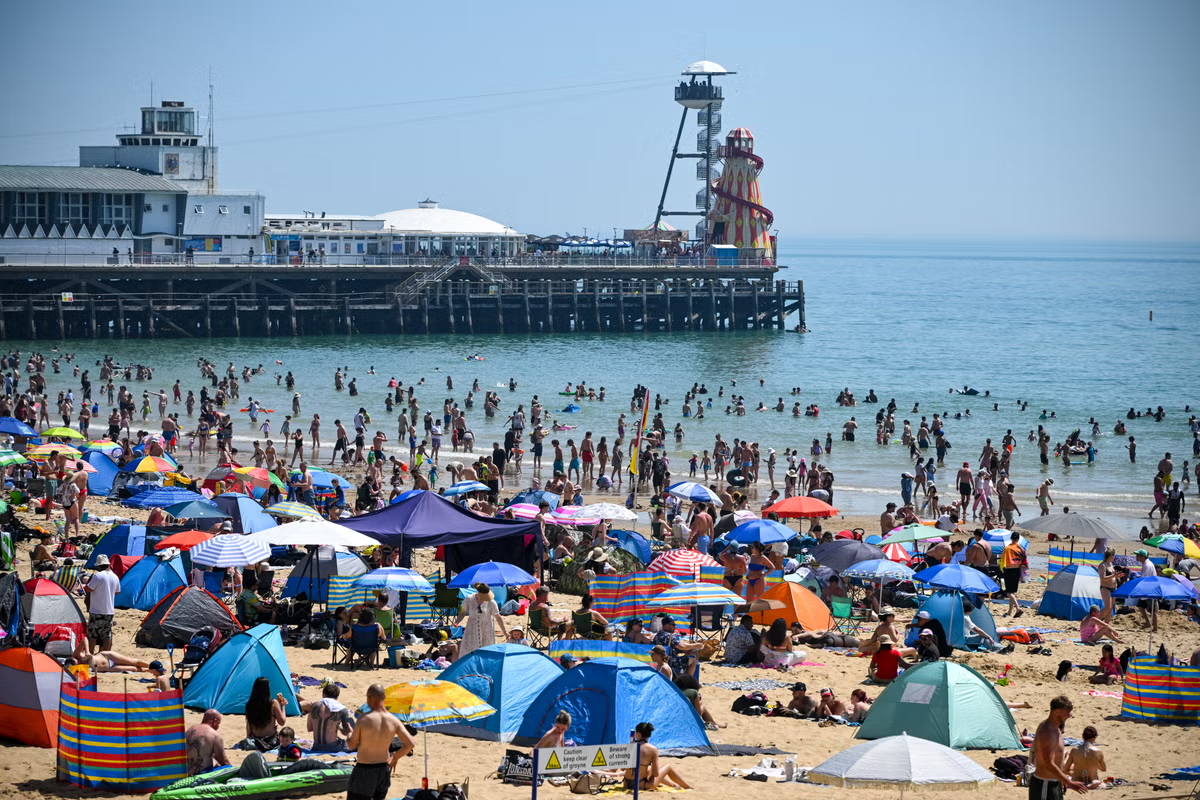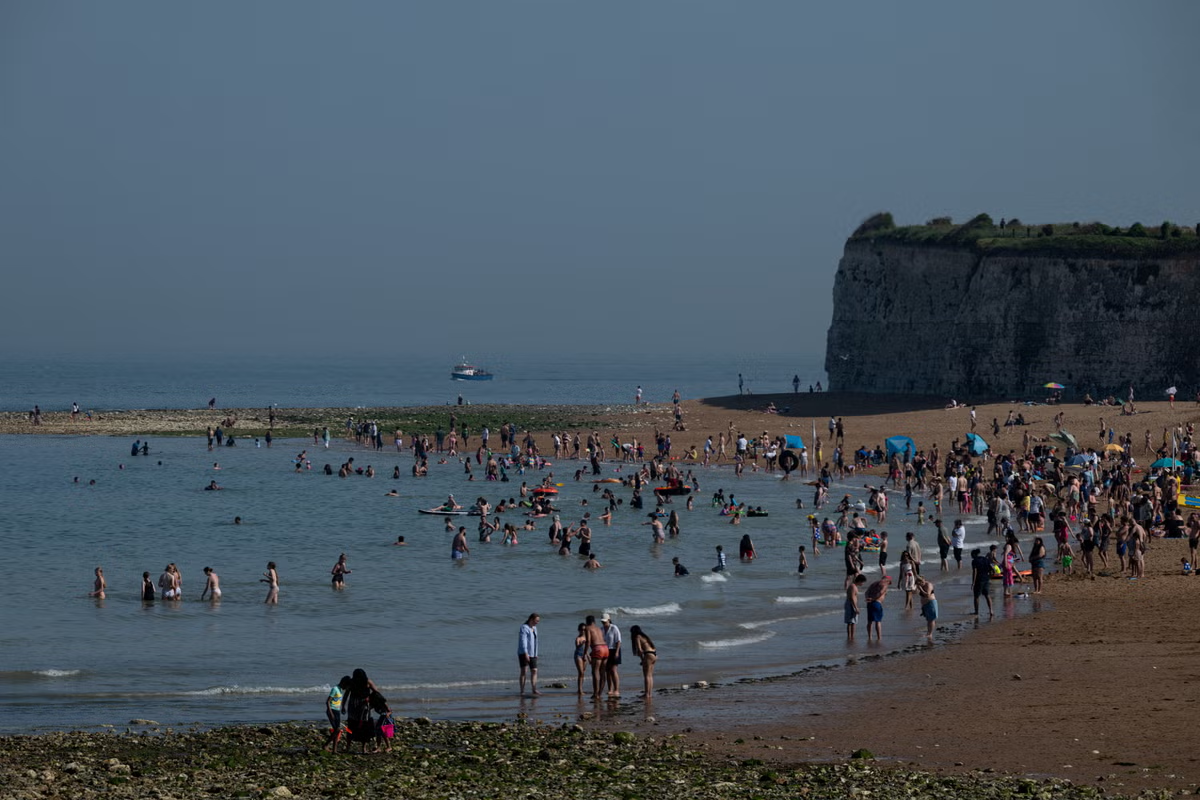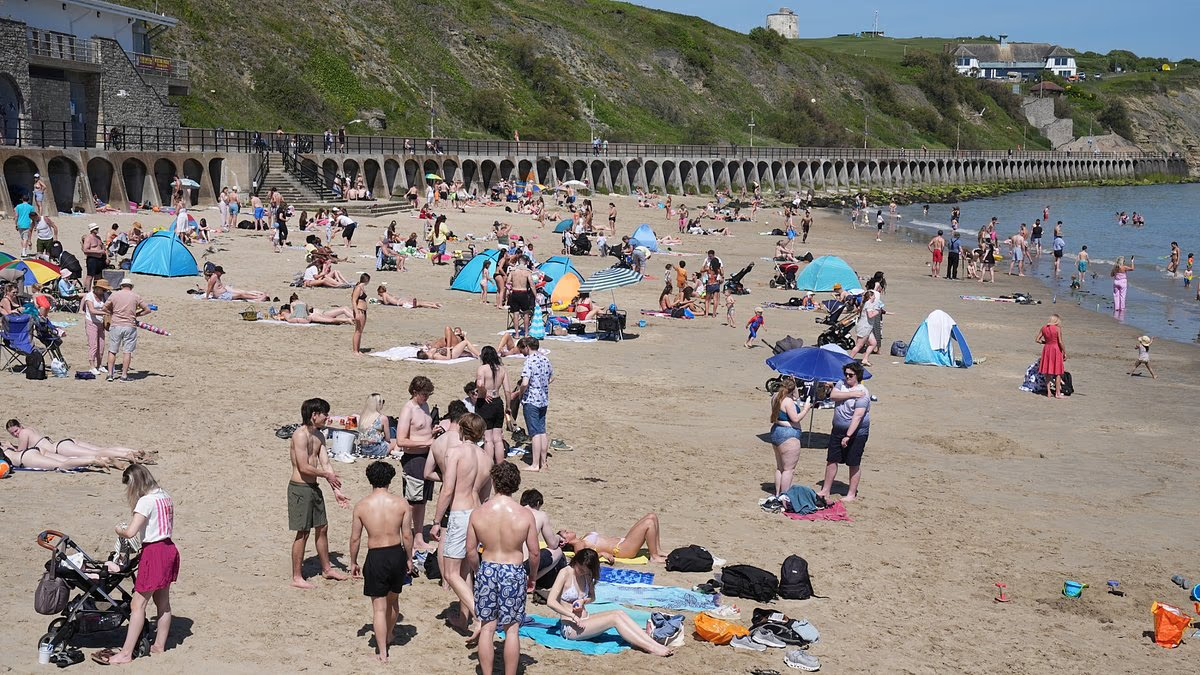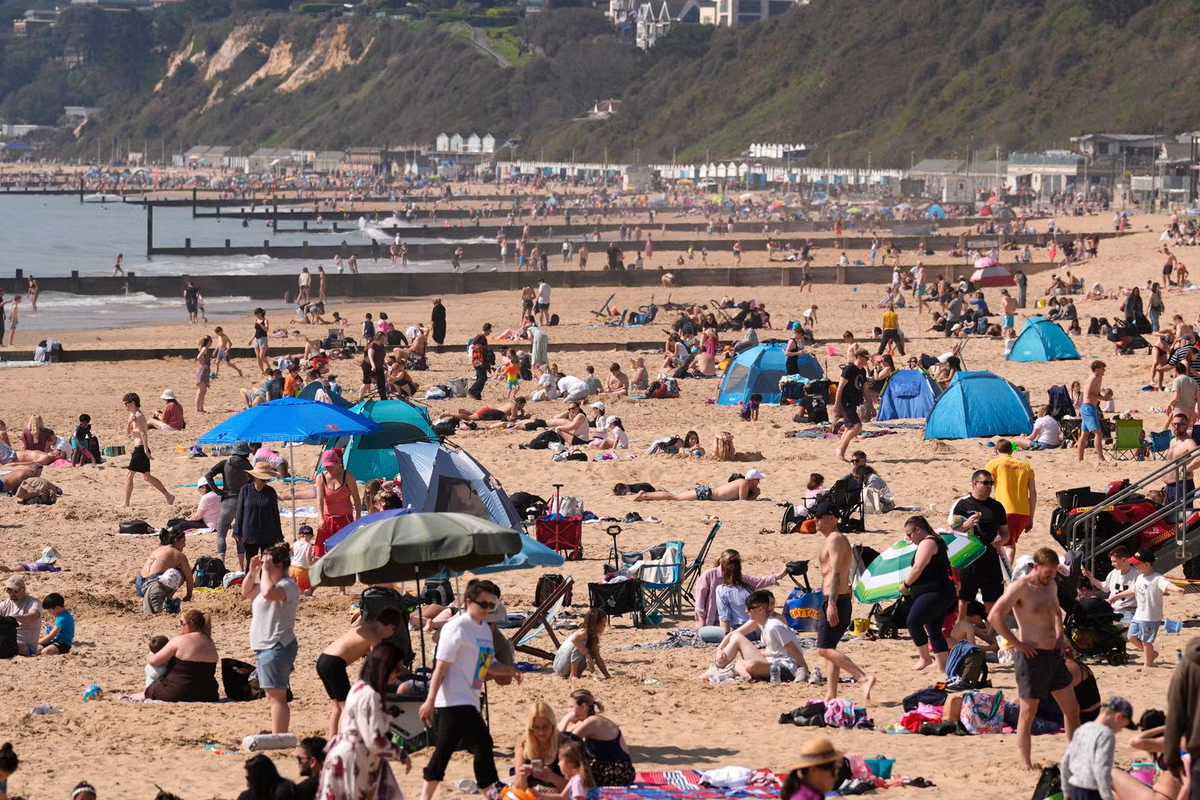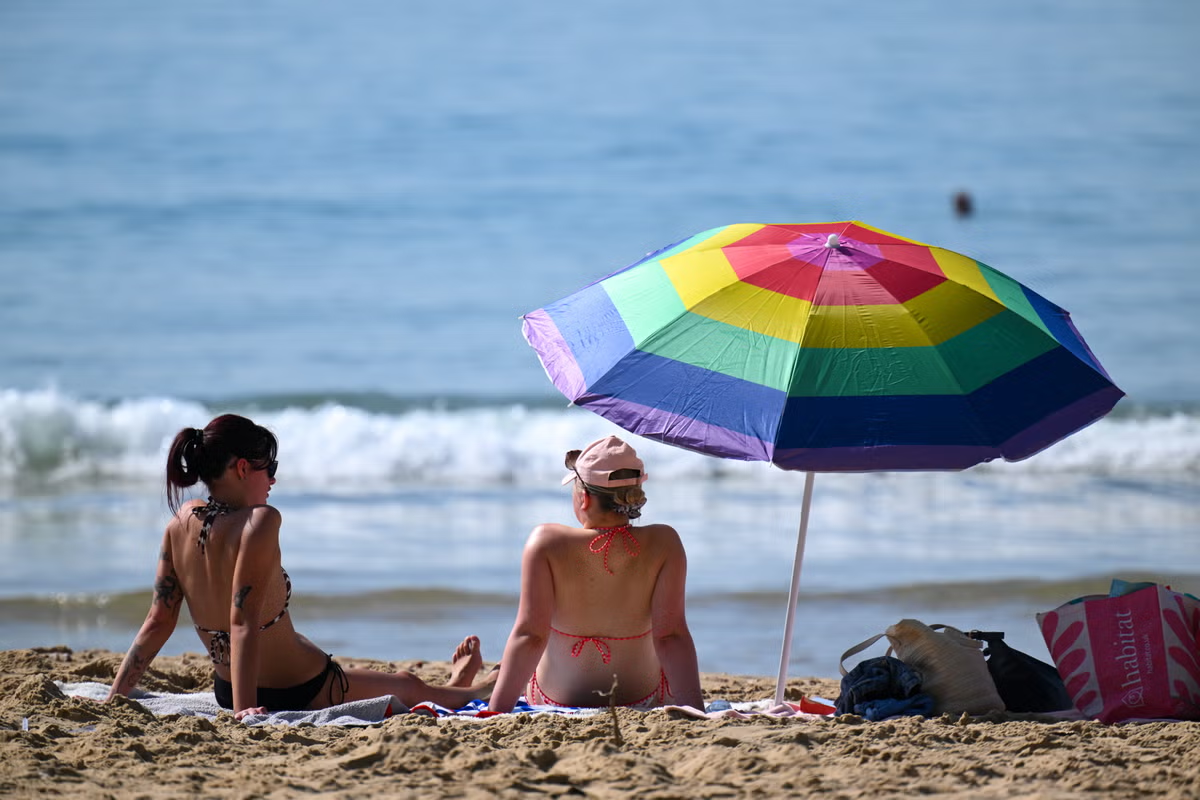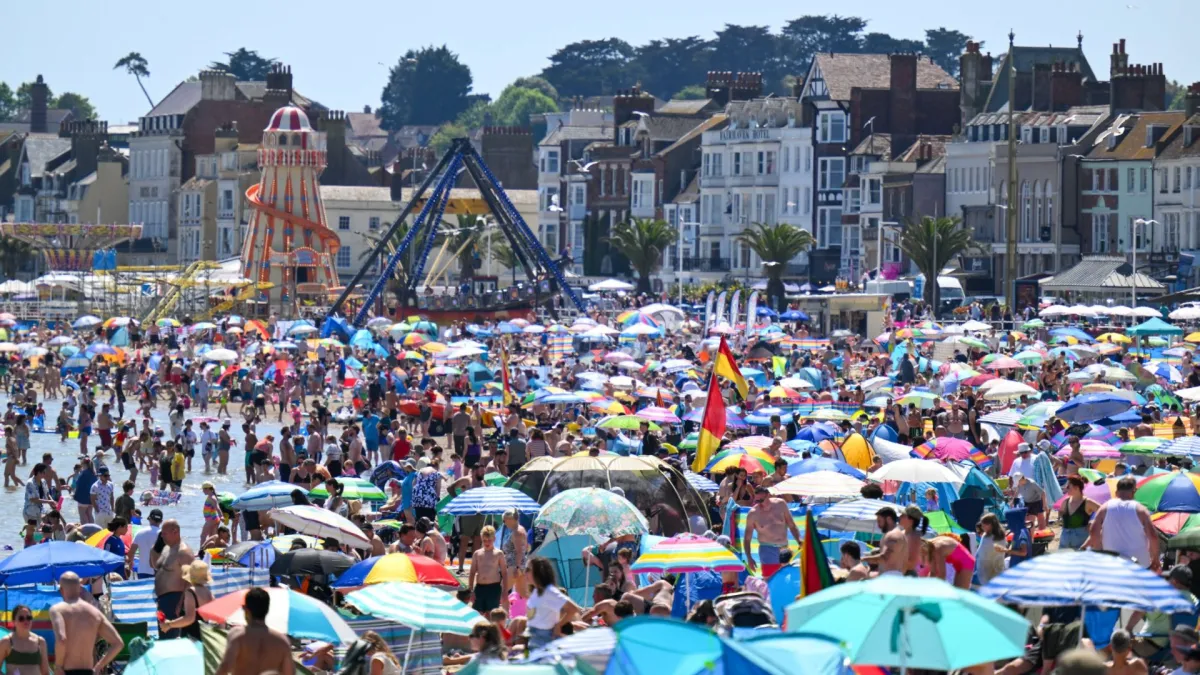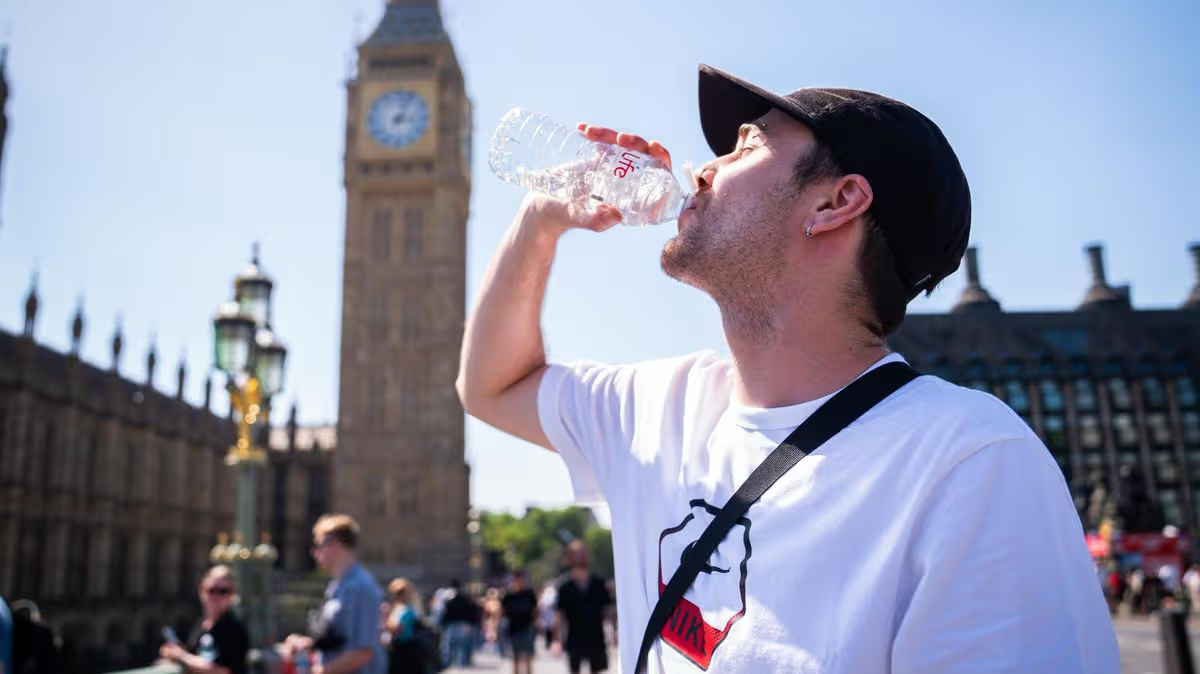
England, Wales and Northern Ireland recorded their highest temperatures of 2026 on Sunday, which was also the UK’s hottest May day for at least 79 years.Kew Gardens in west London recorded 32.3C (90.1F), Cardiff 27.4C and Armagh 23.4C.Scotland reached 23.5C in Edinburgh, just 0.1C below the record of 23.6C set in Aboyne on 1 May.The first area of the UK to hit the heatwave threshold was Santon Downham in Suffolk, which reached the criteria of recording temperatures of more than 27C for three consecutive days at 11.30am on Sunday.The other areas officially in heatwave conditions are Heathrow, Kew Gardens and Northolt in London, Benson in Oxfordshire, Brooms Barn in Suffolk, and High Beach and Writtle in Essex.Temperatures could rise again on Monday, wwith possible highs of between 33C and 34C.The climate crisis is increasing the likelihood of extreme heat. Large parts of western Europe are experiencing similar peaks, and the French national weather agency, Météo-France, said periods of exceptional heat are to be expected “more and more often and more and more prematurely, and to be more and more intense”.Margate beach was packed with sunbathers as temperatures climbed over the bank holiday weekend. Photograph: Chris J Ratcliffe/ReutersA Met Office spokesperson said: “Breaking the 32.8C May record is around three times more likely now in our current climate than it would have been in natural climate conditions before the Industrial Revolution. “What was around a one-in-100-year event is now around a one-in-33-year event.”Earlier, the Met Office meteorologist Jonathan Vautrey said there would be “plentiful amounts of sunshine” in many parts of the UK on Sunday.“If we hit that 33C, maybe even locally close towards 34C, that would bring us our hottest bank holiday day on record, as well as our hottest day in May on record,” Vautrey said. “So it really is quite exceptional heat that is building for the time of year.”A map of UK heatwave thresholdsThe criteria for a heatwave are set by the Met Office. One is declared when temperatures reach or exceed 28C in London and its surrounding counties on at least three consecutive days.For many other areas of England, as well as south-east Wales, it is 26C or 27C. The threshold is 25C for Scotland, Northern Ireland, much of Wales and northern England.Saturday was the UK’s first 30C day of the year, with 23 May being the earliest date 30C was reached since 1952.Sunbathers flocked to beaches across the UK. Pictures from Folkestone, Margate and Weymouth showed crowds of beachgoers soaking up the sun.Given the hot weather, the cricket ground Lord’s has relaxed its strict dress code in its pavilion. The Marylebone Cricket Club usually requires spectators in the pavilion to wear lounge suits or tailored jackets and ties, but that has been eased.There were drinks breaks at the League One playoff final between Bolton Wanderers and Stockport County at Wembley on Sunday and during the Premier League games as the top-flight football season concluded.A dog cools off at water fountains in Battersea park, south-west London. Photograph: James Manning/PAPeople living in three villages in Kent experienced no water or low water pressure for a second day on Sunday. The affected areas are Charing, Challock and Molash near Ashford, where people first reported water supply problems on Saturday evening.South East Water apologised and said the issue was resolved overnight, but added that water supply problems resumed at about 09:25 BST on Sunday due to “issues with the pumping station”.The UK Health Security Agency (UKHSA) issued amber heat health alerts on Friday morning for the East Midlands, the West Midlands, the east of England, London and the south-east.An aerial view of swimmers at Charlton lido, south-east London. Photograph: Yann Tessier/ReutersThe alerts will remain in place until 5pm on Wednesday. They mean there is likely to be a rise in deaths, particularly among those aged 65 and over or with health conditions and an increased demand on all health and social care services, according to the UKHSA website.There were also pleas for caution around open bodies of water, such as lakes and quarries, due to the risk of drowning.According to 2024 data from the National Water Safety Forum, 61% of accidental water-related fatalities occurred in inland waterways, including rivers, canals, lakes, reservoirs and quarries, with May having the largest number of deaths in a single month, at 28 fatalities.The data also suggests many such deaths occur among people who are not intending to enter the water.Prof Mike Tipton, the chair of the forum and an expert in water safety and cold water shock, said: “We encourage people to think before entering the water, and if they decide to go in, go to a supervised location, enter the water slowly to reduce the cold shock response, and keep breathing under control.“If people get into trouble, they should ‘float to live’ – roll on to back, tilt head back to keep airways out of the water, do as little sculling arm and leg exercise as necessary to stay afloat until breathing is back under control.”Tipton advised against entering the water to rescue someone who is struggling, as this often ends up with two people in trouble. Instead, people should call the emergency services, tell the person in the water to float and throw them a flotation aid if possible, he said.While most of the UK was bathed in sunshine, north-west Scotland faced scattered cloud and patches of rain, according to the Met Office.
Hottest May day for nearly 80 years as parts of UK hit heatwave threshold
Highest temperatures of 2026 in England, Wales and Northern Ireland as Kew Gardens in London reaches 32.3C
902 words~4 min read