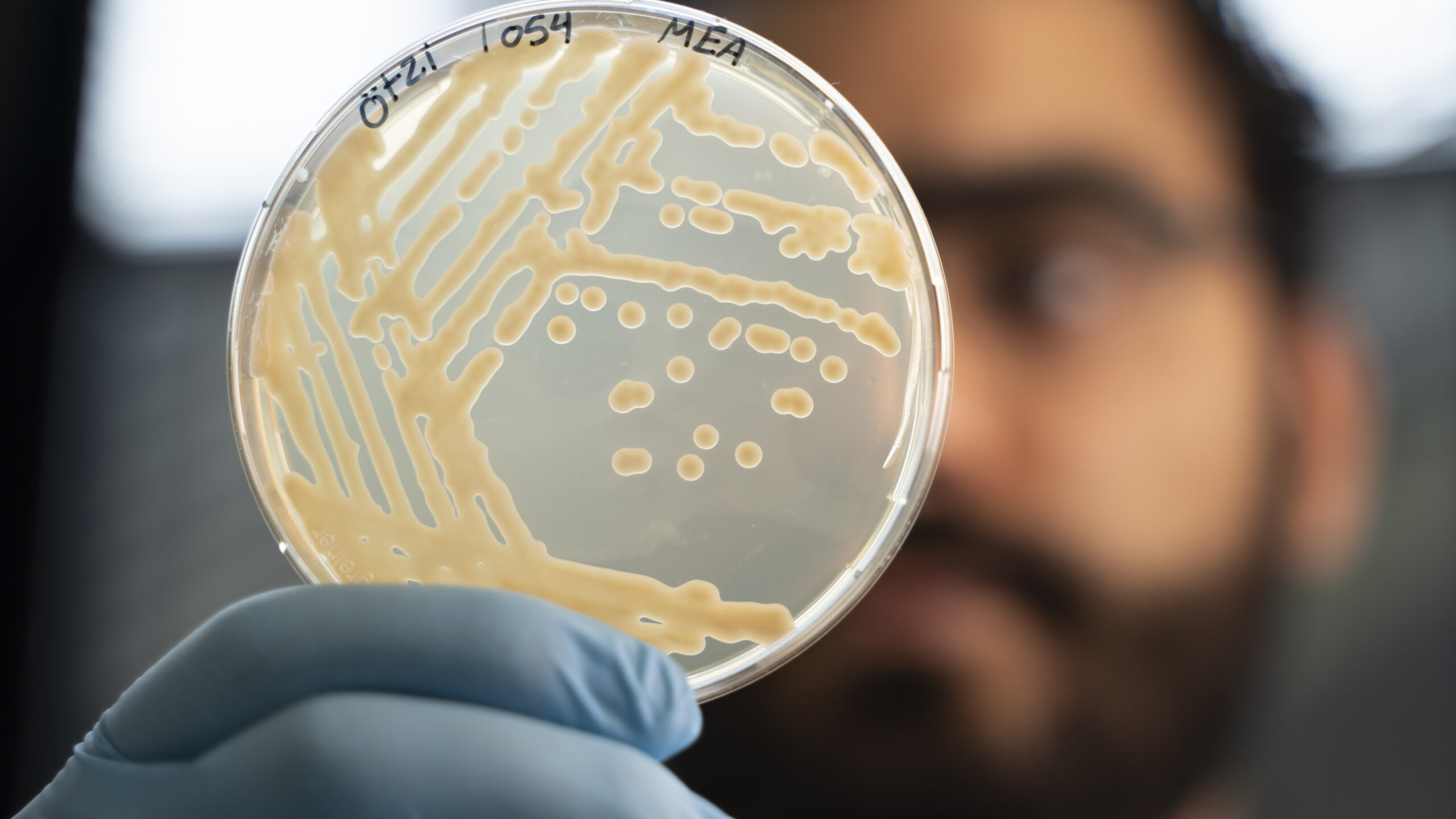
For 15 years, Sébastien Fontaine has been trying to kill dirt. The biochemist, who runs a lab at the French National Institute for Agriculture, Food, and Environment, wanted to know how much carbon is released by soil — just dirt alone, completely devoid of life. His team sealed dirt into jars and blasted them with sterilizing gamma radiation. Then they waited for the carbon dioxide released by the soil — a sign of ongoing microbial respiration — to drop.
They waited, and waited, and waited some more: weeks, then months. Under a microscope, the irradiated soil showed no signs of life, but it continued to emit carbon dioxide. The soil wouldn’t stop breathing.
Fontaine’s lab repeated the experiments and produced the same results. Finally, convinced that they weren’t dealing with an artifact of the experimental setup, they set out to find the source of breath in dead soil.
Now, Fontaine and his colleagues have reported that their soil samples continued to consume oxygen and spew carbon dioxide for six years. In a 2025 paper in Science Advances, they proposed that a metabolic process that powers much of life is also possible outside living cells. Their experiments point to how it could work in dirt, absent the living proteins that would typically organize it. If they’re right, some biochemical reactions, such as those that release the energy of carbon-rich sugar molecules, may not be unique to living things. Such reactions — known as metabolism when performed by cells — could even predate life on Earth, Fontaine said.